
Key takeaways
- Work out how much Venetian plaster, primer and tint you need for neutral color samples sized for bedroom accent walls, without waste or shortfalls in the set.
As an Amazon Associate I earn from qualifying purchases. This post may contain affiliate links at no extra cost to you.
Our top picks at a glance
3 products from this guide, in the order reviewed below.


As an Amazon Associate we earn from qualifying purchases. Prices and availability can change.
A bedroom accent wall in neutral tones looks simple from the doorway, and that simplicity is exactly what makes the material estimate matter. Warm whites, soft greige, pale taupe, and quiet stone shades sit close together on the wall, and the difference between one board and the next can be a single spoon of tint or a slightly thicker second coat. When the estimate is wrong, the maker either runs short in the middle of a board, which leaves a visible join, or mixes far too much, which wastes the very plaster the wall will need.
The answer to how much material do you need to make Venetian plaster color samples for neutral bedroom accent walls is best found with a tape measure, a count of boards, and the coverage figures the makers publish, rather than with a guess. This guide works through that estimate step by step, from the size of the board to the primer on the face and the edges, and it shows how to allow for second coats, for repairs, and for the small extra that keeps a board from running short. The numbers stay in words, the method stays plain, and the result is a shopping list that fits the set.
A neutral palette is forgiving in one way and demanding in another: the colors are calm, so small errors in tint are easy to see, and the boards must be made with the same care the wall will receive. Measure first, mix small, and write everything down, and the set will use just enough material and no more.
Neutral shades also behave differently under bedroom light than they do under workshop light, and that difference is part of the estimate too. A warm white that looks clean under a bright bench lamp can turn grey beside a north facing window, and a soft greige that looks calm in daylight can turn pink under a warm bedside lamp. That is why the sample boards must be judged in the bedroom itself, held against the wall where the light actually falls, rather than in the workshop where they were made. The material estimate stays the same in either room, but the decision about which board wins can only be made where the wall lives, so carry the finished set to the bedroom and let the room light do the final judging.
Tools and materials
Neutral bedroom samples need a kit built around coverage and consistency: two lime bases that cover the neutral range, a primer for grip, a sealer for the raw board, a trowel that lays even coats, and flat boards that never vary. The six items below are chosen so the estimate can be worked out from published coverage rather than guessed.
Novacolor Marmorino KS
- Seasoned lime putty with fine marble powders; satin effect
- Density of about one point six grams per millilitre; ready to use
- Drying time of about twenty four hours; apply between ten and thirty five degrees
Marmorino KS is a lime based plaster coat from Novacolor, built on well seasoned hydrated lime putty and fine marble powders, and it finishes with a satin effect that recalls the traditional Marmorino Veneziano. The maker describes cloudy effects with soft shades as well as even uniform surfaces, which gives a sample maker two ways to chase a match: a quiet even field for calm walls, or a cloudy field for walls with more movement. The product is ready to use, it carries a density of about one point six grams per millilitre, and it dries in about twenty four hours depending on the substrate and the room conditions. It bonds well with lime substrates, it suits plasterboard and mineral surfaces, and it holds the Eurofins Indoor Air Comfort Gold rating, which matters when the samples will live in a bedroom.
Meoded Marmorino Tintoretto
- Lime and marble dust paste; matte to low sheen finish
- Two coats over Meoded Quartz Primer; sizes in quart, gallon and four gallon tubs
- Zero VOC; first coat dries in about eight hours; seal after two days
Marmorino Tintoretto is a natural lime plaster made from limestone and marble dust, and it leaves a smooth matte to low sheen surface with soft movement and gentle color variation. That calm surface is exactly what a color sample needs, because glare never hides the tint and the eye can judge the shade on its own terms. The maker lists it for interior and exterior walls, and it goes on in two coats over Quartz Primer, which gives every board the same starting point. Tintoretto ships as a white paste that the retailer tints to the Meoded color range or to a custom shade, so a sample board can carry the precise color the wall already shows. When the second coat is smoothed with a clean trowel while still moist, the finish reads like honed stone, and that quiet character suits neutral palettes and the soft cloudy look of older marmorino.
Meoded Quartz Primer
- Fine grit mineral primer for Venetian plaster
- Dries in about three to five hours
- Gives plaster grip on smooth boards and drywall
Meoded Quartz Primer is the mineral primer that sits beneath the Meoded plasters, and its fine grit gives the plaster the grip it needs on smooth boards and drywall. One coat goes on over a sound surface, and it dries in about three to five hours before the first plaster coat follows. On a sample board, the primer does two jobs at once: it stops the board from drinking the moisture out of the plaster at different rates across the face, and it gives every board in the set the same base tone, so color differences come from the tint and the technique rather than from the board. Without it, one board can read darker than its twin for no reason the eye can trace, and the whole point of a sample set is lost.
Marshalltown Venetian Plastering Trowel MXS11SSD
- Stainless steel blade with beveled edges and rounded corners
- DuraSoft soft grip handle; made in the USA
- Built for applying and burnishing decorative plaster
The Marshalltown Venetian plastering trowel MXS11SSD is a stainless steel tool with beveled edges and rounded corners, built for applying and burnishing decorative plaster to a smooth polished finish. The DuraSoft handle gives a resilient soft grip that stays comfortable through a full set of boards, and the blade is made to feather thin layers and to help reduce edge marks. Marshalltown has made trade tools in the United States since eighteen ninety, and this trowel carries that plain working character: a stiff honest blade, a handle that does not slip, and edges that are shaped to protect the finish. For estimating material on neutral bedroom samples, a trowel that lays an even coat is worth more than a fancy one, because even coats are what make the coverage figures hold true.
MDF Sample Board Panel Pack
- Stock sample board blanks in seven thirty second inch MDF
- Sizes of eighteen by twenty four inches and twenty six by twenty four inches
- Painted black and white on two sides; four radius corners
Stock sample board blanks give every color in a set the same stage to stand on, and that sameness is what makes comparison possible. The boards are cut from seven thirty second inch MDF in two sizes, eighteen by twenty four inches and twenty six by twenty four inches, with four radius corners and a hand hole for carrying, and they arrive painted black on one side and white on the other. That two tone back is a quiet gift for a color matcher: the same tint can be laid beside a dark field and a light field to see how the shade behaves against both. MDF is flat, stable, and free of grain, so it never fights the plaster the way raw timber can, and a pack of blanks keeps the whole set consistent from the first board to the last.
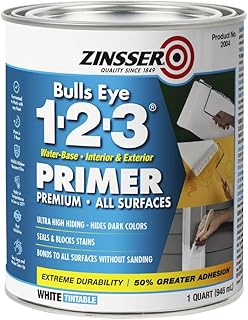
Zinsser Bulls Eye 1-2-3 Primer
- Water based primer sealer recommended under Modern Masters Venetian Plaster
- Seals smooth boards for even absorption
- Tint the primer close to the plaster color
Zinsser Bulls Eye 1-2-3 is a water based primer sealer that Modern Masters recommends beneath its Venetian plaster, and it is the right first step when the sample board is raw MDF. The primer seals the board so the plaster does not lose moisture unevenly, and it gives the face a uniform base that keeps pale tints from reading patchy. Modern Masters suggests tinting the primer close to the plaster color, which helps the final shade stay true even where the plaster coat runs thin at the edges. One even coat, left to dry fully, turns a thirsty board into a reliable surface, and that reliability is the foundation of every color comparison that follows.
| Item | Key spec | Best for |
|---|---|---|
| Novacolor Marmorino KS | Lime putty; satin effect; ready to use | Even satin fields and cloudy effects |
| Meoded Marmorino Tintoretto | Lime and marble dust; two coats | Matte marmorino samples with soft movement |
| Meoded Quartz Primer | Fine grit mineral primer | Even grip on boards and drywall |
| Marshalltown Venetian Plastering Trowel MXS11SSD | Stainless blade; DuraSoft handle | Even coats and clean burnishing |
| MDF Sample Board Panel Pack | Seven thirty second inch MDF blanks | Consistent base for every color |
| Zinsser Bulls Eye 1-2-3 Primer | Water based primer sealer | Sealing raw MDF before plaster |
Step by step
Step 1: Fix the board size and count before ordering
Decide the board size first, because every later figure follows from it. A board of eighteen by twenty four inches is a good working size for a bedroom palette, large enough to show a neutral honestly and small enough to hold against the wall. Count the colors the bedroom needs: a leading warm white, a soft greige, a pale taupe, and perhaps one deeper stone tone for contrast, which gives four colored boards, plus one control board in plain base and one spare board for a mistake. Six boards of the smaller stock size is a sensible set for a bedroom accent wall, and the count should be written down before any material is ordered, so the estimate has a fixed target to aim at.
Step 2: Work out plaster per board from published coverage
Take the coverage figure from the maker data sheet and work backwards to the board. Marmorino Classico covers about three to four square feet per kilogram in two coats, so a single board of three square feet needs roughly a kilogram for its two coats, and a set of six boards needs roughly six kilograms with a small allowance for the second coat running thicker. Marmorino KS and Tintoretto sit in a similar range, and a quart of tint base covers a whole set of boards with material to spare. Work the figure for each base in the set, add the boards together, and buy the next size up rather than the exact amount, because a small surplus is useful while a shortfall in the middle of a board is not.
Step 3: Allow primer for the face, the edges and the back
Primer is easy to forget in the estimate, yet every board needs it on the face, on the edges, and lightly on the back, and those three surfaces together take more primer than the face alone. Roll one even coat of Zinsser Bulls Eye 1-2-3 over the whole board first to seal the MDF, then one coat of Quartz Primer over the face for grip, and allow for both coats on every board in the set. A single small container of each primer covers a set of six boards comfortably, with enough left for touch ups, and the leftover primer will serve the wall job afterwards. Count the primer as part of the material list rather than an afterthought, and the boards will dry evenly from the first to the last.
Step 4: Plan the tint in small measured amounts
Neutral colors need very little tint, and that small amount is exactly why it must be measured rather than poured. Work with a small spoon or a marked measure, add tint a little at a time, and stir until the color is even through the whole batch before adding more. A pale greige can turn muddy with one extra spoon of brown, and a warm white can turn yellow with one extra spoon of ochre, so the tint for a set of six boards is best measured in spoon counts written down for each board. Keep the tint containers sealed between mixes, label each one, and never pour tint straight from the bottle into the plaster, because a free pour is a guess and a guess is waste.
Step 5: Mix a little extra for repairs and second coats
Mix each batch with a small surplus, enough to repair a scuffed corner or to lay a slightly thicker second coat where the board shows thin spots. A surplus of about one board in six is a sensible allowance, and it is far cheaper than mixing a fresh batch for a repair, since a fresh batch will never match the first one exactly. Keep the surplus in a sealed container beside the bench while the board dries, and use it only for that board, because tinted plaster mixed for one color should never be poured into another. The surplus is insurance, and like all insurance it is cheapest when it is never needed.
Step 6: Record what each board used
Write down the plaster, the primer, the tint, and the time for every board, while the details are still in front of you. The record shows which colors used the most material and which used the least, and it turns the next order into a matter of reading rather than guessing. When the wall job begins, the record also shows how much plaster the wall will need, since the coverage on the boards is the truest measure of how far the material goes on a real surface. A notebook beside the bench costs nothing, and it is the difference between an estimate and a memory.
Common mistakes
Guessing the amount instead of measuring the boards
A guess about material is wrong in both directions at once: too little leaves a board half coated and a visible join where the fresh batch meets the old, while too much leaves open tubs that harden before the wall is ready. Measure the boards, read the coverage on the data sheet, and work the figure out on paper before ordering. A ten minute estimate saves an afternoon of repair and a tub of wasted plaster.
Forgetting the edges and the back of the board
The face of a board is only part of its surface, and the edges and the back drink primer and plaster too. A set estimated on the face alone will run short by the third or fourth board, and the shortfall will show as thin edges that read darker than the middle. Count the face, the edges, and a light coat on the back for every board, and the estimate will hold from the first board to the last.
Mixing the whole tub for a small set
Opening a whole tub for six small boards leaves most of the plaster exposed to air, and lime plaster that sits open will skin over and harden before the wall job begins. Mix only what each board needs, keep the tub sealed between mixes, and take the plaster out with a clean scoop rather than pouring from the tub. The tub stays fresh, the boards stay consistent, and the wall inherits the material that was saved.
No allowance for second coats
A second coat always uses more material than the first, because it must cover the texture of the first coat and build the body the finish needs. An estimate that counts one coat will run short halfway through the set, and the boards made after the shortfall will look thinner and paler than the ones made before it. Allow for two coats on every board, plus a small surplus for repairs, and the set will stay even from start to finish.
Ignoring how thirsty raw MDF can be
Raw MDF drinks moisture out of the first coat, and a board that was never sealed will take far more plaster than the data sheet promises. Seal every board with primer first, let the primer dry fully, and the plaster will go on at the coverage the maker lists. A sealed board uses less material, dries more evenly, and shows the color truly, while a raw board wastes plaster and lies about the tint.
FAQ
How many boards do I need for a bedroom neutral palette?
Four colored boards cover most bedroom palettes: a leading warm white, a soft greige, a pale taupe, and one deeper stone tone for contrast. Add one control board in plain base and one spare board for mistakes, which brings the set to six boards. Six boards show the range clearly without wasting material, and the set is small enough to carry to the wall and compare in one visit.
Should I buy a quart or a gallon of plaster for samples?
A quart covers a set of six boards comfortably for most bases, with material left over for repairs and for the wall. A gallon is only needed when the set is large, when the boards are the bigger stock size, or when the same plaster will go straight onto a large wall. Buy the quart first, keep the receipt, and order more only when the boards prove the color, because a quart that matches is worth more than a gallon that does not.
How much primer does a set of sample boards need?
One small container of sealer primer and one small container of mineral primer covers a set of six boards, with enough left for the wall job afterwards. Each board needs sealer on the face, the edges, and lightly on the back, plus one coat of mineral primer on the face for grip. Buy the small sizes, share them across the whole set, and the primer share of the material list stays modest.
How do I store leftover tinted plaster?
Keep leftover tinted plaster in a sealed container with the formula written on the lid, and store it in a cool place away from direct sun. Use it within a few days, since tinted plaster that sits open will skin over and dry out, and a skin that is stirred back in will leave lumps on the next board. Label every container with the board number and the date, so the leftover can be matched to the board it came from.
What if I run short of plaster in the middle of a board?
Stop at a natural break, such as the edge of the board, and mix a fresh batch from the written formula before continuing. Never stretch the last of a batch thin across the board, because a thin patch will dry paler and show as a band across the color. A shortfall is a sign that the estimate was tight, and the fix is a fresh batch made to the same formula, applied while the first part is still workable.
Conclusion
Estimating material for neutral bedroom samples is a matter of measuring the boards, reading the coverage on the data sheet, and allowing for primer, second coats, and a small surplus for repairs. Six boards of the smaller stock size, two lime bases that cover the neutral range, a sealer and a mineral primer, and a trowel that lays even coats will answer the color question without waste and without shortfalls. Write down what each board used, keep the formulas on the backs of the boards, and let the record guide the order for the wall. A set made with just enough material is a set made with care, and the wall will show that care in every square foot.
Related guides
More from Amazon
Programs that pair well with the guide above. Offers and eligibility are set by Amazon and may change.
Free shipping on eligible items, Prime Video and more. Eligible new members can start with a free trial.
Start a Prime free trialAudiobooks and podcasts to listen to on the go. Eligible new members can start with a free trial.
Try Audible freeAd-free music streaming. Eligible new subscribers can start with a free trial.
Try Music Unlimited freeA free business account with business pricing and bulk-buying tools for work, shop or home office.
Create a business accountAs an Amazon Associate we earn from qualifying purchases.
More ways to save on your next finish
Programs that pair well with the guide above. Offers and eligibility are set by Amazon and may change.
A free business account with business pricing and bulk-buying tools for work, shop or home office.
Create a business accountFast, free shipping on eligible items, plus Prime Video and more. Eligible new members can start with a free trial.
Start a Prime free trialRead from a huge library of eBooks, including how-to guides and cookbooks. Eligible new members can start with a free trial.
Try Kindle UnlimitedAudiobooks and podcasts for the commute, the garage or the kitchen. Eligible new members can start with a free trial.
Try Audible freeAs an Amazon Associate we earn from qualifying purchases. Using these links costs you nothing extra.








Write Your Review
No reviews yet. Be the first to share your experience!