
Key takeaways
- Seven 24-inch skimming blades for smoothing large clay plaster panels, compared on blade width, body material, reach, replaceable inserts and edge profile.
As an Amazon Associate I earn from qualifying purchases. This post may contain affiliate links at no extra cost to you.
Our top picks at a glance
4 products from this guide, in the order reviewed below.


As an Amazon Associate we earn from qualifying purchases. Prices and availability can change.
Clay plaster panels are large, soft and honest: a panel several feet wide shows every pass of the blade, and the finish depends on long even strokes rather than short corrections. Clay plaster is applied thick, it stays workable for a long time, and it rewards a wide blade that can smooth a whole panel in a few passes. A narrow trowel leaves a ridge at the edge of every stroke, and on a large panel those ridges add up to a surface that looks striped under raking light. A 24-inch skimming blade is the right width for this work: it spans a broad band of clay in one pass, it is still light enough to hold at shoulder height, and it can be worked with an extendable handle for the top of a tall panel. The body of the blade matters on clay. Clay plaster is soft, so the blade does not need great stiffness, but the panel is large, so the blade is held up for a long time, and weight becomes the deciding factor. A composite body is lighter than aluminium, and aluminium is lighter than steel, so the choice of body decides how fresh the arm feels at the end of a panel. The best wide plaster skimming blades for smoothing large clay plaster panels with 24 inch skimming blades pair a 24-inch edge with a light body and a replaceable insert, so the edge stays true across many panels. This guide compares seven real blades whose makers list 24-inch sizes or wide formats suited to large clay panels, and explains how blade width, body material and handle reach change the smoothing pass.
Quick verdict
The LEVEL5 24-Inch Composite Body Skimming Blade leads this group: its composite frame is the lightest 24-inch body here, its rounded blade smooths clay without leaving lines, and its replaceable insert keeps the edge true. The LEVEL5 24-Inch Skimming Blade 4-924 is the aluminium rival, with the same rounded edge in a metal frame. The NELA Edge Black Edition Spatula 600 mm brings a flexible stainless blade with a moulded grip, the P1 Tools Proline Smoothing Knife 60 cm brings a German-made stainless blade with replaceable edges, and the LEVEL5 32-inch and 48-inch aluminium blades cover wider panels. The LEVEL5 10/24/32 inch set closes the group with three widths and a handle for varied panel work. Choose by panel size first, then by how light the body must be.
| Product | Key spec | Best for |
|---|---|---|
| LEVEL5 24-Inch Composite Body Skimming Blade | 24 in composite body, rounded blade, 1-year warranty | Large clay panels where low weight matters most |
| LEVEL5 24-Inch Skimming Blade 4-924 | 24 in aluminium body, rounded profile edge, 1-year warranty | A metal-framed 24 in blade with a replaceable edge |
| NELA Edge Black Edition Spatula 600 mm | Flexible stainless blade, 600 mm, moulded grip, pole available | Flexible smoothing with an extended grip option |
| P1 Tools Proline Smoothing Knife 60 cm | Stainless steel, 60 cm, soft rubber grip, made in Germany | Firm smoothing with replaceable blades |
| LEVEL5 32-Inch Aluminum Skimming Blade | 32 in aluminium body, 1-year warranty, inserts available | Wider panels smoothed in fewer passes |
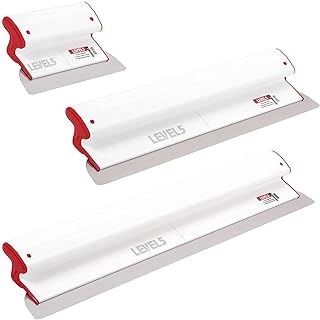
| LEVEL5 10/24/32 in Skimming Blade Set with Handle and Handle Adapter | 10/24/32 in blades with handle and adapter, 1-year warranty | Three widths for varied panel work |
| LEVEL5 48-Inch Aluminum Skimming Blade | 48 in aluminium body, 1-year warranty, inserts available | The widest panels in a single pass |
How we chose
Blade width was the first filter: every blade here is 24 inches or wider, or part of a set that includes a 24-inch blade, so one pass smooths a broad band of clay instead of striping the panel. Body material came next, because a large clay panel means the blade is held up for a long time, and the composite and aluminium bodies here keep the working weight low. Edge profile was weighed after that: rounded blades smooth clay without leaving lines at the edge of each pass, which matters on a panel that will be seen whole. Replaceable edges were checked next, because clay plaster carries fine aggregate that wears a blade edge, and a blade that takes a fresh insert stays true across many panels. Handle reach was weighed after that, since tall clay panels need the blade worked at height, and the handle adapter systems here accept extendable handles for the top of the panel. Grip comfort rounded out the choice, with moulded grips, cork, soft rubber and adapter handles in the group. Cleaning was checked last, because clay rinses off stainless steel easily, and a blade that rinses clean between panels keeps the next panel free of dried lumps. No prices were compared and no tool was handled; the guide relies on published specifications only.
LEVEL5 24-Inch Composite Body Skimming Blade
- Blade: 24 in with a rounded blade
- Body: composite body, lightweight design
- Edge: replaceable blade inserts available
- Warranty: 1-year warranty from the maker
- Handle: handle adapter system accepts extendable handles
The LEVEL5 24-Inch Composite Body Skimming Blade leads this group because it is the lightest 24-inch blade here, and weight is what decides a large clay panel. Clay plaster stays workable for a long time, so the smoothing pass is long and unhurried, and a heavy blade makes the arm drop before the panel is done. The composite body trims weight from the frame, so the blade can be held flat against the panel through the whole pass. The 24-inch rounded blade smooths a broad band of clay in one stroke, and the rounded edge avoids the lines that a square corner would leave at the edge of each pass. The maker lists a 1-year warranty across its skimming blade line, and replacement inserts are listed for the 24-inch size, so the edge can be renewed when the fine aggregate in clay plaster starts to wear it. The handle adapter system accepts extendable handles, which matters on tall panels: the top of a clay panel is the hardest part to reach, and a handle extension keeps the blade flat there. On large clay panels, the composite body is the right lead: wide enough to smooth fast, light enough to hold, and simple to keep sharp with a fresh insert.
Pros:
- Composite body is the lightest 24 in frame here
- Rounded blade smooths clay without leaving lines
- Replaceable inserts renew the edge as aggregate wears it
- Extendable handles available for tall panels
Cons:
- Composite frame can mark if dropped on a hard floor
- Fewer size options than the aluminium range
LEVEL5 24-Inch Skimming Blade 4-924
- Blade: 24 in with a rounded profile blade edge
- Body: aluminium body, lightweight design
- Edge: replaceable blade inserts available
- Warranty: 1-year warranty from the maker
- Handle: handle adapter system accepts extendable handles
The LEVEL5 24-Inch Skimming Blade 4-924 is the aluminium rival to the composite lead, and it suits the plasterer who prefers a metal frame. The aluminium body is light, and the maker describes its skimming blades as lightweight and easy to use, which counts when the blade is worked across a large clay panel. The rounded profile edge is the detail that matters on clay: it lets the blade smooth the surface without catching, and the taper at the edge of each pass fades into the panel instead of leaving a line. The replaceable insert is a practical advantage on clay, because the fine aggregate in clay plaster wears a blade edge over time, and a fresh insert restores a clean smoothing edge without replacing the whole tool. The 1-year warranty covers the full skimming blade line, including handles and accessories. The handle adapter system accepts extendable handles, so the 24-inch blade can be worked from the floor on tall panels. For smoothing large clay panels, the 4-924 is the metal-framed standard: the same 24-inch rounded blade as the composite version, in a frame that feels solid and cool in the hand.
Pros:
- Rounded profile edge smooths clay without lines
- Light aluminium body suits long smoothing sessions
- Replaceable inserts keep the edge true
- Extendable handles available for tall panels
Cons:
- Heavier than the composite body version
- Handle and adapter are separate from the blade alone
NELA Edge Black Edition Spatula 600 mm
- Blade: flexible stainless steel blade
- Size: 600 mm, from a range of 150 to 1200 mm
- Handle: moulded grip shaped for comfort and ease
- Grip options: BiKoGRIP cork and BiKoGRIP soft available
- Reach: pole and attachment available for the Edge range
The NELA Edge Black Edition Spatula in the 600 mm size brings a flexible stainless blade to clay panels, and flexibility is what clay smoothing needs. Clay plaster is soft and the blade must follow the gentle curve of the panel rather than bridge over it, and a flexible blade does that while a stiff blade leaves hollows. The maker lists a flexible stainless steel blade that levels surfaces straight after application, which is the smoothing pass a fresh clay panel needs. At 600 mm, the edge spans a broad band of clay in one pass, so the panel is smoothed in a few strokes rather than many. The moulded grip is shaped to the hand, and the maker describes the design as ergonomic with a lightweight construction, which matters when the blade is held at shoulder height across a large panel. The grip options add to the appeal: BiKoGRIP cork and BiKoGRIP soft are both listed, and cork suits hands that run warm because it absorbs moisture and stays secure. For tall panels, the NELA Edge pole and attachment fit the same spatula, so the top of the panel can be smoothed from the floor. On large clay panels, the Edge 600 mm is the flexible option: it follows the clay, it spans wide, and its grip stays comfortable to the end of the panel.
Pros:
- Flexible blade follows the curve of a clay panel
- 600 mm edge smooths broad bands in few passes
- Moulded grip with cork and soft options
- Pole and attachment extend reach for tall panels
Cons:
- Wider sizes need more storage space
- Pole and attachment are bought separately
P1 Tools Proline Smoothing Knife 60 cm
- Blade: stainless steel smoothing knife
- Size: 60 cm, from a range of 50 to 120 cm
- Build: spot welded; made in Germany
- Handle: soft rubber grip
- Edge: replacement blades available
The P1 Tools Proline Smoothing Knife in the 60 cm size is the firm option in this group, and it suits clay panels that need pressure to flatten. Clay plaster can be laid on thick, and the first smoothing pass must press the coat flat rather than simply glide over it. The maker lists a stainless steel blade, spot welded, made in Germany, with a soft rubber grip that gives stability and ease of use. The 60 cm size matches the 24-inch blades in this group, so it covers the same broad band per pass. Replacement blades are listed, which matters on clay: the aggregate wears the edge, and a fresh blade restores a clean smoothing pass without buying a new tool. The soft rubber grip is the comfort detail: it cushions the hand during the firm pressure that clay smoothing needs, and it stays secure when the hand is damp. The range runs from 50 cm to 120 cm, so the same knife can be used for detail work and for the widest panels. On large clay panels, the Proline 60 cm is the firm, German-made choice: it presses the coat flat, it spans wide, and its edge can be replaced when the clay wears it.
Pros:
- Firm stainless blade presses thick clay flat
- 60 cm width matches the 24 in blades in this group
- Replacement blades available for a worn edge
- Soft rubber grip stays secure under firm pressure
Cons:
- Firmer blade feathers less readily than flexible blades
- Spot welded build needs care to avoid bending
LEVEL5 32-Inch Aluminum Skimming Blade
- Blade: 32 in aluminium body skimming blade
- Body: aluminium body, lightweight design
- Edge: 32-inch replacement blade inserts available
- Warranty: 1-year warranty on the full skimming blade line
- Handle: handle adapter system accepts extendable handles
The LEVEL5 32-Inch Aluminum Skimming Blade is the wider option for clay panels that run long. A large clay panel is smoothed in bands, and a wider blade means fewer bands, fewer joins between passes, and a more even surface. At 32 inches, this blade covers a third more width per pass than a 24-inch blade, and the aluminium body keeps it light enough to hold steady through the stroke. The maker lists a 1-year warranty across its full skimming blade line, and 32-inch replacement inserts are listed, so the long edge can be renewed when the clay aggregate wears it. The handle adapter system is shared with the rest of the LEVEL5 range, so an extendable handle can be fitted for the top of a tall panel. The width demands a steady hand: the ends of a 32-inch blade will flex if the pressure is uneven, so the pass should be made slowly with even pressure from both hands. For smoothing large clay panels, where fewer passes mean a more even finish, the 32-inch aluminium blade is the tool that covers the panel fast without tiring the arm.
Pros:
- 32 in width smooths panels in fewer passes
- Light aluminium body stays steady through long strokes
- Replacement inserts renew the long edge
- Shares handles and adapters with the LEVEL5 range
Cons:
- Width needs even two-hand pressure to stay flat
- Too wide for small panels and tight corners
LEVEL5 10/24/32 in Skimming Blade Set with Handle and Handle Adapter
- Blades: 10, 24 and 32 in skimming blades in one set
- Handle: handle and handle adapter included
- Edge: replacement blade inserts available for the range
- Warranty: 1-year warranty on the full skimming blade line
- Use: varied widths for varied panel work
The LEVEL5 10/24/32 in Skimming Blade Set with Handle and Handle Adapter is the versatile option in this group, and it suits the plasterer who smooths clay panels of many sizes. A large clay panel needs the 24-inch or 32-inch blade, but the edges of the panel, the bands beside trims, and the small areas around openings need a narrower blade, and this set provides all three widths with one handle. The 24-inch blade does the main smoothing, the 32-inch blade covers the widest bands, and the 10-inch blade works the details. The handle and handle adapter are included, so the set is ready to work from the box, and the adapter system accepts extendable handles for tall panels. The maker lists a 1-year warranty across its full skimming blade line, and replacement inserts are listed for the range, so each blade in the set can be kept sharp. For smoothing large clay panels, the set is the practical choice: one handle, three widths, and the right blade for every part of the panel, from the broad middle to the narrow edge.
Pros:
- Three widths cover the panel field and the edges
- Handle and adapter included in the set
- Replacement inserts available for the range
- One handle fits all three blades
Cons:
- Set costs more than a single blade
- 10 in blade is narrow for large open panels
LEVEL5 48-Inch Aluminum Skimming Blade
- Blade: 48 in aluminium body skimming blade
- Body: aluminium body, lightweight design
- Edge: 48-inch replacement blade inserts available
- Warranty: 1-year warranty on the full skimming blade line
- Handle: handle adapter system accepts extendable handles
The LEVEL5 48-Inch Aluminum Skimming Blade is the widest blade in this group, and it suits the largest clay panels. A panel four feet wide can be smoothed in a single pass with a 48-inch blade, which means no joins between bands and no ridges where one pass meets the next. The aluminium body keeps the tool light for its width, and the maker lists a 1-year warranty across its full skimming blade line, with 48-inch replacement inserts listed for the edge. The handle adapter system is shared with the rest of the LEVEL5 range, so an extendable handle can be fitted for the top of a very tall panel. The width demands care: a 48-inch blade needs even pressure from both hands and a slow steady stroke, and it is best used on open panels without breaks. It is not the blade for small rooms or for panels broken by windows and doors. For the largest clay panels, where one continuous pass gives the most even finish, the 48-inch aluminium blade is the tool that covers the whole panel at once.
Pros:
- 48 in width smooths the largest panels in one pass
- Light aluminium body for its width
- Replacement inserts renew the very long edge
- Shares handles and adapters with the LEVEL5 range
Cons:
- Needs even two-hand pressure and a slow stroke
- Too wide for broken panels and small rooms
Buying guide
Smoothing a large clay panel starts with timing. Clay plaster stays workable for a long time, which is a gift, but it also means the smoothing pass should wait until the coat has firmed enough to hold its shape. Work the panel too early and the blade will pull material along; work it too late and the surface will drag. The right moment is when the clay no longer sticks to the blade but still yields to light pressure. Test a small area at the edge of the panel first: if the blade glides and leaves a smooth surface, the panel is ready. If the clay pulls, wait longer. The long open time of clay is what makes a wide blade practical: there is time to smooth the whole panel in a few long passes without rushing.
Blade width should match the panel. A 24-inch blade suits most large panels, covering a broad band per pass while staying light enough to control. A 32-inch blade suits wider panels, where fewer bands mean fewer joins between passes. A 48-inch blade suits the largest open panels, where one continuous pass gives the most even finish. A set with 10, 24 and 32 inch blades covers the whole job: the wide blades smooth the field, and the narrow blade works the edges beside trims and openings. The mistake to avoid is using a blade wider than the panel section being worked: the ends will overhang and rock, leaving a line at each end of the pass. Match the blade to the panel, and the surface will stay even.
Body material decides how the arm feels at the end of a panel. A composite body is the lightest option here, and it suits the plasterer who smooths clay panels all day. An aluminium body is slightly heavier but feels solid and cool in the hand, and it suits panels where a metal frame is preferred. The difference is small on one panel and large over a whole room, so the choice should be made for a day of work rather than a single pass. Grip comfort matters just as much: a moulded grip, a soft rubber grip and a cork grip all suit different hands, and the grip should be tried before a long panel, because a handle that feels fine for one pass can tire a hand over a full wall.
Handle reach is the second half of the panel. Clay panels often run floor to ceiling, and the top of the panel is the hardest part to smooth. An extendable handle keeps the blade flat against the wall at height, and the handle adapter systems in this group accept extensions for exactly that work. When using a handle extension, keep the pressure light and let the blade do the work: pushing hard through a long handle bends the blade and leaves a hollow in the middle of the pass. Work the top of the panel first, while the arm is fresh, and finish with the middle and lower bands, where the blade can be worked with a standard grip.
Edge wear is the quiet cost of clay work. Clay plaster carries fine aggregate, and that aggregate wears a blade edge over time. A worn edge drags and leaves lines, so the edge should be checked before each panel: run a fingertip along it and feel for nicks and dull spots. Blades with replaceable inserts, such as the LEVEL5 range and the P1 Proline with its replacement blades, can take a fresh edge in minutes, which is the cheapest way to keep a smoothing edge true. Stainless steel rinses clean with water, and the blade should be wiped after each pass so dried clay does not score the next one. Dry the blade before storage so the edge stays bright.
Finally, check the smoothed panel before the next coat or the finish goes on. Hold a light at a low angle across the panel and look along it: the raking light shows ridges and hollows that overhead light hides. The panel is ready when the surface looks even under raking light and feels flat to the hand. Clay plaster is forgiving while it is workable and honest once it dries, so the smoothing pass is the moment that decides the finish. A 24-inch blade, used slowly with a clean edge and a light body, is the tool that makes a large clay panel look like one surface instead of many passes.
FAQ
Why is a 24-inch blade the right width for large clay panels?
A 24-inch blade spans a broad band of clay in one pass, so the panel is smoothed in a few strokes, yet it stays light enough to hold at shoulder height. Wider blades cover more ground but need more control, and narrower blades leave a ridge at the edge of every stroke.
Does a composite body or an aluminium body suit clay plaster better?
A composite body is lighter, which suits long smoothing sessions on large panels. An aluminium body is slightly heavier but feels solid in the hand. Both smooth clay well, so the choice comes down to how fresh the arm must feel at the end of a panel.
How does clay aggregate affect the blade edge?
Clay plaster carries fine aggregate that wears a blade edge over time. Check the edge before each panel, and use a blade with replaceable inserts or replacement blades so a fresh edge can be fitted when the old one starts to drag.
How do I smooth the top of a tall clay panel?
Use an extendable handle through the blade's handle adapter system, or a pole where the maker lists one, and keep the pressure light so the blade does not bend. Work the top of the panel first, while the arm is fresh, and finish with the middle and lower bands.
How do I clean a skimming blade after clay plaster?
Rinse the stainless blade with water while the clay is still fresh, wipe the edge clean, and dry the blade before storage. Dried clay on the edge will score the next pass, so check the edge before each panel.
Conclusion
Smoothing a large clay panel is a job for a wide blade, a light body and a clean edge. The LEVEL5 24-Inch Composite Body Skimming Blade leads this group because it is the lightest 24-inch frame here, with a rounded blade and a replaceable insert. The LEVEL5 24-Inch Skimming Blade 4-924 brings the same edge in aluminium, the NELA Edge 600 mm adds a flexible blade with a moulded grip and a pole option, the P1 Proline 60 cm brings a firm German-made blade with replaceable edges, and the 32-inch and 48-inch LEVEL5 blades cover wider panels in fewer passes. The 10/24/32 inch set closes the group with three widths for varied panel work. Pick the width that matches the panel, the body that matches the working day, and the handle that reaches the top, keep the edge fresh, and check the surface with a raking light before the next coat. A large clay panel smoothed well looks like one surface, and these seven 24-inch blades are the tools that make it.
Related guides
More from Amazon
Programs that pair well with the guide above. Offers and eligibility are set by Amazon and may change.
Free shipping on eligible items, Prime Video and more. Eligible new members can start with a free trial.
Start a Prime free trialAudiobooks and podcasts to listen to on the go. Eligible new members can start with a free trial.
Try Audible freeAd-free music streaming. Eligible new subscribers can start with a free trial.
Try Music Unlimited freeA free business account with business pricing and bulk-buying tools for work, shop or home office.
Create a business accountAs an Amazon Associate we earn from qualifying purchases.
More ways to save on your next finish
Programs that pair well with the guide above. Offers and eligibility are set by Amazon and may change.
A free business account with business pricing and bulk-buying tools for work, shop or home office.
Create a business accountFast, free shipping on eligible items, plus Prime Video and more. Eligible new members can start with a free trial.
Start a Prime free trialRead from a huge library of eBooks, including how-to guides and cookbooks. Eligible new members can start with a free trial.
Try Kindle UnlimitedAudiobooks and podcasts for the commute, the garage or the kitchen. Eligible new members can start with a free trial.
Try Audible freeAs an Amazon Associate we earn from qualifying purchases. Using these links costs you nothing extra.










Write Your Review
No reviews yet. Be the first to share your experience!