
Key takeaways
- Seven darbies and straightedges compared for checking straightness on stucco walls, covering level vials, true edges, blade length and grip for a flat finish.
What's inside
As an Amazon Associate I earn from qualifying purchases. This post may contain affiliate links at no extra cost to you.
A stucco wall can look straight from across the room and still be far from flat, and the finish coat will show every hollow and high spot that the base coat hides. The eye reads a wall in broad sweeps and forgives a gradual bow, but a finish coat laid over a wavy base follows the wave, and the light across the finished surface picks out each dip and rise. Checking straightness is the step that catches those errors before the finish goes on, and it is done with a tool that is straighter than the wall: a darby or straightedge held flat against the surface, read by the gaps of light under its edge. This guide covers best plaster darbies and straightedges for checking straightness on stucco walls, and every tool below was compared on the points that decide a good reading: the truth of the edge against the wall, the length of the blade against the section being read, the level vial against the need to know the blade itself is true, and the grip against the need to hold the blade flat while the reading is taken.
Straightness checking is a reading job rather than a cutting job, and the qualities that matter are different from the qualities that matter for leveling. A leveling darby needs stiffness to push a heavy coat, while a checking straightedge needs a true edge and a length that matches the wall it reads. A blade that is too short reads the wall in pieces and hides a gradual bow, while a blade that is too long is hard to hold flat against a vertical surface. The seven tools below cover the range a plasterer needs for this work, from a six foot BuckEye straight edge with a level vial that leads the list for its length and its vial to a 30 inch blue steel darby for the tight spaces around openings. Each one was compared on edge truth against the wall, length against the section being checked, the vial against the need to read level as well as flatness, and grip against the control a vertical reading needs. Every specification below comes from the maker listing or the retailer page for that tool.
Quick verdict
For most plasterers checking straightness on stucco walls, the BuckEye Concrete Straight Edge One Man Darby and Screed 6 ft x 1.5 in with Level Vial is the strongest all-round choice. Its six foot edge spans a full section of stucco between two natural breaks, and the built-in level vial confirms the blade is sitting true while the reading is taken. The Kraft Tool Laminated Canvas-Resin Tapered 45 in Concrete Darby with Level Vial is the pick for plasterers who want a second vial tool in a shorter length, while the Kraft Tool Orange Thunder 36 in Tapered Concrete Darby reads the detail sections around openings. The Kraft Tool Hand and Curb Concrete Darby Magnesium 36 in x 3-1/4 in with Knob Handle gives the firmest grip for a vertical reading, the Kraft Tool Magnesium 28 in Countertop Darby covers small areas and short runs, the Kraft Tool Wiskey Stick 60 in Concrete Screed Float Straightedge reads wide walls in one placement, and the Kraft Tool Plaster and Stucco 30 in Blue Steel Darby fits the tight spaces where a long edge cannot go.
| Product | Key spec | Best for |
|---|---|---|
| BuckEye Concrete Straight Edge One Man Darby and Screed 6 ft x 1.5 in with Level Vial | Straight edge darby and screed; 6 ft; level vial | Checking straightness across a full wall section |
| Kraft Tool Laminated Canvas-Resin Tapered 45 in Concrete Darby with Level Vial | Laminated canvas-resin blade; 45 in; level vial | Leveling and checking level in the same pass |
| Kraft Tool Orange Thunder 36 in Tapered Concrete Darby | Tapered blade; 36 in; KO-20 technology | Straightness checks on medium stucco sections |
| Kraft Tool Hand and Curb Concrete Darby Magnesium 36 in x 3-1/4 in with Knob Handle | Magnesium blade; 36 x 3-1/4 in; knob handle | Controlled straightness checks with a firm grip |
| Kraft Tool Magnesium 28 in Countertop Darby | Magnesium blade; 28 in countertop size | Straightness checks on small stucco areas |
| Kraft Tool Wiskey Stick 60 in Concrete Screed Float Straightedge | Screed float straightedge; 60 in long | Long straightness reads across wide stucco walls |
| Kraft Tool Plaster and Stucco 30 in Blue Steel Darby | Blue steel blade; 30 in plaster and stucco darby | Straightness checks in tight spaces and small areas |
How we chose
The seven tools in this guide share one core trait: a straight edge that can be held flat against a stucco wall and read by the gaps under its blade. A six foot straight edge with a vial, a 45 inch laminated blade with a vial, a 36 inch tapered blade, a 36 inch magnesium blade with a knob handle, a 28 inch magnesium countertop blade, a 60 inch screed straightedge and a 30 inch blue steel blade all serve the same purpose in different ways: they show where the wall is high, where it is low, and where it is true. Beyond that shared trait, the choice came down to fit. Edge truth decides whether the reading is honest, so the list favours blades that hold a straight line across their full length. Blade length decides how much wall one reading covers, so the list runs from 30 inches to six feet, and a plasterer can match the blade to the section being checked. The level vial decides whether the reading includes level as well as flatness, so two tools in the list carry a vial built into the blade. Grip decides whether the blade stays flat while the reading is taken, so the list covers knob handles, hand and curb patterns and double-handed straight edges. Every product below was compared against those points, and the notes record what the maker lists rather than what a catalogue implies.
BuckEye Concrete Straight Edge One Man Darby and Screed 6 ft x 1.5 in with Level Vial
- Blade: straight edge darby and screed, 6 feet by 1.5 inches
- Fitting: level vial built into the straight edge
- Retailer code: T14288 on the Lewis Contractor Sales listing
The BuckEye one man darby and screed at six feet is the lead pick for straightness checking because it combines the three things the job needs: a long true edge, a level vial, and a shape one plasterer can hold flat against a wall. Six feet spans a full section of stucco between two natural breaks, so the blade reads the wall across the distance that matters rather than in short pieces that hide a gradual bow. The 1.5 inch width gives the blade the body to stay stiff across its length, and the level vial shows whether the blade itself is level while it is held against the wall, which keeps the reading honest. The maker lists this straight edge as a one man tool, and the balance of the six foot size is the reason: it is long enough to read a wall and light enough to hold steady while the plasterer marks the high spots.
Straightness checking is a reading job, and this six foot straight edge is made for reading. Held against a stucco wall, the blade shows every hollow as a gap of light and every high spot as a point where the blade rocks, and the level vial confirms the blade is sitting true while the reading is taken. Six feet is the length that matches the way stucco walls are built and checked: it covers the span between corners and openings, and it is short enough for one plasterer to hold flat without a helper. For a plasterer who checks stucco walls before the finish coat goes on, this is the tool that gives the clearest reading.
Pros: Six foot edge spans a full stucco section; Built-in level vial confirms the blade is true; One man design suits a single plasterer; 1.5 in width keeps the blade stiff across six feet.
Cons: Six feet is long to hold flat at shoulder height; Needs a clear wall section to read well; Heavier than a short magnesium darby.
Kraft Tool Laminated Canvas-Resin Tapered 45 in Concrete Darby with Level Vial
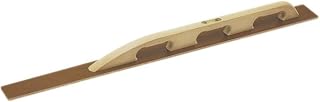
- Blade: laminated canvas-resin, tapered, 45 inches long
- Fitting: level vial built into the darby
- Retailer code: T25897 on the Lewis Contractor Sales listing
The laminated canvas-resin tapered darby pairs a 45 inch tapered blade with a built-in level vial, so the plasterer can level a coat and read its level without swapping tools. The laminated canvas-resin blade is a layered construction that stays stiff across its length while resisting the moisture of fresh render, and the taper gives the working edge a fine line for cutting high spots. The level vial sits where the plasterer can read it during the stroke, which turns the darby into a checking tool as well as a leveling tool: a pass that looks flat can still be out of level, and the vial shows that before the coat sets. The maker lists this darby with the level vial as part of the tool, and the 45 inch size suits open walls where a long blade earns its keep.
A level vial is the feature that makes this darby a straightness checker rather than just a leveler. Held against a stucco wall, the blade reads the flatness of the surface while the vial reads the level of the blade itself, so the plasterer gets two readings from one placement: whether the wall is flat and whether the reference line is true. The 45 inch laminated blade spans a wide section of stucco, and the canvas-resin construction keeps the blade from taking on moisture and changing shape during a long checking session. For a plasterer who checks stucco straightness wall by wall, this is the most direct tool in the list.
Pros: Built-in level vial reads the plane during the stroke; Laminated canvas-resin blade resists moisture; 45 in length spans open wall sections; Tapered edge cuts high spots cleanly.
Cons: Vial needs care to avoid damage on site; Laminated blade is heavier than plain magnesium; 45 in length is long for tight spaces.
Kraft Tool Orange Thunder 36 in Tapered Concrete Darby

- Blade: tapered, 36 inches long, KO-20 technology
- Retailer code: T25209 on the Lewis Contractor Sales listing
- Use: darby for leveling and straightening plaster and render
The Orange Thunder tapered darby at 36 inches uses the maker KO-20 blade technology in the size that suits medium wall sections. The taper gives the blade a fine working edge that reads a stucco surface cleanly, and the 36 inch length is long enough to span a hollow or a bow while staying easy to hold flat against a vertical wall with one hand. A longer blade reads a longer span, but it is harder to hold steady, and the 36 inch size is the balance point: it covers a useful section of wall without tiring the arm that holds it. The KO-20 construction keeps the blade stiff across its length, so the reading the plasterer takes from the wall is a reading of the wall rather than a reading of a blade that has bent under its own weight.
For checking straightness on stucco, the 36 inch tapered darby is the tool for the sections between the long straight edge passes. The six foot BuckEye reads the whole wall, and this 36 inch darby reads the detail: the area around a window, the run beside a door, the patch where the stucco meets an old section. The tapered edge sits cleanly against the surface, and the KO-20 blade holds its line, so a small hollow shows up as a clear gap under the blade. It is the checking tool for the places where a six foot straight edge cannot fit.
Pros: 36 in length suits medium stucco sections; KO-20 construction holds a straight edge; Tapered edge reads the surface cleanly; Easy to hold flat with one hand.
Cons: 36 in length is short for reading long bows; No level vial built into the blade; Tapered edge needs care on soft stucco.
Kraft Tool Hand and Curb Concrete Darby Magnesium 36 in x 3-1/4 in with Knob Handle
- Blade: magnesium, 36 x 3-1/4 inches, hand and curb pattern
- Handle: knob handle for a firm two-hand grip
- Retailer code: T18433 on the Lewis Contractor Sales listing
The magnesium hand and curb darby with a knob handle is built for control. The 36 by 3-1/4 inch magnesium blade is light for its size, and the knob handle gives the plasterer a firm grip point that keeps the blade steady when it is held against a wall. The hand and curb pattern puts the hands close to the working edge, so the plasterer can feel the blade sitting on the surface and can tell by touch when it rocks on a high spot. Magnesium resists the moisture of fresh stucco and stays light through a long checking session, and the knob handle is the feature that keeps the grip firm when the hands are wet with plaster. The maker lists this darby with the knob handle as a distinct model, and the handle is what sets it apart from the plain version of the same blade.
A straightness check is only as good as the grip that holds the blade flat, and the knob handle on this darby is the reason it checks well. Held against a stucco wall, the blade has to stay pressed flat while the plasterer reads the gaps, and a handle that slips or turns lets the blade rock and ruins the reading. The knob gives the hand a solid purchase, so the blade stays put while the other hand marks the high spots, and the magnesium blade is light enough to hold at shoulder height without the arm shaking. For checking stucco around openings and corners, where the blade has to be held at awkward angles, this is the most controllable tool in the list.
Pros: Knob handle gives a firm grip for vertical readings; Magnesium blade is light at shoulder height; Hand and curb pattern puts hands close to the edge; 3-1/4 in width gives the blade body.
Cons: 36 in length is short for wide wall sections; Knob handle adds bulk to the tool; No level vial built into the blade.
Kraft Tool Magnesium 28 in Countertop Darby
- Blade: magnesium, 28 inches long, countertop size
- Retailer code: T26256 on the Lewis Contractor Sales listing
- Use: darby for leveling and straightening plaster and render
The magnesium countertop darby at 28 inches is the shortest magnesium blade in this guide, and its size suits the small areas of a stucco wall where a long straight edge cannot fit. Magnesium keeps the blade light for its length, so it is easy to hold flat against a vertical surface with one hand, and the metal holds a straight edge through repeated use on gritty stucco. At 28 inches the blade spans a small section of wall with room to spare, so it reads the local flatness around a patch, beside a window or along a short return, and it fits the spaces where a longer blade would hit an obstruction. The maker lists this darby as a countertop size tool, and that compact size is what makes it the detail checker in this list.
For checking straightness, the 28 inch magnesium countertop darby is the tool for the small areas that the long straight edges cannot reach. Around a patch, beside a window frame or along a short return, the wall still has to be flat, and this darby reads those sections with a stiff magnesium edge that does not flex under hand pressure. The short length keeps the blade easy to control at awkward angles, and the light body means the plasterer can hold it steady with one hand while marking the high spots with the other. It is the checking tool for the detail work that finishes the job after the long straight edge has read the broad wall.
Pros: 28 in length fits small areas and tight spaces; Magnesium blade is light and easy to hold flat; Stiff edge reads local flatness cleanly; Suits detail checks around patches and openings.
Cons: 28 in length cannot read a long bow; No level vial built into the blade; Short blade needs many placements on a wide wall.
Kraft Tool Wiskey Stick 60 in Concrete Screed Float Straightedge
- Blade: screed float straightedge, 60 inches long
- Retailer code: T26568 on the Lewis Contractor Sales listing
- Use: screed float straightedge for leveling and straightening
The Wiskey Stick is a 60 inch screed float straightedge, and its length is its main quality. Five feet of straight edge spans a wide section of stucco wall in one placement, so the plasterer can read the surface across a distance that a shorter blade would have to measure in pieces. The screed float form gives the tool a flat face that sits cleanly against the wall, and the length means a gradual bow shows up as a clear gap rather than as a series of small readings that are hard to join together. The maker lists this straightedge at 60 inches, and that size suits open stucco walls where the checking has to cover a lot of ground quickly. It is a simple tool with one job: to be straighter than the wall it measures.
A 60 inch straightedge reads a stucco wall the way the wall was built: in long runs. Held against the surface, it shows the bow across a full bay, and the plasterer can see at a glance whether the wall needs a thin skim or a heavier correction. The screed float face sits flat against the stucco without rocking on small bumps, so the reading is of the wall plane rather than of the texture, and the length keeps the tool steady in the hands. For a plasterer checking a large stucco wall face before the finish coat, this is the fastest way to read the whole surface.
Pros: 60 in edge reads wide stucco walls in one placement; Flat screed face sits cleanly against the wall; Length shows a gradual bow clearly; Simple tool with a single clear job.
Cons: 60 in length is hard to hold flat with one hand; No level vial built into the tool; Longest straightedge in this guide to transport.
Kraft Tool Plaster and Stucco 30 in Blue Steel Darby
- Blade: blue steel plaster and stucco darby, 30 inches long
- Use: darby for leveling plaster and stucco coats
- Build: blue steel blade for a stiff, durable edge
The blue steel plaster and stucco darby at 30 inches is the shortest blade in this guide, and its size is its strength. Blue steel is a stiff blade material that holds a straight edge through heavy use, and the 30 inch length fits the tight spaces where a long straight edge cannot go: the return beside a door, the strip above a window, the short run at the end of a wall. A short blade cannot read a long bow, but it can read the local flatness of the surface it covers, and that local reading is what decides whether a small area is ready for the finish coat. The maker lists this darby in the plaster and stucco range, and the blue steel blade marks it as a tool for the coat itself rather than for rough concrete work.
For checking straightness, the 30 inch blue steel darby is the tool for the places the long straight edges cannot reach. Around openings and in corners, the wall has to be flat in short sections even when the long runs are true, and this darby reads those sections with a stiff blue steel edge that does not flex under hand pressure. The short length keeps the blade easy to control at awkward angles, and the steel edge gives a clean reading against the stucco surface. It is the checking tool for the last ten percent of the wall, where the finish coat will show every small hollow.
Pros: 30 in length fits tight spaces around openings; Blue steel blade holds a stiff straight edge; Short length is easy to control at awkward angles; Suits the last detail checks on a wall.
Cons: 30 in length cannot read a long bow; No level vial built into the blade; Short blade needs many placements on a wide wall.
Buying guide
Start with the longest blade that fits the section. A straightness check reads the wall across the length of the blade, and a short blade hides a gradual bow because it follows the curve in short pieces. A six foot straight edge reads a full section between two natural breaks, a 60 inch straightedge reads a wide wall in one placement, and a 45 inch blade reads a medium section. Match the blade to the wall: use the longest tool that fits the section, and drop to a shorter blade only where the long one cannot go. A reading taken with a blade that is too short is a reading that can miss the very error the check is meant to catch.
Hold the blade flat and read the light. Press the edge of the blade against the stucco and look for the gaps of light between the blade and the wall: a gap in the middle means a hollow, a gap at the ends means a high spot in the middle, and no gap at all means the section is true. Rock the blade gently to find the high spots, and mark them with chalk so the correction can be made while the reading is still fresh. Check the wall in both directions, horizontal and vertical, because a wall can be true in one direction and bowed in the other, and the finish coat will show the bow in whichever direction it runs.
Use the level vial to check the blade as well as the wall. A reading is only honest if the blade itself is level while it is held against the wall, and the vial shows that at a glance. Two tools in this guide carry a vial built into the blade, and they suit plasterers who want the level reading without a separate tool. Hold the blade against the wall, read the vial, and then read the gaps: if the vial is off centre, the blade is tilted and the gaps mean nothing, so level the blade first and read second. A straight edge that is held out of level gives a reading of its own tilt rather than a reading of the wall.
Mind the grip when the blade is held vertically. Checking a wall means holding a long blade flat against a vertical surface, often at shoulder height, and the grip has to keep the blade steady while the other hand marks the high spots. A knob handle gives the leading hand a solid purchase, a hand and curb pattern puts the hands close to the blade, and a light magnesium blade keeps the arm from shaking through a long checking session. If the blade feels heavy before the check starts, it will be harder to hold steady after ten minutes, so choose the lightest blade that is long enough for the section.
Check the blade itself before trusting it. A straightedge is only useful if it is straighter than the wall it measures, so sight along the edge of the blade before each session and set aside any blade that shows a bow or a twist. A blade that has been knocked or stored badly can take a bend that is invisible until it is held against a true surface, and a bent blade gives a reading of its own shape rather than a reading of the wall. Store the tool flat or hung by its handles, keep it where it cannot be knocked, and check it against a known flat surface from time to time.
Record what the check finds before correcting it. Mark the high spots with chalk and note the depth of the hollows, then decide whether the wall needs a thin skim or a heavier correction. A hollow of a few millimetres takes a skim coat, while a deeper hollow needs a dubbing out coat before the finish goes on. Correct the high spots by cutting them down while the base is still workable, and fill the hollows before the finish coat is mixed. A check that is not recorded is a check that has to be done twice, so mark the wall as you go and work from the marks.
FAQ
How long should a straightedge be for checking stucco?
The straightedge should be as long as the section being checked, and for most stucco walls that means a six foot blade or a 60 inch straightedge. A long blade reads the wall across a full section and shows a gradual bow as a clear gap, while a short blade reads the wall in pieces and can hide the bow. Use a shorter blade only where the long one cannot fit, such as beside a window or in a corner, and check those areas with a 30 or 36 inch blade.
What does the level vial do on a checking straightedge?
The level vial shows whether the blade itself is level while it is held against the wall. A reading is only honest if the blade is sitting true, and a blade held out of level gives a reading of its own tilt rather than a reading of the wall. Read the vial first, level the blade, and then read the gaps of light under the edge. Two tools in this guide carry a vial built into the blade, so the level and the flatness can be read in one placement.
How do I read the gaps under a straightedge?
Press the edge of the blade flat against the stucco and look for light showing between the blade and the wall. A gap in the middle means a hollow, a gap at the ends means a high spot in the middle, and no gap means the section is true. Rock the blade gently to find the high spots, mark them with chalk, and check the wall in both directions, because a wall can be true horizontally and bowed vertically.
Can a short darby check straightness well?
A short darby checks the local flatness of the section it covers, and that is useful around openings, in corners and on short returns where a long straight edge cannot fit. A 30 inch blue steel darby or a 36 inch magnesium darby reads those areas with a stiff edge that does not flex under hand pressure. A short blade cannot read a long bow, so use it for detail work after the long straight edge has read the whole wall.
How often should I check the straightedge itself?
Sight along the edge of the blade before each checking session, and check it against a known flat surface from time to time. A blade that has been knocked or stored badly can take a bow that is invisible until it is held against a true surface, and a bent blade gives a false reading. Store the tool flat or hung by its handles, and set aside any blade that shows a bow or a twist.
Conclusion
Checking straightness on stucco walls comes down to three choices: a blade long enough to read the section, true enough to give an honest reading, and light enough to hold flat while the reading is taken. The BuckEye Concrete Straight Edge One Man Darby and Screed 6 ft x 1.5 in with Level Vial leads this guide because it answers all three points in one tool, and the other six tools cover the variations a plasterer meets on site: a second vial tool in a shorter length, a tapered blade for detail sections, a knob handle for a firm vertical grip, a wedge blade for short runs, a 60 inch straightedge for wide walls, and a short blue steel darby for tight spaces. Check the longest sections first, read the light under the blade, and mark what you find before the finish coat goes on. A wall that has been checked properly takes a finish coat that stays flat, and a flat finish is the result the whole job is judged by.
Related guides
More from Amazon
Programs that pair well with the guide above. Offers and eligibility are set by Amazon and may change.
Free shipping on eligible items, Prime Video and more. Eligible new members can start with a free trial.
Start a Prime free trialAudiobooks and podcasts to listen to on the go. Eligible new members can start with a free trial.
Try Audible freeAd-free music streaming. Eligible new subscribers can start with a free trial.
Try Music Unlimited freeA free business account with business pricing and bulk-buying tools for work, shop or home office.
Create a business accountAs an Amazon Associate we earn from qualifying purchases.
More ways to save on your next finish
Programs that pair well with the guide above. Offers and eligibility are set by Amazon and may change.
A free business account with business pricing and bulk-buying tools for work, shop or home office.
Create a business accountFast, free shipping on eligible items, plus Prime Video and more. Eligible new members can start with a free trial.
Start a Prime free trialRead from a huge library of eBooks, including how-to guides and cookbooks. Eligible new members can start with a free trial.
Try Kindle UnlimitedAudiobooks and podcasts for the commute, the garage or the kitchen. Eligible new members can start with a free trial.
Try Audible freeAs an Amazon Associate we earn from qualifying purchases. Using these links costs you nothing extra.










Write Your Review
No reviews yet. Be the first to share your experience!