
Key takeaways
- Scraping loose paint near plaster repairs strains hands fast. Compare seven stainless steel taping knives with soft, comfortable grips made for long sessions.
What's inside
As an Amazon Associate I earn from qualifying purchases. This post may contain affiliate links at no extra cost to you.
Scraping loose paint from the edge of a plaster repair is the kind of job that looks small until your hand starts to ache. The paint comes off in flakes and curls, the plaster underneath is uneven, and every pass asks the knife to do two things at once: bite hard enough to lift the paint and stay flat enough not to gouge the repair. A handle that feels fine for five minutes can turn into a source of blisters and cramp after half an hour of steady work, which is why grip comfort matters as much as blade quality here. The best stainless steel taping knives with comfortable grips for scraping loose paint near plaster repairs pair a rust-resistant stainless blade with a handle shaped to spread pressure across the palm, so the hand stays relaxed while the edge does the work. Stainless steel earns its place in this job because paint scraping is wet, dusty work. The blade meets damp plaster, old paint, and wash water in the same session, and a carbon steel blade left damp will show rust spots that can stain a fresh repair. A stainless blade wipes clean, keeps a straight edge, and stays ready for the next coat of filler. This guide compares seven stainless steel taping knives chosen for their grips first and their scraping ability second, covering full soft-grip handles, DuraSoft handles, Sure Grip handles, and glass-reinforced nylon handles, in widths from four inches to twelve inches. Each knife below was picked because the maker lists a stainless steel blade and a handle designed for long, comfortable use, and each one suits a slightly different hand size, repair size, and scraping style.
Quick verdict
If you want one knife for scraping loose paint around plaster repairs without sore hands, pick the USG Sheetrock Matrix Stainless Steel Taping Knife. The maker lists a full soft-grip handle, a tapered neck for control, and an enlarged hammer cap, and the slightly heavier back end keeps the tool balanced while you work a long edge. The stainless blades run from six to fourteen inches, so you can choose a six-inch blade for tight patches or a wider blade for broad runs of flaking paint. For a lighter, more flexible option, the Warner Stainless Steel Taping Knife SSTK10 gives you a ten-inch flexible blade with a soft grip handle made from polypropylene and soft TPE, plus an aluminum back plate that keeps the blade straight across its span. The blade flares at the edges to reach into corners, which helps when loose paint collects where a wall meets trim. The Marshalltown DuraSoft II Stainless Steel Taping Knife is the pick for anyone who scrapes for hours at a time, because the maker lists a resilient DuraSoft handle that provides a soft feel and reduces fatigue, paired with a tempered premium stainless blade that flexes for feathering without taking a set. Budget-minded readers should look at the Goldblatt Pro Series 6-Inch Stiff Joint Knife, a compact six-inch knife with a soft-grip handle, a hammer end, and a tempered blade stiff enough to lift stubborn paint. The remaining three knives cover the gaps: the Kraft Tool DW733PF for a sure grip in a six-inch all-stainless body, the LEVEL5 10-Inch Stainless Steel Taping Knife for a light ten-inch blade with a metal hammer end, and the Warner ProGrip 10916 for a small six-inch knife that reaches into corners. Buy the Matrix first if grip comfort is your main concern, and add a six-inch knife from this list for detail work around small repairs.
| Product | Key spec | Best for |
|---|---|---|
| USG Sheetrock Matrix Stainless Steel Taping Knife | Stainless blades 6 to 14 in; full soft-grip handle; enlarged hammer cap | Long scraping sessions with least hand fatigue |
| Warner Stainless Steel Taping Knife SSTK10 | 10 in flexible stainless blade; soft grip handle; aluminum back plate | Wide, flexible scraping and feathering |
| Marshalltown DuraSoft II Stainless Steel Taping Knife 4508SD | Tempered stainless blade; DuraSoft handle; sizes 6 to 14 in | All-day comfort with a tempered blade |
| Goldblatt Pro Series 6-Inch Stiff Joint Knife | 6 in stainless blade; soft-grip handle; hammer end | Compact stiff scraping on small repairs |
| Kraft Tool DW733PF All Stainless Steel Joint Knife | 6 in all stainless steel; Sure Grip handle | Secure grip on detail scraping |
| LEVEL5 10-Inch Stainless Steel Taping Knife | 10 in stainless blade; soft grip handle; alloy hammer end | Light ten-inch blade for broad paint runs |
| Warner ProGrip Stainless Steel Taping Knife 10916 | 6 in stainless blade; soft-grip handle; flared blade | Corners and tight spots near trim |
How we chose
Comfort was the first filter. Every knife in this guide has a handle the maker describes as a soft grip, a DuraSoft handle, a Sure Grip handle, or a rubberized grip, because a hard, slick handle is the fastest route to a sore hand when you are scraping paint flake by flake. The second filter was the blade. All seven knives have stainless steel blades, which the makers list as rust resistant, so the tools survive wash water and damp plaster without spotting. Blade width was the third filter. Scraping loose paint near a repair calls for widths between four and twelve inches: narrow blades for detail work around small patches, wide blades for broad runs of peeling paint. Flex mattered too. A stiff blade lifts paint that is still holding on, while a flexible blade follows the wall and feathers filler afterward, so the list mixes stiff six-inch knives with flexible ten-inch and twelve-inch blades. Hammer ends earned a mention wherever the maker lists one, because setting a proud nail before scraping saves a second trip to the toolbox. Finally, each knife had to suit the repair context: plaster is softer than drywall in places and harder in others, so the edge needs to cut paint without digging into the plaster beneath. The seven knives below meet those tests in different ways, and the sections that follow explain where each one shines and where it falls short.
USG Sheetrock Matrix Stainless Steel Taping Knife

- Stainless steel blades from 6 to 14 inches
- Full soft-grip handle for long sessions
- Tapered neck for precise control
- Enlarged hammer cap for setting nails
- Slightly heavier back end for balance
- Contoured grip shaped for comfort
The USG Sheetrock Matrix is the lead pick in this guide because its handle is built around comfort from end to end. The maker lists a full soft-grip handle, which means the grip material wraps the whole handle rather than appearing as a small insert, so the palm meets soft material at every point of contact. The tapered neck narrows between the handle and the blade, and that shape lets the fingers guide the edge with small movements instead of wrestling the whole tool. Balance matters during scraping because the hand repeats the same push-and-lift motion hundreds of times, and the Matrix carries a slightly heavier back end that keeps the tool level in the hand. The enlarged hammer cap at the end of the handle sets proud nails and fasteners without a separate hammer, which is handy when a nail head is the reason the paint failed in the first place. Stainless blades from six to fourteen inches cover the full range of repair work: a six-inch blade for a small patch beside a door frame, a ten-inch blade for a long run of peeling paint, and a fourteen-inch blade for broad feathering after the filler goes on. The contoured grip feels solid and secure, and the maker notes that finishers describe it as extremely comfortable during long days. For plaster repairs, the Matrix works well because the stainless blade resists rust from damp plaster and wash water, and the controlled flex of the wider blades smooths filler without leaving ridges.
Pros: Full soft-grip handle covers the whole palm; enlarged hammer cap sets nails; balanced weight reduces wrist strain; wide range of stainless blade sizes.
Cons: Heavier back end may feel unfamiliar at first; wide blades need a larger mud pan for loading.
Warner Stainless Steel Taping Knife SSTK10
- 10-inch flexible stainless steel blade
- Ergonomic soft grip handle of polypropylene and soft TPE
- Aluminum back plate keeps the blade straight
- Rust-resistant blade
- Blade flares at the edges to reach into corners
- Handle secured to the blade with two rivets
The Warner SSTK10 is a ten-inch knife built for the finishing pass as much as for scraping. The maker lists a flexible stainless steel blade, and that flex is what lets the edge follow a slightly wavy plaster surface instead of bridging across the high spots and leaving paint behind in the hollows. The soft grip handle combines polypropylene with soft TPE, a pairing that gives structure to the handle while keeping the surface kind to the palm. An aluminum back plate runs behind the blade and holds it straight across ten inches, so pressure spreads evenly and the corners of the blade do not dig in. The blade flares out at the edges, a small detail that helps the knife reach into corners where loose paint gathers along trim and ceiling lines. Two rivets secure the handle to the blade, which keeps the assembly tight through repeated scraping. At ten inches wide, this knife covers a broad run of peeling paint in fewer passes than a six-inch knife, and the flexible edge feathers the final coat of compound out to a thin, flat finish. It suits readers who want one knife that scrapes, fills, and feathers, and who prefer a lighter tool that does not tire the wrist.
Pros: Flexible ten-inch blade follows wall contours; flared edges reach corners; aluminum back plate keeps the blade straight; soft TPE grip is kind to hands.
Cons: Ten-inch width is awkward in very tight spots; flexible blade is less forceful on paint that is still firmly bonded.
Marshalltown DuraSoft II Stainless Steel Taping Knife 4508SD
- Tempered premium stainless steel blade with aluminum backing plate
- Sizes from 6 to 14 inches
- Blade flexes for feathering without taking a set
- Resilient DuraSoft handle with a soft feel
- Made in the USA with global materials
- Sold individually
The Marshalltown DuraSoft II earns its place through a handle that the maker designed specifically to reduce fatigue. The DuraSoft handle has a resilient feel that cushions the palm during repeated scraping strokes, and the maker lists excellent durability alongside that comfort, so the grip does not go soft or loose after months of use. The blade is tempered premium stainless steel riveted to an aluminum backing plate, a combination that gives the edge enough flex to feather compound while holding its shape across the width. The maker notes that the blade flexes just right for feathering but will not take a set, which means it returns to flat after bending instead of keeping a curve that would leave ridges. Sizes run from six to fourteen inches, so the same handle design is available in a compact six-inch scraper and a wide fourteen-inch finishing blade. The eight-inch size, model 4508SD, sits in the middle and works well for both scraping a run of loose paint and smoothing the filler that follows. Made in the USA with global materials, this knife suits readers who scrape for hours and want a handle that stays comfortable from the first pass to the last.
Pros: DuraSoft handle reduces fatigue over long sessions; tempered blade returns to flat; five sizes cover scraping through finishing; aluminum backing plate adds rigidity.
Cons: Shorter handle version may feel small in very large hands; six-inch size covers ground slowly on broad peeling areas.
Goldblatt Pro Series 6-Inch Stiff Joint Knife
- 6-inch stainless steel blade
- Mirror-polished finish resists rust
- Soft-grip handle
- Hammer end for setting nails
- Hang hole for storage
- Tempered blade with stiff flex
The Goldblatt Pro Series 6-Inch Stiff Joint Knife is the compact scraper in this guide, and its stiffness is the point. The maker lists a tempered blade tuned to a stiffness that holds firm when you push hard, which is exactly what lifting paint that is still gripping the plaster demands. A flexible blade bends away from stubborn paint; this one stays flat and transfers force to the edge. The six-inch width suits small repairs, patches beside trim, and spots where a wide blade cannot fit. The soft-grip handle keeps the hand comfortable during detail work, and the hammer end sets nails that sit proud of the surface. A hang hole at the end of the handle makes storage simple on a pegboard or hook. The mirror-polished stainless blade resists rust and wipes clean after a session with damp plaster, and the smooth finish helps compound slide off the blade instead of sticking. The retailer page lists this knife at a single-figure amount, which makes it an easy addition to a toolbox that already holds wider finishing knives. For readers who need one small, stiff, comfortable knife for scraping paint around repairs, this is the most direct pick on the list.
Pros: Stiff blade lifts stubborn paint; compact six-inch size fits tight spots; soft grip and hammer end add comfort and function; low listed amount.
Cons: Six-inch width covers ground slowly on broad peeling areas; stiff blade is less forgiving when feathering filler.
Kraft Tool DW733PF All Stainless Steel Joint Knife
- 6-inch all stainless steel joint knife
- Sure Grip handle
- Compact size for detail work
- See product page for full specifications
The Kraft Tool DW733PF is a six-inch all-stainless joint knife with a Sure Grip handle, and its compact size is what makes it useful around plaster repairs. Six inches is wide enough to scrape a run of loose paint in a few passes, yet narrow enough to work beside trim, inside a small patch, or along the edge of a repair without touching sound paint nearby. The all-stainless construction means the blade and the metal parts of the tool share the same rust-resistant material, so wash water and damp plaster do not leave spots that could mark a fresh coat. The Sure Grip handle is the feature the maker names for comfort: it is shaped to stay secure in the hand even when the handle is dusty or damp with compound, which matters during scraping because the hand works hard and the grip is the only link between the hand and the edge. A six-inch blade also gives good feedback. You can feel where the paint releases and where it still holds, and that feedback helps you stop before the edge digs into the plaster beneath. This knife suits readers who want a small, sturdy, comfortable tool for the detail stage of a repair, after a wider knife has cleared the broad areas. It also works well as a second knife kept beside a ten-inch or twelve-inch finishing blade, so the right width is always within reach.
Pros: Sure Grip handle stays secure when dusty or damp; six-inch width suits detail work; all-stainless body resists rust; compact size stores easily.
Cons: Full specifications are sparse on the product page; six-inch width is slow on large peeling areas.
LEVEL5 10-Inch Stainless Steel Taping Knife
- 10-inch stainless steel blade
- Precise flex for smooth finishing
- Glass-reinforced nylon soft grip handle
- Alloy hammer end
- Blade corners knocked off at the factory
- Lightweight at 9.17 ounces
The LEVEL5 10-Inch Stainless Steel Taping Knife brings a light ten-inch blade to a job where weight matters. At 9.17 ounces, it is easy to hold overhead while scraping paint from a ceiling edge or the top of a wall, and the glass-reinforced nylon handle keeps the grip light without feeling flimsy. The maker lists a soft grip handle with an alloy hammer end, so the tool sets nails and stays comfortable during long sessions. The blade corners are knocked off at the factory, a small detail with a real effect: sharp square corners leave track marks in wet compound, and pre-broken corners reduce that risk when you feather filler after scraping. The ten-inch width is a useful middle ground for paint scraping. It is wide enough to clear a broad run of peeling paint in steady passes, yet narrow enough to control with one hand and to load from a standard mud pan. The precise flex of the stainless blade helps here too, because the edge follows the plaster surface and lifts paint without gouging the soft spots. For readers who want a light, well-balanced ten-inch knife that moves from scraping to feathering without a tool change, this LEVEL5 is a strong choice, and the hammer end adds function that a plain handle lacks.
Pros: Lightweight body suits overhead work; factory-knocked corners reduce track marks; alloy hammer end sets nails; precise flex follows plaster contours.
Cons: Ten-inch width needs a wide mud pan; glass-reinforced nylon handle may feel less warm in the hand than a rubberized grip.
Warner ProGrip Stainless Steel Taping Knife 10916
- 6-inch stainless steel blade
- Soft-grip handle
- Aluminum backing supports the cutting edge
- Flared blade shape reaches into corners
- Lightweight and ergonomic design
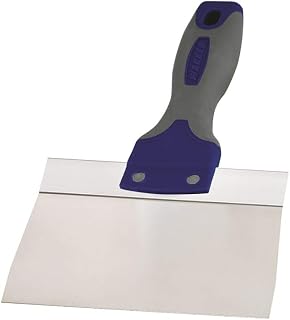
The Warner ProGrip 10916 is the small knife in this guide that earns its place through its flared blade. The maker lists a six-inch stainless steel blade with an aluminum backing that supports the cutting edge without bending, and the blade flares outward at the edges so it can reach into corners where paint peels first. That flare matters near plaster repairs, because loose paint often starts where a wall meets a ceiling or a door frame, and a straight-edged knife cannot reach into the angle without twisting. The soft-grip handle is designed for comfort during long periods of use, and the maker notes that the handle is soft enough for a comfortable grip but strong enough to hold the knife in any position. Being lightweight and ergonomic, the knife allows hours of use without tiring the hand, which is the core promise of this guide. The six-inch width is the right size for bedding tape, filling fastener holes, and scraping paint from small patches, and the stainless blade resists rust from wash water and damp plaster. This knife suits readers with smaller hands, or anyone who wants a nimble six-inch tool for corners and detail scraping while a wider knife handles the open wall.
Pros: Flared blade reaches into corners; aluminum backing keeps the edge from bending; lightweight ergonomic body; soft grip stays comfortable for hours.
Cons: Six-inch width is slow on broad areas; small handle may feel cramped in very large hands.
Buying guide
Start with the grip, because the grip is what your hand lives with. Hold the knife the way you will use it, with the blade flat against the wall and the wrist straight, and notice where pressure lands. A full soft-grip handle spreads pressure across the palm, while a hard plastic handle concentrates it in one spot and causes soreness over time. DuraSoft handles, Sure Grip handles, and rubberized grips all serve the same purpose: a slightly soft, textured surface that stays secure when the hand is dusty or damp. If you have large hands, look for a longer handle with a hammer end, because the extra length gives leverage and the hammer end sets nails. If you have small hands, a compact six-inch knife with a short handle will feel more controllable than a wide fourteen-inch blade. Try the grip with a work glove on if you usually wear one, because a handle that feels fine bare can feel slippery or bulky through a glove.
Blade width decides how fast the job goes. A four-inch or six-inch blade suits small patches, tight corners, and detail scraping beside trim. An eight-inch or ten-inch blade suits broad runs of peeling paint and the first coat of filler. A twelve-inch or fourteen-inch blade suits feathering and skim work across a whole wall. Most plaster repair work is done with two knives: a six-inch knife for scraping and detail, and a ten-inch or twelve-inch knife for feathering. Buying a set that covers several widths costs more up front but saves time, because you stop reaching for the wrong width. The knives in this guide run from six to fourteen inches, and the sets in the wider family cover the same range in one purchase.
Flex is the next decision. A stiff blade transfers force directly to the edge, which lifts paint that is still bonded and packs filler into voids. A flexible blade bends slightly under pressure, which lets the edge follow a wavy plaster surface and feather filler to a thin edge. Stainless blades tend to be stiffer than blue steel or carbon steel blades of the same width, which is good for scraping but means you should choose a wider blade when you want flex for feathering. A ten-inch stainless blade flexes more than a six-inch stainless blade, so width and flex work together. If you can only buy one knife, pick a six-inch stiff blade for scraping and accept that feathering will take more passes, or pick a ten-inch flexible blade and accept that stubborn paint will need a second tool.
Rust resistance is why stainless steel is the right material here. Paint scraping is wet work: the blade meets damp plaster, wash water, and old paint in the same session. Stainless steel resists rust from that exposure, while carbon steel and blue steel need drying and oiling after every use. Even stainless benefits from a quick wipe after the job, because dried compound on the edge leaves lines in the next coat. Rinse the blade in clean water, wipe it dry with a rag, and store the knife with the blade edge protected. A hang hole helps here, keeping the knife off a damp bench and away from other tools that could nick the edge.
The hammer end deserves attention. Loose paint often starts at a nail or screw that has worked proud of the surface, and a knife with a metal hammer end lets you set the fastener, scrape the paint, and fill the hole without putting the knife down. Check that the hammer end is metal, not plastic, and that it sits square at the end of the handle so taps land flat. A larger hammer cap, like the enlarged cap on the USG Matrix, handles harder strikes, while a standard cap suits light setting work.
Technique matters as much as the tool. Scrape with the blade nearly flat to the wall, at a low angle, so the edge slides under the paint instead of digging into the plaster. Work from sound paint toward the loose area, not the other way around, so you do not lift paint that is still bonded. Let the weight of the knife and the sharpness of the edge do the work; pressing hard causes gouges and tired hands. When the paint stops coming off easily, stop scraping and switch to sanding or a chemical stripper made for the job, because forcing the blade will damage the plaster underneath. After scraping, brush the dust off, wipe the area with a damp cloth, and let it dry before applying filler. A clean, sound surface is what makes the filler bond and the paint stay put next time.
Storage and care close the loop. Keep taping knives in a dry place with the blades protected, either hanging by their hang holes or laid flat in a toolbox with the edges covered. Check the edge before each use by running a fingertip lightly across it, feeling for nicks or dried compound, and clean the blade before it goes back on the wall. A knife that is cleaned after every session will keep its edge and its rust resistance for years, while a knife left dirty in a bucket will pit and scratch. Replace a knife when the blade takes a permanent bend or the handle loosens, because a bent blade leaves ridges that no amount of sanding will fully hide.
FAQ
What width of taping knife is best for scraping loose paint near plaster repairs?
A six-inch blade is the most useful single width for scraping paint around plaster repairs, because it fits beside trim, works inside small patches, and still clears a fair area in each pass. A ten-inch blade covers broad runs of peeling paint faster but is harder to control in tight spots. Most repair work goes faster with two knives: a six-inch stiff blade for scraping and a ten-inch flexible blade for feathering filler afterward. Choose the narrow blade when the repair is small and the wide blade when the peeling covers a large area.
Do stainless steel blades really resist rust?
Stainless steel blades resist rust far better than carbon steel or blue steel blades, which is why they suit wet work like paint scraping and plaster repair. The maker lists stainless blades as rust resistant, and they survive wash water and damp plaster without spotting when wiped after use. No steel is fully immune to corrosion, so rinse the blade in clean water and wipe it dry after each session. Dried compound left on the edge can trap moisture and cause pitting over time, so cleaning matters even for stainless.
Why does grip comfort matter so much for scraping?
Scraping loose paint repeats the same push-and-lift motion hundreds of times, and a hard or slick handle concentrates pressure in one spot on the palm. A soft-grip handle spreads that pressure, reduces vibration, and keeps the hand relaxed, which means steadier control and fewer mistakes. Comfort also matters for safety: a tired hand grips harder, slips more easily, and is more likely to gouge the plaster. A handle shaped for comfort, like a full soft grip or a DuraSoft handle, pays for itself in the first long session.
Can one knife handle both scraping paint and feathering filler?
One knife can do both jobs, but it will do one of them better than the other. A stiff six-inch blade scrapes well and fills voids, but feathers slowly. A flexible ten-inch blade feathers beautifully and scrapes broad areas, but bends away from stubborn paint. If you can buy two knives, pair a stiff six-inch scraper with a flexible ten-inch finisher. If you can buy only one, choose a ten-inch flexible blade and keep a small stiff scraper for the spots where paint holds on.
How do I clean a taping knife after scraping paint?
Rinse the blade in clean water while the paint and compound are still wet, then wipe it dry with a clean rag. Use a nylon brush for dried compound, and avoid wire brushes that can scratch the stainless surface. Check the edge for nicks by running a fingertip lightly across it, and wipe a thin film of light oil on a carbon steel blade if you own one. Stainless blades need no oil, just a dry wipe. Store the knife hanging by its hang hole or flat with the edge protected.
Should I use a hammer end on a taping knife?
A hammer end is useful when a nail or screw sits proud of the surface and caused the paint to fail. One or two light taps set the fastener below the surface so you can fill over it. Use light taps only, because hard strikes can crack plaster around the fastener. If the fastener keeps moving, remove it and replace it rather than hammering it repeatedly. A knife without a hammer end works fine for scraping, but you will need a separate hammer for fasteners.
Conclusion
Scraping loose paint near a plaster repair is a small job that punishes a bad grip, and the knives in this guide were chosen to keep your hand comfortable while the stainless edge does the work. The USG Sheetrock Matrix leads the list because its full soft-grip handle, tapered neck, and enlarged hammer cap cover the whole job from scraping to setting nails, and its stainless blades run from six to fourteen inches. The Warner SSTK10 and the Marshalltown DuraSoft II offer flexible ten-inch and tempered eight-inch alternatives with soft grips of their own, while the Goldblatt Pro Series, the Kraft DW733PF, and the Warner ProGrip 10916 cover compact scraping in six-inch sizes. The LEVEL5 ten-inch knife adds a light, well-balanced option for broad runs. Pick the Matrix if comfort is your first concern, add a six-inch knife for detail work, and keep the blades clean and dry after every session. A comfortable grip, a rust-resistant stainless blade, and a light touch will leave the plaster sound and the paint ready to stay put.
Related guides
More from Amazon
Programs that pair well with the guide above. Offers and eligibility are set by Amazon and may change.
Free shipping on eligible items, Prime Video and more. Eligible new members can start with a free trial.
Start a Prime free trialAudiobooks and podcasts to listen to on the go. Eligible new members can start with a free trial.
Try Audible freeAd-free music streaming. Eligible new subscribers can start with a free trial.
Try Music Unlimited freeA free business account with business pricing and bulk-buying tools for work, shop or home office.
Create a business accountAs an Amazon Associate we earn from qualifying purchases.
More ways to save on your next finish
Programs that pair well with the guide above. Offers and eligibility are set by Amazon and may change.
A free business account with business pricing and bulk-buying tools for work, shop or home office.
Create a business accountFast, free shipping on eligible items, plus Prime Video and more. Eligible new members can start with a free trial.
Start a Prime free trialRead from a huge library of eBooks, including how-to guides and cookbooks. Eligible new members can start with a free trial.
Try Kindle UnlimitedAudiobooks and podcasts for the commute, the garage or the kitchen. Eligible new members can start with a free trial.
Try Audible freeAs an Amazon Associate we earn from qualifying purchases. Using these links costs you nothing extra.










Write Your Review
No reviews yet. Be the first to share your experience!