
Key takeaways
- Update textured plaster living room walls with interior limewash paint. Compare seven mineral paints made for drywall, plaster and textured indoor surfaces.
As an Amazon Associate I earn from qualifying purchases. This post may contain affiliate links at no extra cost to you.
A textured plaster living room wall is a surface with a strong opinion. The texture catches the light, throws small shadows across the room, and gives the wall a character that flat paint cannot match. The trouble starts when the wall needs updating, because most ordinary paints either flatten the texture with a thick plastic film or slide over the high points and leave the low points bare. An interior limewash paint takes a different approach: it is thin, mineral and brush-applied, so it follows the texture instead of hiding it, and it adds colour and movement while the plaster underneath keeps doing the visual work. For readers looking for best interior limewash paints for updating textured plaster living room walls with interior suitable formula, the key phrase is interior suitable, because not every limewash paint is made for indoor plaster. Some are made for bare exterior brick, some need bare masonry, and some are made for drywall only. The seven paints in this guide were chosen because their makers list interior use on plaster, drywall or textured mineral surfaces, and each one publishes the specification a reader needs to plan the job.
A living room is also a room that gets used every day, so the paint has to live with people, furniture, daylight and the occasional touch. That makes the choice of formula more important than the choice of colour. A paint that chalks off when brushed against, or that cannot be touched up without repainting a whole wall, will frustrate the reader within months. The paints below include formulas made for interior drywall with no primer, paints made only for interiors, and paints with a primer route for previously painted walls, so the reader can match the formula to the actual wall in the room rather than to a photograph of a wall in a catalogue.
Texture changes the way paint behaves. On a smooth wall, a brush glides and the paint spreads evenly. On a textured plaster wall, the brush has to work into the hollows and over the ridges, and the paint settles unevenly by design. That uneven settling is what creates the cloudy movement limewash is known for, but it also means the reader needs more paint than the coverage figure for a smooth wall suggests, and needs to work in smaller sections with a wet edge. The product sections below give the coverage figures each maker lists, and the buying guide explains how to adjust those figures for a textured surface.
Quick verdict
For most textured plaster living rooms, Romabio Velatura Mineralwash is the strongest choice. It is a mineral paint made for interior drywall and interior plaster, it needs no primer even over existing paint, and it creates the limewash look in two brush-applied coats. The first coat goes on undiluted in a cross-hatch pattern, the second coat is diluted by fifty to eighty percent with water, and the result is soft, cloud-like movement that suits a living room wall. The maker lists sizes of one litre and two and a half litres, with coverage of one hundred to one hundred forty square feet per litre for the first coat.
Readers who want a deeper, more saturated colour should look at James Alexander Modern Lime Paint. The maker describes it as a thicker, smoother lime paint with a deeper, more saturated matte finish than the traditional limewash in the same range, and it is listed as an interior-only paint, which fits a living room exactly. Readers who want a paint made only for interiors should also look at Porters Interno Lime Wash, which the maker lists as an interior-only lime coating with a very flat finish and a coverage figure of about eight square metres per litre.
Readers with a heavily textured wall should look at Kreidezeit Lime Paint Textured, a powder paint with a fine marble sand grain of half a millimetre that gives the surface a fine brush-on plaster character and fills small pores and fine cracks. Readers who want the widest colour choice should look at JH Wall Paints Lime Wall Paint, with ninety-one shades, or Vasari Lime Paint, with a thick mineral consistency that can be back-trowelled for a light texture. Tintural Cosi Lime Paint Classic Finish suits readers who want a small sample size and a near-natural formula with very low VOC content.
Comparison table
| Product | Key spec | Best for |
|---|---|---|
| Romabio Velatura Mineralwash | 1 L to 2.5 L; 2 coats, no primer; 100 to 140 sq ft per litre | Interior drywall and plaster |
| James Alexander Modern Lime Paint | Interior only; thicker, deeper matte finish | Saturated colour |
| JH Wall Paints Lime Wall Paint | 91 shades; quart to 3.5 gallon; minimum 2 coats | Wide colour choice |
| Porters Interno Lime Wash | Interior only; about 8 sq m per litre; very flat finish | Interior-only formula |
| Tintural Cosi Lime Paint Classic Finish | 97 percent natural; 125 g sample; 1 kg covers about 110 sq ft per coat | Small sampling |
| Vasari Lime Paint | 1 gallon covers 200 to 240 sq ft per coat; minimum 2 coats | Thick mineral texture |
| Kreidezeit Lime Paint Textured | Powder; 0.5 mm marble sand grain; usually opaque in 2 coats | Heavily textured walls |
How we chose
The seven paints in this guide were selected against the exact job in the keyword: updating textured plaster living room walls with an interior suitable formula. Each paint had to meet four conditions. First, the maker had to list interior use, and preferably interior use on plaster, drywall or a textured mineral surface, because a paint made only for exterior masonry would be the wrong product for a living room. Second, the maker had to publish a coverage figure or a container size that lets the reader plan how much paint the wall needs. Third, the paint had to be a genuine mineral limewash or lime paint, made from lime and mineral pigment rather than a latex paint with a limewash label. Fourth, the paint had to handle texture honestly: either by following the texture, as a thin limewash does, or by adding a fine texture of its own, as a textured lime paint does.
Specifications in this guide come from the maker pages and technical sheets listed in the sources file for this lot. Where a maker lists a range, the range is given as listed. Where a detail is not published, the article says so rather than guessing. Coverage figures depend on the porosity and texture of the wall, and a textured wall always takes more paint than a smooth wall, so the reader should treat the figures below as a starting point and allow extra paint for the second coat.
Preparation matters on a textured wall because the texture hides dust, loose material and old repairs. The wall should be brushed clean, and any loose plaster should be removed and repaired with a compatible filler before painting. A wall that has been painted before usually needs the primer or base coat the maker lists. A bare plaster wall usually takes limewash directly, sometimes after a light misting with clean water. The product sections below give the preparation each maker lists for its own paint.
Romabio Velatura Mineralwash

Romabio Velatura Mineralwash is a mineral-based paint made to create a limewash look on interior drywall, and it is the lead choice in this guide because it is the only paint here that was designed from the start for the exact surface most living room readers have. The maker lists interior pre-painted or unpainted gypsum board as the surface type, and the paint needs no additional primer, even over existing paint. It is applied in two coats: the first coat goes on undiluted or with up to five percent water, in a cross-hatch technique that fully covers the wall, and the second coat must be diluted by fifty to eighty percent with water and painted in the same cross-hatch technique, with a cloth used if needed. Dry time is listed as four to six hours, and the maker lists sizes of one litre and two and a half litres, with coverage of one hundred to one hundred forty square feet per litre for the first coat.
The finish is a soft, cloud-like movement of colour, and the maker lists the paint as toxin free with zero VOC content. It is recommended for bedrooms, living rooms and other common areas, and the maker notes that it is not recommended for high-traffic areas, which is worth remembering for a living room with children or pets. The colour range includes shades such as Bianco White, Riposo Beige, Nube Gray, Celtic Stone, Blue Ridge Parkway and Venice Blush, and the maker notes that a lighter second coat shows movement best: two coats of the same mid-tone grey show little variation, while a white second coat over a grey first coat shows the movement clearly.
For a textured plaster wall, Velatura has a useful quality: the first coat establishes varying layers of absorbency across the wall, and the diluted second coat settles unevenly into those layers, which is exactly how the cloudy movement is created. On a textured surface the effect is stronger, because the ridges and hollows absorb the second coat differently. The maker notes that the paint will not chalk off, but it is not stain resistant and is not washable, so the reader should plan touch-ups by repainting edge to edge if a mark appears. Multiple applicators can work the same wall and achieve similar effects, which helps when two people paint a large living room together.
Pros:
- Made for interior drywall and plaster with no primer needed
- Two-coat system creates soft, cloud-like movement
- Zero VOC and recommended for living rooms and bedrooms
Cons:
- Not recommended for high-traffic areas
- Not washable, so marks need an edge-to-edge repaint
James Alexander Modern Lime Paint
James Alexander Modern Lime Paint is the thicker, smoother sibling of the maker Traditional Limewash, and it suits readers who want the mineral character of lime paint with a deeper, more saturated colour on a living room wall. The maker describes the Modern Lime Paint as a thicker, smoother application with a deeper, more saturated matte finish, and lists it as an interior-only paint, which is a clear statement that the formula was made for rooms rather than for exterior masonry. The colours highlighted by the maker include Cafe Au Lait, a warm neutral; Olivine Clay, an earthy sage with a clay undertone; and Smoked Plum, a desaturated dusty purple for dining rooms and studies.
The paint shares the mineral lime base of the maker limewash line, and the maker recommends ordering sample jars first, because mineral colours shift with the light in the room and a swatch on a screen cannot show how a shade will read on a textured plaster wall. The maker also notes that the Modern Lime Paint offers a smoother, richer consistency with a similar mineral movement to the traditional limewash, which makes it a good match for a living room where the reader wants depth of colour without the high variation of a thin wash.
For a textured plaster wall, the thicker consistency has a practical benefit: it covers more evenly than a thin wash, so the colour reads more solidly across the ridges and hollows of the texture. The reader should still expect movement, because the mineral pigment and the brushwork create variation, but the variation is subtler than with a thin limewash. The maker lists the paint for interior use only, so the reader should not use it on an exterior wall, and should check the maker page for the exact preparation and coat guidance for the chosen surface, since the maker lists a primer for painted plaster and drywall in the same range.
Pros:
- Interior-only formula made for rooms
- Deeper, more saturated matte colour than a thin limewash
- Sample jars available for sampling colour in the room
Cons:
- Colour range highlighted by the maker is smaller than the limewash range
- Exact coverage figure is not listed on the maker page consulted
JH Wall Paints Lime Wall Paint
JH Wall Paints Lime Wall Paint is a premium, full-bodied lime paint made from mature pit lime aged a minimum of thirty-six months, coloured with natural earth mineral pigments, and it suits readers who want the widest colour choice in this guide. The maker lists ninety-one shades, including a pure mineral white and a designer collection, with custom colours available. Sizes are one quart, one gallon and three and a half gallons, and the maker lists coverage of about three hundred fifty square feet per gallon per coat over primed drywall and about one hundred seventy-five square feet per gallon per coat over porous surfaces such as plaster, masonry, brick, stone and concrete.
The finish is a mineral matte flat with a characteristic luminescent, mottled quality, and the maker lists a dry time to touch of two to four hours, a recoat time of six to eight hours minimum with overnight recommended, and a full cure of seven to ten days. The paint needs a minimum of two coats, with an optional third coat for a layered effect or enhanced mottling, and the maker lists a shelf life of twelve months unopened. The paint is zero VOC, and the maker lists it as suitable for interior drywall with a mineral primer, for plaster and lime plaster, for masonry, brick and block, for concrete, for natural stone, for raw unsealed wood, and for previously painted surfaces with a mineral primer.
For a textured plaster living room, JH Lime Wall Paint has two qualities that matter. First, the maker is clear that the paint is not intended to mask or level existing wall texture, so the final appearance follows the character of the plaster beneath it, which is what a reader updating a textured wall wants. Second, the maker describes a roll-and-brush method that is unusual for limewash: the first coat can be rolled on and the second coat brushed, which helps on a large living room wall where brushing every square foot would be slow. The maker also describes a tone-on-tone method, with one colour as a first coat and a lighter colour on top, and a vertical brush pattern as an alternative to the usual cross-hatch. The reader should mist the wall after each coat, since the maker lists spritzing the wall during the first day to help the lime bloom and build tonal variation.
Pros:
- Ninety-one shades with custom colours available
- First coat can be rolled, which speeds up a large wall
- Clear technical sheet with coverage for drywall and porous surfaces
Cons:
- Drywall and previously painted surfaces need the maker Mineral Prime
- Full cure takes seven to ten days
Porters Interno Lime Wash
Porters Interno Lime Wash is an interior-only lime based coating from Porters Paints, and it suits readers who want a paint that was made for indoor walls and nothing else. The maker lists the coating for interior use only, with a very flat finish, a VOC content of under one gram per litre untinted, and a coverage figure of about eight square metres per litre. It is applied in two coats with a four-by-fourteen-centimetre block brush, with at least six hours of drying time between coats, and the maker lists a Limeproof Undercoat Sealer for preparation where a primer is needed.
The interior-only listing matters for a living room, because it means the formula was not compromised to survive exterior weather. The finish is very flat, which suits a textured plaster wall, because a flat finish does not catch the light on the ridges the way a sheen would, and the texture of the plaster stays the quiet background while the colour provides the interest. The maker lists custom colours as available, so the reader is not limited to a short standard range, and the block brush size is specified exactly, which removes guesswork about the tool.
For a textured plaster wall, the reader should note that the coverage figure of eight square metres per litre is for a smoother surface, and a textured wall will take more paint, so measuring the wall and allowing extra is important. The paint is a thin limewash coating, so it follows the texture rather than filling it, and the reader should expect the plaster texture to remain visible through both coats. The maker lists the coating as a lime based product, and the reader should check the maker page for the exact preparation guidance for the chosen surface, since previously painted walls and new plasterboard need different preparation from bare plaster.
Pros:
- Interior-only formula with very flat finish
- Exact brush size and drying time listed by the maker
- Custom colours available
Cons:
- Coverage figure is in square metres, so imperial readers must convert
- Textured walls will need more paint than the listed figure
Tintural Cosi Lime Paint Classic Finish
Tintural Cosi Lime Paint Classic Finish is a lime paint made with ninety-seven percent natural ingredients and a VOC content under zero point seven five grams per litre, and it suits readers who want to sample a paint cheaply before committing to a full room. The maker lists a one hundred twenty-five gram sample size, and a one-kilogram pack covers about one hundred ten square feet per coat. The system is one coat of Multi primer plus two coats of Cosi, and the finish is described by the maker as cloudy, with indoor and outdoor use listed.
The small sample size is the practical benefit here. A reader who is unsure about limewash can order the sample, brush it on a test board or a small patch of wall, and see the cloudy finish and the colour in the room before buying a full pack. The near-natural formula, with ninety-seven percent natural ingredients, suits readers who care about what goes on the walls of a room where the family spends most of its time, and the very low VOC figure is published by the maker rather than claimed in general terms.
For a textured plaster living room, the Cosi system needs a primer coat first, which adds a step but also evens out the absorption of a patched or uneven wall, so the two limewash coats go on more evenly. The cloudy finish is the classic limewash look, with soft tonal variation rather than a flat uniform colour, and the maker lists the paint for indoor use as well as outdoor use, so the formula is not limited to exterior masonry. The reader should check the maker page for the exact primer and coat guidance, since the system is sold as a primer plus two coats rather than as a single paint.
Pros:
- Small one hundred twenty-five gram sample size for cheap sampling
- Ninety-seven percent natural ingredients with very low VOC
- Cloudy finish suits a textured living room wall
Cons:
- Primer coat adds a step to the job
- Coverage per kilogram is modest, so large rooms need several packs
Vasari Lime Paint
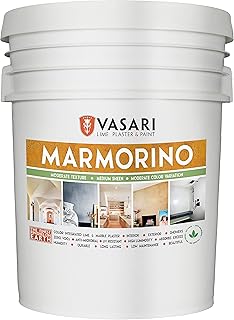
Vasari Lime Paint is a mineral paint made with natural lime and marble dust, and it suits readers who want a thicker paint that can be worked with a trowel as well as a brush. The maker lists sizes of one quart, one gallon, two and a half gallons and five gallons, with coverage of one gallon covering two hundred to two hundred forty square feet per coat, and a minimum of two coats. A mineral primer is required, and the paint can be applied with a brush or a sponge, and it can be rolled or sprayed as well, creating a matte finish with minor movement and variation. The thicker mineral consistency allows the paint to be back-trowelled to create a light to moderate texture if desired, and the maker lists the paint as zero VOC.
The maker lists the paint for interior gypsum drywall, with the drywall taped and smoothed to a level four finish or higher, and for existing painted surfaces, provided the existing paint is latex or acrylic and the surface is in white. It can also be applied onto existing moderate texture such as orange peel or a light skip trowel, which is directly relevant to a textured plaster living room. For exterior use the maker lists a mineral sealer, but the interior use is the focus here, and the maker notes that the paint can be finished with a mineral sealer, wax or top coat for additional protection.
For a textured plaster wall, the thicker consistency is both a benefit and a caution. It covers better than a thin wash, so the colour reads more evenly across the ridges and hollows, and it can be back-trowelled for extra texture if the reader wants it. But it also needs the mineral primer, and the reader should not skip that step, because the primer is what gives the paint its bond on drywall and on previously painted surfaces. The maker lists the paint as lasting ten to fifteen years on interiors when applied as directed, and notes that it pairs well with other natural finishes such as Venetian plaster, Marmorino and Tadelakt.
Pros:
- Thick mineral consistency can be back-trowelled for texture
- Listed for existing moderate texture such as orange peel
- Large five-gallon size suits a full living room
Cons:
- Mineral Primer is required, so preparation takes longer
- Existing painted surfaces must be in white
Kreidezeit Lime Paint Textured
Kreidezeit Lime Paint Textured is a powder lime paint for mixing with water, and it suits readers whose living room wall is heavily textured and needs a paint that adds a fine texture of its own. The powder contains fine marble sand with a grain size of half a millimetre, which gives the surface a fine brush-on plaster character, and the maker lists it as suitable for filling pores and fine cracks in the substrate. It is a fine-grained paint for interior use, it is usually opaque in two coats, and the maker lists a pH above twelve point five, a diffusion value below zero point zero two metres, and a formula free from titanium white, preservatives and synthetic resin binders.
The paint is mixed with water before use, and the maker lists the full declaration of ingredients as marble lime hydrate, marble powders, marble sands and methyl cellulose. Suitable interior substrates listed by the maker include untreated mineral plasters, concrete, stone, masonry, plasterboard, gypsum fibre boards, paper fleece, and other Kreidezeit wall paints and plasters. A base coat is listed for renders, fillers, levelled drywall, concrete and old emulsion paints, using the maker Vega Primer or Casein Primer, and the paint should not be applied to wood, oil paints, plastic surfaces or glossy non-absorbent paints.
For a textured plaster living room, the half-millimetre grain is the key detail. It evens out differences in the texture of the substrate and gives the wall a fine plaster appearance, so a wall with small repairs and uneven patches looks more coherent after two coats. The maker recommends applying the paint with a brush in a criss-cross pattern, and notes that white lime paint can be rolled on slightly absorbent surfaces while tinted lime paint should not be rolled. Tinted versions produce surfaces with a characteristically changing colour intensity, which is the cloudy movement readers expect from a lime paint. The reader should allow at least eight hours of drying time between coats at twenty degrees Celsius and sixty-five percent relative humidity.
Pros:
- Half-millimetre grain fills small pores and fine cracks
- Fine brush-on plaster character suits a heavily textured wall
- Full ingredient declaration with no synthetic resin binders
Cons:
- Powder format must be mixed with water before use
- Tinted versions cannot be rolled, so brushing is required
Buying guide
Start by identifying the surface. A living room wall can be bare lime plaster, painted plaster, drywall, or plaster with a texture such as orange peel or skip trowel, and each surface needs a different preparation. Bare plaster usually takes limewash directly, sometimes after a light misting with clean water. Painted plaster and drywall usually need the primer or base coat the maker lists. A wall with a glossy old paint needs sanding first, because limewash cannot bond with a glossy, non-absorbent surface. Check the maker guidance for the chosen paint and follow the preparation for the actual surface, not for the surface in a photograph.
Measure the wall and adjust for texture. Multiply the width of each wall by its height, add the results, and subtract a rough allowance for windows and doors. The total is the wall area for one coat. A textured wall takes more paint than a smooth wall of the same area, because the paint has to cover the ridges and settle into the hollows, so add at least a fifth more paint than the coverage figure suggests, and more if the texture is deep. Limewash needs two coats on almost every surface, so work out the container size from the two-coat coverage figure, and buy a little extra for touch-ups.
Choose the formula before choosing the colour. An interior-only paint such as Porters Interno or James Alexander Modern Lime Paint is the safest choice for a living room, because the formula was made for indoor conditions. A paint made for interior drywall with no primer, such as Romabio Velatura Mineralwash, is the simplest choice for a room with painted drywall. A paint with a primer route, such as JH Wall Paints Lime Wall Paint or Vasari Lime Paint, is the right choice for a wall that has been painted before or that has uneven absorption. A textured paint such as Kreidezeit Lime Paint Textured is the right choice when the wall has small cracks and pores that need filling.
Sample the colour on the wall. Limewash dries much lighter than it looks when wet, and mineral pigment shifts with the light, so a colour that looks right on a screen can read very differently on a textured plaster wall in a living room with a large window. Order a sample pot, a small container or a sample board, brush a patch of at least a square foot on the wall, and let it dry fully before deciding. Look at the patch in daylight and in the evening, and look at it from the sofa as well as close up. A pale warm white is the safest choice for a first project, because it shows the movement without dominating the room, while a deep colour shows more variation and needs more care with the brushwork.
Think about the brush and the working method. Limewash is a brush-applied finish, and a block brush or a wide stain brush holds a lot of paint and lets the reader work in loose, multi-directional strokes. On a textured wall, the brush should be worked into the hollows as well as over the ridges, and the reader should keep a wet edge so one section does not dry before the next starts. Work from one corner to the other without stopping in the middle of a wall, because a stop leaves a visible line. Keep a spray bottle of clean water nearby to mist the wall lightly if it dries too fast, and allow the full drying time between coats that the maker lists.
Plan for the life of the room. A living room wall gets touched, leaned on and brushed past, so ask whether the chosen paint is washable or needs a sealer in high-traffic areas. Some paints in this guide, such as Velatura Mineralwash, are not washable and need an edge-to-edge repaint if marked. Others, such as Color Atelier and Vasari, list a sealer or top coat for extra protection. A sealer changes the look slightly and adds a step, so the reader should decide before painting whether the wall needs one, and should sample the sealer on the same test patch as the paint.
FAQ
Can limewash paint go on a textured plaster wall?
Yes, limewash is well suited to textured plaster, because it is a thin mineral coating that follows the texture instead of hiding it. Makers such as JH Wall Paints state directly that their lime paint is not intended to mask or level existing wall texture, and Meoded notes the same point for its own paint. The texture stays visible through the paint, and the cloudy movement of the limewash adds depth to it. Repair cracks and holes first, since limewash does not fill them, and allow extra paint for the second coat, because a textured wall absorbs more paint than a smooth one.
Do I need a primer on a living room wall?
It depends on the surface and on the paint. Romabio Velatura Mineralwash needs no primer, even over existing paint. JH Wall Paints Lime Wall Paint needs a mineral primer on drywall and previously painted surfaces. Vasari Lime Paint needs a mineral primer. Porters Interno Lime Wash lists a Limeproof Undercoat Sealer where a primer is needed. The maker guidance for the chosen paint is the authority, and the reader should follow the preparation for the actual surface in the room.
How many coats does interior limewash need?
Almost every paint in this guide needs two coats. The first coat establishes coverage and absorption, and the second coat builds the colour and the movement. Some paints, such as Romabio Classico Limewash, list a one-coat process on bare masonry, but the interior paints in this guide are two-coat systems. A third coat is possible for a more uniform look or for extra depth, and the maker guidance will say whether a third coat is useful for the chosen paint.
Why does my limewash look patchy while it dries?
Limewash looks darker and more transparent when wet, and it dries lighter as the water leaves the surface. While it dries, wet darker areas sit next to dry lighter areas, which looks patchy, and this is normal. The colour settles as the wall dries and sets, and the final appearance is softer and more even than the wet wall suggests. Uneven drying can also come from uneven absorption in the plaster, which is why preparation and a primer or base coat matter on a patched wall.
Can I touch up a limewash living room wall later?
It depends on the paint. Some mineral paints touch up easily because the finish is very flat, and Romabio notes that touch-ups on Classico Limewash can be done at any time. Others, such as Velatura Mineralwash, may need an edge-to-edge repaint if a mark cannot be hidden, because a spot touch-up can show as a visible patch. The safest approach is to keep leftover paint from the same batch, use the same brush and the same technique, and feather the touch-up lightly into the surrounding area.
Is limewash paint safe to use in a room where the family spends a lot of time?
The paints in this guide are mineral based with zero or very low VOC content, and several makers list their paints as virtually odourless while working. That makes them suitable for living rooms and bedrooms, and the room can usually be used again soon after painting. Allow the full drying and curing time the maker lists, keep the room ventilated while the paint dries, and follow the maker guidance on temperature and humidity during application.
Conclusion
Updating a textured plaster living room wall with limewash paint works best when the reader chooses a formula made for interiors and lets the texture do part of the work. Romabio Velatura Mineralwash is the best starting point for most living rooms, because it is made for interior drywall and plaster, needs no primer, and creates soft, cloud-like movement in two coats. James Alexander Modern Lime Paint suits readers who want a deeper, more saturated colour, Porters Interno Lime Wash suits readers who want an interior-only formula, and JH Wall Paints Lime Wall Paint suits readers who want the widest colour choice with a roll-and-brush method for large walls. Tintural Cosi Lime Paint Classic Finish suits careful samplers, Vasari Lime Paint suits readers who want a thicker mineral paint, and Kreidezeit Lime Paint Textured suits walls with deep texture and small cracks.
The practical steps are the same whichever paint is chosen. Identify the surface, follow the maker preparation, measure the wall and allow extra paint for texture, sample the colour on the wall, and brush the paint on in two coats with a wet edge and a cross-hatch stroke. Judge the colour only when it is dry, allow the full curing time, and keep a little paint for touch-ups. Done this way, a textured plaster living room gains a soft, cloudy finish that respects the plaster underneath, and the room feels updated without losing the character that made the wall worth keeping.
Related guides
More from Amazon
Programs that pair well with the guide above. Offers and eligibility are set by Amazon and may change.
Free shipping on eligible items, Prime Video and more. Eligible new members can start with a free trial.
Start a Prime free trialAudiobooks and podcasts to listen to on the go. Eligible new members can start with a free trial.
Try Audible freeAd-free music streaming. Eligible new subscribers can start with a free trial.
Try Music Unlimited freeA free business account with business pricing and bulk-buying tools for work, shop or home office.
Create a business accountAs an Amazon Associate we earn from qualifying purchases.
More ways to save on your next finish
Programs that pair well with the guide above. Offers and eligibility are set by Amazon and may change.
A free business account with business pricing and bulk-buying tools for work, shop or home office.
Create a business accountFast, free shipping on eligible items, plus Prime Video and more. Eligible new members can start with a free trial.
Start a Prime free trialRead from a huge library of eBooks, including how-to guides and cookbooks. Eligible new members can start with a free trial.
Try Kindle UnlimitedAudiobooks and podcasts for the commute, the garage or the kitchen. Eligible new members can start with a free trial.
Try Audible freeAs an Amazon Associate we earn from qualifying purchases. Using these links costs you nothing extra.










Write Your Review
No reviews yet. Be the first to share your experience!