
Key takeaways
- Compare the best stucco patch repair mixes with paintable repair guidance for damaged stucco around windows, with drying times, texture match, and strength.
As an Amazon Associate I earn from qualifying purchases. This post may contain affiliate links at no extra cost to you.
Damaged stucco around a window is a repair that lives or dies by the paint. The window frame is a straight, clean line, and the wall beside it is painted, so any patch that dries with a different sheen or a different color stands out every time the light hits the glass. Worse, the window is where water enters a wall: rain runs down the glass, pools on the sill, and finds any gap in the render beside the frame. A patch here has to do two jobs at once, seal the wall against water and take paint in the same way as the old stucco. That is why the best stucco patch repair mixes with paintable repair guidance for repairing damaged stucco around windows are judged here by their drying times, their paint windows, and the way their surfaces accept a coat of paint.
Window repairs add demands that a patch on a plain wall never faces. The damage often runs along the frame line, where the render meets timber or metal, so the edge of the patch has to finish cleanly against a straight edge. The wall around a window is usually painted, which means the patch must match both the texture and the paint absorption of the old surface. The sill below the window sheds water onto the render beneath it, so the patch below the sill takes more weather than the patch beside the frame. The mixes in this roundup were picked for those demands: fast-setting cement patches with short, stated paint windows, ready-to-use pastes that dry to a paintable face, and base coats that rebuild render that has come away down to the brown coat. Each entry states its paint window plainly, because around a window the paint schedule is the repair schedule.
Best products
QUIKRETE FastSet Stucco Patch 1139
The FastSet Stucco Patch leads this roundup because it has the shortest stated paint window of any cement-based patch here: latex paint can go on after 90 minutes. Around a window, that short window matters, because the patch sits in the most visible part of the wall and an unfinished grey spot beside the frame draws the eye. A 90-minute wait means the repair can be patched and painted in a single visit, with the window looking finished before the end of the day.
- Fast-setting polymer-modified Portland cement patch
- 20 pound pail yields about 0.2 cubic feet
- Covers about 10 square feet at one quarter inch
- Working time of 20 to 30 minutes and final set in 45 to 90 minutes
- Paintable after 90 minutes with latex paint
- Single patch area up to 8 square feet
- Apply between 40 and 100 degrees Fahrenheit
- One-coat application up to three eighths inch, damp cure for 2 days
The working time of 20 to 30 minutes keeps the repairer moving, so the wall should be cleaned, dampened, and masked before the powder meets the water. The polymer-modified cement bonds well to the old stucco and holds a thin edge against the window frame, which is the line that decides whether the repair reads as part of the wall. Damp curing for 2 days keeps the surface from drying too fast in sun or wind, and that step protects the paint bond as much as the patch itself. For damaged stucco around a window that has to be patched and painted the same day, the 90-minute paint window is the strongest feature in this roundup.
DAP Phenopatch Pre-Mixed Stucco Patch
The DAP Phenopatch tub is the ready-to-use option for damaged stucco around a window, and its paint window of about 2 hours with latex paint suits a repair done in the morning and painted in the afternoon. It comes as a heavy paste in quart and gallon sizes, with a polyvinyl acetate vehicle that gives it a thick, workable body. The paste spreads easily with a trowel or a taping knife, and it holds its shape on a vertical surface beside the frame without sliding down while it sets.
- Ready-to-use heavy paste with a polyvinyl acetate vehicle
- Off-white color, mildew resistant and weather resistant
- Quart covers 12 to 18 square feet, gallon covers 48 to 72 square feet
- Paint in about 2 hours with latex paint, 24 hours with oil-based paint
- Apply above 40 degrees Fahrenheit
- No sanding needed, clean up with water
The off-white color dries close to many painted stucco finishes, which helps when the patch will sit unpainted for a while before the top coat goes on. The mildew resistant and weather resistant character suits the damp zone below a window sill, where water lingers after rain. Coverage of 12 to 18 square feet per quart means one tub handles the damage around several windows on the same side of the house. The two-hour latex paint window is short enough to keep the repair on a single-day schedule, and the water clean-up keeps the tools simple when the work is done from a ladder beside the frame.
DAP Stucco Patch Dry Mix
The DAP dry mix is the bag option for window damage that goes deeper than the finish coat, or for a run of windows on the same wall that all need attention. It comes in a 25 pound bag, mixes with water in a bucket, and goes on with a hawk and trowel or a taping knife. The dry format lets the repairer mix only what the job needs and keep the rest of the bag dry for the next window.
- 25 pound bag, mix with water before use
- For interior and exterior stucco applications
- Dries in about 2 hours depending on temperature and humidity
- Easy to spread, goes on thin and consistently
- Apply with a hawk and trowel or with a taping knife
- Mix in a bucket with a drill and a mixing attachment
A dry mix gives the repairer control over the consistency, which counts around a window frame where the patch has to sit against trim without slumping and feather thin at the edge. Mixed a little stiff, the material holds a vertical edge beside the frame. Mixed a little looser, it spreads thin across a shallow area of damage. The drying time of about 2 hours keeps the repair on a single-day schedule, and the thin, even application helps the patch sit flush with the painted render around it. The bag format also suits a property with more than one window showing the same damage, since the same bag can serve the whole side of the house.
SikaWall Fiber-47 Scratch and Brown Sanded
A window surround that has lost render down to the brown coat needs a base coat, and the SikaWall Fiber-47 Sanded is the sanded base for that job. It is a Portland cement, lime, and fiber blend that conforms to ASTM C926, and it was formerly sold as LaHabra Fiber-47 Fastwall. The sanded version carries aggregate in the mix, which gives the base a body that keys into the finish coat applied over it and the paint applied over that.
- Portland cement, lime, and fiber blend, conforms to ASTM C926
- 80 pound bag, coverage of 20 to 24 square feet at three eighths inch
- Coverage of 10 to 12 square feet at three quarters inch
- Mix with 1.5 to 2 gallons of water per bag
- Formerly sold as LaHabra Fiber-47 Fastwall
Coverage of 20 to 24 square feet at three eighths inch means one bag covers far more than a single window surround, so this product suits a repairer who is working around several windows or rebuilding a sill that took a knock. The fiber reinforcement helps the base hold across the edge where new material meets old render, which is the line that fails first when a window frame moves with temperature changes. A finish coat still goes on top of this base, and the sanded surface gives that finish coat a grip that a smooth base cannot offer. For window damage that reaches the brown coat, this is the base to build the repair on before any paint goes near the wall.
LaHabra Fastwall Stucco Base Concentrate
The LaHabra Fastwall Concentrate is the fiber-reinforced base for window damage that runs along the frame or below the sill, where the render has come away in a sheet. It is a Portland cement base with fiber reinforcement, sold in an 80 pound bag, and it sets in 30 to 45 minutes. The fiber helps the base hold across the repair line, which is the line that opens again when a window frame moves with heat and cold.
- Fiber reinforced Portland cement stucco base concentrate
- 80 pound bag, apply from three eighths inch to one half inch in one application
- Coverage of 75 to 90 square feet at three eighths inch
- Coverage of 60 to 72 square feet at one half inch
- Sets in 30 to 45 minutes
An 80 pound bag is more material than a single window needs, so this product fits a wall with several damaged windows, a sill that needs rebuilding, or a property where the same bag will serve later patch work. The application range of three eighths inch to one half inch in a single pass means the base can fill damage that opened the full depth of the finish coat without building up in thin layers. The set time of 30 to 45 minutes gives the repairer time to place and shape the base before it stiffens. A finish coat with matching sand texture goes on top, and that finish layer is what takes the paint and makes the window surround read as one surface again.
QUIKRETE Stucco Crack Repair
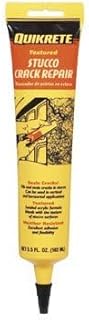
The smallest repair in this roundup is also the simplest to use around a window. The Quikrete Stucco Crack Repair comes in a 5.5 ounce squeeze tube, and the maker lists it in the stucco patch data sheet as the option for smaller projects. A squeeze tube puts the material exactly where the damage sits, with no trowel, no bucket, and no mixing, which is the right scale when the flaw is a hairline crack beside the frame or a small chip at the corner of the sill.
- 5.5 ounce squeeze tube for small crack work
- Ready to use, sized for narrow cracks and small chips
- Listed in the Quikrete stucco patch data sheet as the small-project option
A tube cannot rebuild a deep patch, and it should not be asked to. Its job is the narrow crack and the shallow surface chip, where a thin bead of material fills the void and the sand in the mix keeps the surface from drying smooth and glossy against the painted render. The format also suits a repairer who wants to fix one crack beside a window without opening a pail or a bag and storing the rest. For a wall with a single small flaw at the frame line, the tube is the fastest route from noticing the damage to forgetting it was ever there.
Rapid Set Stucco Mix
The Rapid Set Stucco Mix is the fast base coat for a window surround that has to be rebuilt and finished in a single day. It is a premium blend of Rapid Set cement, quality plaster sand, and high performance additives, and it carries an ICC-ES Evaluation Report numbered ESR-2671. The mix serves as the scratch and brown coats in a conventional three-coat application, or as the base coat in a one-coat application, which gives the repairer room to match the build of the wall beside the window.
- Premium blend of Rapid Set cement, plaster sand, and additives
- 50 pound bag, yield of 0.45 cubic feet, coverage of about 7 square feet at three quarters inch
- Working time of about 45 minutes at 70 degrees Fahrenheit
- Ready for color coat in 1 hour after moist curing
- Apply from three eighths inch to 2 inches thick
- Mix with 2.0 to 3.5 quarts of water per 50 pound bag
- Conforms to ASTM C1328, carries ICC-ES Report ESR-2671
The headline figure is the color coat timing: the base is ready for the color coat in 1 hour after moist curing, which means a window surround can be scratched, browned, and color coated in the same day. That speed suits a window that cannot stay unfinished, such as a street-facing window on a lived-in house. The working time of about 45 minutes is long enough to place and shape the base without rushing, and the thickness range of three eighths inch to 2 inches covers both a shallow rebuild and a deep one. Water curing by misting keeps the surface damp until it hardens, and that step protects the fast-setting base from drying too quickly in sun or wind. For a window surround that needs a full rebuild on a tight schedule, this is the fastest base in the roundup.
| Product | Key specs | Best for |
|---|---|---|
| QUIKRETE FastSet Stucco Patch 1139 | Polymer-modified cement, paintable after 90 minutes, 20 to 30 minute working time | Same-day patch and paint beside the frame |
| DAP Phenopatch Pre-Mixed Stucco Patch | Heavy paste, quart covers 12 to 18 square feet, paint in about 2 hours | Several windows on one side of the house from a single tub |
| DAP Stucco Patch Dry Mix | 25 pound bag, dries in about 2 hours, interior and exterior | Deeper damage and several spots around one frame |
| SikaWall Fiber-47 Scratch and Brown Sanded | Cement, lime, and fiber base, 20 to 24 square feet at three eighths inch, ASTM C926 | Render loss down to the brown coat |
| LaHabra Fastwall Stucco Base Concentrate | Fiber reinforced base, sets in 30 to 45 minutes, 75 to 90 square feet at three eighths inch | Damage along the frame or below the sill |
| QUIKRETE Stucco Crack Repair | 5.5 ounce squeeze tube, ready to use | Hairline cracks and small chips at the frame line |
| Rapid Set Stucco Mix | 45 minute working time, color coat in 1 hour after moist curing, ASTM C1328 | Full rebuild of a window surround in one day |
How to choose
Follow the paint window, not the patch speed
Around a window, the paint window is the schedule that matters. A patch that sets fast but cannot be painted for a day leaves a grey spot beside the frame, while a patch with a short paint window lets the whole repair finish in one visit. The products in this roundup state their windows plainly: 90 minutes for the fast-setting cement mix, about 2 hours for the DAP paste and the DAP dry mix, 1 hour to color coat for the Rapid Set Stucco Mix after moist curing. Cement base coats need a finish coat first, and the whole repair should be dry through before paint goes on. Plan the repair around the paint window and the drying time, not around the speed of the patch alone.
Match the texture and the paint absorption
A patch around a window must match two things: the texture of the render and the way the old surface absorbs paint. A patch that absorbs paint differently from the wall will show as a color difference even when the texture matches, because the paint dries darker or lighter on the new material. Priming the patch before the top coat evens out the absorption, and a sanded texture gives the paint the same surface to grip as the wall around it. Test the match by painting a small area first and looking at it in daylight before committing to the whole surround.
Read the depth of the damage before you buy
Depth decides the product more than any other factor. A shallow surface chip takes a ready-to-use paste or a squeeze tube. A chip that reaches the brown coat needs a cement patch that can be placed up to one inch thick in a single application. A loss that reaches the lath needs a base coat applied as scratch and brown layers, with a finish coat on top. Probe the damage with a flat tool and measure how far the sound stucco extends before choosing a product. The right depth match keeps the patch from sitting proud of the wall or sinking below the painted surface.
Protect the frame line and the sill
The line where the patch meets the window frame is the most visible edge of the repair, so it deserves a plan before the material is mixed. Mask the frame with tape to keep the patch off the wood or metal, and feather the patch thin as it approaches the straight line of the frame. Below the sill, check that water can still run off the sill and away from the wall, because a patch that blocks the drip line will hold water against the render. Remove the tape while the material is still workable so the edge stays crisp.
Common mistakes
The most common mistake around a window is painting too soon. Fresh patch material holds moisture, and paint over a damp patch can blister or dry with a different sheen, which shows at once beside a straight frame line. The paint windows in the product specs exist for this reason, and waiting the full stated time costs nothing compared with redoing a peeled patch. A second mistake is patching over a loose edge. The render beside a window often has a cracked or hollow margin around the damaged spot, and patching over that margin leaves the new material bonded to stucco that is already coming away. Tap the render around the damage, cut back to sound material, and patch from a solid edge.
A third mistake is skipping the finish coat on a deep repair. A base coat patch without a sanded finish coat will always look different from the painted wall around it, no matter how well it is painted, because the surface texture and the paint absorption do not match. The finish layer is what the eye compares, so it deserves the same care as the fill beneath it. A fourth mistake is ignoring the sill. Water that pools on a sill and runs down the wall will find any gap in the patch, so the render below the sill deserves the same attention as the render beside the frame. Check the drip line, keep the sill clear, and make sure the patch below the sill is sealed and painted through.
FAQ
How long should I wait before painting a stucco patch around a window?
Follow the maker stated window for the product used. The FastSet cement mix accepts latex paint after 90 minutes, the DAP paste after about 2 hours, and the DAP dry mix dries in about 2 hours. Base coats need a finish coat first, and the whole repair should be dry through before paint goes on. Waiting the full window avoids blistering and sheen differences beside the frame.
Should I prime a stucco patch before painting it?
Yes, priming helps the patch absorb paint in the same way as the old wall, which avoids a color difference beside the window. A patch that absorbs paint faster than the surrounding render dries darker, while a patch that absorbs slower dries lighter. A coat of primer evens out the absorption so the top coat reads as one color across the repair and the wall.
Can I patch stucco around a window in cold weather?
Most products in this roundup need air temperatures above 40 degrees Fahrenheit during application, and the ready-to-use acrylic tub needs temperatures above 50 degrees Fahrenheit. Cold air slows setting and curing, and a patch placed in cold weather can stay soft or fail to bond. Patch on a mild, dry day and keep the wall above the stated minimum while the material sets.
Why does stucco keep cracking beside my window?
The frame moves slightly with temperature changes, and the render beside it takes that movement as stress. A hairline crack at the frame line is common and usually cosmetic, while a crack that widens or runs across the wall can point to a loose frame or a failed bond. Flexible acrylic patches suit the fine crack at the frame, while a cement patch suits a crack in the field of the render.
Do I need to remove the window trim before patching?
Usually not. Mask the trim with tape and feather the patch to a clean edge against it. Removing trim risks more damage to the render and the frame, and a taped edge gives a crisp line with less work. Remove the tape while the patch is still workable so the edge does not tear.
Conclusion
Damaged stucco around a window is a repair where the paint decides the result. The FastSet cement mix leads because its 90-minute paint window lets the patch and the paint finish in a single visit. The DAP paste and the DAP dry mix cover the middle ground between a quick surface patch and a deeper fill, both with two-hour drying times that keep the repair on a single-day schedule. The SikaWall sanded base and the LaHabra Fastwall base rebuild render that has come away down to the brown coat, the squeeze tube finishes the smallest cracks at the frame line, and the Rapid Set Stucco Mix rebuilds a whole surround and takes a color coat in an hour after moist curing. Choose by the depth of the damage and the paint window you can keep, prepare the surface back to sound stucco, keep the edge clean against the frame, prime the patch so the paint absorbs evenly, and wait the full stated time before the top coat. Done that way, the patch beside the window stops drawing the eye, and the wall reads as one painted surface again.
Related guides
More from Amazon
Programs that pair well with the guide above. Offers and eligibility are set by Amazon and may change.
Free shipping on eligible items, Prime Video and more. Eligible new members can start with a free trial.
Start a Prime free trialAudiobooks and podcasts to listen to on the go. Eligible new members can start with a free trial.
Try Audible freeAd-free music streaming. Eligible new subscribers can start with a free trial.
Try Music Unlimited freeA free business account with business pricing and bulk-buying tools for work, shop or home office.
Create a business accountAs an Amazon Associate we earn from qualifying purchases.
More ways to save on your next finish
Programs that pair well with the guide above. Offers and eligibility are set by Amazon and may change.
A free business account with business pricing and bulk-buying tools for work, shop or home office.
Create a business accountFast, free shipping on eligible items, plus Prime Video and more. Eligible new members can start with a free trial.
Start a Prime free trialRead from a huge library of eBooks, including how-to guides and cookbooks. Eligible new members can start with a free trial.
Try Kindle UnlimitedAudiobooks and podcasts for the commute, the garage or the kitchen. Eligible new members can start with a free trial.
Try Audible freeAs an Amazon Associate we earn from qualifying purchases. Using these links costs you nothing extra.



Write Your Review
No reviews yet. Be the first to share your experience!