
Key takeaways
- Seven wet dry vacuums that lift plaster splashes from floors, compared on wet pickup, nozzles, drains and hose reach, so plaster never gets a second chance.
As an Amazon Associate I earn from qualifying purchases. This post may contain affiliate links at no extra cost to you.
A plaster splash on the floor is a small problem for ten minutes and a hard problem after that. While the plaster is still wet it lifts with a floor nozzle and a little water. Once it dries it bonds to the surface, and removing it means scraping, and scraping means marking the floor. The difference between the two outcomes is often a vacuum that is already in the room, fitted with the right nozzle, and ready to pick up liquid before it sets. This roundup covers the best wet dry vacuums for plaster job sites for cleaning plaster splashes from floors, seven machines chosen for wet pickup, floor tools, drains, and the hose reach that lets one machine cover a whole room while the plaster is still workable.
Floor splashes come in several forms. Thin splashes from the trowel spread wide and dry fast. Drips from the hawk land in small piles that stay wet longer. Slurry from the mixing area creeps across the floor in a thin film, and wash water from cleaning tools leaves a milky residue that dries into a hard skin. All of them share one trait: they are easy to remove while wet and stubborn once dry. The machines below handle liquid without a dry filter in the way, they carry floor nozzles that spread suction across a wide path, and they empty fast through a drain so the next splash can be picked up without delay. Each one was picked from a pool of twenty four verified wet dry vacuums.
Best products
RIDGID HD1600
The RIDGID HD1600 leads this roundup because it pairs a sixteen gallon drum with a detachable blower and a wide floor path, which together make it the machine for clearing a whole floor of splashes at the end of a coat. Its two and one half inch hose moves liquid fast, and the detachable blower clears loose dust from the floor before the wet pass, so the vacuum picks up liquid instead of turning dry dust into slurry. The sixteen gallon drum holds a full day of splash pickup without stopping to empty, which matters when the crew is moving from room to room and the plaster is still wet.
- Tank size: 16 gallons
- Motor: 6.5 peak horsepower
- Airflow: 161 cubic feet per minute
- Water lift: 46 inches
- Air watts: 259
- Hose: 2-1/2 inch diameter, 7 feet long, locking hose
- Power cord: 20 feet
- Noise: 76 decibels
- Extras: detachable blower, blower port, tank drain, on board accessory storage
The HD1600 suits the end of day floor pass, when every room has splashes and the crew wants one machine to clear them all. Its size is the trade off: a sixteen gallon drum is not the machine to carry upstairs for a single splash, and it needs floor space in a room that already holds trestles and boards. Use the blower first to push loose dust into a pile, vacuum the pile, then run the wet nozzle across the splashes. Remove the dry filter before the wet pass and fit the foam sleeve, or the filter will soak and airflow will collapse within minutes.
DeWalt DXV09P
The DeWalt DXV09P is the nine gallon machine in this roundup, and it fits the splash cleanup role because it is light enough to move room to room while the plaster is still wet, and strong enough to lift liquid through a floor nozzle without leaving a film behind. Its seventy inches of water lift is the figure that matters here: lift pulls liquid up through the hose and into the drum, and seventy inches is strong for a machine of this size. The built in drain empties the drum at the end of the pass, so the machine is ready for the next room without tipping.
- Tank size: 9 gallons
- Motor: 5 peak horsepower
- Airflow: 90 cubic feet per minute
- Water lift: 70 inches
- Hose: 1-7/8 inch diameter, 7 feet long
- Power cord: 10 feet
- Extras: blower port, built in drain, 3-year warranty
The DXV09P suits a plasterer working alone who needs to clear splashes as they happen, rather than waiting for a big machine at the end of the day. Its ten foot cord is short for a large room, so plan the outlet position before starting, or keep an extension lead on the trolley. The one and seven eighths inch hose is narrower than the two and one half inch hoses on the larger machines, which means it passes liquid and small splashes easily but will not swallow a large dried lump. Pick up the big pieces by hand, run the floor nozzle over the wet areas, and the floor will be clear before the plaster sets.
Shop-Vac 5801611
The Shop-Vac 5801611 uses the SVX2 motor, which the maker describes as a longer life version of its standard six and one half peak horsepower motor, and it pairs that motor with a sixteen gallon drum and one hundred and fifty cubic feet per minute of airflow. For floor splash work the airflow matters, because a floor nozzle spreads suction across a wide path and needs volume to keep the suction even across the whole width. The eight foot locking hose gives a little more reach than the standard seven foot hose, and the tank drain empties the drum without lifting it.
- Tank size: 16 gallons
- Motor: 6.5 peak horsepower, SVX2 motor
- Airflow: 150 cubic feet per minute
- Hose: 2-1/2 inch diameter, 8 feet long, Lock-On hose
- Extras: tank drain, rear blower port, tool storage bag, extension wands, wet and dry floor nozzle, gulper tool, crevice tool
This Shop-Vac suits large open floors where the crew wants to clear splashes in long straight passes with a wide floor nozzle. The sixteen gallon drum and strong airflow make it a good main machine for the floor pass, but it is a large machine to move through doorways and up stairs. Its gulper tool is worth using on thicker piles of wet plaster, since it concentrates suction on a small area and lifts material the wide nozzle would spread. Keep the drain clear, because a drum of plaster slurry left to dry will block the drain and add an hour of chipping to the next morning.
WORKSHOP WS1600VA
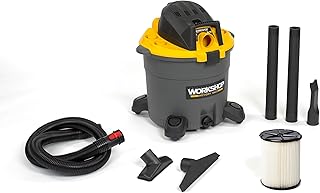
The WORKSHOP WS1600VA is the highest airflow machine in this roundup at one hundred and sixty nine cubic feet per minute, and that volume shows when the floor nozzle is run across a wide splash. Its sixteen gallon drum, twelve amp motor, and two and one half inch hose put it in the same class as the RIDGID HD1600 for floor work, and its twenty foot cord covers a large room from a single outlet. The drain port and blowing port add the two features that matter most after the pass: fast emptying and a way to clear dust from the floor before the next wet pass.
- Tank size: 16 gallons
- Motor: 6.5 peak horsepower, 12 amps
- Airflow: 169 cubic feet per minute
- Water lift: 46 inches
- Air watts: 265
- Hose: 2-1/2 inch diameter
- Power cord: 20 feet
- Noise: 87 decibels
- Extras: drain port, blowing port, 2-1/2 inch accessories
The WS1600VA suits open plan work and large rooms where the floor pass is long and the splashes are spread wide. Its noise figure of eighty seven decibels is high, so ear protection is worth wearing during a long floor pass, and the machine is best used when the house is empty. Its sixteen gallon drum is an advantage on big floors and a drawback in small rooms, where it blocks the doorway. Run the floor nozzle in overlapping passes, empty the drum through the drain at the end of each room, and the floor will dry clean without a milky film.
Bosch VAC140AH
The Bosch VAC140AH is the dust extractor in this roundup, and it earns its place on floors because it pairs a HEPA filter with an automatic filter cleaning cycle that runs every fifteen seconds. Plaster dust loads filters fast, and a filter that cleans itself keeps suction steady through a long floor pass instead of fading as the filter clogs. Its fourteen and one half gallon drum holds a full session of splash pickup, and its ninety seven point three inches of static water lift is the highest lift figure in this roundup, which helps when the hose has to reach across a room or up to a scaffold board.
- Tank size: 14.5 gallons
- Motor: 9.5 amps, 120 volts
- Airflow: 150 cubic feet per minute
- Water lift: 97.3 inches static water lift
- Filter: HEPA, 99.97 percent at 0.3 microns, automatic filter cleaning every 15 seconds
- Hose: 1-3/8 inch diameter, 9.85 feet long
- Power cord: 13.5 feet
- Weight: 38 pounds
- Extras: built in drain, power tool activation
The VAC140AH suits finish work in occupied houses, where dust control matters and the floor must be left clean enough to walk on in socks. Its one and three eighths inch hose is narrower than the hoses on the other large machines, so it passes liquid and fine material well but will not swallow a large dried lump. Pick up the big pieces by hand first. Its thirty eight pound weight and thirteen and one half foot cord mean it stays in one room at a time, and the power tool activation is a bonus for sanding work, switching the vacuum on with the sander. Keep the drain clear and the HEPA filter dry, since a wet HEPA filter loses its fine dust performance.
Armor All AA255
The Armor All AA255 is the smallest machine in this roundup, and it earns its place by being the vacuum that is already in hand when a splash lands. At two and one half gallons and seven pounds it carries one handed to the exact spot, and its two peak horsepower motor lifts fresh splashes through a one and one quarter inch hose before they spread. It is not a machine for clearing a whole floor, but it is the machine that stops a single splash from becoming a dried patch that needs scraping.
- Tank size: 2.5 gallons
- Motor: 2 peak horsepower, 2.5 amps, 120 watts
- Water lift: 48 inches maximum suction
- Hose: 1-1/4 inch diameter, 6 feet long
- Power cord: 10 feet
- Weight: 7 pounds
- Noise: 82 decibels
- Extras: blower function, reusable cloth filter, foam wet filter, 2-in-1 utility nozzle with brush, crevice tool
The AA255 suits the plasterer who works alone and wants to clear splashes as they happen, without dragging a large machine across the room. Its two and one half gallon drum fills fast, so it needs emptying often, and its narrow hose will not pass a large lump. Its strength is speed: it is in the room, it starts at once, and it clears the splash while the plaster is still wet. Keep the foam wet filter fitted for splash work and the cloth filter for dry dust, and rinse the foam filter at the end of the day so it is ready for the next morning.
Craftsman CMXEVBE17590
The Craftsman CMXEVBE17590 is the nine gallon portable machine in this roundup, and it fits the splash cleanup role because it balances a useful drum with a size that moves easily between rooms. Its four and one quarter peak horsepower motor delivers up to seventy two cubic feet per minute through a one and seven eighths inch hose, and its oversized drain empties the drum fast at the end of a pass. The Qwik Lock filter fastening makes it quick to swap between the dry filter and the foam wet filter as the job changes from dry cleanup to splash pickup.
- Tank size: 9 gallons
- Motor: 4.25 peak horsepower, 8.3 amps
- Airflow: up to 72 cubic feet per minute
- Hose: 1-7/8 inch diameter, 7 feet long, locking hose
- Power cord: 10 feet
- Weight: 15.5 pounds
- Extras: blower port, oversized drain, on board hose storage, accessory and cord organizers, 3-year warranty
This Craftsman suits a crew that clears splashes room by room and wants a machine that is easy to carry through doorways. Its fifteen and one half pound weight is light for a nine gallon machine, and its ten foot cord is short for a large room, so keep an extension lead handy. Its airflow is modest beside the larger machines here, so it works best on fresh splashes rather than on a floor that has been left to dry. Run the floor nozzle in slow passes, let the suction do the work, and empty the drum through the oversized drain before moving to the next room.
| Model | Tank and motor | Airflow and lift | Fit for this job |
|---|---|---|---|
| RIDGID HD1600 | 16 gal, 6.5 peak HP | 161 CFM, 46 in lift | Whole floor pass, big drum |
| DeWalt DXV09P | 9 gal, 5 peak HP | 90 CFM, 70 in lift | Room to room splash pickup |
| Shop-Vac 5801611 | 16 gal, 6.5 peak HP | 150 CFM, see product page | Wide floor nozzle passes |
| WORKSHOP WS1600VA | 16 gal, 6.5 peak HP | 169 CFM, 46 in lift | Large rooms, high airflow |
| Bosch VAC140AH | 14.5 gal, 9.5 A | 150 CFM, 97.3 in lift | Dust control, occupied houses |
| Armor All AA255 | 2.5 gal, 2 peak HP | See product page, 48 in lift | Spot splashes, one handed |
| Craftsman CMXEVBE17590 | 9 gal, 4.25 peak HP | Up to 72 CFM, see product page | Portable room to room work |
How to choose
Pick the machine for wet work first
A vacuum for floor splashes is a wet pickup machine first and a dry machine second. Check that it has a foam wet filter or a wet application filter, and that the dry filter comes out easily before wet work. A machine that needs tools to change the filter will not get changed, and the dry filter will soak and fail. Look for a drain that empties the drum without tipping, since a drum of plaster slurry is heavy and tipping it across a clean floor spills the very mess it just collected. The blower port is a useful extra for clearing dust before the wet pass, but it is not a substitute for a proper wet setup.
Match hose width and nozzle to the splash
Thin splashes spread wide and need a floor nozzle that covers a broad path with even suction. Thick piles need a gulper or a utility nozzle that concentrates suction on a small area. A two and one half inch hose passes both, while a one and one quarter inch hose suits fresh thin splashes and spot work but jams on lumps. Check which nozzles come in the box: a wet and dry floor nozzle, a utility nozzle, and a crevice tool cover most floor work, and extension wands let the nozzle reach under trestles and along skirting boards without bending. A locking hose stays connected when the machine is pulled across a room, which matters when the hose is full of liquid.
Read lift for liquid, airflow for coverage
Water lift pulls liquid up through the hose and into the drum, so a high lift figure helps when the hose runs long or uphill to a scaffold board. Airflow moves volume across a wide floor nozzle, so a high airflow figure helps when the nozzle covers a broad path. For floor splashes, which are mostly liquid spread thin, lift matters slightly more than airflow, but a machine with very low airflow will leave a film behind the nozzle even with good lift. Look for both figures to sit in the middle of the range, and compare numbers from the same maker first, since makers measure these figures in different ways.
Plan the emptying route before the drum fills
A drum of plaster slurry is heavy, and it sets hard if left overnight. Before starting the floor pass, know where the drum will be emptied and how the slurry will be disposed of. A bottom drain empties the drum where it stands, while a machine without a drain has to be carried to a disposal point and tipped. On an upper floor, a small drum that can be carried downstairs full is often better than a large drum that has to be emptied on the landing. Empty the drum at the end of each room, rinse it, and leave it open to dry, and the machine will be ready for the next day without an hour of chipping.
Common mistakes
The most common mistake with floor splashes is waiting until the end of the day to clear them. By then the thin splashes have dried and bonded, and the vacuum will not lift them. Clear splashes as they happen, or at least once per coat, while the plaster is still wet. A second mistake is running the wet pass with the dry filter still fitted. The filter soaks, airflow collapses, and the motor strains. Take the dry filter out before any wet work and fit the foam sleeve. A third mistake is using the blower near fresh plaster. The blower drives dust onto the wet surface, where it shows through the finish. Keep the blower away from open work and use it only on floors that are already dry. A fourth mistake is dragging the cord across a wet floor. The cord picks up slurry and trails it across the clean area, and a wet cord on a wet floor is a slip hazard. Run the cord along the wall and keep it out of the work area. A fifth mistake is leaving the drum closed overnight with wet waste inside. The waste sets, the drum smells, and the next morning starts with chipping instead of work. Empty, rinse, and leave the drum open. A sixth mistake is vacuuming a dried splash with the floor nozzle instead of scraping it first. The nozzle will not lift a bonded patch, and the effort wastes time. Scrape the dried patch, pick up the pieces, then run the vacuum over the area.
FAQ
How soon should I vacuum a plaster splash from the floor?
As soon as it lands, or at the end of the coat at the latest. While the plaster is wet it lifts with a floor nozzle and a little suction. Once it dries it bonds to the surface and needs scraping. On a busy day, run the vacuum over the floor once per coat, before the next coat starts, so each coat goes onto a clean floor and the crew is not walking through grit.
Do I need to remove the dry filter before wet pickup?
Yes. The dry filter soaks on contact with liquid, airflow collapses, and the motor strains against a blocked intake. Take the dry filter out, fit the foam wet filter or wet sleeve, and run the machine. When the wet work is done, take the foam filter out, rinse it, and refit the dry filter before any dry cleanup. Keep both filters on the trolley so the swap takes seconds.
What nozzle works best on plaster splashes?
A wet and dry floor nozzle covers a wide path and suits thin splashes spread across the floor. A gulper tool or utility nozzle concentrates suction on a small area and suits thicker piles. A crevice tool clears the line where the floor meets the skirting board, where splashes collect and dry unnoticed. Use the floor nozzle for the bulk of the work and the smaller tools for edges and corners.
Can a wet dry vacuum damage a finished floor?
It can if the nozzle is dragged with grit trapped underneath, or if a metal tool is used on a soft surface. Keep the nozzle clean, lift it rather than dragging it across a finished floor, and use a soft floor nozzle on timber and vinyl. Empty the drum before it gets heavy, since a full drum is harder to control and more likely to bump into skirting boards and door frames.
How do I dispose of plaster slurry from the drum?
Let the solids settle, pour off the clear water where site rules allow, and bag the remaining solids for disposal with the rest of the renovation waste. Never pour slurry down a drain, since it sets in the pipe. Check the site waste plan before starting, since some sites require all plaster waste to be bagged. Rinse the drum after emptying so the next load does not pick up dried residue from the last one.
Conclusion
Floor splashes are a race against the clock, and the vacuum that wins is the one that is already in the room, fitted for wet pickup, and ready to work while the plaster is still wet. The RIDGID HD1600 leads this roundup because it pairs a sixteen gallon drum with a detachable blower and a wide hose for the whole floor pass. The DeWalt DXV09P moves room to room with strong lift, the Shop-Vac 5801611 covers wide floors with a broad nozzle, the WORKSHOP WS1600VA brings the highest airflow here, the Bosch VAC140AH keeps dust down in occupied houses, the Armor All AA255 clears the splash that just landed, and the Craftsman CMXEVBE17590 carries nine gallons through doorways without fuss. Pick the machine that fits the floor, keep the foam filter ready, and clear each splash before it dries. Do that, and the floor stays clean, the next coat goes onto a clear surface, and the end of the day brings a quick pass instead of an hour with a scraper.
Related guides
More from Amazon
Programs that pair well with the guide above. Offers and eligibility are set by Amazon and may change.
Free shipping on eligible items, Prime Video and more. Eligible new members can start with a free trial.
Start a Prime free trialAudiobooks and podcasts to listen to on the go. Eligible new members can start with a free trial.
Try Audible freeAd-free music streaming. Eligible new subscribers can start with a free trial.
Try Music Unlimited freeA free business account with business pricing and bulk-buying tools for work, shop or home office.
Create a business accountAs an Amazon Associate we earn from qualifying purchases.
More ways to save on your next finish
Programs that pair well with the guide above. Offers and eligibility are set by Amazon and may change.
A free business account with business pricing and bulk-buying tools for work, shop or home office.
Create a business accountFast, free shipping on eligible items, plus Prime Video and more. Eligible new members can start with a free trial.
Start a Prime free trialRead from a huge library of eBooks, including how-to guides and cookbooks. Eligible new members can start with a free trial.
Try Kindle UnlimitedAudiobooks and podcasts for the commute, the garage or the kitchen. Eligible new members can start with a free trial.
Try Audible freeAs an Amazon Associate we earn from qualifying purchases. Using these links costs you nothing extra.



Write Your Review
No reviews yet. Be the first to share your experience!