
Key takeaways
- Learn which primer bonds new stucco patch to old rough render, how to spot an incompatible primer, and the exact prep sequence for a courtyard wall that lasts.
As an Amazon Associate I earn from qualifying purchases. This post may contain affiliate links at no extra cost to you.
A courtyard wall takes weather from every direction. Sun bakes the face in the afternoon, rain drives into the rough render at night, and wind pushes dust into every pore. When a patch of textured stucco comes loose on such a wall, the primer underneath the patch decides whether the repair holds for years or peels away in a single season. Which primer is compatible before you repair textured stucco patches on a rough render courtyard wall is therefore the first question to answer, long before any trowel touches the surface.
The short version is that a primer must match three things at once: the chemistry of the old render, the chemistry of the patch material, and the fact that the surface stands vertical and rough. An acrylic masonry primer-sealer suits most cement-based patch work on old stucco, while a latex bonding adhesive suits cement-based patch material that needs a chemical grip on sound old plaster. A primer made only for horizontal concrete floors does not belong on a wall, no matter how good its label sounds. The rest of this guide walks through the compatibility checks, the preparation sequence, and the five products that cover the common cases.
Quick answer
For a rough render courtyard wall, use an acrylic masonry primer-sealer such as Loxon Concrete and Masonry Primer-Sealer on sound, dry, old stucco, or a latex bonding adhesive such as QUIKRETE Concrete Bonding Adhesive No. 9902 or Sakrete Concrete Bonder and Fortifier under a cement-based patch. Prime only after the wall is clean, sound, and dry enough for the product data sheet. Never use a primer that the maker limits to horizontal surfaces on a vertical wall, and never prime over loose render, dust, chalk, or paint that is peeling. Let the primer reach the dry or recoat time the maker lists before patching over it.
| Item | What it does | When to use it |
|---|---|---|
| Loxon Concrete and Masonry Primer-Sealer | Acrylic primer-sealer that seals porous stucco and resists alkali | Sound old stucco that will receive a cement-based patch and a topcoat |
| QUIKRETE Concrete Bonding Adhesive No. 9902 | Latex bonding agent that bonds new plaster to old plaster | Cement-based patch over sound old stucco, applied as a paint-on coat or slurry |
| Sakrete Concrete Bonder and Fortifier | Latex copolymer bonder and admixture that improves bond strength | Paint-on bonding coat or fortifier mixed into a cement-based patch |
| BEHR Premium Concrete and Masonry Bonding Primer No. 880 | Water-based bonding primer for porous horizontal concrete | Horizontal concrete only, never on a vertical courtyard wall |
| QUIKRETE Stucco Patch No. 8650 | Ready-to-use sanded acrylic patch for shallow stucco defects | Shallow patches up to one quarter inch thick on a primed, sound surface |
Step by step
1. Read the wall before choosing anything
Start with a slow walk along the courtyard wall and look at the render the way a mason does. Press a thumb against the rough surface and watch whether sand grains come away. Tap the render lightly with a knuckle and listen for a hollow sound that marks a delaminated area. Look for map cracking, hairline cracking, white salt bloom, dark damp patches, and paint that has lifted in sheets. Each of these signs changes the primer choice, because a primer bonds to the surface it touches, and a primer spread over a weak surface only bonds the patch to the weak layer.
Mark every hollow area with chalk and draw a line around the full extent of the loose render, not just the visible hole. A patch that stops at the edge of the visible damage but leaves a hollow ring around it will fail at that ring within a year. Photograph the marks for reference, then plan the repair area so the patch edges land on sound render. A courtyard wall often shows damage near the base where splashback keeps the render wet, and near the top where coping stones shed water onto the face. Those two zones deserve extra attention during the soundness check.
2. Clean the repair area down to sound render
Remove all loose render with a cold chisel and a club hammer, working from the center of the damage outward to the chalk line. Cut the edges of the repair back to a square shoulder where the render is thick enough to allow it, because a feathered edge of new patch over old render has almost no thickness to hold onto. Brush the exposed area with a stiff wire brush until no loose sand remains, then sweep the dust out of the pores with a soft brush.
Wash the area with clean water and a stiff nylon brush to lift embedded dust, algae, and salt bloom from the rough texture. Let the wall dry until the surface looks evenly dry and no dark damp patches remain. A primer applied over a damp wall may dilute at the bond line, and a primer applied over dust bonds to dust instead of to render. The data sheets for the bonding products in this guide all call for a clean, sound surface, and that requirement is not a formality. It is the single most common reason a stucco patch separates from the wall beneath it.
3. Measure the alkalinity and moisture of the old render
Old cement render stays alkaline for a long time, and fresh cement patch material is alkaline too. A primer that cannot tolerate a high pH will soften or lose adhesion under the patch. Loxon Concrete and Masonry Primer-Sealer is listed by the maker for surfaces with a pH of 6 to 13, which covers the normal range of old stucco. Check the pH with a simple surface pH strip or a pH pencil after wetting a small area, and record the reading. If the reading sits above the range the primer maker lists, the surface needs more curing time or a different primer.
Check moisture with a moisture meter or with a simple plastic sheet taped to the wall for a day. Condensation under the sheet means the wall is still holding moisture, and patching over a wet wall traps that moisture behind the new material. In a courtyard, the base of the wall and the shaded side dry last, so check those spots separately. A wall that reads dry on the sunny face can still be damp at the base, and a patch at the base will fail first.
4. Match the primer to the patch material
The compatibility question has two sides. The primer must bond to the old render, and the patch material must bond to the primer. Cement-based patch material bonds well to a latex bonding adhesive coat, because the adhesive is designed for fresh-to-hardened concrete and plaster. Acrylic ready-mixed patch material bonds well over an acrylic primer-sealer, because the two share the same resin family. Mixing families without a reason creates risk: a cement patch over a primer that softens in alkaline conditions, or an acrylic patch over a bonding adhesive that the maker does not list for that use, can both fail.
Read the data sheet for the patch material first, then read the data sheet for the primer, and confirm that each one names the other type of surface as a suitable substrate. The QUIKRETE Stucco Patch data sheet describes a sanded acrylic formula for stucco surfaces. The QUIKRETE Bonding Adhesive data sheet describes bonding new plaster and stucco to existing plaster and stucco. The Loxon data sheet lists stucco among its surfaces and describes high alkali resistance. When both sheets agree, the combination is compatible. When either sheet is silent, treat the combination as unproven and choose a pair that the makers do name.
5. Apply the primer the way the maker lists
Apply a bonding adhesive with a brush or roller to the thickness of a coat of paint, covering the whole repair area and a small margin of sound render around it. The QUIKRETE data sheet gives a paint-on coverage of 35 to 75 square feet per quart, and a primer coverage of 600 to 1200 square feet per gallon when used as a primer. Do not flood the surface. A thick puddle of bonding adhesive dries into a glossy film that the patch cannot grip, while a thin even coat gives the patch a rough, tacky key.
Apply an acrylic primer-sealer with a brush or a roller with a long nap, and backroll on rough stucco so the primer reaches into the texture. The Loxon data sheet lists coverage of 200 to 320 square feet per gallon on general masonry, and 80 square feet per gallon on porous and rough stucco. That lower number on rough stucco is the honest one for a courtyard wall, so plan material quantities from it. Let the primer dry to the time the maker lists: Loxon reaches touch dry in 4 hours and recoat in 24 hours at 77 degrees Fahrenheit and 50 percent relative humidity. A latex bonding adhesive typically dries in 2 to 3 hours before patch material goes over it, and Sakrete Bonder and Fortifier lists 2 to 4 hours of drying time at 70 degrees Fahrenheit. Do not rush this wait. Patch material placed over a wet primer slides, and patch material placed over a primer that has dried too long may need a fresh coat.
6. Place the patch and match the texture
Dampen the primed repair area lightly with a mist of clean water if the patch maker calls for a damp surface, and keep the patch material out of direct sun while working. Press the first layer of patch firmly into the texture so it keys into the rough render, then build the patch in layers no thicker than the maker allows. QUIKRETE Stucco Patch allows one quarter inch per layer, with 24 hours between layers for deeper repairs. Rapid Set Stucco Patch allows thicknesses from one eighth inch to one inch in a single application, with a working time of about 20 minutes. Work within those limits. A patch built too thick in one pass shrinks as it hardens and cracks along the edge of the repair.
Match the texture while the patch is still workable. A sand finish comes from a sponge float or a rubber float worked in small circles over the surface. A rough render comes from a stipple brush or a texture roller pressed lightly into the fresh material. Practice the motion on a sample panel first, so the first attempt on the wall is not a guess. A sample panel made from a spare board with the same patch material shows how the texture sets at the day's temperature and humidity, and it costs almost nothing compared with redoing a visible courtyard wall.
7. Cure, protect, and topcoat on schedule
Keep the patch out of rain and direct sun while it hardens. QUIKRETE Stucco Patch begins to form a skin in about 20 to 40 minutes and becomes hard in about 2 hours, with additional curing continuing for up to 3 days. Do not paint the patch until the maker allows it: QUIKRETE lists at least 24 hours before painting with an acrylic paint. Loxon primer must be topcoated within 14 days on exterior work, so plan the topcoat before that window closes. A patch left unpainted through a rainy season absorbs water at the edges and loosens, even when the bond underneath was sound.
Protect the base of the wall from splashback after the repair. A courtyard wall that sheds water from a coping or a roof edge onto the same spot will damage the new patch the same way it damaged the old render. A small drip edge, a gravel strip at the base, or a regraded paving slope keeps water away from the repair and gives the primer and patch the dry conditions they need to last.
Tools and materials
Sherwin-Williams Loxon Concrete and Masonry Primer-Sealer
- Acrylic primer-sealer for interior and exterior above-grade masonry
- Coverage: 200 to 320 square feet per gallon, 80 square feet per gallon on porous and rough stucco
- Touch dry in 4 hours, recoat in 24 hours at 77 degrees Fahrenheit and 50 percent relative humidity
- Suitable for surfaces with a pH of 6 to 13
- Minimum application temperature 40 degrees Fahrenheit
- Topcoat exterior work within 14 days
- Shelf life 36 months unopened
- Vehicle type: acrylic, white
Loxon is the primer to reach for when the old stucco is sound and the repair will receive a cement-based patch and a topcoat. The data sheet names stucco directly among the surfaces it seals, and the alkali resistance matters because old render and fresh patch are both alkaline. The low coverage figure on rough stucco is honest and useful: a courtyard wall with deep texture drinks primer, and planning from 80 square feet per gallon keeps the job from running short halfway across the wall. The 24-hour recoat time means the primer goes on one day and the patch the next, which suits a repair that needs a full day of drying anyway.
Pros: Names stucco directly, high alkali resistance, clear coverage figures for rough stucco, long shelf life.
Cons: Needs a full day before recoat, must be topcoated within 14 days outdoors, and needs surfaces at least 7 days old.
QUIKRETE Concrete Bonding Adhesive No. 9902

- Exterior-grade synthetic emulsion for bonding new concrete, plaster, and stucco to existing surfaces
- Sizes: 1 quart bottles, 1 gallon jugs, 5 gallon buckets
- Paint-on coverage: 35 to 75 square feet per quart, 140 to 300 square feet per gallon
- Slurry-coat coverage: about 19 square feet per quart, 76 square feet per gallon
- Primer coverage: 600 to 1200 square feet per gallon
- Meets ASTM C1059, both types; slant shear above 400 psi for the first type and above 1250 psi for the second type
- Drying time 2 to 3 hours before placing new material
- Apply to dry or damp surfaces with brush, roller, or sprayer
QUIKRETE Bonding Adhesive is the bonding agent to use when the patch is cement-based and the old render is sound. The data sheet describes it as formulated to bond new plaster and stucco to existing plaster and stucco, which is exactly the job on a courtyard wall. The slurry option, two parts portland cement to one part adhesive, gives a thick bonding coat for a rough surface that a thin paint-on coat might miss. The ASTM C1059 listing gives the bond a measured basis instead of a marketing claim.
Pros: Made for fresh-to-hardened plaster and stucco, three application methods, measured bond strength under ASTM C1059, works on damp surfaces.
Cons: Dries in 2 to 3 hours, so timing matters; a thick puddle turns into a glossy film that hurts bond; not a topcoat primer on its own.
Sakrete Concrete Bonder and Fortifier
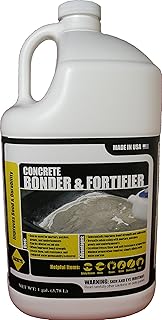
- Latex copolymer bonder and admixture for concrete, mortar, stucco, and plaster mixes
- Paint-on bonder straight from the bottle, or fortifier mixed 1 to 1 with water
- Coverage as a primer: 125 to 200 square feet per quart, 500 to 800 square feet per gallon
- Drying time 2 to 4 hours at 70 degrees Fahrenheit
- Slurry mix: 2 parts Bonder and Fortifier to 1 part portland cement
- Application temperature 40 to 80 degrees Fahrenheit, no rain within 24 hours
- Shelf life one year from date of manufacture
- VOC under 10 grams per liter
Sakrete Bonder and Fortifier earns its place because it does two jobs. As a paint-on coat it bonds new patch material to old render, and as an admixture it improves the tensile and flexural strength of the patch mix itself. On a rough courtyard wall, that second job matters: the patch mix with fortifier resists water penetration and freeze-thaw damage better than an unmodified mix. The one-year shelf life is shorter than some rivals, so check the date on the bottle before starting.
Pros: Two uses in one bottle, low VOC, clear coverage figures, improves the patch mix as well as the bond.
Cons: One-year shelf life, needs 40 to 80 degrees Fahrenheit during application, and needs a full day without rain after application.
BEHR Premium Concrete and Masonry Bonding Primer No. 880
- Water-based epoxy and acrylic bonding primer, clear finish
- Coverage 350 to 500 square feet per gallon
- Dry to touch in 2 hours, ready for topcoat in 4 hours
- Application temperature 50 to 90 degrees Fahrenheit
- Topcoat must be applied after at least 4 hours and before 30 days
- Resin type epoxy and acrylic, VOC under 50 grams per liter
- Not designed for use on wood, metal, or silicone-treated surfaces
- Not for use on vertical surfaces
BEHR 880 is in this guide as the product to avoid on a courtyard wall, and that warning is the point. The data sheet limits it to horizontal surfaces, and a vertical stucco wall is outside that limit. A primer that runs, sags, or hardens unevenly on a vertical face will not give the patch the even bond it needs. The product itself is sound for its intended use on floors and horizontal masonry, and its 2-hour dry time and 4-hour topcoat window are attractive, but none of that helps on a wall. The lesson is general: read the limitations section of every data sheet, because the limits are where incompatible choices hide.
Pros: Fast dry time, clear finish, good coverage on horizontal concrete, low VOC.
Cons: Not for vertical surfaces, so it must not be used on a courtyard wall; needs a topcoat within 30 days.
QUIKRETE Stucco Patch No. 8650
- Ready-to-use sanded acrylic formula for cracks, breaks, and holes up to one quarter inch thick
- Size: 1 quart pail
- Coverage: about 3.25 square feet at one eighth inch thickness per quart
- Maximum one quarter inch per layer, 24 hours between layers for deeper repairs
- Skin forms in 20 to 40 minutes, hard in about 2 hours, curing continues up to 3 days
- Application temperature above 50 degrees Fahrenheit
- Paint with acrylic paint after at least 24 hours
- Suitable for vertical or horizontal stucco repair
QUIKRETE Stucco Patch is the patch material that pairs with the primers above when the damage is shallow. The sanded acrylic formula blends with the texture of surrounding stucco, which is what a courtyard wall needs: a patch that disappears into the render instead of standing out as a smooth island. The one-quarter-inch limit per layer is a hard rule, not a suggestion, and the 24-hour wait between layers is what keeps a deep repair from cracking. Keep the pail out of freezing temperatures in storage, and stir the contents before use if the maker directs it.
Pros: Ready to use with no mixing, sanded texture blends with old stucco, clear layer limits and cure times, works on vertical surfaces.
Cons: Only one quarter inch per layer, needs 24 hours between layers, and needs temperatures above 50 degrees Fahrenheit.
Common mistakes
Priming over loose render
A primer bonds to whatever it touches. Spread it over render that is already loose, and the patch bonds to a layer that is already failing. The whole repair peels away with the loose render underneath it. Always cut back to sound render first, and check the edges with a tap before priming.
Using a horizontal-surface primer on a wall
Some bonding primers are made for floors and horizontal concrete, and their data sheets say so plainly. BEHR 880 is one example. On a vertical wall, such a primer may run, cure unevenly, or fail to hold the patch. Read the limitations section before buying, and choose a primer that names vertical masonry or stucco among its uses.
Flooding the surface with bonding adhesive
More adhesive is not better. A thick puddle dries into a glossy skin that the patch slides on, and a glossy skin is worse than no primer at all. Apply a thin, even coat to the thickness of a coat of paint, and let it dry to the time the maker lists before patching.
Patching over a wet primer
Fresh patch material placed over a primer that has not dried dilutes the bond line and weakens the repair. The wait is short, usually 2 to 4 hours for a bonding adhesive and 24 hours for a primer-sealer recoat, but skipping it costs the whole repair. Plan the day so the primer goes on in the morning and the patch goes on after lunch or the next day.
Skipping the sample panel
Texture is hard to match by memory. A sample panel made with the same patch material, on a spare board, shows how the texture sets at the day's temperature and humidity. Without it, the first attempt on the wall is a guess, and a wrong guess on a visible courtyard wall is hard to hide. Make the sample panel before the patch, and compare it with the old render in the same light.
Painting too soon
A patch that looks dry on the surface is often still curing underneath. Painting before the maker allows traps moisture under the paint film, and the paint blisters or peels. QUIKRETE Stucco Patch needs at least 24 hours before acrylic paint, and deeper patches need longer. Wait for the full cure time, and check that the patch is evenly dry before opening the paint.
FAQ
What shows whether a primer is compatible with old stucco?
Read the data sheet and look for three things: stucco or plaster listed among the surfaces, a pH range that covers old render, and a statement that the primer suits vertical masonry. Loxon lists stucco directly and covers pH 6 to 13. QUIKRETE Bonding Adhesive names new plaster and stucco over existing plaster and stucco. If a data sheet does not name stucco or vertical use, the product is unproven for the job.
Can a bonding adhesive replace a primer?
Yes, when the patch is cement-based and the old render is sound. A latex bonding adhesive such as QUIKRETE No. 9902 or Sakrete Bonder and Fortifier is designed for that job, applied as a paint-on coat or as a slurry. A bonding adhesive is not a substitute for a primer-sealer when the plan calls for sealing a porous surface before a topcoat, so match the product to the sequence, not just to the wall.
What happens when primer goes over a damp wall?
A primer applied over a damp wall may dilute at the bond line and lose adhesion. A bonding adhesive can be applied to a damp surface in some cases, but a primer-sealer needs a dry surface. Check moisture with a meter or a taped plastic sheet, and let the wall dry until it reads evenly dry before priming.
Why does the primer coverage drop on rough stucco?
Rough texture has far more surface area than a smooth wall, and the primer must fill the pores and the valleys of the texture. Loxon lists 200 to 320 square feet per gallon on general masonry but only 80 square feet per gallon on porous and rough stucco. Plan material quantities from the rough-surface figure for a courtyard wall.
How long is the wait between priming and patching?
A latex bonding adhesive typically dries in 2 to 3 hours before patch material goes over it. Sakrete Bonder and Fortifier lists 2 to 4 hours at 70 degrees Fahrenheit. An acrylic primer-sealer such as Loxon reaches recoat in 24 hours. Cold or humid weather extends those times, so check the surface by touch and by the data sheet, not by the clock alone.
Can a courtyard wall be patched in cold weather?
Most stucco patch products need air and surface temperatures above 50 degrees Fahrenheit, and Loxon needs at least 40 degrees Fahrenheit. Cold slows drying and curing, and frost destroys a fresh patch. Work in the warm part of the day, protect the repair from cold nights, and postpone the job if frost is forecast.
Conclusion
Primer compatibility for a textured stucco patch on a rough render courtyard wall comes down to three checks: the primer must name stucco and vertical masonry as suitable surfaces, it must tolerate the alkalinity of old render, and it must match the patch material that goes over it. An acrylic primer-sealer such as Loxon suits sound old stucco that will receive a cement-based patch and a topcoat. A latex bonding adhesive such as QUIKRETE No. 9902 or Sakrete Bonder and Fortifier suits cement-based patch work that needs a chemical grip on old plaster. A primer limited to horizontal surfaces has no place on a wall, no matter how fast it dries. Clean the wall to sound render, check pH and moisture, apply the primer thin and even, wait for the drying time the maker lists, and match the texture on a sample panel before touching the wall. Done in that order, the patch bonds to the wall instead of to a weak layer, and the courtyard wall keeps its face through the next season and the ones after it.
Related guides
More from Amazon
Programs that pair well with the guide above. Offers and eligibility are set by Amazon and may change.
Free shipping on eligible items, Prime Video and more. Eligible new members can start with a free trial.
Start a Prime free trialAudiobooks and podcasts to listen to on the go. Eligible new members can start with a free trial.
Try Audible freeAd-free music streaming. Eligible new subscribers can start with a free trial.
Try Music Unlimited freeA free business account with business pricing and bulk-buying tools for work, shop or home office.
Create a business accountAs an Amazon Associate we earn from qualifying purchases.
More ways to save on your next finish
Programs that pair well with the guide above. Offers and eligibility are set by Amazon and may change.
A free business account with business pricing and bulk-buying tools for work, shop or home office.
Create a business accountFast, free shipping on eligible items, plus Prime Video and more. Eligible new members can start with a free trial.
Start a Prime free trialRead from a huge library of eBooks, including how-to guides and cookbooks. Eligible new members can start with a free trial.
Try Kindle UnlimitedAudiobooks and podcasts for the commute, the garage or the kitchen. Eligible new members can start with a free trial.
Try Audible freeAs an Amazon Associate we earn from qualifying purchases. Using these links costs you nothing extra.










Write Your Review
No reviews yet. Be the first to share your experience!