
Key takeaways
- Work out the labor for repairing hollow lime plaster near a doorway, from sounding the patch to mixing, layering and finishing, with time allowances included.
As an Amazon Associate I earn from qualifying purchases. This post may contain affiliate links at no extra cost to you.
A loose patch of lime plaster beside a doorway is a small job on paper and a surprisingly fiddly one in practice. The doorway moves a little every time the door closes, the frame casts a shadow that hides the true edge of the hollow area, and the patch sits where everyone in the house walks past it, so the work has to be protected while it hardens. The question of how to estimate labor when you repair hollow lime plaster around a loose patch near a doorway is therefore less about the size of the patch and more about the number of visits, the waiting between coats, and the care needed around the frame.
Most of the labor in a lime repair is not in the plastering itself. It is in the survey, the cutting back, the cleaning, the mixing, and the return visits to lay the next coat. Lime hardens slowly, and each layer needs time to firm before the next one goes on, so a patch that takes an hour to plaster can take several days from first tap to final limewash. An estimate that counts only the trowel time will always be short. An estimate that counts the visits, the protection, and the drying will be close to the truth.
This guide breaks the job into stages, gives each stage a realistic time allowance, and shows how to adjust the estimate when the patch is larger than it looks, the background is worse than expected, or the doorway keeps the room in use while the work goes on.
Tools and materials
Kerakoll Biocalce Intonaco
- WTA-certified plaster based on NHL 3.5 natural hydraulic lime
- Consumption about 1.3 kg per square metre per mm of thickness
- Supplied in 25 kg bags
- Mixing about 5.1 litres of water per 25 kg bag
Biocalce Intonaco is the body coat for the dubbing-out layers, and its published consumption figure is the key to estimating material and mixing time. At about 1.3 kg per square metre per mm, a patch of one square metre dubbed out to 10 mm needs about 13 kg of dry material, which is a little over half a bag, and the mixing water is about 5.1 litres per full bag. Those figures let you work out how many mixes the job needs and how long each mix will take, including the standing time the lime needs after mixing. The NHL 3.5 base gives the coat a gentle hydraulic set alongside the slow carbonation, which helps a repair near a doorway where the wall gets a little vibration. Keep the bags dry, mix with clean water, and do not add extra water to make the mix go further, because a wet mix shrinks more and takes longer to firm.
Kerakoll Biocalce Intonaco Fino
- Plaster based on NHL 3.5 natural hydraulic lime, finer grade body coat
- Consumption about 1.2 kg per square metre per mm of thickness
- Supplied in 25 kg bags
- Mixing about 5.1 litres per 25 kg bag
- Application temperature plus 5 to plus 30 degrees C
Intonaco Fino is the finer grade that follows the body coat, and it is the layer where the estimate starts to include finishing time rather than just filling time. Its consumption of about 1.2 kg per square metre per mm is close to the body coat, but the finer aggregate means it goes on thinner and needs a steadier hand, so allow more time per square metre for this coat than for the dubbing out. The application range of plus 5 to plus 30 degrees C matters for scheduling: a cold hallway near an outside door can sit below the lower limit in winter, and the job may need to wait for a warmer spell or for the room to be heated gently. Plan the finishing coat for the warmest part of the day, and keep the door closed while the coat firms so a draught does not dry the surface too fast.
Kreidezeit Marmorino
- Lime plaster
- Two layers about 1 mm
- Coverage 2 kg per square metre at 2 mm
- Dry about 24 hours
Kreidezeit Marmorino is the finish plaster for this repair, and it is the layer where the labor estimate should include the most care. Two thin layers of about 1 mm each give a fine, even surface without adding the weight of a thick coat, and the published coverage of 2 kg per square metre at 2 mm lets you work out how much to order for a patch without waste. Allow time for both coats, including the wait between them, and allow time for the final pass with the trowel to close the surface. The drying time of about a day is a guide, not a promise: a cold hallway near an outside door can take longer, and the coat should be firm and pale before you judge it. Rushing the finish coat is the most common way to lose time on this job, because a rushed coat has to be taken down and done again, and that costs more than doing it slowly once.
Meoded HydroWax
- Water-soluble plaster wax
- Adds shine
- For smooth finishes only: Lamundo, Tintoretto and smooth Palladino
- Applied after the plaster has dried
HydroWax is not needed on every patch, and it should not be used on a patch that will be limewashed, because the wax will sit between the plaster and the limewash. It earns a place in this estimate only where the finish will be left as a polished plaster surface, and in that case the labor includes the waiting time for the plaster to dry fully before the wax goes on, plus the time to apply the wax in thin coats and buff it. Allow that time in the estimate rather than treating the wax as a quick final step. A wax applied over plaster that is still damp will cloud, and a clouded wax coat has to be removed before the work can be finished, which costs more time than waiting in the first place.
Zinsser Bulls Eye 1-2-3
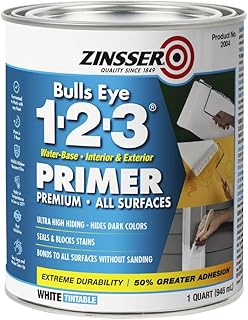
- Water-based styrenated acrylic primer
- Coverage 400 to 450 square feet per gallon
- Touch dry 30 minutes
- Topcoat after 1 hour
- Full hardness 7 days
- VOC under 100 grams per litre
Zinsser 1-2-3 is the primer for the painted surfaces around the patch, such as the door frame and the skirting, rather than for the lime itself. Its published drying times are useful for scheduling: touch dry in half an hour, ready for a topcoat in an hour, and fully hard in a week. On a doorway repair, the frame and the architrave often need a coat of primer before they are painted, and that work can be fitted into the waiting time between lime coats. Do not use this primer as a bonding coat under lime plaster: it is made for paint, and a lime coat needs a lime-compatible key. Keep it for the joinery, and keep the lime work separate.
Meoded WhiteOut Trowel

- Smoothing and burnishing trowel for light colours
- Helps avoid dark carbon marks from standard steel
The WhiteOut trowel is the finishing trowel for this repair, and it earns its place in the labor estimate because it saves correction time. On a pale lime finish beside a doorway, where the light falls across the wall, a standard steel blade can leave dark carbon marks that show through the limewash and have to be sanded out. The WhiteOut trowel is made for light colours, so the finish stays clean and the correction time disappears from the estimate. Keep the blade clean and dry between coats, check the edge before each pass, and let the trowel do the work rather than pressing hard. A light hand with the right trowel finishes the coat in fewer passes, and fewer passes mean fewer hours on the job.
| Item | Key spec | Best for |
|---|---|---|
| Kerakoll Biocalce Intonaco | NHL 3.5, 1.3 kg per square metre per mm | Dubbing out deep hollows |
| Kerakoll Biocalce Intonaco Fino | NHL 3.5 fine grade, 1.2 kg per square metre per mm | Finer body coat before finishing |
| Kreidezeit Marmorino | 2 layers about 1 mm, coverage 2 kg per square metre | Thin finish coat, easy to measure |
| Meoded HydroWax | Water-soluble wax, apply after plaster dries | Polished finish where no limewash follows |
| Zinsser Bulls Eye 1-2-3 | Touch dry 30 minutes, topcoat after 1 hour | Primer for frame and skirting paint |
| Meoded WhiteOut Trowel | Smoothing trowel for light colours, avoids dark marks | Clean finish without correction time |
Step by step
Step 1: Survey the patch and the doorway
Tap the wall around the doorway in a grid, marking every hollow area with a pencil. A loose patch near a doorway often runs further than it looks, because the vibration from the door travels through the plaster and loosens the bond beyond the visible crack. Check the frame itself: is it firm, or does it move when the door closes? A moving frame will keep cracking any repair until it is fixed, so note it in the estimate as a separate item. Measure the patch, including the area beyond the first marks, and photograph it. Count the number of separate hollow areas, because two small patches take more visits than one patch of the same total size. Note the condition of the wall above the door, where the lintel can hide a longer crack, and check the skirting and architrave for damage that will need attention in the same visit.
Step 2: Allow time for cutting back and cleaning
Cutting back a loose patch beside a doorway takes longer than the same area on an open wall, because the frame, the architrave, and the skirting all limit the swing of the tools. Allow for careful hand work around the frame, and for protecting the frame with tape and board while the plaster comes off. Cleaning takes time too: the dust from the cutting back settles on the frame and the floor, and it must be vacuumed out of the cut and the joints before any primer goes on. A realistic allowance for cutting back and cleaning a patch of about one square metre beside a doorway is a half day of careful work, including the protection and the clearing up. If the background turns out to be worse than the survey suggested, for example perished mortar in the joints, allow a further half day for raking out and repointing before the plaster work starts.
Step 3: Price the mixing and the layers
Work out the material from the published consumption figures, then turn the material into mixes. A patch of one square metre dubbed out to 10 mm needs about 13 kg of Biocalce Intonaco, which is a little over half a 25 kg bag, and the mixing water is about 5.1 litres per full bag. Each mix takes time to measure, mix, stand, and use, and a deep repair needs two or three mixes across two or three visits. Allow for the time between layers as well: each layer must firm before the next goes on, and that waiting time is part of the job even though no trowel is in hand. A good estimate lists the mixes and the visits separately, so the client can see why a small patch takes several days. Do not promise a one-day finish for a deep lime repair. The lime will not keep that promise, and the repair will fail.
Step 4: Schedule the finish coat and the blending
The finish coat is the stage where haste costs the most. Allow a full visit for the Marmorino coats, including the wait between the two coats and the sponging pass that blends the edge of the patch. The room should be kept free of draughts while the finish firms, and the doorway should be kept closed or screened so nobody brushes past the fresh work. If the house is in daily use, allow time to set up protection at the start of the visit and to take it down at the end, and allow for the fact that the door may need to stay usable while the patch hardens. A screen or a temporary board can keep the doorway in use without risking the patch, and the time to set it up belongs in the estimate.
Step 5: Add the drying and the limewash
Lime hardens slowly, and the estimate should include the return visit for the limewash rather than treating it as part of the plastering day. The published carbonation rate for mature lime putty is about 1 to 1.5 mm per month, so a repair several millimetres thick needs weeks before it is fully hard, and the limewash should wait until the surface is firm and dry. Allow a separate visit for the limewash, including the time to mask the frame and the floor, to apply two or three thin passes, and to clear up. If the client wants the wall back in use quickly, explain that the waiting time is part of the lime, not a delay in the work, and that a limewash applied too early will peel and have to be done again.
Step 6: Write the estimate so the client can follow it
Set the estimate out stage by stage: survey and protection, cutting back and cleaning, priming and dubbing out, finish coat and blending, drying, and limewash. Give each stage a time allowance and a note of what it includes, so the client can see where the days go. Note the assumptions as well: the patch size as surveyed, the condition of the background, and the fact that the frame is firm. If the background turns out worse once the plaster is off, the estimate should say what will change and by how much. A clear estimate protects both sides: the client knows what to expect, and the plasterer is not asked to absorb the cost of a problem that was hidden behind the plaster.
Common mistakes
Counting only the trowel time
The trowel time is the smallest part of a lime repair. The survey, the cutting back, the cleaning, the mixing, the waiting between coats, and the protection all take time, and an estimate that ignores them will always be short. Count the visits, not just the hours with a trowel in hand.
Promising a one-day finish
A deep lime repair cannot be finished in a day, because each layer needs time to firm before the next goes on. A promise of a one-day finish forces the plasterer to lay the coats too thick or too soon, and the repair will crack. Give the job the days it needs, and explain why.
Forgetting the doorway in the estimate
The doorway is not just a location. It is a moving frame, a source of vibration, a shadow that hides the edge of the patch, and a route that people use while the work is drying. An estimate that prices the patch as if it were on an open wall will miss the protection, the careful cutting around the frame, and the extra visits. Walk the doorway, note the frame, and price it.
Forgetting the protection for the doorway
A doorway in daily use needs a screen or a temporary board while the patch hardens, and the time to set that protection up belongs in the estimate. Without it, someone will brush past the fresh plaster, lean a bag against it, or slam the door and crack the surface before it has firmed. The protection itself is cheap: a sheet of board, a dust sheet, and a few minutes to fix them in place. The cost of leaving it out is a patch that has to be done again, and a second repair always takes longer than the first because the failed work must be removed and the background cleaned once more. Put the screen on the checklist and keep it up until the limewash is dry.
Mixing too much at once
A large mix that stiffens before it is used is wasted material and wasted time. Mix only as much as can be placed before it firms, and allow for a second mix rather than trying to stretch one mix across the whole patch. The published mixing water per bag is a guide: measure it, do not guess.
Limewashing before the plaster is firm
A limewash over a soft repair will peel with the top skin of the plaster, and the whole finish will have to be done again. Wait until the surface is firm and dry, allow for the slow carbonation of lime, and keep the limewash visit separate in the estimate.
FAQ
How many visits does a doorway patch usually need?
A typical patch needs at least four visits: survey and cutting back, priming and dubbing out, finish coat and blending, and limewash. A deep patch may need an extra visit for a second dubbing-out layer, and a cold room may need longer gaps between visits. The number of visits matters more than the total hours, because each visit has its own setup and clearing up.
Why does the estimate include waiting time between coats?
Lime hardens by carbonation, which is slow, and each layer must firm before the next goes on. If the next coat goes on too soon, it can slide, or it can trap moisture that later causes cracking. The waiting time is not idle time for the plasterer, who may be on another job, but it is part of the calendar time the client should expect.
How do I adjust the estimate if the patch is bigger than surveyed?
Measure the true area once the plaster is cut back, work out the material from the published consumption figures, and add the extra mixes and the extra visit if the depth needs another layer. Tell the client before the extra work starts, and note the new size on the estimate so there is a record of what changed.
Should the door be kept shut while the plaster hardens?
If possible, yes, or screened so draughts do not dry the surface too fast. A door that slams will vibrate a fresh patch, and a draught will dry the surface while the inside stays soft. A temporary screen keeps the doorway usable without risking the repair, and the time to set it up belongs in the estimate.
Does cold weather change the labor estimate?
Yes. Lime work below the published application range will not harden properly, and the job may need to wait for warmer weather or for gentle heating of the room. Cold also lengthens the time between coats. Allow for longer gaps in winter, and do not try to force the drying with direct heat.
What if the frame moves when the door closes?
A moving frame will crack any plaster repair until it is fixed. The estimate should list the frame repair as a separate item, to be done before the plaster work starts. Plastering over a moving frame is wasted labor, because the crack will return with the first slam of the door.
Conclusion
Estimating labor for a hollow lime plaster repair near a doorway is an exercise in counting what is easy to miss: the survey, the careful cutting around the frame, the mixes, the layers, the waiting, and the return visit for the limewash. The trowel time is only a small part of the job, and an estimate that counts only that part will always fall short. Work from the published consumption figures, list the visits stage by stage, and be honest about the drying time lime needs. A clear estimate, built on real figures and real visits, is the foundation of a repair that lasts.
Related guides
More from Amazon
Programs that pair well with the guide above. Offers and eligibility are set by Amazon and may change.
Free shipping on eligible items, Prime Video and more. Eligible new members can start with a free trial.
Start a Prime free trialAudiobooks and podcasts to listen to on the go. Eligible new members can start with a free trial.
Try Audible freeAd-free music streaming. Eligible new subscribers can start with a free trial.
Try Music Unlimited freeA free business account with business pricing and bulk-buying tools for work, shop or home office.
Create a business accountAs an Amazon Associate we earn from qualifying purchases.
More ways to save on your next finish
Programs that pair well with the guide above. Offers and eligibility are set by Amazon and may change.
A free business account with business pricing and bulk-buying tools for work, shop or home office.
Create a business accountFast, free shipping on eligible items, plus Prime Video and more. Eligible new members can start with a free trial.
Start a Prime free trialRead from a huge library of eBooks, including how-to guides and cookbooks. Eligible new members can start with a free trial.
Try Kindle UnlimitedAudiobooks and podcasts for the commute, the garage or the kitchen. Eligible new members can start with a free trial.
Try Audible freeAs an Amazon Associate we earn from qualifying purchases. Using these links costs you nothing extra.










Write Your Review
No reviews yet. Be the first to share your experience!