
Key takeaways
- Choosing the right primer before blending new stucco into old stucco near a patched porch pier matters for adhesion, color match, and a long-lasting repair.
What's inside
As an Amazon Associate I earn from qualifying purchases. This post may contain affiliate links at no extra cost to you.
Our top picks at a glance
3 products from this guide, in the order reviewed below.

As an Amazon Associate we earn from qualifying purchases. Prices and availability can change.
When a porch pier has been patched and the time comes to blend new stucco into the old surface around it, the choice of primer decides whether the repair disappears into the wall or shows as a visible patch within a season. Which primer is compatible before you blend new stucco into old stucco near a patched front porch pier is a question with a practical answer: the primer must bond to weathered cement, tolerate the high alkalinity of fresh stucco, and accept the finish coat without flashing or peeling. A porch pier sits close to grade, catches splashback in rain, and endures freeze and thaw cycles, so the primer layer carries more responsibility here than on a sheltered wall.
This guide compares five bonding and priming products that suit the job, explains how each one works on old stucco, and sets out a step-by-step method for preparing the pier, priming the repair zone, and blending the new coat into the old. Every product below is a real, named product with published specifications from the maker, and every coverage figure and drying time comes from the product data sheet. The aim is a repair that reads as one continuous wall face, with no pale halo around the patch and no edge that lifts when the weather turns.
Quick answer
For a patched porch pier, an acrylic masonry primer-sealer such as Sherwin-Williams Loxon suits most repairs, while a cement bonding adhesive such as QUIKRETE 9902 suits patches that need extra grip on smooth, dense old stucco. A latex bonder such as SAKRETE Concrete Bonder and Fortifier works well as a paint-on bond coat or as an admixture, and Larsen Weld-Crete suits sound, hard old stucco that needs a strong chemical key. Zinsser Bulls Eye 1-2-3 fits only where the surface is already painted or sealed and the new stucco will sit over a stable coating. Match the primer to the surface condition, apply it within the maker's temperature range, and allow the full drying time before the finish coat goes on.
| Product | What it does | When to use it |
|---|---|---|
| Sherwin-Williams Loxon Concrete and Masonry Primer-Sealer | Acrylic primer-sealer that seals porous stucco and resists high alkalinity | General priming of weathered stucco before a finish coat |
| QUIKRETE Concrete Bonding Adhesive No. 9902 | Synthetic emulsion bonding adhesive for cement to cement | Smooth, dense old stucco where extra grip is needed |
| Larsen Weld-Crete Bonding Agent | Chemical bonding agent for Portland cement plaster to sound concrete | Hard, sound old stucco that needs a strong key |
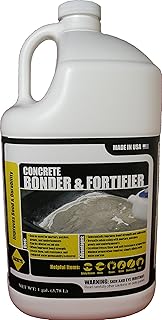
| SAKRETE Concrete Bonder and Fortifier | Latex copolymer bonder and admixture for cement mixes | Paint-on bond coat or mixed into the patch mortar |
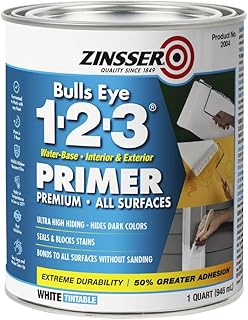
| Zinsser Bulls Eye 1-2-3 Primer-Sealer | Styrenated acrylic primer-sealer for coated surfaces | Painted or previously sealed stucco under a new coat |
Step by step
1. Inspect the pier and the patch
Walk around the pier and look at the patch from several angles and in different light. A good patch sits flush with the old stucco, with no hollow sound when tapped and no loose edge that moves under a fingertip. Check the junction between the patch and the old stucco for hairline gaps, and check the old stucco for powdering, flaking, or hollow areas that extend beyond the patch. Mark any suspect areas with painter's tape so the whole repair zone is clear before work starts. The primer choice depends on what this inspection finds: sound, hard stucco takes a bonding agent well, while powdery or very porous stucco needs a sealing primer first. Note the exposure of the pier as well. A pier on the weather side of a porch or near a downspout outlet faces more water than a pier under a deep overhang, and that exposure argues for the most water-resistant primer in the comparison.
2. Clean the old stucco
Remove loose material, dust, and salts from the repair zone and from a margin of at least 300 mm around it, because the blend zone extends well beyond the patch itself. A stiff bristle brush takes off surface dust and loose grains, and a scraper lifts flaking paint or soft stucco. Wash the area with clean water and a brush, working from the top down so dirt does not run onto cleaned areas. Let the wall dry back to a damp, not wet, state before priming. Grease, algae, and old paint that is peeling must come off; a primer cannot bond through a layer of contamination. Where algae has stained the pier, a suitable masonry cleaner from a trade supplier removes the growth, followed by a clean-water rinse. Do not use a high-pressure washer at close range on old stucco, because the jet can cut into the surface and open new damage around the patch.
3. Dampen the surface
Old stucco is thirsty. A dry, porous surface pulls water out of the primer and out of the fresh stucco too fast, which weakens the bond and can cause the patch to dry with a pale, dusty face. Dampen the repair zone with a fine mist from a garden sprayer until the surface darkens evenly, then wait until the surface looks damp but has no standing water or shiny wet spots. This is the correct state for most primers and bonding agents in this guide. The QUIKRETE data sheet and the SAKRETE guidance both describe application to a sound, clean, damp surface. In hot sun or wind, dampen twice, because a pier in direct sun can dry out in minutes. Work in the cooler part of the day when possible, and keep the misting bottle close at hand through the whole job.
4. Apply the primer or bonding agent
Choose the product from the comparison table that matches the surface found in step one, then apply it exactly as the maker directs. A primer-sealer such as Loxon goes on with a brush or roller in a single even coat, and the data sheet lists coverage of 200 to 320 square feet per gallon, falling to about 80 square feet per gallon on porous, rough stucco. A bonding adhesive such as QUIKRETE 9902 can be brushed on as a paint-on coat at 35 to 75 square feet per quart, or mixed as a slurry coat. Weld-Crete goes on as a thin, even film at 200 to 300 square feet per gallon. The SAKRETE bonder can be brushed on straight or diluted one part bonder to one part water as an admixture. Keep the coat thin and even. A thick, puddled coat of bonding agent dries as a skin that the new stucco cannot key into, which defeats the purpose. Feather the primer a little beyond the patch edge so the blend zone has the same base as the patch itself. Allow the full drying time from the data sheet before the next step: Loxon needs 24 hours before recoating at 77 degrees Fahrenheit and 50 percent relative humidity, QUIKRETE 9902 needs 2 to 3 hours to dry, and the SAKRETE bonder needs 2 to 4 hours at 70 degrees Fahrenheit.
5. Apply the new stucco and blend the edge
Mix the patch stucco to the maker's ratio and apply it in a coat no thicker than the data sheet allows for a single application. Press the material firmly into the patch area so it keys into the primed surface, then work outward across the blend zone with a trowel, thinning the coat toward the edge so the new material feathers into the old. The blend zone should be at least as wide as the patch itself; a narrow blend reads as a sharp line, while a wide, thin feather disappears. Use a sponge float in light circular movements to match the texture of the old stucco, and keep the float damp. Check the work from a few steps back and from the side, because a blend that looks right from straight on can show a ridge in raking light. If the texture does not match, wait until the coat has firmed slightly, then rework the surface lightly with the float rather than adding more material.
6. Protect the fresh work while it hardens
Fresh stucco needs time to harden without drying out too fast or freezing. Shade the pier from direct sun with a board or a sheet of damp hessian hung clear of the surface, and mist the new work lightly if the air is hot and dry. Keep rain off the fresh coat for at least the period the product data sheet specifies, and keep the temperature above the maker's minimum until the coat has hardened. Do not paint or seal the repair until the stucco has cured for the period the finish product requires; the Loxon data sheet, for example, calls for the surface to be at least 7 days old before priming, and the topcoat should go on within 14 days on exterior work. A repair that is rushed into paint before it has cured can show color differences that no amount of later coating will hide.
Tools and materials
Sherwin-Williams Loxon Concrete and Masonry Primer-Sealer
- Acrylic primer-sealer for concrete, masonry, and stucco
- Coverage 200 to 320 sq ft per gallon; about 80 sq ft per gallon on porous, rough stucco
- Touch dry in 4 hours; recoat after 24 hours at 77 degrees Fahrenheit and 50 percent relative humidity
- Suitable for surfaces with pH from 6 to 13
- Apply above 40 degrees Fahrenheit; topcoat within 14 days on exterior work
- Shelf life 36 months
Loxon is the most forgiving primer in this comparison for a weathered porch pier, because it seals a porous surface, tolerates the high pH of fresh cement, and gives a uniform base for the finish coat. The data sheet lists a wide coverage range, and the lower figure is the realistic one for rough old stucco, so measure the repair zone and allow for the porous-surface rate rather than the smooth-surface rate. One even coat is the normal application, and the 24-hour recoat interval means the job needs two visits or a well-planned day.
Pros: Seals porous stucco and resists high alkalinity; wide coverage range; long shelf life.
Cons: 24-hour recoat interval slows the job; coverage falls sharply on very rough stucco.
QUIKRETE Concrete Bonding Adhesive No. 9902
- Exterior-grade synthetic emulsion bonding adhesive
- Available in 1 quart, 1 gallon, and 5 gallon sizes
- Paint-on coat covers 35 to 75 sq ft per quart; slurry coat covers about 19 sq ft per quart
- Primer use covers 600 to 1200 sq ft per gallon
- Meets the ASTM C1059 standard for bonding agents
- Dries in 2 to 3 hours
QUIKRETE 9902 is the bonding adhesive to reach for when the old stucco is smooth and dense and a paint-on primer alone may not give enough grip. The same product works three ways: brushed on as a bond coat, mixed as a slurry, or diluted as a primer, which makes it flexible on a pier where the patch area and the blend zone have different surface conditions. The slurry option is useful where the old stucco has a slick, burnished face. Keep the coat thin, because a thick film of bonding adhesive dries as a skin that blocks the key the new stucco needs.
Pros: Three application methods from one product; strong bond on smooth, dense stucco; fast drying time.
Cons: Thick coats can skin over and block adhesion; coverage as a slurry coat is low.
Larsen Weld-Crete Bonding Agent
- Chemical bonding agent for Portland cement plaster and stucco to sound concrete
- Coverage 200 to 300 sq ft per gallon
- Meets the ASTM C1059 standard for bonding agents
- Applied as a thin, even film
Weld-Crete suits a pier where the old stucco is hard, sound, and well attached, and the repair needs a chemical key rather than a sealing coat. It goes on as a thin film and leaves a surface that fresh cement grips firmly. The product is aimed at sound substrates, so it is not the right choice where the old stucco is powdery or hollow; in that case a sealing primer such as Loxon comes first. The coverage rate is generous, so a single gallon covers a large repair zone with material to spare for the blend area.
Pros: Strong chemical key on sound, hard stucco; generous coverage; simple thin-film application.
Cons: Needs a sound substrate; not a sealer for powdery or very porous stucco.
SAKRETE Concrete Bonder and Fortifier
- Latex copolymer bonder and admixture
- Paint-on coat covers 125 to 200 sq ft per quart; 500 to 800 sq ft per gallon
- Can be used straight as a paint-on bonder or diluted one part bonder to one part water as an admixture
- Slurry mix: 2 parts bonder to 1 part Portland cement
- Dries in 2 to 4 hours at 70 degrees Fahrenheit
- Apply between 40 and 80 degrees Fahrenheit; shelf life 1 year; VOC under 10 g per litre
The SAKRETE bonder earns its place on a porch pier because it works in two roles: brushed on as a bond coat, or mixed into the patch mortar to improve adhesion and water resistance from within. The slurry mix of two parts bonder to one part Portland cement makes a useful bonding coat for a patch edge that has been cut back to sound material. The drying time of 2 to 4 hours fits a single working day, and the low VOC figure suits work close to a house entrance. Keep the product within its temperature range, because application below 40 degrees Fahrenheit slows the bond formation.
Pros: Works as a paint-on coat and as an admixture; good coverage as a primer; low VOC.
Cons: One-year shelf life is shorter than some rivals; temperature range is narrower than Loxon.
Zinsser Bulls Eye 1-2-3 Primer-Sealer
- Styrenated acrylic primer-sealer
- Coverage 400 to 450 sq ft per gallon; about 350 sq ft per gallon on porous surfaces
- Touch dry in 30 to 35 minutes; topcoat after 1 hour; full hardness in 7 days
- Suitable for surfaces with pH up to 12.5
- Apply between 35 and 90 degrees Fahrenheit
Bulls Eye 1-2-3 is the fast option in this comparison, and it fits a specific case: a pier where the old stucco is already painted or sealed and the new stucco will sit over a stable coating. The one-hour topcoat interval keeps a small repair moving, and the coverage is the highest of the five products. It is not a bonding agent for bare cement, so it should not be the first choice on unpainted, weathered stucco. Use it where the surface is already coated and sound, and where speed matters more than the extra grip a cement bonding adhesive provides.
Pros: Fast drying and one-hour topcoat interval; highest coverage in this comparison; wide temperature range.
Cons: Not a bonding agent for bare cement; limited to coated or sealed surfaces for this job.
Common mistakes
Priming over dust and loose material
A primer cannot bond through dust, salts, or flaking paint. The most common reason a blended patch fails is a surface that looked clean but carried a thin film of dust from the cutting and patching work. Brush the repair zone thoroughly, wash it, and let it dry back to damp before any primer goes on. The extra half hour of cleaning is cheaper than redoing the whole pier.
Choosing a primer for the wrong surface
A sealing primer on a smooth, dense surface and a bonding adhesive on a powdery surface both give poor results. The sealing primer has little to grip on a slick face, and the bonding adhesive cannot stabilise a surface that is shedding grains. Match the product to the surface found in the inspection step, and use a sealer first where the stucco is powdery, then a bonding agent if the patch still needs extra grip.
Applying the primer too thick
Bonding agents and primers are thin-film products. A thick, puddled coat dries as a skin that the new stucco cannot key into, and the patch can shear off the skin in the first freeze. Brush the product on in a thin, even coat, and brush out any pools or runs before they set. If the data sheet offers a dilution or a slurry option, follow it rather than applying the product neat and thick.
Skipping the drying time
Each product in this guide has a stated drying or recoat interval, and the new stucco should not go on before that interval has passed. Loxon needs 24 hours before recoating, while the bonding adhesives need 2 to 4 hours. Rushing the next coat traps moisture under the finish and can cause the patch to dry with a pale face or to lose adhesion at the edge.
Blending over too narrow a zone
A patch blended over a narrow band of old stucco shows as a sharp line, especially in raking light. Feather the new material over a zone at least as wide as the patch, and carry the primer across the same zone so the base is uniform. The eye reads a gradual change in texture as one wall, and a sudden change as a repair.
FAQ
Can a primer be skipped when the old stucco looks sound?
Skipping the primer is a false economy on a porch pier. Even sound-looking old stucco is porous and alkaline, and a primer or bonding agent controls suction, improves adhesion, and gives the finish coat a uniform base. A repair made without primer often shows as a pale patch within months, and the cost of redoing it exceeds the cost of the primer many times over.
Which primer works best on a pier that stays damp?
A pier that stays damp needs a primer that tolerates moisture and a surface that is allowed to dry back before work starts. Loxon suits damp-prone masonry because it seals the surface and resists high alkalinity, while a bonding adhesive such as QUIKRETE 9902 needs a sound, damp surface and gives a strong cement-to-cement bond. Find and fix the source of the dampness first, because no primer can hold a repair together where water keeps coming through the wall.
How long should the primer dry before the new stucco goes on?
Follow the data sheet for the product in use. Loxon needs 24 hours before recoating at 77 degrees Fahrenheit and 50 percent relative humidity. QUIKRETE 9902 dries in 2 to 3 hours. The SAKRETE bonder dries in 2 to 4 hours at 70 degrees Fahrenheit. Zinsser Bulls Eye 1-2-3 accepts a topcoat after 1 hour. Cooler or more humid air lengthens every one of those times, so allow extra time on a cold or damp day.
Does the primer need to cover the blend zone as well as the patch?
Yes. The primer should extend across the whole blend zone, not just the patch itself. The new stucco feathers out across the blend zone, and it needs the same base there as it has over the patch. A blend zone primed only in part dries with a visible edge where the primed and unprimed areas meet.
Can a bonding adhesive be mixed into the patch mortar instead of brushed on?
Yes, where the maker allows it. The SAKRETE bonder is made for this: it can be diluted one part bonder to one part water as an admixture in the mix. QUIKRETE 9902 also offers a slurry option. Mixing the bonder into the mortar improves adhesion from within the patch, but it does not replace a paint-on bond coat on a smooth, dense surface, where a brushed coat gives the strongest key.
Conclusion
Blending new stucco into old stucco near a patched front porch pier comes down to matching the primer to the surface. A sealing primer such as Loxon suits weathered, porous stucco; a bonding adhesive such as QUIKRETE 9902 or Larsen Weld-Crete suits smooth, dense stucco that needs extra grip; a latex bonder such as SAKRETE Concrete Bonder and Fortifier covers both roles; and Zinsser Bulls Eye 1-2-3 fits coated surfaces where speed matters. Clean the pier, dampen the surface, apply the primer thinly and evenly, allow the full drying time, and feather the new stucco across a wide blend zone. Done in that order, the repair reads as one continuous wall face, and the pier keeps its appearance through rain, sun, and freeze.
Related guides
More from Amazon
Programs that pair well with the guide above. Offers and eligibility are set by Amazon and may change.
Free shipping on eligible items, Prime Video and more. Eligible new members can start with a free trial.
Start a Prime free trialAudiobooks and podcasts to listen to on the go. Eligible new members can start with a free trial.
Try Audible freeAd-free music streaming. Eligible new subscribers can start with a free trial.
Try Music Unlimited freeA free business account with business pricing and bulk-buying tools for work, shop or home office.
Create a business accountAs an Amazon Associate we earn from qualifying purchases.
More ways to save on your next finish
Programs that pair well with the guide above. Offers and eligibility are set by Amazon and may change.
A free business account with business pricing and bulk-buying tools for work, shop or home office.
Create a business accountFast, free shipping on eligible items, plus Prime Video and more. Eligible new members can start with a free trial.
Start a Prime free trialRead from a huge library of eBooks, including how-to guides and cookbooks. Eligible new members can start with a free trial.
Try Kindle UnlimitedAudiobooks and podcasts for the commute, the garage or the kitchen. Eligible new members can start with a free trial.
Try Audible freeAs an Amazon Associate we earn from qualifying purchases. Using these links costs you nothing extra.










Write Your Review
No reviews yet. Be the first to share your experience!