
Key takeaways
- Blotchy stucco color near a rain streak takes days, not hours. Learn the drying and hardening times for fog coat, primer, masonry paint and sealer coating.
As an Amazon Associate I earn from qualifying purchases. This post may contain affiliate links at no extra cost to you.
A rain streak that has left blotchy color on an exterior stucco wall does not get fixed in an afternoon, even when the wall is small and the materials are ready. The work itself takes a few hours, but the drying and hardening times between the steps take days, and those times cannot be shortened without weakening the repair. The question how long does it take to fix blotchy exterior stucco color near an exterior rain streak has two answers: the direct work takes about half a day spread across two or three visits, and the full repair, from the first wash to the final hardened color, takes about three to five days in warm, dry weather and longer in cool or damp weather. The wall decides the schedule, not the calendar, and every step below carries the time it needs.
The reason the repair takes days is that each layer must dry before the next layer goes on, and each material dries on its own clock. A primer that needs 24 hours before a topcoat cannot be rushed, because a topcoat applied over a wet primer slides, blisters, and peels. A fog coat that lightens as it dries cannot be judged until it has dried fully, because the wet color is always darker than the dry color. A sealer applied over a coating that is still damp traps moisture under the surface, and the blotches return as that moisture works its way out. The times in this guide come from the data sheets of the products themselves, and they are the minimum times, not the ideal times. Waiting a little longer than the minimum is always safer than starting the next step a little early.
Quick answer
Fixing blotchy stucco color near a rain streak takes about three to five days from the first wash to the final hardened color in warm, dry weather. Washing and drying take at least a full day. LaHabra Fog Kote needs a full day to harden between coats. Zinsser Bulls Eye 1-2-3 dries to the touch in about 30 minutes and takes a topcoat in one hour, while Sherwin-Williams Loxon needs 4 hours to the touch and 24 hours before recoating. KILZ Self-Priming Masonry Paint dries in about 3 hours, and Master Builders Solutions Color Coat needs its primer dry to the touch before the color goes on. The direct work takes about half a day spread across two or three visits.
| Material | Drying time | When the next step can start |
|---|---|---|
| LaHabra Fog Kote 6 lb | Hardens over a full day per coat | Next coat or sealer after a full day |
| Zinsser Bulls Eye 1-2-3 Primer-Sealer | Touch about 30 min; topcoat 1 hour; full adhesion 7 days | Topcoat after 1 hour; full strength after 7 days |
| Sherwin-Williams Loxon Primer-Sealer | Touch 4 hours; recoat 24 hours | Topcoat after 24 hours |
| KILZ Self-Priming Masonry Paint | Dry about 3 hours | Second coat or sealer after about 3 hours |
| Master Builders Solutions Color Coat | Primer dry to the touch before color; second coat deepens color | Color coat after the primer is dry to the touch |
Step by step
1. Wash the streak and wait a full day
Wash the streak zone with clean water and a stiff brush, working from the top of the streak downward so dirt does not wash back over cleaned areas. Use a fan spray rather than a hard jet, and scrub a dark band again with a mild masonry cleaner diluted exactly as the maker lists, then rinse twice with clean water. The washing itself takes less than an hour, but the drying takes at least a full day, and two days after rain or in cool, humid weather. A stucco wall holds water deep in its pores, so the surface can look dry while the inside is still damp. Touch the wall with the back of the hand in several places; the surface should feel dry and cool, not cold or damp. Do not start coating a wall that still shows damp patches, because the coating bonds to the water instead of to the stucco and the color comes back blotchy.
2. Mist the wall and apply the first fog coat
Mist the repair zone lightly with clean water until the surface darkens slightly and evenly, without water running down the face. The misting takes only a few minutes, but it stops the dry stucco from pulling the water out of the fog coat too fast, which would leave a pale, dusty finish. Mix LaHabra Fog Kote 6 lb with clean water and apply the first coat with a sprayer or a brush in a thin, even layer, covering the whole streak zone plus a margin of at least a foot into the sound finish on every side. The first coat should look like a light veil over the wall, with the texture still clearly visible. Leave the first coat to harden for a full day before judging the color or applying a second coat. A fog coat judged while still damp looks darker than it will dry, so a coat that looks perfect while wet often dries too pale.
3. Apply the second fog coat the next day
Mix a fresh batch of Fog Kote and apply the second coat the next day, working in the opposite direction from the first coat so the passes cross and the coverage stays even. The second coat deepens the color and evens out the bands that the first coat only softened. The second coat also needs a full day to harden before the color can be judged or a sealer can go on. Step back after the second coat and compare the coated area with the sound finish beside it in flat daylight. The goal is a wall where the eye does not stop on the streak; a perfect color match on a single spot matters less than an even field across the whole area. If a pale band still shows after two coats, a third light coat over that band alone can finish the job, but the third coat also needs a full day to harden.
4. Prime the spots that need it and wait the primer out
Look for the spots that absorb differently from the rest of the wall: a patch of newer stucco, a glossy spot where an old sealer remains, and the pale bands themselves, which often absorb faster than the surrounding finish. Prime those spots with Zinsser Bulls Eye 1-2-3 for a fast turnaround or with Sherwin-Williams Loxon for a longer-lasting bond, and respect the drying time of whichever primer is used. Zinsser Bulls Eye 1-2-3 dries to the touch in about 30 minutes and takes a topcoat in one hour, with full adhesion after 7 days, so a wall primed in the morning can take a color coat the same afternoon. Sherwin-Williams Loxon dries to the touch in 4 hours and needs 24 hours before recoating, so a wall primed with Loxon must wait until the next day. The primer must be dry to the touch before the color coat goes on, and the full adhesion time of 7 days for Zinsser and 14 days for Loxon to topcoat are the real measures of a finished repair.
5. Apply the color coat and let it settle
Apply Master Builders Solutions Color Coat over the primed and fog-coated wall with a sprayer, a 3/8 inch nap roller, or a good-quality latex paint brush, at a rate of 150 to 250 square feet per gallon. One 5-gallon pail covers 750 to 1250 square feet in one coat, so a streak zone needs only a small amount of the pail. The color coat is a 100 percent acrylic-based coating that changes the color of the wall with minimum change in finish texture or sheen, so the repair blends instead of covering. Apply the first coat in even passes and keep a wet edge so one section does not dry before the next section starts. A second coat deepens the color and evens out any bands that the first coat only softened. Let the color coat dry fully before judging the match, because the wet color is always deeper than the dry color.
6. Finish with masonry paint where the wall needs it
Where the streak zone needs a paint finish rather than a mineral coating, apply KILZ Self-Priming Masonry, Stucco and Brick Paint after the primer and the fog coat have hardened fully. The paint is an acrylic latex that covers 250 to 400 square feet per gallon, resists alkali to pH 12.0, and dries in about 3 hours. Apply the paint in thin, even coats with a brush, roller, or sprayer, and let the first coat dry for about 3 hours before the second coat goes on. The paint is self-priming, so it can go over a sound, primed surface without a separate primer coat, but it should not go over a fog coat that is still damp. A paint finish dries faster than a mineral coating, which makes it useful for a wall that must be finished quickly, but the faster dry time does not shorten the hardening time of the layers underneath.
7. Wait for the full hardening time before judging
The hardest part of the repair is the waiting. A fog coat needs a full day per coat to harden. A primer needs 7 days for full adhesion with Zinsser and up to 14 days before the topcoat window closes with Loxon. A color coat needs a full day to dry and several days to settle to its final shade. A sealer needs a fully hardened surface underneath. Add those times together and the full repair takes about three to five days in warm, dry weather, and a week or more in cool or damp weather. Judge the color only after the wall has had that time, in flat daylight, and compare the repaired area with the sound finish beside it. A wall judged too early almost always looks wrong, and a wall judged after full hardening usually looks right.
8. Seal the finished wall and keep it dry
Wait until every layer has hardened fully before sealing, which takes at least a full day after the last color coat in warm weather and longer in cool or damp conditions. Apply a breathable sealer with a brush or a garden pump sprayer in one or two coats, and keep the wall dry for several hours after the sealer goes on. A breathable sealer sheds rainwater from the surface while letting water vapor escape from inside the wall, which helps the streak stay gone instead of returning under a sealed surface. Do not seal a wall that is still damp from the last coat, and do not seal in direct sun or when rain is expected within a few hours. Check the wall again after the sealer has dried; the color should look the same as before sealing, only slightly deeper while the sealer is wet.
Tools and materials
LaHabra Fog Kote 6 lb
- 6 lb box; coverage 800 to 3000 sq ft depending on surface and application
- 30 standard colors; Portland cement color equalizer
- Will not chip or peel like paint; evens out color over a large area
- Hardens over a full day per coat
LaHabra Fog Kote 6 lb is the main material for correcting blotchy color over a large area, because it is a Portland cement color equalizer that bonds with the stucco rather than sitting on top like paint. The 6 lb box covers 800 to 3000 square feet depending on the surface and the application, which makes one box enough for a generous streak zone with material left over for a sample panel. The fog coat comes in 30 standard colors, so the shade can be matched to most walls without custom tinting. The coating will not chip or peel the way a paint film peels, because the color becomes part of the mineral surface. Each coat needs a full day to harden, which sets the pace of the whole repair.
Pros: Evens out broad color bands; bonds with the stucco; will not chip or peel; covers a large area per box.
Cons: Needs a full day per coat to harden; color lightens as it dries; judging the match takes patience.
Zinsser Bulls Eye 1-2-3 Primer-Sealer
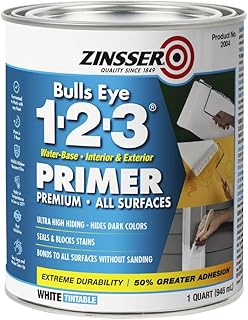
- Water-based styrenated acrylic; white
- Touch about 30 minutes; topcoat 1 hour; full adhesion 7 days
- Coverage about 400 to 450 sq ft per gal; apply 35 to 90 F; humidity under 85 percent
- Sizes 1 qt, 1 gal, 5 gal; pH up to 12.5
Zinsser Bulls Eye 1-2-3 Primer-Sealer is the fast primer for this repair, because it dries to the touch in about 30 minutes and takes a topcoat in one hour. The primer is a water-based styrenated acrylic that bonds to glossy and chalky surfaces without scuff sanding, which suits a streak zone where the old finish has weathered unevenly. The coverage of about 400 to 450 square feet per gallon means a small repair needs only a fraction of a gallon. The primer handles alkalinity up to pH 12.5, which matters on fresh cement and lime surfaces. Full adhesion takes 7 days, so the repair should not be washed or scrubbed for a week after the topcoat goes on.
Pros: Very fast drying; topcoat in one hour; bonds without scuff sanding; handles high alkalinity.
Cons: Full adhesion takes 7 days; needs temperatures above 35 F; humidity must stay under 85 percent.
Sherwin-Williams Loxon Concrete and Masonry Primer-Sealer
- Acrylic; white; pH 6 to 13; coverage 200 to 320 sq ft per gal
- About 80 sq ft per gal on porous rough stucco; wet 5.3 to 8.0 mils; dry 2.1 to 3.2 mils
- Touch 4 hours; recoat 24 hours at 77 F and 50 percent humidity; minimum 40 F
- New surfaces at least 7 days old; topcoat exterior within 14 days; 36-month shelf life
Sherwin-Williams Loxon Concrete and Masonry Primer-Sealer is the slow, durable primer for this repair, because it bonds deeply with masonry and holds a topcoat for years. The primer covers 200 to 320 square feet per gallon on a normal surface and about 80 square feet per gallon on porous rough stucco, so a streak zone needs only a small amount. The touch time of 4 hours and the recoat time of 24 hours set the pace: a wall primed with Loxon must wait until the next day for the topcoat. The primer handles a pH range of 6 to 13, which covers fresh and weathered masonry alike, and the topcoat should go on within 14 days of the primer so the bond stays strong.
Pros: Deep bond with masonry; wide pH range; long shelf life; clear recoat window.
Cons: Needs 24 hours before recoating; slower than a fast primer; porous stucco takes far more material.
KILZ Self-Priming Masonry, Stucco and Brick Paint
- Acrylic latex; flat; self-priming; 250 to 400 sq ft per gal
- Alkali-resistant to pH 12.0; brush, roll, or spray; soap and water cleanup
- Dry about 3 hours
KILZ Self-Priming Masonry, Stucco and Brick Paint finishes a streak zone where the wall needs a paint finish rather than a mineral coating. The paint is an acrylic latex that covers 250 to 400 square feet per gallon and resists alkali to pH 12.0, which matters on a wall that still carries fresh cement or lime. The paint is self-priming, so it can go over a sound, primed surface without a separate primer coat, though a separate primer still helps on the spots that absorb differently. The dry time of about 3 hours means a second coat can go on the same afternoon, which keeps the work moving. Cleanup with soap and water keeps the tools ready for the next coat.
Pros: Self-priming; fast drying; alkali-resistant; simple soap and water cleanup.
Cons: Needs about 3 hours between coats; a paint finish hides texture more than a mineral coating; the wall underneath must be fully hardened first.
Master Builders Solutions Color Coat
- 100 percent acrylic-based coating; 55 lb per 5-gallon pail
- Coverage 750 to 1250 sq ft per pail in one coat; 150 to 250 sq ft per gal
- Sprayer, 3/8 in nap roller, or good-quality latex paint brush
- Tinted primer dry to the touch before the color coat; second coat deepens the color
Master Builders Solutions Color Coat changes the color of a wall with minimum change in finish texture or sheen, which is exactly what a blotchy repair needs. The coating is 100 percent acrylic-based and comes in a 55 lb pail that covers 750 to 1250 square feet in one coat, so a streak zone needs only a small amount of the pail. The application rate of 150 to 250 square feet per gallon gives a clear way to work out the amount for any wall. The color coat goes on with a sprayer, a 3/8 inch nap roller, or a good-quality latex paint brush, and the tinted primer underneath must be dry to the touch before the color coat starts. A second coat deepens the color and evens out any bands that the first coat only softened.
Pros: Changes color with minimum texture change; high coverage per pail; wide color range; simple application.
Cons: Primer must be dry to the touch first; a second coat may be needed; the wet color looks deeper than the dry color.
Common mistakes
Starting the next coat before the last one has dried
A topcoat applied over a primer that is still wet slides, blisters, and peels. A sealer applied over a fog coat that is still damp traps moisture and the blotches return. Every material in this repair carries a drying time on its data sheet, and those times are minimums, not suggestions. Waiting a little longer than the minimum is always safer than starting the next step a little early.
Judging the color while the coat is still wet
A fog coat and a color coat both look much darker when wet than when dry, so a coat judged wet almost always dries too pale. Wait at least a full day after the coat dries, then compare the repaired area with the sound finish beside it in flat daylight. The final shade only appears after the surface has hardened fully.
Coating a wall that is still damp inside
A stucco wall can look dry on the surface while the inside is still damp, and a coating applied over that dampness dries unevenly. Wait at least a full day after washing, and two days after rain or in cool, humid weather, before coating. The back of the hand against the wall tells the truth better than the eye.
Applying one thick coat instead of two thin coats
A single thick coat dries darker in the thick spots and lighter in the thin spots, which recreates the blotches the repair is meant to fix. Two thin coats let each layer dry evenly, keep the texture visible, and give the color time to build to the right depth. The first coat should look like a light veil; the second coat finishes the color.
Sealing before the wall has hardened
A sealer applied over a coating that is still damp traps moisture under the surface, and the color can come back blotchy as that moisture works its way out. Wait at least a full day after the last color coat in warm weather and longer in cool or damp conditions before sealing. The wall must stay dry for several hours after the sealer goes on.
Working in direct sun or before rain
Direct sun dries a fog coat and a color coat before they have time to level, and the repair shows every pass of the sprayer or brush. Rain within a few hours of application washes the fresh coating and leaves new streaks. Work in the shade or on a cloudy day, and check the forecast before starting a coat that needs hours to dry.
FAQ
How long does the whole repair take from washing to finished color?
About three to five days in warm, dry weather: one day for washing and drying, one day per fog coat, one day for priming and the color coat, and time for the final hardening. Cool or damp weather stretches the schedule to a week or more. The direct work takes about half a day spread across two or three visits.
Can the second fog coat go on the same day as the first?
No. Each fog coat needs a full day to harden before the next coat goes on. A second coat applied over a damp first coat blends into one thick layer that dries unevenly and can crack as it hardens. Mix a fresh batch the next day and work in the opposite direction from the first coat.
How long after priming can the color coat go on?
With Zinsser Bulls Eye 1-2-3, the color coat can go on after one hour, since the primer dries to the touch in about 30 minutes. With Sherwin-Williams Loxon, the color coat must wait 24 hours, since the primer needs that long before recoating. Full adhesion takes 7 days for Zinsser, so the repair should not be washed or scrubbed for a week.
How long does KILZ masonry paint take to dry?
KILZ Self-Priming Masonry, Stucco and Brick Paint dries in about 3 hours, so a second coat can go on the same afternoon. The paint should only go over a primer and a fog coat that have hardened fully, because the fast dry time of the paint does not shorten the hardening time of the layers underneath.
Why does the repaired color look different a week later?
A mineral coating keeps settling and lightening as it hardens, and the final shade only appears after the full hardening time has passed. A fog coat needs a full day per coat, and a limewash needs weeks to reach its final shade. Judge the color after the wall has had that time, in flat daylight, and compare it with the sound finish beside the repair.
Conclusion
Fixing blotchy stucco color near a rain streak takes about three to five days, not because the work is slow but because each layer needs its own time to dry and harden. Washing and drying take a full day. Each fog coat needs a full day. A fast primer takes an hour before a topcoat, while a slow primer takes a full day. A color coat needs a full day to dry and several days to settle to its final shade. The direct work takes about half a day spread across two or three visits, and the rest of the time belongs to the wall. Respect those times, keep each coat thin, judge the color only after the wall has hardened fully, and the streak stops drawing the eye.
Related guides
More from Amazon
Programs that pair well with the guide above. Offers and eligibility are set by Amazon and may change.
Free shipping on eligible items, Prime Video and more. Eligible new members can start with a free trial.
Start a Prime free trialAudiobooks and podcasts to listen to on the go. Eligible new members can start with a free trial.
Try Audible freeAd-free music streaming. Eligible new subscribers can start with a free trial.
Try Music Unlimited freeA free business account with business pricing and bulk-buying tools for work, shop or home office.
Create a business accountAs an Amazon Associate we earn from qualifying purchases.
More ways to save on your next finish
Programs that pair well with the guide above. Offers and eligibility are set by Amazon and may change.
A free business account with business pricing and bulk-buying tools for work, shop or home office.
Create a business accountFast, free shipping on eligible items, plus Prime Video and more. Eligible new members can start with a free trial.
Start a Prime free trialRead from a huge library of eBooks, including how-to guides and cookbooks. Eligible new members can start with a free trial.
Try Kindle UnlimitedAudiobooks and podcasts for the commute, the garage or the kitchen. Eligible new members can start with a free trial.
Try Audible freeAs an Amazon Associate we earn from qualifying purchases. Using these links costs you nothing extra.










Write Your Review
No reviews yet. Be the first to share your experience!