
Key takeaways
- Refresh textured plaster living room walls with interior limewash paints under one hundred dollars a gallon, compared for coverage, color and brush technique.
What's inside
As an Amazon Associate I earn from qualifying purchases. This post may contain affiliate links at no extra cost to you.
Textured plaster gives a living room a surface that flat drywall cannot match: trowel marks, soft ridges, and shadows that move as the daylight changes. Updating those walls with limewash keeps the texture visible while softening the color, because limewash is a thin mineral wash rather than a thick sealing coat. The catch is budget. A living room has a lot of wall, and limewash takes two coats, so the price of a gallon matters as much as the color in the tin. That is why best interior limewash paints under one hundred dollars for updating textured plaster living room walls is a practical search: every paint in this guide lists a gallon under the one-hundred-dollar ceiling, and every one of them suits textured plaster.
This guide compares seven interior limewash paints that meet that ceiling, from authentic Italian slaked-lime washes to a water-based limewash-effect paint for beginners. Each one is a real product from a verified maker, with published coverage, coat counts, and application guidance. The focus is the living room: how the paint sits on textured plaster, how much wall a gallon covers when the surface drinks more than smooth drywall, and which finish character suits a room where people actually live.
Texture changes everything about limewash. A smooth wall shows every brush stroke, while a textured wall hides small laps and rewards the cloudy movement that makes limewash worth choosing. The trowel marks catch the wash unevenly, which is exactly the effect buyers want: light pooling in the hollows, color gathering on the ridges. The trade-off is absorption. Textured plaster has more surface area than a flat wall of the same size, and it drinks the first coat fast. Plan for the coverage figures the makers publish for porous surfaces, not the figures for primed drywall, and buy a little extra rather than running short halfway through the second coat.
Quick verdict
Romabio Classico Limewash leads this group for textured plaster living rooms. It is an authentic Italian slaked-lime wash, it dilutes with water, it needs one coat for a classic wash and two for fuller coverage, and a gallon lists under the one-hundred-dollar ceiling. The 1-litre size also lets a buyer sample a single wall before committing to gallons.
Portola Paints Lime Wash is the pick for the widest color choice under the ceiling, with 61 standard colors and a dedicated undercoat, while Vasari Lime Paint is the pick for a burnishable finish that can be polished to a soft sheen. Color Atelier Lime Paint covers the most wall per gallon, at about 350 to 400 square feet, and Dolphin Lime Wash is the simplest budget entry at a gallon under the ceiling. Heirloom Traditions ALL-IN-ONE Limewash Paint suits beginners who want the limewash look without lime chemistry, and Romabio Velatura Mineralwash suits living rooms where the textured plaster already carries a painted surface.
| Product | Key spec | Best for |
|---|---|---|
| Romabio Classico Limewash | 1-coat wash; 7 colors; 1L covers 80-100 sq ft | Authentic lime wash on texture |
| Portola Paints Lime Wash | 61 colors; 160-200 sq ft per gallon, 2 coats | Widest color choice |
| Vasari Lime Paint | 180 colors; burnishable matte; 200 sq ft per gallon per coat | Burnished finish |
| Color Atelier Lime Paint | 31 colors; 350-400 sq ft per gallon | Most coverage per gallon |
| Dolphin Lime Wash | 1-gallon size under the ceiling | Simplest budget entry |
| Heirloom Traditions ALL-IN-ONE Limewash Paint | Water-based limewash effect; beginner-friendly | First-time limewash users |
| Romabio Velatura Mineralwash | Interior drywall; brush and cloth technique; zero VOC | Painted textured surfaces |
How we chose
Every paint in this guide had to meet three conditions. First, the gallon had to list under one hundred dollars, verified from a retailer or maker listing, with the price expressed here in words rather than figures. A paint with no verifiable gallon price under the ceiling was left out, however good its finish. Second, the paint had to suit interior textured plaster: either a true lime wash that bonds with mineral walls, a mineral paint that breathes, or a limewash-effect paint made for interior walls. Third, the maker had to publish usable application data, including coverage, coats, and primer guidance, so a living room project can be planned in gallons rather than guessed.
We also weighed finish character, because a living room is the most seen room in a house. The cloudy, mottled movement of limewash is the reason to choose it over flat paint, and the paints here differ in how much movement they show. We weighed coverage on porous surfaces, since textured plaster drinks more paint than smooth drywall, and we weighed ease of application, because a living room refresh is often a weekend project done by the homeowner. Where a paint needs a dedicated primer or undercoat, we note it, because that step changes both the cost and the schedule.
Romabio Classico Limewash
- Base: authentic slaked lime from the Dolomites, made in Italy
- Colors: 7 pre-tinted whites and neutrals at retail; custom tinting at independent retailers
- VOC: 3.9 grams per litre
- Sizes: 1 litre, 2.5 litre, and 15 litre
- Coverage: 1 litre covers 80-100 square feet in one coat; a gallon covers 325-450 square feet after dilution
- Coats: 1 coat for a classic wash, 2 for more coverage
- Dilution: dilute 50-100 percent with water before application
- Application: masonry brush or airless sprayer with back-brushing
- Primer: no primer on absorbent masonry
- Dry time: 10-60 minutes
Romabio Classico Limewash is the benchmark lime wash for a reason, and on textured plaster it shows why. The paint is authentic slaked lime from the Dolomites, and it goes on as a thin wash that lets the plaster texture show through. One coat gives the classic translucent wash, with the plaster and its trowel marks visible beneath, while two coats give fuller color for a living room that needs a stronger statement. The wash must be diluted 50 to 100 percent with water before application, and the surface must be dampened first, which is the step that lets the lime bond with the mineral wall instead of sitting on top of it.
Coverage is generous after dilution: a gallon covers 325 to 450 square feet, and a single litre covers 80 to 100 square feet in one coat, so a small size can refresh a single living room wall as a sample of the full effect. The seven pre-tinted whites and neutrals at retail are a focused range, and independent retailers offer custom tinting for buyers who want a color outside it. The maker lists VOC at 3.9 grams per litre and no primer on absorbent masonry, which keeps the system simple: dampen the wall, brush on the diluted wash, and let it dry. The finish can be distressed within five days by washing it back with water, which gives a homeowner a short window to soften any area that dried too strong. For a textured living room, that forgiveness matters, because the first coat on uneven plaster rarely dries perfectly even.
Pros:
- Authentic Italian slaked-lime wash for mineral walls
- One coat for a classic wash, two for fuller coverage
- Generous coverage after dilution
- Small sizes let a buyer sample one wall first
Cons:
- Only 7 stock colors; custom colors need a retailer visit
- Must be diluted and the wall dampened before use
- Five-day distressing window is short for a slow project
Portola Paints Lime Wash
- Base: traditional lime-based finish
- Colors: 61 standard colors
- VOC: the maker lists zero VOC
- Sizes: quart, gallon, and 5 gallon
- Coverage: 160-200 square feet per gallon over 2 coats
- Sample sizes: 4 oz sample jars, small color chips, drawdowns, and sample boards
- Coats: 2 coats in overlapping brush strokes
- Primer: Limeproof Undercoat recommended; water-based stain-blocking primer first on new drywall
- Application: stain brush; keep a wet edge to avoid lap lines
- Surfaces: drywall, plaster, brick, cement, and stucco; interior and exterior
Portola Paints Lime Wash brings the widest color choice under the ceiling to a textured living room, with 61 standard colors and custom matching for buyers who want a shade outside the range. The finish is a traditional lime-based wash that dries to a soft, suede-like appearance indoors, and the cloudy movement shows well on textured plaster, where the ridges catch the color and the hollows hold the lighter wash. A gallon covers 160 to 200 square feet over two coats, which is a practical figure for planning a living room: measure the walls, allow for the extra absorption of textured plaster, and order the undercoat in the same delivery.
The maker's Limeproof Undercoat is the key step for a living room refresh. The maker recommends it in most cases for color accuracy and adhesion, and it is required on previously painted walls that are in good condition. New drywall needs a water-based stain-blocking primer before the undercoat, while bare plaster can take the wash with the undercoat alone. Application is with a stain brush in overlapping strokes, keeping a wet edge to avoid lap lines, which is a skill that textured plaster forgives more readily than smooth drywall. The maker notes that darker colors show more movement and variation than whites and light colors, so a living room that calls for a deep tone deserves a sample jar on the real wall first. The paint is not wipeable, per the maker, so a living room with small children or pets should plan on a sealer in the most touched areas.
Pros:
- 61 standard colors with custom matching
- Four-ounce sample jars for color confirmation
- Dedicated undercoat for color accuracy
- Zero VOC with a soft suede-like interior finish
Cons:
- Not wipeable without a sealer, per the maker
- Undercoat adds a step and a delivery to the project
- Darker colors vary more than the swatch suggests
Vasari Lime Paint
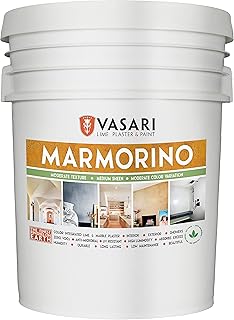
- Base: natural mineral paint from crushed limestone and powdered marble
- Colors: 180 colors
- VOC: the maker lists low VOC
- Sizes: quart, 1 gallon, and 5 gallon
- Coverage: about 200 square feet per gallon per coat
- Sample sizes: sample boards and swatch cards
- Coats: minimum 2 coats
- Primer: Mineral Primer
- Finish: matte that can be burnished to a soft sheen; dilutes with water to a lime wash effect
Vasari Lime Paint suits a living room that wants a lime finish with a little more polish. The paint is made in California from crushed limestone and powdered marble, and its matte finish can be burnished to a soft sheen after the coats dry. That burnishing step gives a homeowner control over the final look: leave it matte for a quiet room, or polish the high points of the textured plaster for a gentle glow that catches the evening light. The paint also dilutes with water to a lime wash effect, so the same tin can give a thin wash on one wall and a fuller finish on another.
Coverage is about 200 square feet per gallon per coat, with a minimum of two coats, so a living room needs honest measuring before ordering. The 180-color range is broad, and the maker's sample boards and swatch cards help buyers see the burnished effect at scale, which a small jar cannot show. The maker's Mineral Primer prepares previously painted walls and drywall, and application can be by brush, roller, or spray, though a brush gives the most character on textured plaster. The maker lists low VOC and low odor, which suits a lived-in room that cannot be emptied for days. For a textured living room, the paint's strength is its flexibility: a matte refresh, a burnished feature wall, or a thinned wash, all from one product line.
Pros:
- Burnishable matte finish for a soft sheen
- 180 colors with sample boards and swatch cards
- Dilutes with water to a lime wash effect
- Brush, roller, or spray application
Cons:
- Two coats minimum with primer on painted walls
- Coverage per gallon is modest for large living rooms
- Burnishing adds a step that needs practice
Color Atelier Lime Paint
- Base: ready-mixed pre-tinted authentic lime wash paint
- Colors: 31 pre-mixed colors
- VOC: the maker lists zero VOC
- Sizes: quart, 1 gallon, and 5 gallon
- Coverage: about 350-400 square feet per gallon
- Coats: 2 coats with a lime paint brush in X-strokes
- Dry time: at least 6 hours between coats
- Primer: Matte Primer
- Color strengths: 50, 100, and 150 percent
Color Atelier Lime Paint covers more wall per gallon than any other paint in this guide, at about 350 to 400 square feet, which makes it the economical choice for a large living room even before the ceiling is considered. The paint is a ready-mixed, pre-tinted authentic lime wash from a small-batch maker in San Francisco, and it arrives ready to brush, with no mixing or dilution to get wrong. The 31 pre-mixed colors are a focused range, and the maker offers color strengths of 50, 100, and 150 percent, which lets a buyer tune the depth of a shade without leaving the line: a half-strength white for a bright room, a full-strength neutral for a cozy one, or a deeper strength for a feature wall.
Application follows the classic limewash pattern: two coats with a lime paint brush in X-strokes, with at least six hours between coats, over the maker's Matte Primer. The X-stroke pattern is what builds the cloudy movement on textured plaster, and the long dry time between coats means a living room takes two days rather than one. That schedule suits a weekend project: primer and first coat on Saturday, second coat on Sunday, and the room back in use by Monday. The maker lists zero VOC, which matters in a room where the family gathers, and the pre-tinted colors keep batch variation low, since each tin is mixed by the maker rather than tinted at a counter.
Pros:
- About 350-400 square feet per gallon, the best coverage here
- Ready-mixed and pre-tinted with no mixing needed
- Color strengths of 50, 100, and 150 percent
- Zero VOC from a small-batch maker
Cons:
- Only 31 pre-mixed colors
- At least 6 hours between coats, so a room takes two days
- Needs the maker's Matte Primer
Dolphin Lime Wash
- Base: lime wash paint
- Sizes: 1-gallon size listed
- Coverage: see product page
- Colors: see product page
- Dry time: see product page
Dolphin Lime Wash is the simplest entry in this guide, and its appeal is its price: a one-gallon size lists under the one-hundred-dollar ceiling, which makes it the most direct way to start a living room refresh on a tight budget. The retailer lists the paint as a lime wash in a one-gallon size, and buyers should confirm coverage, color range, and dry time on the product page before ordering, since the published listing gives the size and the price but not the full data sheet. That honesty matters: a budget paint only saves money when the quantity is right, and ordering without a coverage figure risks a shortfall halfway through the second coat.
For a textured plaster living room, the sensible way to use Dolphin Lime Wash is to start small. Order one gallon, paint a single wall with two coats, and measure the coverage on the real plaster before ordering the rest. Textured plaster absorbs more than the flat surfaces most coverage figures assume, so a wall-by-wall approach protects the budget better than a single large order. Brush the wash on in overlapping strokes, keep a wet edge, and let the first coat dry fully before judging the color, because limewash dries lighter than it looks wet. If the finish suits the room, the same paint can continue across the remaining walls, and the low gallon price keeps the whole project under the ceiling that this guide is built around.
Pros:
- One-gallon size under the one-hundred-dollar ceiling
- Simple budget entry for a first limewash project
- Suits a wall-by-wall approach on textured plaster
Cons:
- Coverage, color range, and dry time listed as see product page
- No published primer guidance in the listing
- Needs a measured wall before ordering the full quantity
Heirloom Traditions ALL-IN-ONE Limewash Paint
- Base: water-based limewash-effect paint, not a true lime paint
- Colors: includes Manor House and a range of limewash-effect shades
- Sizes: see product page for container sizes
- Surfaces: interior walls, including drywall and interior brick
- Application: brush or roller, per the maker
- Skill level: beginner-friendly
Heirloom Traditions ALL-IN-ONE Limewash Paint is the outlier in this guide, and the difference should be stated plainly: it is a water-based paint engineered to deliver the limewash look without lime chemistry. That makes it the easiest paint here for a first-time user, and the most forgiving on a textured plaster living room where the homeowner is learning the technique as they go. The paint goes on with a brush or roller, it does not need dilution, dampening, or a specialist undercoat, and it dries as a flat, cloudy finish that reads as limewash from across the room.
The trade-off is authenticity. A true lime wash bonds with mineral plaster, breathes with it, and changes as it ages, while a limewash-effect paint sits on the surface as a conventional coating. For a living room refresh where the goal is the look rather than the chemistry, that trade-off is reasonable, and the paint's beginner-friendly handling is a real advantage: no mixing ratios, no dampening step, and no short distressing window. The maker lists the paint for interior walls, including drywall and interior brick, and the Manor House color is a useful starting point for a soft neutral living room. Buyers who want the mineral properties of real lime should choose one of the true lime paints in this guide instead, and buyers who want the look with the least fuss will find this paint the fastest route to a finished wall.
Pros:
- Beginner-friendly with no dilution or dampening step
- Water-based with brush or roller application
- Limewash look without lime chemistry
- Lists under the one-hundred-dollar ceiling
Cons:
- Not a true lime paint, so no mineral bond with plaster
- Less breathable than a real lime wash
- Finish character is flatter than a true lime wash
Romabio Velatura Mineralwash

- Base: mineral-based decorative paint for interior drywall
- Colors: 6+ pre-tinted colors including Bianco White, Crema, Grigio Perla, Nero, Blue Ridge Parkway, and Venezia
- VOC: the maker lists zero VOC
- Sizes: 2.5-litre size listed under the one-hundred-dollar ceiling
- Coverage: 70-150 square feet per quart, varying by coat and dilution
- Coats: 2 coats; base coat undiluted, wash coat diluted 50-80 percent
- Application: brush for the first coat; brush and cloth technique for the second coat; not a roller product
- Primer: no primer needed on drywall or painted surfaces
- Surfaces: interior drywall and painted interior surfaces; interior only
Romabio Velatura Mineralwash closes this guide with a paint made for the living rooms that already carry paint. Unlike the lime washes here, which suit bare mineral surfaces, Velatura is a mineral-based decorative paint designed for drywall and painted interior surfaces, which is exactly what a textured plaster living room looks like when a previous owner has already painted it. The two-coat artisan technique uses a brush for the base coat and a brush-and-cloth technique for the wash coat, which produces clouds of color, movement, and depth that read like aged European plaster walls.
The technique is the product, and the maker is direct about that: results depend on applicator skill, and each wall is unique. The base coat goes on undiluted, the wash coat is diluted 50 to 80 percent, and no primer is needed on drywall or painted surfaces, which removes a step from the project. Coverage runs 70 to 150 square feet per quart depending on the coat and the dilution, so a buyer should measure carefully and expect the wash coat to stretch further than the base coat. The maker lists zero VOC with a toxin-free, hypoallergenic, odorless formula, and six or more pre-tinted colors including Bianco White, Crema, Grigio Perla, Nero, Blue Ridge Parkway, and Venezia. For a textured living room with painted plaster, Velatura is the paint that works with the existing surface rather than fighting it.
Pros:
- Made for drywall and painted interior surfaces
- No primer needed on drywall or painted surfaces
- Zero VOC, toxin-free, and odorless, per the maker
- Brush and cloth technique gives clouds of color
Cons:
- Results depend on applicator skill
- Not a roller product, so large walls take time
- Coverage varies widely by coat and dilution
Buying guide
Measure the room before buying anything. Textured plaster has more surface area than a flat wall of the same dimensions, and it drinks the first coat faster, so the coverage figures for primed drywall will overstate what a gallon does on a living room wall. Measure each wall, subtract doors and windows, and add at least ten percent for absorption. Where a maker publishes separate coverage for porous surfaces, use the porous figure. Where a maker does not, assume the first coat will cover a quarter less than the published number and order accordingly.
Decide the color depth before the first coat. Limewash dries lighter than it looks wet, and the cloudy movement means no two walls will look identical, which is the point of the finish. A living room usually wants a soft neutral or a pale warm tone, because the texture already gives the wall visual interest. Dark colors show more movement and variation, and they need a sample on the real wall before committing. Order a quart or a small size first, paint a two-coat patch on the textured plaster, and live with it for a few days in morning and evening light.
Match the primer to the paint and to the wall. Bare textured plaster can often take a lime wash directly, sometimes with a light dampening first. Painted plaster needs the maker's undercoat or primer for color accuracy and adhesion, and new drywall needs a stain-blocking primer before the undercoat. Read the data sheet for the exact sequence and buy the primer with the paint, so the sample patch shows the true finished color. A sample painted without primer will read differently from the finished wall, and the difference can be enough to send a buyer back for a different shade.
Apply with a brush and keep a wet edge. Limewash gets its movement from brush strokes, and a roller flattens the finish. Use a wide masonry brush or a block brush, work in sections no wider than an arm's reach, and keep the edge wet so laps do not dry as lines. Two thin coats beat one thick coat on textured plaster: thin coats dry evenly, bond better, and let the trowel marks show through. Dampen very thirsty plaster lightly before the first coat, following the maker's guidance, and let each coat dry for the time the maker lists before the next one goes on.
Plan the cure and the furniture. Lime paint keeps changing as it sets, and the color on day two is not the color on day ten. Do not push furniture against the wall, hang pictures, or judge the final shade until the maker's cure period has passed. Ventilate the room while the coats dry, keep the temperature inside the range the maker lists, and protect floors, trim, and sofas, because limewash splashes are hard to remove once dry. Wear gloves and eye protection during application, since lime paint is alkaline and the makers in this guide list pH values that call for basic protection.
FAQ
How much limewash does a textured plaster living room need?
More than a smooth room of the same size. Textured plaster has extra surface area and absorbs the first coat quickly, so use the maker's coverage figure for porous surfaces where one is published, and add at least ten percent to the measured area. A gallon that lists 160 to 200 square feet over two coats will cover a smaller textured wall than a flat one, and ordering a little extra beats running short halfway through the second coat.
Can limewash go over painted textured plaster?
It depends on the paint. True lime washes suit bare mineral surfaces and need the maker's undercoat on painted walls, while mineral paints such as Romabio Velatura Mineralwash are made for drywall and painted interior surfaces with no primer. Read the data sheet for the product chosen, and sample on the real wall, because a painted surface absorbs differently from bare plaster.
Why does limewash look patchy on the first coat?
The first coat is thin by design, and textured plaster absorbs it unevenly, with ridges taking color and hollows staying pale. That patchiness is normal and usually resolves with the second coat, which evens the color while keeping the cloudy movement. Let the first coat dry fully, keep a wet edge during application, and judge the finish only after the second coat has dried.
Should a living room limewash be sealed?
Sealing depends on how the room is used. Makers in this guide suggest a sealer for high-contact areas such as hallways and the wall behind a sofa, and some sealers suit light colors only because they can leave a milky cast on deeper shades. A quiet living room may not need a sealer at all, while a busy family room will benefit from one. Sample the finish with the sealer before sealing a whole room.
How do I pick a color for a textured living room?
Start with a soft neutral or a pale warm tone, since the texture already gives the wall visual interest. Order a quart or a small size, paint a two-coat patch on the textured plaster, and live with it for several days in morning and evening light. Dark colors show more movement and need a sample even more, because the same shade can read very differently on a ridge than in a hollow.
Is a limewash-effect paint a good substitute for real limewash?
A water-based limewash-effect paint gives the look with far less fuss: no dilution, no dampening, and no specialist undercoat. It does not bond with mineral plaster or breathe the way a true lime wash does, so it suits a living room refresh where the goal is appearance rather than chemistry. Buyers who want the mineral properties of real lime should choose a true lime wash from this guide instead.
Conclusion
Updating a textured plaster living room with limewash is a project where the ceiling matters as much as the color, and every paint in this guide lists a gallon under one hundred dollars. Romabio Classico Limewash leads for its authentic slaked-lime chemistry and its one-coat wash, Portola brings the widest color choice, Vasari brings a burnishable finish, Color Atelier brings the best coverage per gallon, Dolphin brings the simplest budget entry, Heirloom Traditions brings the easiest first project, and Romabio Velatura brings a finish made for painted surfaces.
Measure the room with textured plaster in mind, sample the color on the real wall, match the primer to the paint, and brush on two thin coats with a wet edge. The texture will do the rest, catching the wash on its ridges and holding the lighter tones in its hollows, and the living room will gain a cloudy, mineral finish that flat paint cannot copy. Start with one wall, confirm the color after the cure, and then finish the room.
Related guides
More from Amazon
Programs that pair well with the guide above. Offers and eligibility are set by Amazon and may change.
Free shipping on eligible items, Prime Video and more. Eligible new members can start with a free trial.
Start a Prime free trialAudiobooks and podcasts to listen to on the go. Eligible new members can start with a free trial.
Try Audible freeAd-free music streaming. Eligible new subscribers can start with a free trial.
Try Music Unlimited freeA free business account with business pricing and bulk-buying tools for work, shop or home office.
Create a business accountAs an Amazon Associate we earn from qualifying purchases.
More ways to save on your next finish
Programs that pair well with the guide above. Offers and eligibility are set by Amazon and may change.
A free business account with business pricing and bulk-buying tools for work, shop or home office.
Create a business accountFast, free shipping on eligible items, plus Prime Video and more. Eligible new members can start with a free trial.
Start a Prime free trialRead from a huge library of eBooks, including how-to guides and cookbooks. Eligible new members can start with a free trial.
Try Kindle UnlimitedAudiobooks and podcasts for the commute, the garage or the kitchen. Eligible new members can start with a free trial.
Try Audible freeAs an Amazon Associate we earn from qualifying purchases. Using these links costs you nothing extra.










Write Your Review
No reviews yet. Be the first to share your experience!