
Key takeaways
- Six interior limewash paints compared for textured plaster living room walls, with brush application guidance, coverage and coats to help you choose well today.
As an Amazon Associate I earn from qualifying purchases. This post may contain affiliate links at no extra cost to you.
A textured plaster living room wall is a wall with a shape of its own. The trowel marks, the skip pattern, the orange peel or the hand-finished swell of the plaster are all part of the room, and a new coat of paint should work with that texture rather than bury it. A limewash paint applied with a brush does exactly that: the bristles push the paint into the hollows, ride over the high spots, and leave a stroke pattern that follows the wall instead of hiding it. That is what best interior limewash paints with brush application guidance for updating textured plaster living room walls means in practice, and it is the standard every product in this guide has to meet.
Brush application guidance is the part of the keyword that decides whether the finish looks handmade or looks patchy. A limewash brush is not a small trim brush: it is a wide block brush or a long-haired brush that holds a lot of paint, and the pattern matters as much as the tool. Cross-hatch strokes, X-strokes and criss-cross strokes all lay the paint in two directions, and that crossing is what builds the soft, cloudy movement that a single-direction coat cannot give. The products in this guide list their brush, their stroke pattern and their drying time between coats, and the comparison notes each one.
This guide compares six interior limewash paints that suit textured plaster living room walls. Each one is a real lime or mineral paint with a maker page behind it, a listed brush method, a listed coverage figure and a listed coat count. The quick verdict gives a short answer, the table gives the numbers, and the buying guide at the end explains how to choose a brush, how to work a textured wall, and how to keep the finish even from one end of the room to the other.
Quick verdict
For most textured plaster living room walls, the Portola Paints Lime Wash is the most direct pick. The maker lists it as brush-applied and states plainly that it is not meant to mask or hide existing texture, which is exactly the promise a textured wall needs. With more than 75 colours, zero VOCs listed and sample jars available, it covers the colour decision and the application in one product.
The Meoded Lime Wash is the stronger choice when the brush pattern itself is the finish. The maker lists a two-coat cross-hatch brush application, which lays the paint in two directions and builds the cloudy movement that suits a textured wall. Its 88 colours and its listed base coat for drywall and painted surfaces make it flexible across the different patches of a living room wall.
For living rooms where the brush is a wide block brush, the Porters Interno Lime Wash deserves attention. The maker lists two coats with a 4 by 14 centimetre block brush and a very flat finish, which suits a large textured wall. The Vasari Lime Paint is the flexible pick, since the maker lists brush, sponge, roll or spray, and the Meoded MobWash and KEIM paints cover a small curated palette and a primer-free coat on bare mineral walls.
Comparison table
| Product | Key spec | Best for |
|---|---|---|
| Portola Paints Lime Wash | Traditional lime; 75+ colours; brush-applied; sample jars | Living rooms where brush marks are part of the finish |
| Vasari Lime Paint | Crushed limestone and marble; 180 colours; sample boards | Textured plaster refreshed with a brush or sponge finish |
| Meoded Lime Wash | Slaked limestone; 88 colours; cross-hatch brush; 2 coats | Textured plaster where cross-hatch brushwork adds depth |
| Meoded MobWash | Eight-colour limewash; Tonester; mineral primer listed | Living rooms where a small curated colour set speeds the choice |
| Porters Interno Lime Wash | Interior-only lime coating; block brush; 8 sq m per litre | Living rooms painted with a block brush in two coats |
| KEIM Limewash | Pit lime matured 3 years; mineral pigments; 2-coat system | Old lime plaster that needs a paint matched to its chemistry |
How we chose
The six products in this guide were picked against the textured plaster living room wall first and the catalogue second. A textured wall is uneven by nature, and a paint for such a wall must be applied with a brush, because a roller skates over the high spots and leaves the hollows pale. Every product here lists a brush method on its maker page or in its technical sheet, and the guide notes the brush type, the stroke pattern and the drying time for each one.
Brush guidance was the first filter. Portola lists a brush-applied finish, Meoded lists a two-coat cross-hatch brush application, Porters lists two coats with a block brush, Vasari lists brush application with criss-cross strokes, MobWash lists two coats with a brush, and KEIM lists a two-coat system for porous mineral surfaces applied by brush. A paint with no listed brush method did not meet this filter.
Texture honesty was the second filter. A limewash paint should follow the texture of the wall, not fill it, and the guide favours paints whose makers say so. Portola states that the finish is not meant to mask existing texture, Vasari lists application over existing moderate texture such as orange peel or light skip trowel, and the other paints in this guide are listed for plaster and textured mineral surfaces. A paint that needs a flat, skimmed wall would not suit this job.
Coverage and coat count were the third filter, because a textured wall takes more paint than a flat one. The hollows hold paint and the high spots take less, so the guide lists the coverage figure for each product where the maker gives one: 160 to 200 square feet per gallon over two coats for Portola, 200 to 300 square feet per gallon for two coats for Meoded, about 200 square feet per gallon per coat for Vasari, and about 8 square metres per litre for Porters Interno. Coat counts run to two for most of the group.
Drying time between coats was the fourth filter, because a living room cannot be out of use for long. The listed gaps run from 6 hours for Porters, through 8 hours or more for MobWash, to the recoat guidance on each maker page for the rest. A short gap keeps the project inside a weekend; a long gap needs the room to be planned around the drying.
Portola Paints Lime Wash
- Maker: Portola Paints
- Base: traditional lime-based finish with natural pigments
- Colours: 75+ hand-crafted colours
- Sample format: 4 oz sample jars, plus sample chips and boards
- Sizes: quart, gallon and 5 gallon
- Coverage: 1 gallon covers 160 to 200 sq ft over two coats
- VOC: zero VOC listed
- Application: brush-applied; apply above 55F
- Primer: Limeproof Undercoat listed
- Finish: non-wipeable
Portola Paints Lime Wash is a traditional lime-based finish, brush-applied, with more than 75 hand-crafted colours and zero VOCs listed. A gallon covers 160 to 200 square feet over two coats, and the line runs from a quart up to a 5 gallon pack, which keeps a single living room wall and a whole open-plan room inside the same product family. The maker lists 4 oz sample jars alongside chips and boards, so a colour can be brushed out on the actual wall before a gallon is ordered. Portola lists the finish as non-wipeable, which is a real limit to respect in a room where hands and furniture touch the wall, and it lists a Limeproof Undercoat for surfaces that need one. The brush is the point of the product: the strokes stay visible and give the wall its movement.
On a textured plaster wall, Portola earns its lead position with a single honest sentence from the maker: the finish is not meant to mask or hide existing texture. That is the whole job in this guide, and a paint that promises it in writing is a safer pick than one that leaves it unsaid. The brush-applied coat follows the trowel marks and the skip pattern, and the strokes stay visible, which is what gives a living room wall its depth.
Pros: 75+ colours; sample jars available; zero VOC listed; brush finish keeps wall texture visible
Cons: Non-wipeable finish; needs temperatures above 55F; primer needed on some surfaces
Vasari Lime Paint
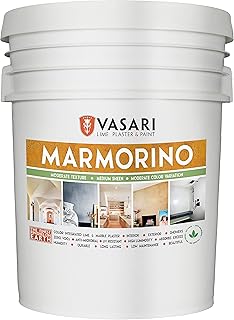
- Maker: Vasari Lime Plaster & Paint
- Base: natural mineral paint from crushed limestone and powdered marble
- Colours: 180
- Sample format: sample boards and swatch cards listed
- Coverage: about 200 sq ft per gallon per coat
- Coats: minimum 2 coats
- VOC: low VOC listed
- Primer: Mineral Primer listed
- Application: brush, sponge, roll or spray; dilutes with water to a lime wash effect
- Finish: burnishable to a soft sheen
Vasari Lime Paint is a natural mineral paint made from crushed limestone and powdered marble, with 180 colours and a low VOC listing. A gallon covers about 200 square feet per coat, and two coats are the listed minimum, so the consumption is easy to work out for a living room wall. The maker lists sample boards and swatch cards, which matter because the finish can be burnished to a soft sheen or left matte, and the same colour reads differently at each sheen. Mineral Primer is the listed primer, and the paint can be applied with a brush, a sponge, a roller or a sprayer, then thinned with water to a lime wash effect when a more translucent coat is wanted. That range of application methods makes it flexible on a textured plaster wall, where a brush can work the paint into the texture and a sponge can soften it.
On a textured plaster wall, Vasari is the most flexible tool in this guide. The maker lists brush, sponge, roll and spray, and the brush option with criss-cross strokes is the one that suits a textured wall, because the strokes cross in two directions and lay the paint into the hollows. The sponge option is useful for softening a coat that has gone on too strongly, and the burnishable finish lets the same colour read matte or softly sheened.
Pros: 180 colours; sample boards; brush, sponge, roll or spray; burnishable finish
Cons: Two coats minimum; primer listed; sheen changes how the colour reads
Meoded Lime Wash

- Maker: Meoded Paints
- Base: slaked limestone mineral paint
- Colours: 88
- Coverage: quart 50 to 75 sq ft; gallon 200 to 300 sq ft for two coats
- Sizes: quart, gallon and 4 gallon
- Coats: two-coat cross-hatch brush application
- VOC: zero VOC listed
- Primer: Lime Wash Base Coat for drywall and painted surfaces listed
Meoded Lime Wash is a slaked limestone mineral paint with 88 colours and zero VOCs listed, applied in two coats with a cross-hatch brush pattern. A quart covers 50 to 75 square feet and a gallon covers 200 to 300 square feet for two coats, and the line runs up to a 4 gallon pack for a large room. The cross-hatch pattern is the heart of the product: the brush strokes cross in two directions, and that crossing is what builds the soft, cloudy movement that a flat roller coat cannot give. The maker lists a Lime Wash Base Coat for drywall and previously painted surfaces, which is the step that lets the lime coat grip a surface that is not bare plaster. On a textured plaster wall, the brush follows the texture instead of hiding it, and the colour sits in the hollows and on the high spots in different strengths.
On a textured plaster wall, Meoded is the paint whose brush pattern does the most work. The cross-hatch application lays the first coat in one direction and the second across it, and that crossing builds a cloudy, shifting tone that follows the texture instead of fighting it. The 88 colours give a wide field, and the Lime Wash Base Coat is the listed step for the parts of the wall that have been painted before.
Pros: 88 colours; cross-hatch brush pattern; zero VOC listed; base coat for drywall and painted walls
Cons: Brush pattern takes practice; base coat needed on painted surfaces; two coats needed
Meoded MobWash
- Maker: Meoded Paints
- Base: eight-colour limewash collection made with Tonester from authentic slaked limestone
- Colours: 8
- Coverage: quart about 50 to 75 sq ft; gallon about 200 to 300 sq ft for two coats
- Coats: two coats, with at least 8 hours drying between coats
- Primer: MobWash Mineral Primer for drywall and previously painted surfaces listed
Meoded MobWash is a smaller limewash collection of eight colours, made with Tonester from authentic slaked limestone, and its small palette is a strength when a living room colour has to be chosen without weeks of indecision. A quart covers about 50 to 75 square feet and a gallon covers about 200 to 300 square feet for two coats, which matches the coverage of the wider Meoded Lime Wash line. Two coats are listed, with at least 8 hours of drying between them, so the second coat goes on the next day rather than the same afternoon. The maker lists a MobWash Mineral Primer for drywall and previously painted surfaces, which is the step that lets the limewash grip a wall that is not bare plaster. On a textured plaster wall, the brush coats follow the texture and the eight colours are all muted, mineral tones that sit calmly in a living room.
On a textured plaster wall, MobWash is the paint for a quick colour decision. Eight colours is a small palette, but every one of them is a muted mineral tone, and a small palette means the choice is made in an afternoon rather than a week. The two coats go on with a brush, with at least 8 hours between them, so the second coat goes on the next day, after the first has settled into the texture.
Pros: Small curated palette; slaked limestone base; primer listed for painted walls
Cons: Only 8 colours; 8 hours between coats; two coats needed
Porters Interno Lime Wash
- Maker: Porters Paints
- Base: interior-only lime based coating
- Finish: very flat finish listed
- VOC: under 1 g per litre untinted listed
- Coverage: about 8 sq m per litre
- Coats: 2 coats with a 4 by 14 cm block brush
- Recoat: at least 6 hours dry time between coats
- Primer: Limeproof Undercoat Sealer listed
- Sample format: see product page
- Colours: custom colours available
Porters Interno Lime Wash is an interior-only lime based coating with a very flat finish, and the maker lists VOCs at under 1 gram per litre untinted. Coverage is listed at about 8 square metres per litre, and the application is two coats with a 4 by 14 centimetre block brush, with at least 6 hours of drying between coats. The block brush is the right tool for a textured plaster wall: its wide head holds a lot of paint, and its bristles push the lime into the hollows of the texture instead of skating over the high spots. A Limeproof Undercoat Sealer is listed for surfaces that need one, and custom colours are available, so the shade can be matched to the room rather than picked from a fixed card. Because the coating is listed for interiors only, it is aimed squarely at rooms like the living room in this guide.
On a textured plaster wall, Porters Interno is the paint built around the block brush. The maker lists two coats with a 4 by 14 centimetre block brush, and a brush that wide holds enough paint to keep a wet edge across a large living room wall, which is the hardest part of the job. The very flat finish keeps the texture visible, and the interior-only listing fits a living room exactly.
Pros: Interior-only formula; block brush application; very flat finish; custom colours available
Cons: Interior only; 6 hours between coats; undercoat sealer needed on some surfaces
KEIM Limewash
- Maker: KEIM
- Base: pit lime matured at least 3 years with natural mineral pigments
- pH: 11 listed
- System: 2-coat system with no primer on bare masonry
- Reversible: up to 1 week listed
- Vapour permeability: 75 to 85 perms listed
- Use: interior and exterior porous mineral surfaces
- Gloss: 2.0 at 85 degrees listed
KEIM Limewash is made from pit lime matured for at least three years, coloured with natural mineral pigments, and it is built as a two-coat system that needs no primer on bare masonry. That detail matters on old lime plaster, where a primer can sit between the paint and the wall and change how the finish bonds. The maker lists a pH of 11 and a water vapour permeability of 75 to 85 perms, which describes a finish that stays open to moisture movement rather than sealing the wall. The paint is listed as reversible for up to one week, so a fresh coat can still be removed shortly after application if the colour or the coverage is wrong. It is listed for interior and exterior porous mineral surfaces, which covers the old plaster, render and masonry that this guide is about.
On a textured plaster wall, KEIM is the paint that needs the least between it and the wall. No primer is listed for bare masonry, so the paint meets the plaster directly, and the two-coat system is simple enough to follow without a long instruction sheet. The listed vapour permeability of 75 to 85 perms describes a finish that stays open, which suits an old textured plaster wall that needs to breathe.
Pros: Matured pit lime base; no primer on bare masonry; very vapour permeable; reversible for a week
Cons: Needs bare mineral surface; narrow traditional palette; fresh coats need care in the first week
Buying guide
Choose the brush before choosing the paint. A limewash brush is wide, with long, soft bristles that hold a lot of paint: a block brush for a large wall, a long-haired brush for a traditional limewash, and a lime paint brush for a ready-mixed paint. Porters lists a 4 by 14 centimetre block brush, and the other paints in this guide list a block brush or a lime paint brush. A small trim brush will not hold enough paint to keep a wet edge, and a roller will not push the paint into the texture. Buy the brush the maker lists, or one of the same size and shape.
Learn the stroke pattern on a spare board first. Cross-hatch, X-strokes and criss-cross strokes all mean the same thing in practice: lay the paint in one direction, then lay the next pass across it, so the strokes cross. That crossing is what builds the cloudy, shifting tone, and it is also what keeps the colour even over a wall where suction varies. Practise on a board until the strokes feel natural, and keep the same pattern across the whole wall, because a change of pattern halfway across a room will show.
Work the whole wall in one session. Limewash dries quickly, and a coat that is stopped halfway will show a hard line where the wet paint met the dry paint. Plan the room so the wall can be painted from one end to the other without a break, keep the edge wet, and work in sections that overlap while the paint is still damp. If the wall is too large for one session, stop at a natural break such as a corner or a doorway, never in the middle of a flat run.
Mind the texture when sizing the paint. A textured wall takes more paint than a flat one, because the hollows hold paint that a flat wall would not need. Use the maker coverage figure, then allow extra for the texture: a skip trowel or orange peel finish can take a quarter more paint than the listed figure suggests. Order the extra from the same batch, because a second batch mixed later can dry to a slightly different tone.
Respect the drying time between coats. The listed gaps in this guide run from 6 hours for Porters to 8 hours or more for MobWash, and the other paints list their own recoat times. A second coat laid too soon will lift the first coat and leave a patchy finish, and a second coat laid too late will not bond with the first in the same way. Follow the maker figure, keep the room ventilated, and do not rush the second coat to finish the room in a single day.
Live with the finish before judging it. Limewash is darkest when wet and lightens as it dries, and the colour keeps settling as the coat carbonates over days. The brush strokes that look strong on the day of painting will soften as the wall hardens, and the texture that looks patchy when wet will read as depth when dry. Give the wall a few days, look at it in daylight and in the evening, and only then decide whether a third coat or a touch-up is needed.
FAQ
Which brush should be used for limewash on textured plaster?
A wide block brush or a long-haired limewash brush, of the kind the makers in this guide list. Porters lists a 4 by 14 centimetre block brush, and the other paints list a block brush or a lime paint brush. The wide head holds enough paint to keep a wet edge, and the long bristles push the paint into the hollows of the texture.
What stroke pattern works best on a textured wall?
A crossing pattern: cross-hatch, X-strokes or criss-cross strokes, with the second pass laid across the first. Meoded lists a cross-hatch pattern, Vasari lists criss-cross strokes. The crossing builds the cloudy tone and keeps the colour even over a wall where suction varies.
Will limewash paint hide the texture of my plaster wall?
No, and it should not. Portola states that its finish is not meant to mask existing texture, and Vasari lists application over existing moderate texture such as orange peel or light skip trowel. A brush-applied limewash follows the texture and lets it show through, which is the finish this guide is about.
How many coats does a textured living room wall need?
Most paints in this guide list two coats. The first coat is often absorbed quickly by a porous, textured wall, and the second coat builds the colour. Thin coats are better than thick ones, because thick coats craze as they dry and can fill the texture that the wall should keep.
How long should be left between coats?
Follow the maker figure for the paint in use. Porters lists at least 6 hours, MobWash lists at least 8 hours, and the other paints list their own recoat times. A second coat laid too soon can lift the first, so give the wall the full listed time and keep the room ventilated while it dries.
Conclusion
Updating a textured plaster living room wall with limewash is a brush job, and the paints in this guide are chosen for it. Portola leads because the maker states plainly that the finish will not hide the texture, and its brush-applied coat, wide colour range and sample jars cover the whole job. Meoded follows for the cross-hatch pattern that builds depth, Porters for the block brush that keeps a wet edge across a large wall, and Vasari for a paint that can be brushed, sponged or sprayed. MobWash and KEIM cover the rest: a small curated palette and a primer-free coat on bare mineral walls.
Buy the brush the maker lists, learn the stroke pattern on a spare board, and paint the whole wall in one session with a wet edge. Allow extra paint for the texture, respect the drying time between coats, and give the wall a few days to cure before judging the colour. Done this way, the new coat follows the old texture, the brushwork reads as part of the room, and the living room keeps the character that made the wall worth keeping.
Related guides
More from Amazon
Programs that pair well with the guide above. Offers and eligibility are set by Amazon and may change.
Free shipping on eligible items, Prime Video and more. Eligible new members can start with a free trial.
Start a Prime free trialAudiobooks and podcasts to listen to on the go. Eligible new members can start with a free trial.
Try Audible freeAd-free music streaming. Eligible new subscribers can start with a free trial.
Try Music Unlimited freeA free business account with business pricing and bulk-buying tools for work, shop or home office.
Create a business accountAs an Amazon Associate we earn from qualifying purchases.
More ways to save on your next finish
Programs that pair well with the guide above. Offers and eligibility are set by Amazon and may change.
A free business account with business pricing and bulk-buying tools for work, shop or home office.
Create a business accountFast, free shipping on eligible items, plus Prime Video and more. Eligible new members can start with a free trial.
Start a Prime free trialRead from a huge library of eBooks, including how-to guides and cookbooks. Eligible new members can start with a free trial.
Try Kindle UnlimitedAudiobooks and podcasts for the commute, the garage or the kitchen. Eligible new members can start with a free trial.
Try Audible freeAs an Amazon Associate we earn from qualifying purchases. Using these links costs you nothing extra.










Write Your Review
No reviews yet. Be the first to share your experience!