
Key takeaways
- Mineral pigment limewash paints for textured plaster living room walls: compare colors, coverage, coats and brush guidance before you choose the right finish.
As an Amazon Associate I earn from qualifying purchases. This post may contain affiliate links at no extra cost to you.
A living room with textured plaster already has movement built into its walls. The ridges, trowel marks and shallow hollows catch light differently through the day, and a flat plastic-looking coat would hide exactly what makes the surface interesting. That is why so many owners turn to limewash: a mineral finish that sits inside the texture instead of burying it, letting the plaster show through while the color settles into the highs and lows. The choice that matters most is the pigment. Natural mineral pigments give colors that shift gently with daylight, hold their depth on a rough surface, and age with the wall rather than fading into a chalky haze. best interior limewash paints with mineral pigment colors for updating textured plaster living room walls bring that combination together, and the products below were picked for the strength of their pigment ranges, their fit on textured plaster, and the clarity of their application guidance. This guide compares seven of them on color choice, coverage on rough surfaces, coat counts, drying times and the practical details that decide whether a living room repaint goes smoothly or turns into a second weekend of repairs.
Quick verdict
Bauwerk Limewash Paint leads this group because its pigment range is the widest here, with 400 colors drawn from natural pigments, and the maker lists the paint for textured interior masonry and for high humidity rooms. For a living room where the plaster texture is the feature, that range matters: a pale mineral color keeps the texture readable, while a deeper earth tone lets the ridges cast soft shadows. Portola Lime Wash is the pick for owners who want to build color in layers, with more than 75 hand-crafted colors and a two-coat system that lets the second coat deepen the first. Sydney Harbour Interno Lime Wash suits large living rooms, with coverage of 350 to 400 sq ft per gallon and an interior-only formula with 0 g per litre VOC. Tockay Lime Paint Smooth 888 offers the largest color formula list here at more than 250, Vasari Lime Paint adds a burnishable option for owners who want a soft sheen on top of the matte, Kreidezeit Lime Paint Smooth gives a simple ready-to-use two-coat job with a criss-cross brush pattern, and Tintural Cosi Lime Paint brings a cloudy finish with a clear primer-plus-two-coats system. None of these paints is a one-coat fix for a damaged wall, and none should be applied over a sealed or glossy surface without the preparation each maker lists.
Comparison table
| Product | Key spec | Best for |
|---|---|---|
| Bauwerk Limewash Paint | Pure mineral paint; 400 natural pigment colors; zero VOC | Widest mineral pigment color range |
| Portola Lime Wash | Traditional lime finish; 75+ hand-crafted colors; zero VOC | Layered color on textured plaster |
| Sydney Harbour Interno Lime Wash | Interior-only lime coating; 0 g/L VOC; 350-400 sq ft/gal | Covering a large living room |
| Kreidezeit Lime Paint Smooth | Ready-to-use liquid lime paint; marble lime; 2 coats | A simple two-coat finish on sound plaster |
| Tockay Lime Paint Smooth 888 | Marble lime hydrate; no synthetic binders; 250+ color formulas | Matching an exact color scheme |
| Vasari Lime Paint | Crushed limestone and marble; 180 colors; low VOC | A soft sheen on textured plaster |
| Tintural Cosi Lime Paint Classic Finish | 97 percent natural ingredients; VOC under 0.75 g/L; cloudy finish | A cloudy finish on textured plaster |
How we chose
The shortlist was built around the living room first and the paint second. A textured plaster wall in a living room is a large, well-lit surface that people look at every day, so color quality carried the most weight: the size of the mineral pigment range, whether colors come from natural pigments, and whether the maker offers samples or color cards so the tone can be judged on the real wall. Coverage on textured plaster came next, because rough surfaces drink paint faster than flat ones, and the coverage figures each maker publishes were compared on the same two-coat basis wherever the maker states one. Coat count and drying time matter for planning, since a living room is hard to keep out of use for days, so the guide records the recoat interval each maker lists. Interior suitability was checked product by product, including whether the maker lists high humidity rooms, previously painted plaster, or a primer system for sealed surfaces. VOC listings were noted because a living room is a space where people spend long evenings, and every product here lists zero or low VOC. Finally, brush guidance was weighed, since limewash on textured plaster is a brush job: cross-hatch strokes, loose strokes and wet edges all change how the pigment settles into the texture, and the makers that describe their stroke pattern clearly earned their place.
Bauwerk Limewash Paint
- Base: pure mineral paint made from calcium carbonate with natural pigments
- Colors: 400 colors in the range; sample pots recommended by the maker
- VOC: no solvents and no VOC listed by the maker
- Sizes: 1, 5, 10 and 20 litre containers listed
- Use: interior and exterior, including high humidity rooms
- Fire: A1 building class; maker lists the paint as fireproof
Bauwerk is the natural lead for a living room repaint because the color decision is the whole project, and a 400-color range built on natural pigments gives more room to find a tone that suits both the plaster texture and the furniture already in the room. The maker lists the paint for interior and exterior masonry and for high humidity rooms, which covers the usual living room conditions, and the A1 fire rating is a useful extra on a large wall area. On textured plaster, the mineral base matters: the paint is absorbed into the surface rather than forming a film, so the ridges and hollows keep their shape while the pigment settles unevenly in the most attractive way. Sample pots are recommended by the maker, and on a textured wall that advice is worth following, since the same color can read a full shade deeper in a hollow than on a ridge. Sizes run to 20 litres, so a whole living room can come from one batch, which avoids the color drift that comes from mixing batches across two weekends.
Pros:
- 400-color range built on natural pigments
- Listed for high humidity rooms as well as living rooms
- Large sizes up to 20 litres for whole-room work
- A1 building class fire rating
Cons:
- Sample pots are recommended, adding a step before ordering
- No coverage figure per litre stated on the maker page
Portola Lime Wash
- Base: traditional lime-based finish
- Colors: more than 75 hand-crafted colors listed
- VOC: zero VOC listed by the maker
- Coverage: one gallon covers 160 to 200 sq ft for two coats
- Sizes: quart, gallon and 5 gallon; 4 oz sample jars listed
- Application: brush-applied; Limeproof Undercoat listed for preparation
- Finish: unsealed finish listed as non-wipeable; apply above 55F
Portola suits owners who want to control the depth of color rather than accept whatever the first coat gives. The two-coat system is the point: the first coat establishes the tone on the plaster, and the second coat, applied over it, deepens the color and evens out the patchiness that textured surfaces often show after coat one. With more than 75 hand-crafted colors, the range is smaller than the lead pick but still wide enough for most living room palettes, and the maker lists sample jars so the color can be checked on the wall before committing to gallons. Coverage of 160 to 200 sq ft per gallon for two coats is a realistic figure for planning, though textured plaster sits at the thirsty end of any coverage range, so measuring the wall and adding a margin is sensible. The unsealed finish is listed as non-wipeable, which is worth knowing in a living room with children or pets, and the Limeproof Undercoat is listed for surfaces that need preparation.
Pros:
- Layered two-coat system for depth control
- More than 75 hand-crafted colors
- Sample jars available for wall checks
- Clear coverage figure for two coats
Cons:
- Unsealed finish listed as non-wipeable
- Needs an undercoat on some prepared surfaces
Sydney Harbour Interno Lime Wash
- Base: interior-only lime based coating
- VOC: 0 g per litre VOC listed
- Coats: 2 coats with a 5-inch block brush; touch dry 2 hours; 6 hours dry per coat
- Coverage: 350 to 400 sq ft per gallon
- Use: plasterboard, plaster, masonry and previously painted surfaces
- Limit: not for bathrooms, kitchens or wet areas listed
Sydney Harbour Interno is the pick for a large living room, because the coverage figure is one of the most generous in this group: 350 to 400 sq ft per gallon. A living room with long walls and a high ceiling can drink a surprising amount of paint, and a product that covers that far keeps the project to fewer containers from a single batch. The formula is an interior-only lime based coating with 0 g per litre VOC listed, which suits a room where people spend long evenings, and the maker lists it for plasterboard, plaster, masonry and previously painted surfaces, covering the usual living room wall types. Two coats with a 5-inch block brush are listed, with a touch dry time of 2 hours and 6 hours of drying per coat, which is a brisk pace for a weekend project. The maker lists the paint as not for bathrooms, kitchens or wet areas, which is no drawback in a living room. On textured plaster, the block brush and the generous coverage work together: the wide brush lays paint into the texture quickly, and the second coat evens out the color across the ridges and hollows.
Pros:
- Interior-only formula with 0 g per litre VOC
- Coverage of 350 to 400 sq ft per gallon
- Two coats with a 5-inch block brush
- Listed for plasterboard, plaster and masonry
Cons:
- Not listed for wet areas, so keep it to living spaces
- Color range details sit on the product page
Kreidezeit Lime Paint Smooth
- Base: ready-to-use liquid lime paint; marble lime with no synthetic resin binders
- Coats: usually full coverage in 2 coats; brush in a criss-cross pattern
- Dry time: 8 hours dry between coats listed
- Use: interior intermediate and final coats
- pH: pH above 12.5 listed
Kreidezeit Smooth is the straightforward choice for a living room with sound, even textured plaster. The paint arrives ready to use as a liquid lime paint, so there is no mixing and no measuring before the brush work starts, and the maker lists full coverage in two coats as usual. The brush is worked in a criss-cross pattern with 8 hours of drying between coats, and that pattern is worth following closely on textured plaster: the crossing strokes lay pigment in two directions, which keeps the color even across ridges and hollows instead of leaving bands. The base is marble lime with no synthetic resin binders, and a pH above 12.5 is listed, so gloves and eye protection are part of the job. As an interior intermediate and final coat, it is listed for the exact role a living room wall needs. On a wall where the texture is regular and the plaster is sound, the smooth grade keeps the plaster visible while the pigment gives the room its color.
Pros:
- Ready to use, no mixing needed
- Criss-cross brush pattern listed
- Usually full coverage in 2 coats
- No synthetic resin binders
Cons:
- 8 hours of drying between coats
- Best on sound, even plaster rather than damaged walls
Tockay Lime Paint Smooth 888
- Base: marble lime hydrate paint with no synthetic resin binders and no synthetic pigments
- Colors: more than 250 color formulas with natural pigments
- Coats: usually covering in 2 coats listed
- Use: interior and exterior listed
- Samples: sample kits and color charts listed
- pH: pH 13 listed on the technical data sheet
Tockay is the choice for owners who have a specific color in mind and do not want to compromise. With more than 250 color formulas built on natural pigments, the range is deep enough to match an unusual sofa fabric, a stone hearth or a timber floor without settling for a near miss. The base is marble lime hydrate with no synthetic resin binders and no synthetic pigments, which keeps the finish mineral through and through, and the maker lists the paint for interior and exterior use. Coverage in two coats is the listed norm, and sample kits and color charts are listed so the color can be checked before ordering in volume. The pH of 13 listed on the technical data sheet is a reminder that this is a true lime product, so gloves and eye protection are part of the job, and the maker guidance should be followed for surface preparation. On textured plaster, the smooth grade keeps the plaster texture visible while the pigment does the decorative work.
Pros:
- More than 250 color formulas with natural pigments
- No synthetic resin binders or synthetic pigments
- Sample kits and color charts listed
- Interior and exterior use listed
Cons:
- Color range can slow the decision
- Full color details sit on the product page
Vasari Lime Paint
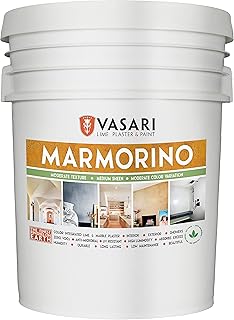
- Base: natural mineral paint from crushed limestone and powdered marble
- Colors: 180 colors listed
- VOC: low VOC listed by the maker
- Coverage: about 200 sq ft per gallon per coat
- Coats: minimum 2 coats listed
- Samples: sample boards and swatch cards listed
- Primer: Mineral Primer listed; dilutes with water to a lime wash effect; burnishable to a soft sheen
Vasari brings something the other products here do not: a finish that can be burnished to a soft sheen. On a textured plaster living room wall, that option matters, because a burnished area catches evening light differently from the matte field around it, and the maker lists the paint as burnishable after application. The base is crushed limestone and powdered marble, with 180 colors and low VOC listed, and coverage of about 200 sq ft per gallon per coat with a minimum of two coats. Sample boards and swatch cards are listed, which is the right way to judge a color that will be burnished, since the sheen changes how deep the color reads. A Mineral Primer is listed for preparation, and the paint dilutes with water to a lime wash effect, so the same product can give a lighter wash on one wall and a fuller color on another. That flexibility suits living rooms where one wall is a feature and the rest need a quieter tone.
Pros:
- Burnishable to a soft sheen
- 180 colors from limestone and marble
- Sample boards and swatch cards listed
- Dilutes with water for a lighter wash
Cons:
- Minimum two coats listed
- Low VOC rather than zero VOC
Tintural Cosi Lime Paint Classic Finish
- Base: Cosi paint with 97 percent natural ingredients; VOC under 0.75 g per litre
- Coverage: 1 kg covers about 110 sq ft per coat
- System: 1 coat Multi primer plus 2 coats Cosi listed
- Finish: cloudy finish listed
- Use: indoor and outdoor use listed
- Samples: 125 g sample size listed
Tintural Cosi brings a cloudy finish to a textured plaster living room, and the maker lists the system that produces it clearly: one coat of Multi primer plus two coats of Cosi. That primer step does real work on a living room wall, since it equalizes absorption across old plaster, new patches and previously painted areas, so the cloudy finish forms evenly instead of in blotches. The base is 97 percent natural ingredients with VOC under 0.75 g per litre, and 1 kg covers about 110 sq ft per coat, which makes planning a room a matter of simple arithmetic. Indoor and outdoor use is listed, and a 125 g sample size is listed for checking the color beside the sofa and under the actual living room lighting before ordering. The cloudy finish is the look this paint is made for, and on textured plaster it gives soft movement that changes gently through the day as daylight moves across the room.
Pros:
- Clear system: primer plus two coats
- 97 percent natural ingredients
- Cloudy finish listed by the maker
- 125 g sample size listed
Cons:
- Primer coat adds a step to the project
- Coverage figure is per coat, not per two coats
Buying guide
Match the pigment to the plaster
Mineral pigments behave differently from synthetic colorants on a textured surface. The color sits in the lime rather than in a plastic film, so the tone shifts as the wall dries and as daylight moves across the room. That is the charm, and it is also the reason to sample on the wall itself. Paint a sample patch of at least a square foot on the textured plaster, in the part of the room that gets the most daylight, and live with it for two days before ordering. The same pigment can read warm near a south-facing window and cool beside a stone fireplace. Natural pigment ranges are built around earth tones, ochres, umbers and soft mineral whites, so a color that looks muted on a card often gains depth on the wall. When the plaster is heavily textured, lean toward mid-tones rather than very pale colors, since pale colors can look washed out on ridges while the hollows hold shadow.
Plan coverage on texture
Textured plaster absorbs more paint than a flat wall, and every coverage figure in this guide should be read with that in mind. Makers quote coverage for a stated number of coats, and the figures are not directly comparable unless the coat count matches. Work out the wall area in square feet, divide by the maker coverage figure for two coats, and then add a margin of about a quarter for deep texture. It is better to have one spare container from the same batch than to run short halfway across the main wall, since a second batch mixed on a different day can show a faint edge. Keep the spare sealed and unopened until the last wall is done, and note the batch details from the label in case a touch-up is needed later.
Prepare the plaster before the first coat
Limewash needs an absorbent surface to bond. Brush the wall down to remove dust and loose plaster, and fill any cracks that move or shed. If the plaster has been painted before with a glossy or sealed coating, the maker guidance in this guide points to a primer or prep coat system, and that step should not be skipped: limewash over a sealed surface can powder or peel. Dampen absorbent plaster lightly with clean water before the first coat, following the maker instructions for the product chosen. Work in good light so the wet edge stays visible, and keep the room ventilated without creating a draft that dries one section faster than the rest.
Brush work that suits texture
A natural-bristle block brush is the usual tool for limewash on textured plaster, and the stroke pattern decides the finish. Loose, multi-directional strokes let the paint reach into hollows, while long straight strokes can leave visible bands on a rough surface. Keep a wet edge and finish each wall in one session, since stopping mid-wall leaves a dry line that shows once the paint hardens. Two coats are the norm for the products in this guide, and the second coat should go on only after the drying interval the maker lists. Between coats, the wall will look darker when wet and lighter as it dries, which is normal for lime paint and not a reason to overload the brush.
Living with a matte mineral finish
A limewashed living room wall is a matte, breathable surface, and it should be treated gently. Dust it with a soft brush or a dry cloth, and wipe marks with a barely damp cloth rather than scrubbing. Unsealed limewash is not wipeable in the way a vinyl wall paint is, and the products in this guide that list a non-wipeable finish should be kept in mind when the wall sits behind a sofa or near a doorway. The finish will soften and gain character over the first weeks as the lime hardens, and small marks can usually be touched up with a little of the same paint from the same batch. That ease of touch-up is one of the practical reasons owners choose limewash for a room that is used every day.
FAQ
Can limewash be applied over textured plaster?
Yes, textured plaster is one of the surfaces limewash suits best, because the mineral paint is absorbed into the plaster and follows its shape instead of hiding it. The wall should be clean, sound and absorbent, with dust brushed off and loose material removed. If the plaster was painted before with a sealed or glossy coating, follow the primer or prep coat system the maker lists for that product. A sample patch on the real wall is the best check, since texture changes how the color reads. Two coats are the norm for the products in this guide.
Do mineral pigment colors fade on a living room wall?
Mineral pigments are listed by makers as lightfast and UV stable, and the colors in this guide come from natural earth and mineral pigments rather than synthetic colorants. Indoors, away from direct sun for most of the day, a mineral pigment color holds its tone well. What changes over time is the lime itself: the finish hardens and the color settles, which owners usually describe as the wall gaining depth rather than losing color. Keep sample records of the color and batch so a later touch-up matches.
How many coats does textured plaster need?
Two coats are listed for most products in this guide, and textured plaster often needs the full second coat because the first coat is partly absorbed into the hollows. One-coat products exist, but they are listed for absorbent masonry rather than for plaster that has been primed or previously painted. Allow the drying interval the maker lists between coats, and do not judge the color until the second coat is dry, since wet limewash always looks darker than the finished wall.
Can I paint limewash over previously painted plaster?
It depends on the old coating. Limewash bonds to absorbent mineral surfaces, so a sound, matte, unsealed plaster surface is usually suitable after cleaning. A glossy, sealed or flaking coating is not, and the maker guidance for the products in this guide points to a primer or prep coat system in that case. Gloss areas should be sanded and primed as the maker directs. When in doubt, paint a sample patch and leave it for several days to check adhesion before committing to the whole room.
How do I clean a limewashed living room wall?
Treat the wall gently. Dust with a soft brush or dry cloth, and wipe light marks with a barely damp cloth. Avoid scrubbing, harsh cleaners and abrasive pads, since an unsealed mineral finish can mark or powder under hard rubbing. Some products in this guide list a non-wipeable unsealed finish, so walls behind furniture and near doorways deserve extra care. Small marks can usually be touched up with paint from the same batch, applied with the same brush and stroke pattern as the original coats.
Conclusion
Updating a textured plaster living room with limewash is a project where the pigment choice does most of the work. Bauwerk Limewash Paint leads this group on the strength of its 400-color natural pigment range, with Portola Lime Wash close behind for owners who want to build color in layers, and Sydney Harbour Interno Lime Wash for large rooms where coverage matters. Whichever product fits the room, the same habits decide the result: sample on the real wall, measure the area and allow extra paint for texture, prepare the plaster so it can absorb the finish, and keep a wet edge with loose brush strokes. A mineral finish will not hide the plaster, and that is the point. The texture stays visible, the color gains depth as the lime hardens, and the wall keeps the character that made the room worth updating in the first place.
Related guides
More from Amazon
Programs that pair well with the guide above. Offers and eligibility are set by Amazon and may change.
Free shipping on eligible items, Prime Video and more. Eligible new members can start with a free trial.
Start a Prime free trialAudiobooks and podcasts to listen to on the go. Eligible new members can start with a free trial.
Try Audible freeAd-free music streaming. Eligible new subscribers can start with a free trial.
Try Music Unlimited freeA free business account with business pricing and bulk-buying tools for work, shop or home office.
Create a business accountAs an Amazon Associate we earn from qualifying purchases.
More ways to save on your next finish
Programs that pair well with the guide above. Offers and eligibility are set by Amazon and may change.
A free business account with business pricing and bulk-buying tools for work, shop or home office.
Create a business accountFast, free shipping on eligible items, plus Prime Video and more. Eligible new members can start with a free trial.
Start a Prime free trialRead from a huge library of eBooks, including how-to guides and cookbooks. Eligible new members can start with a free trial.
Try Kindle UnlimitedAudiobooks and podcasts for the commute, the garage or the kitchen. Eligible new members can start with a free trial.
Try Audible freeAs an Amazon Associate we earn from qualifying purchases. Using these links costs you nothing extra.










Write Your Review
No reviews yet. Be the first to share your experience!