
Key takeaways
- Are exterior masonry limewash paints worth buying on Black Friday? Seven mineral paints compared on coverage, coats and weather, with a verdict for your facade.
What's inside
As an Amazon Associate I earn from qualifying purchases. This post may contain affiliate links at no extra cost to you.
An exterior masonry wall finished in limewash looks as if it had always been that colour. The wash soaks into brick, stone, stucco and render and dries to a soft, cloudy surface that shifts with the weather, instead of forming a plastic film that peels when water gets behind it. That is the whole point of limewash outside: it is a mineral finish that bonds with the wall, lets water vapour pass through, and weathers gently rather than failing all at once. But it is also a finish that asks for more care than a tin of latex paint, and it needs renewal as the lime binder weathers. So are exterior masonry limewash paints worth buying on black friday? The short answer is yes, for a porous masonry facade where a breathable, mineral finish matters, and no, for a wall that needs a washable, maintenance-free coating. The seven paints compared below show why, with the coverage, coat count and weather limits each maker publishes.
Limewash has been used on masonry for centuries because it bonds with the wall instead of sitting on top of it. As it dries, the lime takes in carbon dioxide from the air and turns back into limestone, which is why a limewashed wall feels like stone rather than plastic. The paints in this guide are all mineral paints built on that chemistry, and most of them list zero volatile organic compounds. They differ in ways that decide whether the job goes well: some need a primer on painted masonry and some do not, some cover twice the wall area per litre, some offer a dozen colours and some offer hundreds, and some are made for raw masonry only while others also suit primed surfaces. The table gives the short version, and each product section gives the fuller picture.
Quick verdict
Yes, exterior masonry limewash paints are worth buying when the facade is made of porous brick, stone, stucco, render or lime plaster, and when the owner wants a breathable, mineral finish with real depth rather than a flat uniform coat. Meoded Lime Wash Paint leads this guide as the most practical all-round exterior pick, with eighty-eight colours, clear coverage figures and a sealer system for exposed work. Kreidezeit Lime Paint Textured leads for filling fine cracks and pores as an intermediate coat in an exterior system. Kalcito Lime Paint leads for a Danish powder paint mixed at home. Romabio Classico Limewash leads for a one-coat finish on raw brick and stone. KEIM Limewash leads for historic masonry and listed buildings. Vasari Lime Paint leads for deep colour in large containers. Kalklitir Lime Paint leads for a powder paint that ships light. They are not worth buying for a cement render or a concrete wall, for a wall that must be washed every week, or for a facade that cannot be protected from rain for four weeks after painting, because limewash needs suction, needs time to harden, and needs renewal as it weathers.
| Product | Key spec | Best for |
|---|---|---|
| Meoded Lime Wash Paint | 88 colours; 200 to 300 sq ft per gallon for two coats; zero VOC | Practical all-round exterior pick |
| Kreidezeit Lime Paint Textured | Marble sand 0.5 mm grain; fills pores and fine cracks; 2 coats | Filling intermediate coat outdoors |
| Kalcito Lime Paint | Powder; 6 to 8 sq m per litre; 2 to 3 coats; 12 hours between coats | Danish powder paint mixed at home |
| Romabio Classico Limewash | 1 coat; 80 to 100 sq ft per litre; 7 whites and neutrals | One-coat finish on raw masonry |
| KEIM Limewash | Concentrated lime paint; pit lime matured 3 years; 2-coat system | Historic masonry and listed buildings |
| Vasari Lime Paint | 180 colours; about 140 sq ft per gallon for two coats | Deep colour in large containers |
| Kalklitir Lime Paint | Powder; 1 kg covers 86 to 108 sq ft for two coats; 36 colours | Powder paint that ships light |
How we chose
The seven paints below were picked from maker product pages and technical data sheets. Each one is a mineral limewash or lime paint sold in containers a homeowner can order, with a published colour count, a published coverage figure or a published coat count, and a clear statement that it suits exterior masonry. Paints that are only limewash effect coatings, chalk paints or acrylic paints with a little lime added were left out, because they do not behave like limewash on a wall. Each product section states where the paint works and where it does not, including temperature limits and renewal intervals, so the verdict at the end of this guide can be matched to a real facade. Coverage figures are the makers own numbers and they vary with surface absorption, so they are given as ranges wherever the maker gives a range.
Meoded Lime Wash Paint

- Natural mineral paint made from slaked limestone
- Eighty-eight colours with custom colour matching available
- Sizes: quart, gallon and 4 gallon
- Coverage for two coats: quart covers 50 to 75 square feet, gallon covers 200 to 300 square feet
- Two coats with a box brush in a cross-hatch pattern, at least eight hours between coats
- Zero volatile organic compounds and completely solvent-free
- Suits interior and exterior walls, including unsealed brick, stone, plaster and porous mineral surfaces
- Stain Shield sealer for exterior work, applied after 48 to 72 hours of drying
Meoded Lime Wash Paint is the practical all-round pick, and its clear routine is the reason. The paint is made from slaked limestone and dries to a matte, weathered plaster look with a soft touch, and the maker lists it as zero VOC and solvent-free. Two coats are applied with a box brush in crossing strokes, with at least eight hours of drying between them, and the paint dries lighter than it looks when wet, so the colour should be judged once it is dry. The surface range is wide: unsealed brick, natural stone, plaster and other porous mineral surfaces take it directly, while drywall and previously painted walls need the makers Lime Wash Base Coat first. For exterior work the maker adds two conditions that are worth knowing before ordering: the paint should not go on below 55 degrees or above 85 degrees Fahrenheit or in direct sun, and exterior finishes need two to three coats of the makers Stain Shield sealer after two to three days of drying to improve water repellency. Eighty-eight colours cover the usual range from whites through warm neutrals to deeper tones, and the maker offers custom matching for colours outside the range. The combination of a clear coat count, honest coverage numbers and a sealer system for exposed work is what makes this paint the lead pick for a facade that has to last.
Pros: Eighty-eight colours; clear quart and gallon coverage; pre-mixed and ready to brush; sealer system for exteriors.
Cons: Needs a base coat on painted surfaces; exterior work needs a sealer; do not apply in very hot or cold weather.
Kreidezeit Lime Paint Textured
- Lime paint to DIN 55945 with finely dispersed marble lime
- Fine plaster appearance from marble sand with a grain of 0.5 millimetres
- Fills pores and fine cracks; evens out slight differences in the substrate
- Two coats usually give full coverage; eight hours of drying between coats at twenty degrees
- pH 13; sd value under 0.02 metres; wipe-proof and splash-proof once dry
- No synthetic resin binders and no titanium white; vegan
- Suits intermediate and final coats indoors; outdoors only as an intermediate coat
- Primer: Vega Primer or Casein Primer on renders, fillers, levelled drywall, concrete and old emulsion paints
Kreidezeit Lime Paint Textured is the filling pick, and its marble sand is the reason. The paint carries fine marble sand with a grain of half a millimetre, which gives smooth substrates a fine plaster appearance and fills pores and fine cracks that a smooth paint would leave visible. That makes it the right first coat on a facade where the render is sound but uneven, because it evens out slight differences in the substrate before the final coat goes on. The honest limit is the one the maker states plainly: outdoors it is recommended only as an intermediate coat, not as a final coat, so it belongs in a two-product system with the makers smooth lime paint on top. Indoors it suits intermediate and final coats. The base properties match the smooth version: finely dispersed marble lime with no synthetic resin binder and no titanium white, an sd value under 0.02 metres, a pH of 13 that makes it mould resistant, and a finish that is wipe-proof and splash-proof once dry. Application is by brush in a criss-cross pattern, working wet on wet, with at least eight hours of drying between coats, and a base coat of Vega Primer or Casein Primer goes on renders, fillers, concrete and old emulsion paints first. The paint can be tinted, and tinted versions develop the changing colour intensity that is characteristic of lime paint, though tinted paint must not be rolled.
Pros: Fills pores and fine cracks; evens out uneven render; very breathable; mould resistant.
Cons: Outdoors only as an intermediate coat; eight hours between coats; tinted paint cannot be rolled.
Kalcito Lime Paint
- Danish lime paint, one hundred percent natural, made with Danish lime
- Powder in a bucket, mixed with water and left to rest for twenty-four hours before use
- Coverage: 6 to 8 square metres per litre; apply in two to three coats
- Drying time of twelve hours between coats
- Suits mineral substrates such as plaster, brick, mortar and concrete, for interior and exterior use
- Tintable with earth pigments, oxide pigments and other pigments that tolerate high pH
- Will not adhere to surfaces previously painted with conventional plastic-based paint, even if sanded
- Do not apply in direct sunlight or over salt deposits on plaster
Kalcito Lime Paint is the Danish powder pick, and its simplicity is the reason. The paint is a bucket of powder made from Danish lime with only natural ingredients, mixed with water at home and left to rest for twenty-four hours before use, which is the traditional way to let a lime paint settle. Coverage is six to eight square metres per litre, applied in two to three coats with twelve hours of drying between them. The surface list covers mineral substrates such as plaster, brick, mortar and concrete, for interior and exterior use, and the paint can be tinted with earth pigments, oxide pigments and other pigments that tolerate a high pH, so the colour range is set by the pigments rather than by a fixed chart. The limits are stated plainly and they matter: the paint will not adhere to surfaces previously painted with conventional plastic-based paint, even if the surface has been sanded to a matte finish first, and it will fail if applied over salt deposits on plaster, so the wall must be sound and clean before work starts. Direct sunlight is also out, because the paint will harden too quickly and fail to bond. For a sound mineral facade with no plastic paint and no salt damage, it is one of the most straightforward lime paints in this guide, and its powder form keeps for a long time on a shelf.
Pros: One hundred percent natural; powder keeps well; tintable with mineral pigments; suits interior and exterior masonry.
Cons: Needs mixing and a twenty-four hour rest; will not bond over plastic paint; not for salt-damaged plaster.
Romabio Classico Limewash
- Authentic slaked lime paint, handcrafted in Italy with lime from the Dolomite Mountains
- One-coat process with no primer needed on absorbent, unpainted brick, stone or masonry
- Sizes: 1 litre, 2.5 litres and 15 litres
- Coverage at one coat with dilution: 1 litre covers 80 to 100 square feet, 2.5 litres covers 200 to 250 square feet, 15 litres covers 1200 to 1500 square feet
- Seven pre-tinted whites and neutrals, including Avorio White, Bianco White and Cristallo White
- Dilute with water by half to double the volume before application
- Breathable finish that calcifies and will not chip, peel or flake
- Apply between 50 and 88 degrees Fahrenheit and keep out of full sun where possible
Romabio Classico Limewash is the one-coat pick, and its single-coat system is the reason it earns a place in a worth-buying guide. The paint goes on in three steps: wet the masonry, brush on one generous coat, and wash back or distress the surface while it is still workable if an exposed brick look is wanted. Because the paint is diluted with water before use, the same container can give a light wash that lets brick show through or a fuller coat that reads as a flat opaque finish. The maker lists the paint as 97 percent natural mineral content, and it is made from slaked lime that has been worked with methods the maker traces back two thousand years. On exterior brick and stone it needs no primer, which keeps the job to one product, though glazed brick, reclaimed brick, painted stucco, concrete block and previously painted surfaces do need the makers MicroGrip Primer first. The finish is very flat, it breathes, and it patinas over time rather than peeling, which is the behaviour that separates a limewash from a latex paint on masonry. The maker is clear about the limits: the paint is not made for horizontal surfaces or places where water pools, it should not go on floors, patios, steps or driveways, and a sample area can be washed off within three to five days with a power washer if the look is wrong, which is worth knowing before the whole facade is done.
Pros: One-coat system on absorbent masonry; no primer needed on raw brick and stone; coverage figures published per container size; seven ready colours.
Cons: Colour range is narrow next to rivals; needs a primer on painted surfaces; not for horizontal surfaces.
KEIM Limewash
- Classic old-world limewash with hydrated lime as the binder and natural mineral pigments
- Made with pit lime that has matured for at least three years; dolomitic lime from the Alps
- Two-coat system on bare masonry with no primer needed
- Concentrated formula that must be thinned with water before use
- Reversible for up to one week, which suits restoration work
- Extremely vapour permeable; non-film-forming, it penetrates and bonds with masonry
- Apply by brush, roller or airless spray
- Suits brick, stucco, historic masonry, porous stone, lime plaster, mortar, concrete block and render
KEIM Limewash is the restoration pick, and its long record is the reason it is worth buying for a historic facade. The maker has made mineral paints since 1878, and this limewash is a concentrated paint made from pit lime matured for at least three years, thinned with water on site to give anything from a thin wash to a solid finish. On bare masonry the system is two coats with no primer, and the finish forms chemical bonds with the wall rather than a film on top of it, so it will not peel or lose adhesion. The finish is extremely vapour permeable, which is why it suits old lime plaster and stucco that must keep breathing, and the lime binder continues to interact with the environment as the coating hardens and ages, giving the patina that cannot be copied with a latex or acrylic finish. The honest trade-off is renewal: on the exterior the limewash must be routinely re-applied as the lime binder weathers away at a rate set by the severity of the climate, and a sheltered wall will hold its finish far longer than a wall facing driving rain. The early reversibility is a genuine advantage in a listed building, because for up to a week the finish can be removed. Dampen exterior masonry until it is uniformly damp before painting, and do not apply to polished stone, concrete, floors or resin-based coatings.
Pros: Long record in restoration; no primer on bare masonry; reversible for a week; extremely breathable.
Cons: Exterior coats weather and need renewal; no single coverage figure published; needs dampening before application.
Vasari Lime Paint
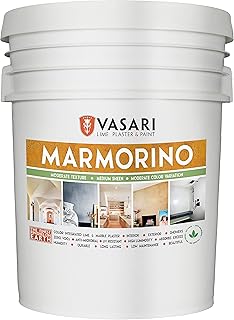
- Natural mineral paint made from slaked lime and powdered marble
- One hundred and eighty exclusive colours with custom tinting available
- Coverage: one gallon covers about 140 square feet for two coats
- At least two coats for full coverage, with a third coat an option for touch-ups
- Apply by brush, roller or spray; dilute with water to make a lime wash
- Sizes: 1 gallon and 5 gallon containers; 5 gallon wet mix lists at 46 pounds
- Matte finish that can be burnished to a soft sheen
- Suits interiors and exteriors
Vasari Lime Paint is the colour-depth pick, and its marble-rich base is the reason. The paint is made from slaked lime and powdered marble, with fine limestone aggregates, and the maker lists one hundred and eighty exclusive colours, which is one of the widest ranges in this guide. A gallon covers about one hundred and forty square feet across two coats according to the makers data sheet, so a facade needs a realistic quantity, and the five gallon container suits a large wall or a whole house without ordering a dozen small tins. Two coats are the minimum for full coverage, and the maker suggests ordering extra for a third coat or for touch-ups. The paint can be brushed, rolled or sprayed, which is unusual among lime paints, and diluting it with water turns it into a thinner, more translucent lime wash for a weathered effect. The finish is matte and can be burnished to a soft sheen, which gives more control over the final surface than a chalk matte paint. The maker describes it as a natural, breathable, low VOC mineral finish for interiors and exteriors, and the same paint can be used on an interior wall and on the masonry outside, which helps when one colour has to run through a whole house. The trade-off is coverage: at about one hundred and forty square feet per gallon for two coats, a large facade needs several containers, so the quantity should be worked out from the data sheet before ordering.
Pros: One hundred and eighty colours; five gallon size for large jobs; brush, roll or spray; interiors and exteriors.
Cons: Coverage per gallon is modest; at least two coats needed; five gallon container is heavy at 46 pounds.
Kalklitir Lime Paint
- Powder paint made from one hundred percent natural minerals, mixed with water at home
- Thirty-six Signature colours
- Coverage: 1 kilogram bag covers 8 to 10 square metres, or 86 to 108 square feet, for two coats
- 500 gram bag covers 4 to 5 square metres for two coats; 60 gram sample sachet covers a 90 by 90 centimetre area for one coat
- Two coats recommended; the second coat brings out the depth and movement
- VOC-free, mineral-based, breathable and eco-friendly
- Base Coat and Top Coat sold as companions
- Dry powder keeps for years; mixed paint keeps about a year in an airtight container
Kalklitir Lime Paint is the powder pick, and its form is both its strength and its quirk. The paint ships as a dry powder made from one hundred percent natural minerals, so there is no water to ship and the dry powder keeps for years on a shelf, which matters when a facade job is planned months ahead. Mixing it with water at home takes a few minutes, and a one kilogram bag covers eight to ten square metres across the two coats the maker recommends. Thirty-six colours cover the usual range from soft whites through warm neutrals to deep greens and browns, and the maker sells sixty gram sample sachets so a shade can be brushed on a board before a bag is ordered. Two coats are the standard, and the maker is clear that the second coat is where the depth and movement of the finish really come to life, so the first coat should not be judged on its own. The paint suits interior and exterior walls, and the maker sells a Base Coat to prepare surfaces and a Top Coat to add protection over the finished lime paint. The trade-off is that a powder paint needs measuring and mixing, and the mixed paint must be used within about a year even in an airtight container, so it suits a painter who is comfortable following a mixing routine rather than opening a ready-mixed tin.
Pros: Ships as light powder; dry powder keeps for years; thirty-six colours; sample sachets sold.
Cons: Needs mixing with water; mixed paint has a limited shelf life; second coat is essential for the full effect.
Buying guide
The verdict depends on the wall, so start there. Limewash needs a porous mineral surface to bond, and the first question is what the wall is made of and what is already on it. Bare brick, bare stone, bare stucco, bare render and bare lime plaster take most of these paints directly. Previously painted masonry, sealed surfaces and glazed brick need a primer from the same maker, and the primer matters: a standard latex primer will not do the job, because limewash needs a mineral primer that lets the wall breathe. Check the product section for the paint you are considering and order the matching primer at the same time, because a limewash over the wrong primer can peel or dry patchy. Cement render and concrete are the hard limit: Ty-Mawr and Kalcito both state that their limewash does not suit cement render or concrete, and a wall made of those needs a different paint altogether, such as a silicate paint made for the job.
Measure the facade and buy for two coats, even for the paints that list one coat as standard. Coverage figures in this guide are the makers own numbers, and they assume a surface of average absorption. A thirsty render wall can drink far more paint than the label suggests, while a dense, previously painted wall can stretch a litre further. Powder paints change the maths: Kalklitir sells by the kilogram bag and Kalcito sells by the bucket of powder, so the quantity has to be worked out from the coverage per bag rather than per litre. Order all the paint for one facade from one batch, because natural pigments vary slightly between batches and a second container mixed on a different day can dry a shade apart from the first. Sample pots, sachets and small jars are the cheapest insurance here: brush a sample on the actual wall, let it dry fully, and look at it in morning light and evening light before committing to bags or gallons.
Weather decides the working days. Limewash must go on in the right temperature window, and the makers in this guide agree on the shape of it: not in frost, not in direct hot sun, and not when rain is coming before the paint has carbonated. Meoded lists fifty-five to eighty-five degrees Fahrenheit, Romabio lists fifty to eighty-eight, and the general rule is to work in mild, overcast weather and to follow the sun around the building rather than letting it follow the painter. Newly applied exterior limewash must be protected from rain, wind, direct sunlight and frost until it has hardened and carbonated, which normally takes about four weeks. Plan the job for a settled spell of weather, and do not start a facade that cannot be finished before the weather turns. A facade that is half done when rain arrives will show the join, and a coat that is rained on before it hardens can wash off the wall.
Brush choice shapes the finish as much as the paint does. Limewash is brushed, not rolled or sprayed, and most of the makers in this guide agree on that point, with Vasari as the exception that also allows a roller or a sprayer. A wide block brush holds the thin wash and leaves the soft, feathered strokes that make the cloudy movement. Work in loose crossing strokes, keep a wet edge, and finish each facade in one session where possible, because stopping halfway leaves a visible lap line where dry paint meets wet paint. Stir the paint often while working, since lime and pigment settle fast, and dampen the masonry before the first coat so the wash does not vanish into the wall before it can set. KEIM asks for the masonry to be uniformly damp, and Kalcito must not be applied in direct sunlight, so a garden sprayer and a watch on the sun are part of the kit.
Finally, think about renewal before ordering, because this is where the yes-or-no answer is decided. An exterior limewash weathers gently and needs routine re-application as the lime binder wears away, with the interval set by how exposed the wall is. A sheltered wall can hold its finish for years, while a wall facing driving rain will need attention sooner. The finish does not peel the way a latex paint can; it wears away grain by grain, and renewal is a fresh coat over the clean, damp surface rather than a stripping job. If the wall is very exposed, a sealer from the same maker can extend the life of the finish, and Meoded sells its Stain Shield sealer for exactly this job. Gutters and drips should be kept in good order so water does not run down the same path on the wall every time it rains. If that maintenance sounds like too much, then the honest answer is no, and a silicate paint with a longer life is the better buy.
FAQ
Is exterior limewash paint worth the extra work over latex paint?
It is worth the extra work when the finish itself is the point. Limewash gives a cloudy, mineral surface with depth and movement that latex paint cannot copy, and it lets a masonry wall breathe. It is not worth the extra work when the wall needs a uniform, washable, maintenance-free surface, because latex paint does that job better and faster. The deciding question is what the wall is for: a period facade or a garden wall rewards limewash, while a wall that must be washed every week usually does not.
How long does exterior limewash last?
It depends on exposure. A sheltered wall can hold its finish for years, while a wall facing driving rain will weather faster. Limeworks and Saint-Astier both list five to six years outdoors, with re-application in two years in extreme weathering, and Sydney Harbour lists ten to fifteen years for its exterior wash while it gradually washes away. The finish does not peel the way a latex paint can; it wears away grain by grain, and renewal is a fresh coat over the clean, damp surface rather than a stripping job.
Do I need a primer for limewash on exterior masonry?
Bare, absorbent masonry usually needs no primer with the paints in this guide. Romabio, KEIM and James Alexander all list no primer on raw brick, stone, stucco and render. Previously painted masonry, glazed brick, reclaimed brick and sealed surfaces do need a primer from the same maker, because limewash has to penetrate the surface to hold. A standard latex primer is not a substitute, because it seals the wall and stops the limewash from bonding.
What temperature can I apply exterior limewash in?
The makers in this guide list similar windows: Meoded gives fifty-five to eighty-five degrees Fahrenheit, Romabio gives fifty to eighty-eight, and the general guidance is to avoid frost, avoid direct hot sun, and avoid applying when rain is expected before the paint has carbonated. Newly applied exterior limewash must be protected from rain, wind, direct sunlight and frost until it has hardened and carbonated, which normally takes about four weeks. Mild, overcast weather is the best working weather for a facade.
Can I paint limewash over a latex-painted exterior wall?
The limewash will not bond properly unless the wall is prepared first. A latex-painted wall is a sealed, non-mineral surface, and limewash needs suction to hold. The usual route is a mineral primer from the same maker as the paint, applied over the sound latex paint, followed by two coats of limewash. Loose, peeling or flaking paint must be scraped off first, and a glossy latex finish should be lightly sanded so the primer has something to grip. Kalcito states plainly that it will not bond over plastic-based paint even if the surface has been sanded, so the product section for the paint you choose should be checked before ordering.
Is limewash paint safe around children and pets?
The paints in this guide list zero or near-zero volatile organic compounds and are made from mineral ingredients, which is why they are often chosen for homes with children. Limewash is strongly alkaline while wet, so gloves and eye protection are needed during application, and the area should be kept clear while the paint dries. Once hardened, the finish is a mineral surface. Keep children and pets away from the wall while the paint is wet, and follow the maker safety sheet for the product you buy.
Conclusion
So, are exterior masonry limewash paints worth buying on Black Friday? Yes, with two conditions: buy them for a porous masonry facade, and buy them knowing they need renewal. For a facade made of brick, stone, stucco, render or lime plaster, they are worth buying, because no latex paint gives the same soft, cloudy, mineral surface, and the paints in this guide are genuine mineral finishes with published coverage, published coat counts and published surface limits. Meoded Lime Wash Paint is the practical all-round pick, Kreidezeit Lime Paint Textured is the pick for filling fine cracks as an intermediate coat, Kalcito Lime Paint is the pick for a Danish powder paint, Romabio Classico Limewash is the pick for a one-coat finish on raw masonry, KEIM Limewash is the pick for historic masonry, Vasari Lime Paint is the pick for deep colour in large containers, and Kalklitir Lime Paint is the pick for a powder paint that ships light. They are not worth buying for a cement render or a concrete wall, for a wall that must be washed every week, or for a facade that cannot be protected from rain for four weeks after painting. Match the paint to the masonry, order the matching primer and enough paint from one batch, watch the weather window, brush thin coats with a block brush, and let the finish harden fully before judging the colour. Done that way, the answer is a clear yes.
Related guides
More from Amazon
Programs that pair well with the guide above. Offers and eligibility are set by Amazon and may change.
Send a Prime gift membership to someone who would use free shipping and Prime Video.
Gift Amazon PrimeGive audiobooks to someone who loves to listen. Plans and prices are set by Amazon.
Gift AudibleFree shipping on eligible items, Prime Video and more. Eligible new members can start with a free trial.
Start a Prime free trialAudiobooks and podcasts to listen to on the go. Eligible new members can start with a free trial.
Try Audible freeAs an Amazon Associate we earn from qualifying purchases.
More ways to save on your next finish
Programs that pair well with the guide above. Offers and eligibility are set by Amazon and may change.
A free business account with business pricing and bulk-buying tools for work, shop or home office.
Create a business accountFast, free shipping on eligible items, plus Prime Video and more. Eligible new members can start with a free trial.
Start a Prime free trialRead from a huge library of eBooks, including how-to guides and cookbooks. Eligible new members can start with a free trial.
Try Kindle UnlimitedAudiobooks and podcasts for the commute, the garage or the kitchen. Eligible new members can start with a free trial.
Try Audible freeAs an Amazon Associate we earn from qualifying purchases. Using these links costs you nothing extra.










Write Your Review
No reviews yet. Be the first to share your experience!