
Key takeaways
- Are mineral primers for limewash a sound buy this Black Friday? Seven primers weighed here, from casein and silicate to masonry sealers, with a clear verdict.
As an Amazon Associate I earn from qualifying purchases. This post may contain affiliate links at no extra cost to you.
Our top picks at a glance
3 products from this guide, in the order reviewed below.


As an Amazon Associate we earn from qualifying purchases. Prices and availability can change.
Limewash is a finish that rewards preparation and punishes shortcuts. The wash itself is thin, mineral and highly breathable, and it will only last when the layer beneath it shares those qualities. A wall that is too thirsty drinks the wash dry before it can bond. A wall that is sealed or glossy lets the wash slide off. A wall that carries old paint in patches takes the wash unevenly, leaving a finish that is blotchy in one place and thin in another. A mineral primer is the layer that fixes all three problems at once: it steadies suction, keys the surface, and bonds with the wall by mineral chemistry.
Are mineral primers for limewash worth buying on black friday is therefore a practical question rather than a shopping question, and the short answer is yes, provided the primer matches the wall it must prime. A casein primer over a thirsty lime plaster is money well spent. A waterglass fixative over old synthetic paint is a mistake, however low its tag. The seven primers in this guide were each checked against the maker's own data sheet or product page, and every figure quoted here comes from those documents, so the verdict at the end rests on published facts rather than on habit or brand loyalty.
The sale weekend suits primer buying for a simple reason: primer is a consumable, and a limewash project uses more of it than most readers expect. A whole room of wash needs a full priming coat first, and an exterior wall needs the primer to cover every square metre of it. Primer keeps well when it is sealed and frost-free, so buying during the event covers the next job as well as the current one, provided the primer matches the wall and the wash above it.
Quick verdict
Yes, with one condition: buy the primer that matches the wall. For absorbent clay and lime plaster, the Kreidezeit Casein Primer 145 is the strongest pick in this guide: a 250 g pack of powder makes 8 litres of primer and covers 40 to 60 sq m, with a vapour diffusion resistance under 0.01 m. For untreated lime render, the KEIM Soldalit Fixativ is the silicate answer, applied undiluted at about 0.15 L per sq m. For a highly breathable silicate prime, the Earthborn Silicate Primer is the specialist, with a vapour diffusion value under 0.002 m and coverage of about 5 sq m per litre.
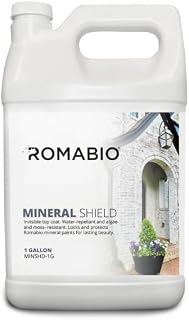
Readers who want an invisible protective primer should look at the Romabio Mineral Shield, a breathable sealer that covers 200 to 300 sq ft per gallon. The Dryvit Color Prime covers the system end as a pigmented acrylic primer at about 1,500 sq ft per pail, the KILZ masonry paint covers the self-priming end at 250 to 400 sq ft per gallon, and the Zinsser Cover Stain closes the set as an oil-based primer-sealer that binds chalky surfaces. Buy during the event when the primer fits the wall, the area has been measured, and the container count covers the job; skip the purchase when the primer is wrong for the surface, however tempting the offer.
| Product | Key spec | Best for |
|---|---|---|
| Kreidezeit Casein Primer 145 | 250 g powder makes 8 L; 40 to 60 sq m; dry about 8 hrs | Budget mineral priming over absorbent plaster |
| KEIM Soldalit Fixativ | Silica sol and water glass; pH about 11; 0.15 L per sq m | Silicate priming under limewash on lime render |
| Earthborn Silicate Primer | Sd under 0.002 m; about 5 sq m per litre; touch dry 1 hr | Highly breathable priming under silicate masonry paint |
| Romabio Mineral Shield | 1 gal covers 200 to 300 sq ft; dry 4 to 8 hrs; 1 to 2 coats | Invisible breathable protection on mineral surfaces |
| Dryvit Color Prime | Water-based pigmented acrylic; about 1,500 sq ft per pail | System priming over cured brown coat before finish |
| KILZ Self-Priming Masonry Paint | Acrylic latex; 250 to 400 sq ft per gal; alkali to pH 12.0 | Self-priming masonry, stucco and brick paint |
| Zinsser Cover Stain | Oil-based; about 400 sq ft per gal smooth; recoat 2 hrs | Binding chalky masonry and stucco surfaces |
How we chose
Each primer below was checked against a document the maker publishes: a technical data sheet or a product page that states the composition, the dilution, the coverage, and the drying time. A product entered this guide only when those figures could be read from such a document. Anything sold on a bare claim, without a stated dilution or a published coverage figure, was left out, because a mineral primer is judged by its chemistry and its consumption, and both must be on the record.
The seven products were chosen to cover the real spread of the category. One is a casein primer that steadies absorbent plaster, one is a silicate fixative that primes by chemical bond, one is a highly breathable silicate primer, one is an invisible mineral sealer, one is a pigmented acrylic system primer, one is a self-priming masonry paint, and one is an oil-based primer-sealer for chalky surfaces. Dilution ratios were compared exactly as the maker states them, and drying times were noted at the maker's stated temperature, since a limewash coat laid over a damp primer can lift or dust.
The verdict in this guide follows the same rule in every section: the primer is judged against the wall it must prime. A casein primer suits a thirsty plaster, a waterglass fixative suits untreated render, and an oil-based sealer suits a chalky surface that a water-based primer cannot bind. That is why the notes under each product state the wall it suits, the dilution it needs, and the waiting time before the wash goes on.
Kreidezeit Casein Primer 145
- Multi-purpose colourless transparent primer; article number 145
- Powder for mixing with water; composition casein and sodium carbonate
- 250 g powder makes 8 litres of primer; covers about 40 to 60 sq m
- Mix 250 g in 3 litres of water, rest 30 minutes, dilute with 5 litres of water
- Dry about 8 hours at 20 C; apply at 8 C or above; sd value under 0.01 m
- Powder stores at least 2 years in a cool, dry, frost-free place
Kreidezeit Casein Primer 145 leads this guide because it is the most economical mineral primer for the most common limewash wall: an absorbent plaster. It is a powder made of casein and sodium carbonate, mixed with water on site, and a single 250 g pack makes 8 litres of primer that covers about 40 to 60 sq m depending on how absorbent the wall is. The mixing sequence is stated step by step: add 250 g to 3 litres of clean cold water while stirring, leave it to expand for about 30 minutes, stir again, then dilute with 5 litres of water.
The primer is colourless and transparent, and it reduces the absorbency of highly absorbent substrates while evening out differences in absorption across the wall. Its vapour diffusion resistance is sd under 0.01 m, so it has almost no reducing effect on the vapour absorption of plasters, which makes it an ideal primer for clay and lime plasters. It suits all untreated substrates such as clay, lime, lime-cement and gypsum plasters, plasterboard, stone and concrete, and it is recommended for priming absorbent old paints before renovation. It is not suitable for smooth non-absorbent surfaces or permanently moist substrates. Drying takes about 8 hours at 20 C, the minimum application temperature is 8 C, and the mixed primer must be used on the same day.
Pros: Very low material use per sq m; almost no effect on vapour permeability; ideal for clay and lime plasters; powder keeps at least 2 years.
Cons: Mixed primer must be used the same day; not for smooth non-absorbent surfaces; needs a drill and whisk for mixing, and a brush rather than a roller or spray.
KEIM Soldalit Fixativ
- Silicate primer and diluent based on silica sol and water glass
- Density 1.0 to 1.1 g per cubic centimetre; pH about 11; organic content 5 percent or less
- Consumption about 0.15 L per sq m as a primer; apply undiluted
- Apply at 5 C or above; containers 5 L and 20 L; shelf life 12 months
KEIM Soldalit Fixativ primes by chemistry rather than by grit, and that is why it belongs at the head of a mineral primer guide. It is a mixture of silica sol and water glass, with an organic content of 5 percent or less, a pH near 11, and a density of 1.0 to 1.1 g per cubic centimetre. As a primer it is applied undiluted, at a consumption of about 0.15 L per sq m, and it also serves as the diluent for KEIM Soldalit silicate paint, so one container covers both the prime coat and the thinning of the finish.
The primer works by silicification: the water glass reacts with the mineral substrate and forms an inseparable bond, rather than sitting on the surface as a film. That is why the coat stays highly breathable and why it will not peel from trapped moisture. The minimum application temperature is 5 C, containers are 5 L and 20 L, and the shelf life is about 12 months in a sealed container kept cool and frost-free. For a limewash job, its role is the first coat on untreated lime or lime-cement render, evening out suction so the wash dries at one rate across the wall.
Pros: Chemical bond with mineral substrates, not a surface film; very low consumption per sq m; doubles as a diluent for the silicate finish; highly breathable.
Cons: Carries no aggregate, so it gives no mechanical key on smooth non-mineral surfaces; tied to silicate finishes; alkaline, so skin and glass nearby need protection.
Earthborn Silicate Primer
- Base coat primer for Earthborn Silicate Masonry Paint
- Coverage about 5 sq m per litre depending on the surface
- Touch dry about 1 hour; recoat and apply paint after 12 hours
- Vapour diffusion value sd under 0.002 m; Class 1 highly vapour permeable
- Pack sizes 100 ml, 2.5 L and 5 L; thinner is water; brush or roller only, not a spray gun
- Apply above 8 C; avoid direct sun, rain and cold for 24 hours after application
Earthborn Silicate Primer is the breathability specialist of this set. It is a base coat primer for Earthborn Silicate Masonry Paint, and it can also stabilise any mineral surface that is very absorbent or powdery. Its vapour diffusion value is sd under 0.002 m, which places it in Class 1 for vapour permeability, and its moisture vapour diffusion rate is stated at 8,321.7 g per sq m per 24 hours. For a limewash job, that breathability is the point: the primer steadies the wall without sealing it, so moisture can still move through the system.
Coverage is about 5 sq m per litre depending on the surface. Touch dry time is about 1 hour, with a minimum of 12 hours between coats and before the silicate paint goes on, at 20 C and 65 percent relative humidity. It suits unpainted porous mineral surfaces such as lime render, concrete, sand-lime and burnt clay brick, pebbledash, stone and cement render. It is not suitable for engineered brick, synthetic resin renders, acrylic plasters, oil-based or latex paints, plastic, wood, metal or glass, or for surfaces affected by rising damp or salt deposits. Pack sizes run from 100 ml through 2.5 L to 5 L, the thinner is water, and the maker states brush or roller only, not a spray gun. Application needs temperatures above 8 C, with no direct sun, rain or cold for 24 hours after application.
Pros: Exceptional breathability at sd under 0.002 m; stabilises powdery and absorbent mineral surfaces; clear coverage and drying figures; small 100 ml pack for a sample area.
Cons: Not for synthetic resin renders or previously painted surfaces; needs 12 hours before the next coat; brush or roller only, no spray gun.
Romabio Mineral Shield
- Invisible breathable sealer and primer for mineral surfaces
- Coverage 1 gallon covers 200 to 300 sq ft
- Dry time 4 to 8 hours; 1 to 2 coats; ready to use with no dilution
- Apply by brush or garden pump sprayer; algae and moss resistant
Romabio Mineral Shield is the invisible option in this guide. It is a breathable sealer and primer for mineral surfaces that goes on invisibly, protecting the wall while leaving its colour and texture unchanged. Coverage is 1 gallon for 200 to 300 sq ft, drying takes 4 to 8 hours, and the maker calls for 1 to 2 coats, ready to use with no dilution. Application is by brush or garden pump sprayer.
Its role in a limewash project is the protective prime over a mineral surface that must stay breathable: a wall that has been limewashed and needs a shield against algae and moss, or a surface that must be sealed against staining without being sealed against vapour. Because it is invisible, it can go over a finished wash without changing its look, which is a use no pigmented primer in this guide can claim.
Pros: Invisible finish leaves the wall unchanged; breathable; ready to use with no mixing; algae and moss resistant.
Cons: A sealer rather than a bonding primer, so it protects rather than keys a slick surface; coverage is modest per gallon; needs 4 to 8 hours to dry.
Dryvit Color Prime
- Water-based pigmented acrylic primer for stucco and finishes
- 50 lb pail; about 1,500 sq ft per pail
- Dry to touch in half an hour; finish in 2 hours; protect from rain for 4 hours
- Apply at 40 F or above; dilute 2 gallons of water per pail over stucco
- Primer over cured brown coat before finish; evens suction
Dryvit Color Prime is the system primer of this set, and its coverage is the widest in the guide. It is a water-based pigmented acrylic primer supplied in a 50 lb pail, covering about 1,500 sq ft per pail. It dries to touch in half an hour, the finish can follow in 2 hours, and the coat must be protected from rain for 4 hours. Application needs temperatures of 40 F or above, and the maker directs a dilution of 2 gallons of water per pail over stucco.
Its stated use is as a primer over a cured brown coat before the finish, evening out suction so the top coat dries evenly. The brown coat must cure for at least 7 days before the primer goes on. For a limewash project, its role is the preparatory prime over a stucco wall that will carry a Dryvit finish beside a limewashed area, or the base that evens a large stucco surface before the wash goes on.
Pros: Widest coverage in this guide at about 1,500 sq ft per pail; fast drying with a 2 hour finish window; pigmented base evens the finish colour.
Cons: Tied to the Dryvit finish system; needs the brown coat cured for 7 days first; must be protected from rain for 4 hours.
KILZ Self-Priming Masonry, Stucco and Brick Paint
- Acrylic latex self-priming paint for masonry, stucco and brick
- Coverage 250 to 400 sq ft per gallon
- Alkali resistant to pH 12.0; flat white finish
- Brush, roller or spray application; soap and water cleanup
- Dry about 3 hours
KILZ Self-Priming Masonry, Stucco and Brick Paint is the self-priming end of this set. It is an acrylic latex paint that primes as it coats, made for masonry, stucco and brick, with a coverage of 250 to 400 sq ft per gallon and an alkali resistance to pH 12.0. The flat white finish can serve as a base under a limewash coat, and the soap and water cleanup keeps the job simple.
Its role in a limewash project is the preparatory coat over a masonry wall that needs both a prime and a base colour in one pass. Because it is self-priming, it removes a step from the job, and because it is alkali resistant to pH 12.0, it can go over fresh masonry that would lift an ordinary paint. Drying takes about 3 hours. It is not a mineral primer, and it should not replace one where the wash must bond directly with a mineral wall, but as the base coat under a wash on a sound masonry wall it earns its place.
Pros: Primes and coats in one pass; alkali resistant to pH 12.0 for fresh masonry; solid coverage per gallon; simple soap and water cleanup.
Cons: Acrylic latex, so it is not a mineral primer; flat white base may need tinting toward the wash colour; drying figures vary between listings, so the maker's sheet should be checked on the day.
Zinsser Cover Stain Oil-Based Primer-Sealer
- Oil-based primer-sealer for masonry including stucco, concrete block, poured concrete and brick
- Coverage about 400 sq ft per gallon on smooth surfaces; 300 sq ft per gallon on rough porous surfaces
- Dry to touch 30 minutes; recoat 2 hours; full cure 7 days
- Apply between 41 F and 90 F; binds chalky surfaces; not for floors, decks or roofs
Zinsser Cover Stain closes the set as the oil-based primer-sealer for the hardest wall in a limewash job: a chalky one. It is an oil-based primer-sealer made for masonry including stucco, concrete block, poured concrete and brick, and its stated strength is binding chalky surfaces that a water-based primer cannot hold. Coverage is about 400 sq ft per gallon on smooth surfaces and 300 sq ft per gallon on rough porous ones.
Drying is 30 minutes to touch and 2 hours to recoat, with a full cure in 7 days. Application temperatures run from 41 F to 90 F. For a limewash project, its role is the first coat over a chalking or powdery wall, locking the loose surface down so the mineral primer and the wash have something sound to bond to. It is not for floors, decks or roofs, and as an oil-based product it needs the ventilation and cleanup that a water-based primer does not.
Pros: Binds chalky surfaces no water-based primer in this guide can; fast touch dry and 2 hour recoat; solid coverage on smooth and rough surfaces.
Cons: Oil-based, so it needs solvents for cleanup and good ventilation; full cure takes 7 days; not a mineral primer, so it prepares the wall rather than priming for the wash itself.
Buying guide
Start with the wall, not the primer. A thirsty clay or lime plaster asks for a casein primer such as Kreidezeit 145, because it steadies absorption without blocking vapour. An untreated lime render asks for a waterglass fixative such as KEIM Soldalit Fixativ, because the fixative bonds with the render by silicification. A powdery or chalky wall asks for a binding primer such as Zinsser Cover Stain first, because a mineral primer cannot hold a surface that is already loose. A glossy or sealed surface asks for an aggregate primer, because only a mechanical key will hold the wash. A mixed wall of old paint and bare patches asks for a fast primer-sealer first, then the mineral primer.
Read the dilution ratio before mixing anything. Waterglass fixatives are diluted 1 part to 2 parts water, the casein primer is mixed as 250 g in 3 litres with a 30 minute rest and a further 5 litres, and the mineral shield goes on ready to use with no dilution. These ratios are not interchangeable, and a primer mixed at the wrong strength can either seal the wall too far or leave it too thirsty. Mix only as much as the day's work needs, since a mixed casein primer must be used the same day.
Check the curing time of the wall itself. A new lime plaster needs time to carbonate before it is primed and washed: the common rule is about one month of drying for every 5 mm of thickness, and a fresh render that is primed too early can fail under the wash. The primer data sheets state their own drying times, but the wall's own schedule comes first, and no primer can rescue a render that is still green.
Work out how much primer the job needs before ordering. Measure the wall area, then divide by the coverage the maker states for the surface in question, remembering that a porous or rough surface takes far more primer than a smooth one. A casein primer covers 40 to 60 sq m per 250 g pack, a silicate primer covers about 5 sq m per litre, and a pigmented system primer covers about 1,500 sq ft per pail, so the figure for the actual product and the actual wall is the one to use, with a little extra ordered to finish the job without a mid-wall stop.
Apply a mineral primer with a brush. Several of the primers in this guide state brush application, and the casein primer must not be sprayed or rolled. A brush pushes the primer into the pores of the render, and it shows where the coat has been laid and where it has been missed. Keep a wet edge, work in full wall sections, and do not stretch the primer further than the maker states in an effort to cover more wall. Protect glass and other surfaces nearby, since waterglass primers are alkaline and can mark them.
Storage is simple but not optional. Keep containers sealed, cool and frost-free. Most of the primers here carry a shelf life of 12 to 36 months unopened, and the casein powder keeps at least 2 years in a cool, dry, frost-free place. A primer that has frozen, skinned over, or developed a sour smell should not be used, however much is left in the container.
During a sale event, the decision rule is plain. Buy when the primer fits the wall, when the area is measured, and when the container count covers the job with a little to spare. Skip the purchase when the primer is wrong for the surface, when the primer belongs to a system the reader does not own, or when the container would sit unopened past its shelf life. A primer bought on those terms is a sound purchase at any time of year, and the event simply lowers the outlay.
FAQ
Why does limewash need a mineral primer instead of an ordinary primer?
Limewash is a mineral finish, and it needs a mineral base. An ordinary acrylic primer can seal the wall, trap moisture behind the wash, and leave the finish to powder or peel. A mineral primer consolidates the surface, evens out suction, and bonds with the wall by the same chemistry the limewash uses, so the wash and the wall behave as one system rather than as separate coats.
Can a waterglass primer go over old paint?
No, not as a rule. Waterglass fixatives are made for untreated mineral render, and they need a bare mineral surface to react with. Over old paint, an aggregate primer is the better choice, because it gives the wash a mechanical key on a surface that will not absorb. Loose, flaking or powdery paint should be removed before any priming, and a chalky wall should be bound first with a primer-sealer made for that job.
How long must a mineral primer dry before the limewash goes on?
It varies by product. The casein primer needs about 8 hours at 20 C, the Earthborn silicate primer needs 12 hours before the next coat, and the mineral shield dries in 4 to 8 hours. The maker's data sheet states the figure for its own product, and that figure is the one to follow. The wall itself must also be fully dry and cured before priming begins.
Is a casein primer suitable for lime plaster?
Yes. The Kreidezeit Casein Primer 145 is described by its maker as an ideal primer for clay and lime plasters, because its vapour diffusion resistance is sd under 0.01 m, so it has almost no reducing effect on the vapour absorption of the plaster. It suits untreated clay, lime, lime-cement and gypsum plasters, plasterboard, stone and concrete, and it is recommended for priming absorbent old paints before renovation.
Do mineral primers work outside?
Yes, when the maker states exterior use. The KEIM silicate products, the Beeck fixative family, and the Earthborn silicate primer are made for interior and exterior mineral surfaces, and the Dryvit Color Prime is an exterior stucco primer. The maker's stated field of application is the guide: if the data sheet lists exterior use, the primer is made for it, and if it does not, it should stay inside.
Should a reader buy several containers during the sale?
Yes, when the job is measured and the primer matches the wall. Primer is a consumable, a single project often needs several containers, and an unopened container keeps for 12 to 36 months when sealed and frost-free. The purchase is a poor one only when the primer is wrong for the surface, when the primer belongs to a system the reader does not own, or when the container would sit past its shelf life.
Conclusion
The answer is yes, with the wall as the deciding factor. A mineral primer for limewash is worth buying during the sale weekend when it matches the surface it must prime: the Kreidezeit Casein Primer 145 for absorbent clay and lime plaster, the KEIM Soldalit Fixativ for untreated lime render, and the Earthborn Silicate Primer where the highest breathability is needed. The Romabio Mineral Shield adds invisible protection, the Dryvit Color Prime serves the stucco system, the KILZ masonry paint primes and coats in one pass, and the Zinsser Cover Stain binds the chalky wall that no water-based primer can hold.
Buy when the primer fits the wall, the area is measured, and the container count covers the job. Skip the purchase when the primer is wrong for the surface or belongs to a system the reader does not own. On those terms, the primer is a sound buy at any time of year, and the sale weekend simply lowers the outlay for a product the job genuinely needs.
Related guides
More from Amazon
Programs that pair well with the guide above. Offers and eligibility are set by Amazon and may change.
Send a Prime gift membership to someone who would use free shipping and Prime Video.
Gift Amazon PrimeGive audiobooks to someone who loves to listen. Plans and prices are set by Amazon.
Gift AudibleFree shipping on eligible items, Prime Video and more. Eligible new members can start with a free trial.
Start a Prime free trialAudiobooks and podcasts to listen to on the go. Eligible new members can start with a free trial.
Try Audible freeAs an Amazon Associate we earn from qualifying purchases.
More ways to save on your next finish
Programs that pair well with the guide above. Offers and eligibility are set by Amazon and may change.
A free business account with business pricing and bulk-buying tools for work, shop or home office.
Create a business accountFast, free shipping on eligible items, plus Prime Video and more. Eligible new members can start with a free trial.
Start a Prime free trialRead from a huge library of eBooks, including how-to guides and cookbooks. Eligible new members can start with a free trial.
Try Kindle UnlimitedAudiobooks and podcasts for the commute, the garage or the kitchen. Eligible new members can start with a free trial.
Try Audible freeAs an Amazon Associate we earn from qualifying purchases. Using these links costs you nothing extra.










Write Your Review
No reviews yet. Be the first to share your experience!