
Key takeaways
- Compare the best vapor permeable plaster sealers for mineral render interiors, with Sd values, coverage, drying times and guidance for breathable finishes.
As an Amazon Associate I earn from qualifying purchases. This post may contain affiliate links at no extra cost to you.
A mineral render interior is a wall that needs to breathe. Lime render, clay render and other mineral finishes take in moisture from the room and release it again as conditions change, and that slow exchange is what keeps the surface dry, stable and free of the damp patches that show up behind a sealed coating. A sealer that forms a tight plastic film breaks that exchange. Moisture gets trapped behind the film, the bond between render and coating weakens, and the finish starts to blister, peel or flake, often months after the work looked finished. Choosing the best vapor permeable plaster sealers for finishing compatible mineral render interiors means finding products that protect the surface from water and dust while leaving the pores of the render open, so vapor keeps moving through the wall in both directions.
The products in this guide were picked because their makers publish vapor data or state plainly that the treatment does not form a film. That matters more than any marketing claim, because a sealer can call itself breathable while still building a thin skin over the render. The honest check is the Sd value, the figure that describes how much resistance a coating offers to vapor diffusion, or a plain statement from the data sheet that the treatment is non film forming and that water vapor diffusion is maintained. Every product below passes one of those two checks, and each one is listed with the figures its maker actually publishes, so you can compare them on the same terms.
Mineral render interiors also ask for a sealer that works with the surface rather than against it. Some products in this guide are silicate fixatives that bond chemically with mineral substrates. Others are silane and siloxane impregnations that line the pores without filling them. A few are consolidants that strengthen a soft or powdery surface before it takes a finish. The right choice depends on whether the render is new or old, sound or dusty, lime based or cement based, and on whether you need a primer under a silicate paint, a water repellent topcoat, or a clear consolidant that simply steadies the surface. The guide below covers all of those jobs, with a lead pick for each one.
Best products
BEECK Fixative
BEECK Fixative is the strongest pick for finishing a compatible mineral render interior, because it is a pure mineral product with the lowest vapor resistance figure in this guide. It is a potassium water glass fixative with zero percent organic content, which means it bonds with mineral substrates through silicification rather than sitting on the surface as a resin film. The maker states an Sd value under 0.01 metres, a figure so low that the treated surface behaves almost exactly like the bare render when it comes to vapor movement. That is the standard a mineral render interior should be judged against, and no other product in this guide matches it.
- Base: pure mineral potassium water glass, zero percent organic content
- Sd value: under 0.01 metres, equal to 77 to 89 perms
- Density: 1.16 kilograms per litre
- pH: 11
- VOC: zero grams per litre
- Finish: colourless and transparent
BEECK Fixative works as a primer, a thinner and a consolidant, which makes it unusually flexible on a mineral render. It dilutes with water, and it suits lime plaster, cement plaster, brick, concrete and natural stone. On a new lime render it primes the surface for a silicate paint and evens out absorption, so the paint dries at one rate across the whole wall. On an older render it steadies a chalky or lightly powdery face. The high pH is normal for a water glass product and is part of how it bonds, so gloves and eye protection belong in the kit, and any splashes on glass or metal should be wiped off while still wet.
KEIM Soldalit-Fixativ
KEIM Soldalit-Fixativ is a sol silicate thinner and primer made for the KEIM Soldalit paint system, and it is a natural choice when the render interior will take a silicate paint as its finish. It is vapor permeable and microporous, and the maker describes it as non film forming, so the pores of the render stay open after treatment. It dilutes with water and is used both to thin the paint and to prime the substrate, which keeps the whole system mineral based from the render up through the final coat.
- Base: sol silicate fixative and primer for KEIM Soldalit paints
- Vapor behaviour: vapor permeable, microporous, non film forming
- Density: about 1.0 to 1.1 grams per cubic centimetre
- pH: about 11
- Organic content: no more than five percent
- Consumption as primer: about 0.15 litres per square metre
- Pack sizes: 5 litres and 20 litres
- VOC: zero to one gram per litre
The milky bluish liquid goes on easily with a brush or roller, and the low consumption rate means a 5 litre pack covers a good sized room as a primer coat. It suits interior and exterior mineral substrates, and because it is part of a matched paint system, the primer and the paint are made to work together, which removes the guesswork about compatibility. If the plan is a silicate paint finish over lime render, this fixative keeps the build up thin, mineral and fully breathable.
Romabio Mineral Shield
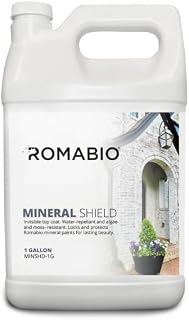
Romabio Mineral Shield is an invisible breathable topcoat, and it is the pick for a render interior that is already finished and simply needs protection. It repels water droplets while allowing vapor to pass through, so rain splash, condensation and everyday marks stay on the surface instead of soaking in, while the wall keeps breathing underneath. The maker states that it protects Classico Limewash, Lime Slurry, masonry paints and Marmorino plasters, as well as uncoated porous brick, stone, stucco and concrete, which covers most mineral render interiors.
- Base: invisible breathable topcoat
- Coverage: about 200 to 300 square feet per gallon
- Application: pump sprayer or brush, do not dilute
- Application temperature: 10 to 35 degrees Celsius
- Finish: invisible, does not change the look of the surface
Mineral Shield is applied after the finish has cured, and it needs no dilution, which makes the application straightforward: spray or brush it on evenly and let it dry. The coverage range is wide because absorbent surfaces take more product than dense ones, so a small sample patch on an inconspicuous area is the sensible way to judge how much a particular render will take. Because the finish is invisible, it suits decorative lime and Marmorino work where any change in colour or sheen would spoil the effect.
Limeworks Ecologic Waterglass Primer and Consolidant
Limeworks Ecologic Waterglass Primer and Consolidant is a clear primer, conditioner and thinner for silicate paints, and it is the pick for an older lime render that needs steadying before it takes a finish. It is vapor permeable, and it stabilizes old lime and cement plaster by binding loose surface material back into the wall, which gives a silicate paint or a limewash a firm base to grip. The liquid is milky white in the can and dries clear, so it does not tint the render or show through a pale finish.
- Base: clear waterglass primer, conditioner and thinner for silicate paints
- Vapor behaviour: vapor permeable
- Coverage: about 240 square feet per gallon
- Touch dry: about one hour
- Time between coats: six to eight hours
- Application temperature: 41 to 113 degrees Fahrenheit, equal to 5 to 45 degrees Celsius
- Finish: milky white liquid that dries clear
The one hour touch dry time and the six to eight hour recoat window make it easy to plan a day of work around, with the primer going on in the morning and the finish coat following later the same day. It is a good match for historic lime plaster, where the surface is often soft, powdery or unevenly absorbent, and where a penetrating waterglass primer does more good than a thick quartz primer that would sit on the surface. Dilution follows the maker directions for the job at hand, whether that is priming, conditioning or thinning paint.
Earthborn Silicate Primer
Earthborn Silicate Primer is a highly breathable primer made for Earthborn Silicate Masonry Paint, and it is the pick for a mineral render interior where the vapor figure itself is the deciding factor. The 2025 data sheet states an Sd value under 0.002 metres and a moisture vapor transmission rate of 8321.7 grams per square metre per 24 hours, which are among the strongest breathability figures published for any primer in this guide. Those numbers matter on a lime render, because the primer sits directly on the render and any resistance it adds is resistance the whole wall has to live with.
- Base: silicate primer for Earthborn Silicate Masonry Paint
- Sd value: under 0.002 metres, from the 2025 data sheet
- Moisture vapor transmission: 8321.7 grams per square metre per 24 hours
- Coverage: about 5 square metres per litre
- Touch dry: about one hour, recoat after 12 hours
- Pack sizes: 100 millilitres, 2.5 litres and 5 litres
- VOC: under 0.1 percent
The primer stabilizes absorbent and powdery mineral surfaces, including lime render, so it does two jobs at once: it firms up a soft face and it gives the silicate paint an even base. Coverage of about 5 square metres per litre is generous, and the small 100 millilitre pack is handy for a sample patch or a single wall. The 12 hour recoat time is longer than most primers in this guide, so plan the schedule with that in mind and let the primer cure fully before the paint goes on.
Mapei Antipluviol W
Mapei Antipluviol W is a milky silane and siloxane water repellent impregnator in a watery emulsion, and it is the pick for a mineral render interior where a water based product is preferred. It does not form a film, and the maker states that vapor permeability is not modified, so the render keeps breathing exactly as it did before treatment. Because it is water based, it has little odour and cleans up with water, which makes it a comfortable choice for interior work in a lived in house.
- Base: silane and siloxane water repellent impregnator in water emulsion
- Vapor behaviour: does not form a film, vapor permeability not modified
- Consumption: about 0.20 to 1 kilogram per square metre
- Consumption on conventional render: 0.50 to 0.80 kilograms per square metre
- Application: ready to use, do not dilute, apply only on dry surfaces
- Finish: milky liquid that dries without changing the look of the surface
The consumption range is wide because a porous lime render drinks far more product than a dense cement render, and the figure of 0.50 to 0.80 kilograms per square metre for conventional render is the realistic planning number for most interiors. The surface must be dry before application, and the product must not be diluted, so the best routine is to check the render with the back of the hand, wait for a dry spell in the room, and apply the full strength product in one even pass. It suits walls that face occasional splash or condensation, such as a kitchen or a hallway, where water resistance is wanted without any loss of breathability.
Remmers Funcosil WS
Remmers Funcosil WS is a hydrophobising impregnation on a silane and siloxane base in an aqueous emulsion, and it is the pick for a mineral render interior that needs water repellency with no solvent smell. It is solvent free, it allows water vapor diffusion, and its pH is about 7.0, which is neutral, so it is gentle on lime render and comfortable to apply indoors. The milky liquid soaks into the pores and lines them with a water repellent layer, rather than coating the surface.
- Base: silane and siloxane hydrophobising impregnation in aqueous emulsion
- Vapor behaviour: allows water vapor diffusion
- Density: about 1.0 grams per cubic centimetre
- Active ingredient: about ten percent by mass
- pH: about 7.0, neutral
- Solvent: solvent free
- Pack sizes: 5 litres and 30 litres
- Application temperature: plus 10 to plus 25 degrees Celsius
The neutral pH and the water based carrier make Funcosil WS one of the easiest products in this guide to live with during application, and the 5 litre pack suits a single room while the 30 litre pack covers a whole house. Application temperature matters: below 10 degrees Celsius the product will not penetrate properly, and above 25 degrees it can dry too fast on the surface, so a mild day and a cool wall are the right conditions. Two coats are often needed on a thirsty lime render, with the second coat going on while the first is still damp, following the maker directions for the substrate.
| Product | Base type | Vapor behaviour | Coverage or consumption | Pack sizes |
|---|---|---|---|---|
| BEECK Fixative | Potassium water glass | Sd under 0.01 metres | See product page | See product page |
| KEIM Soldalit-Fixativ | Sol silicate | Vapor permeable, non film forming | About 0.15 litres per square metre | 5 and 20 litres |
| Romabio Mineral Shield | Invisible breathable topcoat | Lets vapor pass, repels droplets | 200 to 300 square feet per gallon | See product page |
| Limeworks Ecologic Waterglass | Waterglass primer and consolidant | Vapor permeable | About 240 square feet per gallon | See product page |
| Earthborn Silicate Primer | Silicate primer | Sd under 0.002 metres | About 5 square metres per litre | 100 millilitres, 2.5 and 5 litres |
| Mapei Antipluviol W | Silane and siloxane emulsion | Vapor permeability not modified | 0.50 to 0.80 kilograms per square metre on render | See product page |
| Remmers Funcosil WS | Silane and siloxane emulsion | Allows water vapor diffusion | See product page | 5 and 30 litres |
How to choose
Match the product to the job
The first decision is what the sealer has to do. A new lime render that will take a silicate paint needs a primer, and the right primer is the one made for that paint system, such as KEIM Soldalit-Fixativ under KEIM Soldalit or Earthborn Silicate Primer under Earthborn Silicate Masonry Paint. A finished decorative surface that only needs protection wants an invisible topcoat such as Romabio Mineral Shield. An old render that is dusty or soft needs a consolidant first, such as Limeworks Ecologic Waterglass or BEECK Fixative, before any paint or topcoat goes on. A render that faces splash or condensation wants a water repellent impregnation such as Mapei Antipluviol W or Remmers Funcosil WS. Buying the product that matches the job is worth more than buying the product with the longest list of features, because a primer used as a topcoat and a topcoat used as a primer both fail in different ways.
Read the vapor figure before the label
The word breathable appears on many labels, and it means little on its own. The figure that matters is the Sd value, measured in metres, and lower is better: an Sd under 0.01 metres means the coating offers almost no resistance to vapor, while an Sd of 0.5 metres or more means the wall will dry far more slowly. Where no Sd value is published, look for a plain statement in the data sheet that the product does not form a film and that water vapor diffusion is maintained. If neither a figure nor a statement exists, treat the product as unproven for a mineral render interior and pick one that publishes its data. The products in this guide all pass one of those two checks.
Check compatibility with the render
Mineral renders are not all the same. A lime render is alkaline and soft, a cement render is harder and less absorbent, and a clay render is sensitive to water and needs a product made for it. Silicate fixatives such as BEECK Fixative and KEIM Soldalit-Fixativ bond well with lime and cement renders because they react with the mineral surface itself. Silane and siloxane impregnations such as Funcosil WS and Antipluviol W suit most mineral substrates but need a dry surface and a sound face to penetrate properly. A render with old paint, oil stains or a gypsum skim will not take a silicate fixative properly, and those surfaces need cleaning or removal first. A sample patch on a hidden area, left for a few days and then checked for adhesion and colour change, is the cheapest insurance against a compatibility mistake.
Plan coverage, temperature and drying time
Coverage figures in this guide are planning numbers, not promises, because a porous lime render can take twice as much product as a dense cement render. Buy ten percent more than the calculation suggests, and keep the receipt for an unopened pack. Temperature matters just as much: most products in this guide need the wall and the air above 10 degrees Celsius, and several stop working properly above 25 or 30 degrees. Drying times vary from about one hour to 12 hours between coats, so read the data sheet before starting and plan the day around the slowest step, not the fastest. A primer that needs 12 hours before recoating cannot be rushed with a heater, because forced drying can trap moisture in the render.
Common mistakes
The most common mistake on a mineral render interior is sealing it with a product that forms a film. Acrylic sealers, varnishes and ordinary emulsion paints look fine on the day and then fail over the following months, as trapped moisture pushes the coating off the render in blisters and flakes. The damage is worst in rooms with high humidity, such as kitchens and bathrooms, and on external walls that face driving rain. The fix is to strip the film back and start again with a vapor permeable product, which costs far more than choosing the right sealer the first time.
A second mistake is applying a sealer to a damp render. Silane and siloxane impregnations need dry pores to soak into, and a waterglass primer needs a surface that is not already saturated. A render that looks dry on the face can still hold moisture deeper in, especially after a wet winter or a leak. Let the wall dry for several days, check it with the back of the hand, and if in doubt wait another day. Applying too soon wastes product and leaves the treatment sitting on the surface instead of inside the pores where it belongs.
A third mistake is skipping the sample patch. Every render is different, and the same product can look invisible on one wall and leave a faint sheen on another. A sample patch the size of a hand, applied in a corner or behind a door, shows the true colour change, the absorption rate and the drying time before the whole room is committed. It also shows whether the render is sound enough to take the product, because a patch that powders off with the sealer on it is a warning that the surface needs consolidating first.
A fourth mistake is over applying. A sealer that is meant to soak in cannot do its job if it is left pooling on the surface. Puddles and runs dry into a glossy skin that blocks vapor exactly where the product was supposed to keep it open. The right technique is a thin, even coat, worked in with a brush or roller, with any excess brushed out before it dries. A second coat, if the maker calls for one, goes on while the first is still damp, not after it has dried hard.
A fifth mistake is mixing systems without checking. A silicate primer under an acrylic paint, a quartz primer under a limewash, or a water repellent topcoat over a fresh silicate paint can all react badly, because the chemistry of one layer fights the chemistry of the next. Keep the primer, the paint and the topcoat inside one system where the maker offers one, and where that is not possible, check the data sheets of both products for a compatibility statement before starting.
FAQ
Do vapor permeable sealers stop water getting into the render?
They reduce water uptake a great deal, but they do not make the render waterproof, and that is by design. A vapor permeable sealer lines the pores so that liquid water is kept out while water vapor can still pass through. Rain splash, condensation and everyday marks stay on the surface, while moisture inside the wall can still dry outwards. A product that blocked all water movement would also block drying, which is what causes blistering and peeling on mineral renders.
How do I know if a sealer is truly vapor permeable?
Look for an Sd value in the data sheet, measured in metres, and compare it with the figures in this guide: under 0.01 metres is excellent, under 0.1 metres is very good, and anything above 0.5 metres will slow drying noticeably. Where no Sd value is published, look for a statement that the product does not form a film and that water vapor diffusion is maintained. A label that only says breathable, without a figure or a statement, is not enough evidence for a mineral render interior.
Can I use a vapor permeable sealer over an old painted render?
It depends on the old paint. A silicate fixative needs direct contact with a mineral surface, so it will not bond properly over an acrylic or oil based paint, and the old paint should be removed first. A water repellent impregnation also needs bare pores to soak into, so it will not work over a sealed coating either. If the old finish is a limewash or a silicate paint, a compatible sealer can sometimes go over it, but a sample patch and a check of both data sheets are needed before committing to the whole wall.
How long does a vapor permeable sealer last on an interior render?
Interior sealers last a long time because they are sheltered from sun and weather, and a good treatment can protect a render for many years. Silicate fixatives bond with the mineral surface itself and do not wear off in the way a surface coating does. Silane and siloxane impregnations sit inside the pores and are protected by the render around them, so they degrade slowly. The honest answer is that no maker in this guide publishes a fixed service life for interior use, because the render, the room and the moisture load all affect it, and the practical check is to watch for water starting to soak in again and reapply when it does.
Is a vapor permeable sealer safe to apply in a lived in house?
Most products in this guide are low odour and water based, and several state VOC figures at or near zero, which makes them suitable for interior use. Solvent based products such as some silane impregnations have a stronger smell and need the room ventilated during application, with windows open and the door to the rest of the house closed. Gloves and eye protection are sensible for all of them, and waterglass products with a pH around 11 need care because they are alkaline. Keep children and pets out of the room until the product has dried.
Conclusion
A mineral render interior stays healthy when its sealer protects the surface without closing the pores, and the seven products in this guide all do that job with published data to back the claim. BEECK Fixative leads for its pure mineral chemistry and its Sd value under 0.01 metres, Earthborn Silicate Primer leads for its published moisture vapor transmission figure, and Romabio Mineral Shield leads where an invisible topcoat is all that is needed. The rest of the list covers the other jobs a render interior can ask for: priming under a silicate paint, consolidating an old lime face, and adding water repellency without any loss of breathability.
The practical steps are simple. Identify whether the wall needs a primer, a consolidant or a topcoat. Check the Sd value or the film forming statement in the data sheet. Run a sample patch on a hidden area and leave it for a few days. Apply on a dry wall, in the temperature range the maker states, in thin even coats. Done in that order, a vapor permeable sealer will protect a mineral render interior for years while the wall keeps breathing exactly as it was built to do.
Related guides
More from Amazon
Programs that pair well with the guide above. Offers and eligibility are set by Amazon and may change.
Free shipping on eligible items, Prime Video and more. Eligible new members can start with a free trial.
Start a Prime free trialAudiobooks and podcasts to listen to on the go. Eligible new members can start with a free trial.
Try Audible freeAd-free music streaming. Eligible new subscribers can start with a free trial.
Try Music Unlimited freeA free business account with business pricing and bulk-buying tools for work, shop or home office.
Create a business accountAs an Amazon Associate we earn from qualifying purchases.
More ways to save on your next finish
Programs that pair well with the guide above. Offers and eligibility are set by Amazon and may change.
A free business account with business pricing and bulk-buying tools for work, shop or home office.
Create a business accountFast, free shipping on eligible items, plus Prime Video and more. Eligible new members can start with a free trial.
Start a Prime free trialRead from a huge library of eBooks, including how-to guides and cookbooks. Eligible new members can start with a free trial.
Try Kindle UnlimitedAudiobooks and podcasts for the commute, the garage or the kitchen. Eligible new members can start with a free trial.
Try Audible freeAs an Amazon Associate we earn from qualifying purchases. Using these links costs you nothing extra.



Write Your Review
No reviews yet. Be the first to share your experience!