
Key takeaways
- Compare air compressors for texture hopper guns by CFM at 40 PSI, with tank sizes, recovery times and noise figures that suit small decorative texture panels.
As an Amazon Associate I earn from qualifying purchases. This post may contain affiliate links at no extra cost to you.
A texture hopper gun is only as good as the air behind it. The gun itself is a simple device, a hopper on top and a nozzle below, but it asks for a steady stream of air at a pressure and volume that many small workshop compressors cannot sustain. When the air supply falls short, the spray pattern turns patchy, the texture lands wet in one spot and dry in the next, and the finish on a small decorative panel looks uneven no matter how carefully the mix was prepared. That is why the compressor matters as much as the gun, and why the rating to watch is not horsepower or tank size alone but the delivered airflow at the pressure the gun actually runs at.
The best air compressors for texture hopper guns with compatible CFM rating for spraying small decorative texture panels deliver at least six cubic feet per minute at forty pounds per square inch, hold a working pressure between twenty-five and fifty pounds per square inch, and carry enough stored air to finish a panel without the motor running the whole time. Light orange peel work needs four to six cubic feet per minute at forty pounds per square inch, while heavier knockdown and popcorn patterns need six to nine, so a compressor rated at six or more at forty pounds per square inch covers both ends of the range for small panels. The seven machines below all clear that bar, and each one is compared on the figures that decide whether a panel sprays cleanly or sputters.
Best products
DeWalt DXCMLA1983054
- Tank capacity: 30 gallons
- Air delivery: 7.0 CFM at 40 PSI, 5.7 CFM at 90 PSI
- Maximum pressure: 155 PSI
- Pump: oil-lubricated, belt drive
- Power: 120 or 240 volt
- Best for: the largest small-panel jobs and the heaviest knockdown patterns
The DeWalt DXCMLA1983054 leads this roundup because it delivers the highest airflow at the pressure a hopper gun uses, seven cubic feet per minute at forty pounds per square inch. That figure sits above the six to nine cubic feet per minute range that heavier knockdown and popcorn patterns ask for, which means the gun keeps its spray pattern from the first pass to the last without the pressure sagging while the tank refills. A thirty gallon tank adds a deep reserve, so the motor cycles off for long stretches while the gun works through a panel, and the belt drive pump runs with less vibration than a direct drive unit of the same size.
The trade-off is size and the oil-lubricated pump, which needs its oil level watched and changed on the maker schedule. The machine is a shop unit rather than a carry-around unit, so it suits a workshop where panels are sprayed in batches and the compressor stays in one place. For a plasterer who sprays decorative texture panels regularly and wants the gun to behave the same on the tenth panel as on the first, the combination of seven cubic feet per minute at forty pounds per square inch and thirty gallons of stored air is the strongest match in this group.
Makita MAC5200
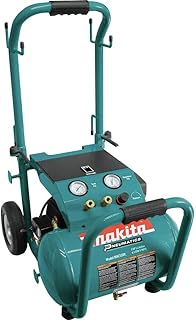
- Tank capacity: 5.2 gallons
- Air delivery: 6.9 CFM at 40 PSI, 6.5 CFM at 90 PSI
- Maximum pressure: 140 PSI
- Motor: 3.0 HP, 2.1 HP running
- Weight: 88 lbs net
- Features: wheels and folding handle, two 1/4 in. universal quick couplers included
- Best for: a compact compressor that still clears the six CFM bar
The Makita MAC5200 is the surprise of this roundup, because it packs six point nine cubic feet per minute at forty pounds per square inch into a five point two gallon machine that one person can wheel across a room. Its Big Bore pump is the reason, moving more air per stroke than the small pancake pumps that dominate the budget end of the market, and the two included universal quick couplers mean the hose connects straight to the gun without a trip to buy fittings. The folding handle and wheels make it easy to move between a mixing table and a spraying area, which matters when panels are finished one at a time.
The small tank is the limit to respect. Five point two gallons empties fast under a gun that draws six to seven cubic feet per minute, so the motor runs often and the operator should spray in short passes with brief pauses while pressure recovers. For a single small panel at a time, with pauses to reload the hopper and check the pattern, the MAC5200 keeps up. For back-to-back panels without a break, a larger tank from this roundup will serve better.
Husky C303H
- Tank capacity: 30 gallons, vertical
- Air delivery: 6.8 SCFM at 40 PSI, 5.1 SCFM at 90 PSI
- Maximum pressure: 175 PSI
- Pump: oil-free
- Power: 120 volt, 15 amp
- Features: wheels
- Best for: long spraying sessions on several panels in a row
The Husky C303H pairs six point eight cubic feet per minute at forty pounds per square inch with a thirty gallon vertical tank, a combination that suits a full day of panel work. The vertical tank takes up little floor space, the oil-free pump removes oil changes from the routine, and the one hundred seventy-five pound per square inch maximum pressure leaves plenty of headroom above the twenty-five to fifty pound per square inch range a hopper gun uses. The wheels let the unit roll across a workshop floor, though at thirty gallons it is a machine to roll rather than lift.
Recovery time is where the C303H earns its place. A thirty gallon tank at six point eight cubic feet per minute gives the operator long stretches of steady spraying between motor cycles, which keeps the texture pattern consistent across a whole panel and across several panels in a row. The vertical layout also keeps the drain valve and regulator within easy reach, so draining condensation at the end of the day is a quick job rather than a chore that gets skipped.
California Air Tools 10020C
- Tank capacity: 10 gallons, steel
- Air delivery: 6.4 CFM at 40 PSI, 5.3 CFM at 90 PSI
- Maximum pressure: 125 PSI
- Motor: 2.0 HP
- Noise level: 70 dBA
- Pump: oil-free
- Features: wheels, 70/30 duty cycle
- Best for: quiet operation in a shared workshop or occupied building
The California Air Tools 10020C delivers six point four cubic feet per minute at forty pounds per square inch from a ten gallon steel tank, and it does so at seventy decibels, which is noticeably quieter than the eighty decibel machines in this roundup. That noise figure matters when panels are sprayed indoors in a building where other people are working, or in a home workshop where a loud compressor wears on the operator over a long session. The oil-free pump needs no oil checks, and the wheels make the ten gallon unit easy to move.
A ten gallon tank is enough for a single twelve-foot wall segment or a run of small panels with short pauses, which matches the small-panel brief of this roundup. The seventy over thirty duty cycle means the pump is designed to run for seventy minutes out of every hundred, with thirty minutes of rest, so the operator should plan short breaks between panels rather than running the gun without stopping. Used that way, the 10020C gives a quiet, steady supply that suits decorative work in occupied spaces.
California Air Tools 15020C

- Tank capacity: 15 gallons, steel
- Air delivery: 6.4 CFM at 40 PSI, 5.3 CFM at 90 PSI
- Maximum pressure: 130 PSI
- Motor: 2.0 HP
- Noise level: 70 dB
- Weight: 90 lbs
- Pump: oil-free
- Features: wheel kit
- Best for: a step up in tank size without a step up in noise
The California Air Tools 15020C uses the same pump as the 10020C, so it delivers the same six point four cubic feet per minute at forty pounds per square inch and the same seventy decibel noise level, but it stores that air in a fifteen gallon steel tank instead of a ten gallon one. The extra five gallons stretch the time between motor cycles, which shows up as a steadier spray pattern when a panel needs several passes to build up the texture. The wheel kit and ninety pound weight keep the unit movable by one person across a flat workshop floor.
The one hundred thirty pound per square inch maximum pressure gives a little more headroom than the 10020C, and the oil-free pump keeps maintenance simple. The 15020C is the right pick for a plasterer who likes the quiet California Air Tools pump but finds a ten gallon tank runs dry a little too soon on larger panels. It is also a good match for orange peel and light knockdown work, where the gun draws four to six cubic feet per minute and the fifteen gallon reserve covers several panels before the motor needs to catch up.
California Air Tools 20020
- Tank capacity: 20 gallons, steel
- Air delivery: 6.4 CFM at 40 PSI, 5.3 CFM at 90 PSI
- Maximum pressure: 125 PSI
- Motor: 2.0 HP
- Noise level: 70 dB
- Weight: 134 lbs
- Pump: oil-free
- Features: wheels
- Best for: the largest quiet compressor in this roundup
The California Air Tools 20020 takes the same six point four cubic feet per minute at forty pounds per square inch and puts it behind a twenty gallon steel tank, the largest tank in the California Air Tools quiet range. Twenty gallons is the size that workshop guides call a realistic minimum for multi-room or ceiling work, and for small decorative panels it means the motor spends most of its time resting while the gun works. The seventy decibel noise level stays the same as its smaller siblings, so the extra capacity costs nothing in sound.
At one hundred thirty-four pounds the 20020 is a roll-around machine, not a lift-and-carry one, and the wheels are part of the design rather than an accessory. The oil-free pump and the same straightforward controls as the 10020C and 15020C make it easy to live with. For a plasterer who sprays panels in batches and wants the quietest possible twenty gallon supply, the 20020 is the natural end of this family line.
Stealth SAQ-12018
- Tank capacity: 20 gallons
- Air delivery: 6.0 CFM at 40 PSI, 5.0 CFM at 90 PSI
- Maximum pressure: 150 PSI, cut-out
- Motor: 1.8 HP
- Noise level: 68 dB
- Weight: 121 lbs
- Pump: oil-free
- Features: eight inch rubber wheels, two quick couplers
- Best for: the quietest twenty gallon option in this roundup
The Stealth SAQ-12018 delivers six cubic feet per minute at forty pounds per square inch from a twenty gallon tank at sixty-eight decibels, the lowest noise figure in this roundup. The eight inch rubber wheels roll over workshop floors and across thresholds without catching, and the two quick couplers let the operator connect a gun hose and a second tool without swapping fittings. The one hundred fifty pound per square inch cut-out pressure gives a wide working band above the gun range, and the oil-free pump keeps the maintenance routine to draining the tank and keeping the intake filter clean.
Six cubic feet per minute at forty pounds per square inch sits right at the lower edge of the range for heavier knockdown patterns, so the Stealth suits orange peel and light to medium knockdown better than heavy popcorn work. For small decorative panels, where the gun runs in short passes and the operator pauses to check the pattern, the twenty gallon tank covers the work with room to spare. The quiet running and the large rubber wheels make it the easiest twenty gallon machine in this roundup to live with in a small workshop.
| Compressor | CFM at 40 PSI | Best for |
|---|---|---|
| DeWalt DXCMLA1983054 | 7.0 | Heaviest knockdown and largest panels |
| Makita MAC5200 | 6.9 | Compact power with wheels and handle |
| Husky C303H | 6.8 | Long sessions on several panels |
| California Air Tools 10020C | 6.4 | Quiet work in occupied buildings |
| California Air Tools 15020C | 6.4 | Larger tank without more noise |
| California Air Tools 20020 | 6.4 | Largest quiet tank in the family |
| Stealth SAQ-12018 | 6.0 | Quietest twenty gallon option |
How to choose
Match the CFM figure to the pattern, not the horsepower
The number that decides whether a hopper gun sprays cleanly is the delivered airflow at forty pounds per square inch, because that is the pressure band where most texture work happens. Light orange peel patterns ask for four to six cubic feet per minute at forty pounds per square inch, while heavier knockdown and popcorn patterns ask for six to nine. A compressor rated at six or more at forty pounds per square inch covers both, and the machines in this roundup run from six point zero to seven point zero at that pressure. Horsepower alone does not tell the story, since two motors with the same horsepower can deliver very different airflow, and the figure at ninety pounds per square inch, which many listings lead with, is always lower than the figure at forty. Read the forty pound per square inch figure first, and treat anything below five cubic feet per minute at that pressure as a poor match for a hopper gun.
Size the tank to the panel, not the room
Tank size decides how long the gun sprays before the motor has to catch up. An eight to ten gallon tank is enough for a single twelve-foot wall segment or a run of small panels with pauses, while twenty to thirty gallons is the realistic minimum for multi-room work or ceilings. For small decorative panels, a ten to fifteen gallon tank is a good middle ground, giving several passes per fill without the weight and floor space of a thirty gallon unit. A small tank paired with a strong pump, like the five point two gallon Makita MAC5200, still works for one panel at a time, but the operator should expect the motor to run often and should spray in short passes. A large tank paired with a strong pump, like the thirty gallon DeWalt or Husky, gives the longest stretches of steady spraying.
Set the regulator inside the gun working band
A hopper gun runs between twenty-five and fifty pounds per square inch at the gun, with orange peel at the upper end of that band and knockdown at the lower end. The compressor maximum pressure, which runs from one hundred twenty-five to one hundred seventy-five pounds per square inch in this roundup, is not the spraying pressure, and the regulator is what bridges the two. Set the regulator to the low forties for orange peel and the high twenties to mid thirties for knockdown, then adjust in small steps while watching the pattern on a scrap panel. A regulator with a clear gauge and a lock ring holds its setting better than a bare knob, and a short hose run between the compressor and the gun loses less pressure than a long one.
Weigh noise against the working space
Noise figures in this roundup run from sixty-eight to eighty decibels, and the gap between those ends is large in practice. A seventy decibel machine can run in a shared workshop or an occupied building without dominating the room, while an eighty decibel machine needs hearing protection and wears on the operator over a long session. The quiet machines here, the California Air Tools range and the Stealth, achieve their figures with slower pump speeds and sound-dampening housings, and they trade a little recovery speed for the quieter running. If panels are sprayed in a home workshop, a studio, or a building where other trades are working nearby, the noise figure deserves as much weight as the airflow figure.
Common mistakes
The most common mistake is buying on horsepower or tank size and ignoring the airflow figure at forty pounds per square inch. A large tank with a weak pump still starves the gun, because the tank empties faster than the pump refills it, and the spray pattern fades halfway through a panel. The fix is to read the forty pound per square inch figure before anything else and to choose a machine that delivers at least six cubic feet per minute at that pressure for knockdown work.
A second mistake is running the regulator too high. More pressure does not mean a better pattern, and running a hopper gun at sixty or seventy pounds per square inch blows the texture thin, throws material past the panel, and fills the air with overspray. The working band is twenty-five to fifty pounds per square inch, and the right setting is found by spraying a scrap panel and adjusting in small steps until the pattern looks even.
A third mistake is skipping the water drain. Compressors condense water inside the tank, and that water travels down the hose into the gun, where it thins the mix and leaves pale spots in the texture. Draining the tank at the end of every spraying day takes a minute and keeps the air dry. A small inline filter near the gun adds a second layer of protection on damp days.
A fourth mistake is using a hose that is too long or too narrow. A long, narrow hose drops pressure between the compressor and the gun, so the gauge at the compressor reads forty pounds per square inch while the gun sees far less. A short run of three-eighths inch hose keeps the pressure where it belongs, and keeping the hose free of kinks matters as much as its length.
A fifth mistake is spraying a full panel without a scrap panel check. Mix thickness, nozzle size, air pressure, and gun distance all interact, and a change in any one of them shifts the pattern. A scrap panel the same size as the work panel, sprayed with the same mix and the same settings, shows the pattern before the real panel is committed, and it takes only a minute to run.
FAQ
What CFM does a texture hopper gun need at forty pounds per square inch?
A common hopper gun needs four to ten cubic feet per minute at forty pounds per square inch, depending on the pattern. Light orange peel work runs on four to six cubic feet per minute, while heavier knockdown and popcorn patterns need six to nine. A compressor that delivers at least six cubic feet per minute at forty pounds per square inch covers the full range for small panels, and every machine in this roundup meets that mark.
Is a bigger tank better than a stronger pump?
Both matter, and they solve different problems. The pump decides whether the gun keeps its pattern while it sprays, and the tank decides how long the gun sprays before the motor has to catch up. A strong pump with a small tank works for one panel at a time with pauses, while a large tank with a weak pump still starves the gun. For small decorative panels, a pump that delivers six cubic feet per minute at forty pounds per square inch and a tank of ten gallons or more is a sound combination.
What pressure should the regulator be set to for a hopper gun?
Most hopper guns run between twenty-five and fifty pounds per square inch at the gun. Orange peel patterns sit at the upper end, around forty to fifty pounds per square inch, and knockdown patterns sit at the lower end, around twenty-five to thirty-five. Start in the middle of the range for the pattern, spray a scrap panel, and adjust in small steps until the texture looks even.
Can a small pancake compressor run a texture hopper gun?
A small pancake compressor can move air through a hopper gun for a few seconds, but it cannot sustain the four to seven cubic feet per minute at forty pounds per square inch that the gun needs. The pattern will start strong and fade as the tank empties, and the motor will run without stopping while the tank still loses pressure. Pancake compressors suit nail guns and inflation, not texture spraying, and a panel sprayed with one will show the uneven pattern.
How loud are these compressors in a workshop?
Noise figures in this roundup run from sixty-eight decibels for the Stealth SAQ-12018 to eighty decibels for the Makita MAC700. Seventy decibels is close to normal conversation level and suits shared or occupied spaces, while eighty decibels needs hearing protection for longer sessions. The California Air Tools machines and the Stealth are the quiet choices here, all at seventy decibels or below.
Does an oil-free pump matter for texture work?
An oil-free pump removes oil changes from the routine and removes any chance of oil mist reaching the air line, which is a small but real benefit when the air carries a plaster mix onto a decorative surface. Oil-lubricated pumps, like the Makita MAC5200 and the DeWalt DXCMLA1983054, run cooler and often last longer under heavy use, but they need their oil level watched. Either type works for texture spraying, and the choice comes down to how much maintenance the operator wants to do.
Conclusion
The right compressor for a texture hopper gun is the one whose airflow at forty pounds per square inch matches the pattern, with a tank large enough to carry the operator through a panel without the motor running the whole time. The DeWalt DXCMLA1983054 leads on raw airflow at seven cubic feet per minute, the Husky C303H and the California Air Tools 20020 lead on tank size at thirty and twenty gallons, and the Makita MAC5200 shows that a compact machine can still clear the six cubic feet per minute bar. For small decorative texture panels, any of the seven machines here will keep the gun spraying evenly, and the choice comes down to how many panels run in a row, how quiet the space needs to be, and how far the compressor has to move between jobs.
Related guides
More from Amazon
Programs that pair well with the guide above. Offers and eligibility are set by Amazon and may change.
Free shipping on eligible items, Prime Video and more. Eligible new members can start with a free trial.
Start a Prime free trialAudiobooks and podcasts to listen to on the go. Eligible new members can start with a free trial.
Try Audible freeAd-free music streaming. Eligible new subscribers can start with a free trial.
Try Music Unlimited freeA free business account with business pricing and bulk-buying tools for work, shop or home office.
Create a business accountAs an Amazon Associate we earn from qualifying purchases.
More ways to save on your next finish
Programs that pair well with the guide above. Offers and eligibility are set by Amazon and may change.
A free business account with business pricing and bulk-buying tools for work, shop or home office.
Create a business accountFast, free shipping on eligible items, plus Prime Video and more. Eligible new members can start with a free trial.
Start a Prime free trialRead from a huge library of eBooks, including how-to guides and cookbooks. Eligible new members can start with a free trial.
Try Kindle UnlimitedAudiobooks and podcasts for the commute, the garage or the kitchen. Eligible new members can start with a free trial.
Try Audible freeAs an Amazon Associate we earn from qualifying purchases. Using these links costs you nothing extra.



Write Your Review
No reviews yet. Be the first to share your experience!