
Key takeaways
- Compare air compressors for texture hopper guns with CFM ratings matched to pneumatic plaster texture sprayers, plus tank size and duty cycle for steady flow.
As an Amazon Associate I earn from qualifying purchases. This post may contain affiliate links at no extra cost to you.
Our top picks at a glance
5 products from this guide, in the order reviewed below.
As an Amazon Associate we earn from qualifying purchases. Prices and availability can change.
A pneumatic plaster texture sprayer is only as good as the air that feeds it. The sprayer turns a stream of compressed air into a spray of plaster or stucco, and the quality of that spray depends on two things: how much air the compressor delivers, and how steadily it delivers it. A compressor that delivers enough air keeps the spray even from the first second to the last. A compressor that delivers too little air starts strong and fades as the tank drains, and the texture on the wall fades with it. The best air compressors for texture hopper guns with compatible CFM rating for supplying pneumatic plaster texture sprayers are the machines whose CFM rating matches the sprayer, with a tank and a duty cycle that keep the air flowing for the whole job.
Compatible CFM rating is the idea that runs through this group. Every sprayer states the air it needs, usually in CFM at a working pressure, and the compressor has to meet or beat that figure. A sprayer that needs 5 CFM and a compressor that delivers 3 CFM will never work well together, no matter how large the tank is, because the tank will drain faster than the pump can refill it. A sprayer that needs 3 CFM and a compressor that delivers 6 CFM will work well, because the pump stays ahead of the gun and the tank stays full. The match matters more than any other figure on the compressor, and it should be checked before anything else.
The seven compressors below cover the full range of sprayers, from small guns that draw little air to large guns that need a strong pump. Each one has a verified CFM figure from the maker or the manual, a tank sized to its air delivery, and a duty cycle that suits the pace of spray work. The group is led by the strongest machines, for sprayers that draw the most air, and it closes with light machines for small sprayers worked in short bursts.
Best products
Makita MAC5200
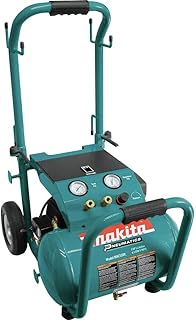
- Motor: 3.0 HP
- Tank: 5.2 gal tank
- Air delivery: 6.9 CFM at 40 PSI, 6.5 CFM at 90 PSI
- Maximum pressure: 140 PSI
- Weight: 88 lbs
- Pump: oil-lubricated Big Bore pump, 3420 RPM
- Power: 13.8 A
The Makita MAC5200 leads this group because it delivers the most air of any machine here: 6.9 CFM at 40 PSI and 6.5 CFM at 90 PSI. For a pneumatic plaster texture sprayer, that figure is the whole point. A sprayer that draws 5 or 6 CFM will run on the MAC5200 without draining the tank, because the pump delivers more air than the gun uses. The 5.2-gallon tank stores enough air to cover a long spray run, and the pump refills it fast enough that the next run can start at once. On a day of continuous spraying, the MAC5200 keeps the gun fed without a pause, and the pattern stays even from the first wall to the last.
The cost of that air delivery is weight and speed. At 88 lbs the MAC5200 is the heaviest machine in this group, and its pump runs at 3420 RPM, which is twice the speed of the slower Makita machines. A faster pump makes more noise and more heat, and the oil-lubricated pump needs its oil level watched. It draws 13.8 amps, so it belongs on a sound circuit with no other heavy load on the same line. For a plasterer who runs a large sprayer all day, with the compressor parked in one place and a long hose running to the gun, the MAC5200 is the strongest choice here. It is not the machine to carry up stairs, but for ground-floor spray work it keeps the gun supplied without a break.
Husky C201H
- Motor: 1.3 running HP
- Tank: 20 gal vertical tank
- Air delivery: 5.2 SCFM at 40 PSI, 4.0 SCFM at 90 PSI
- Maximum pressure: 175 PSI
- Weight: 73 lbs
- Pump: oil-free
- Power: 120V, 15 A
- Fill time: about 7 minutes from empty
- Sound level: 83 dBA
The Husky C201H takes a different approach to supplying a sprayer: instead of the strongest pump, it has the largest tank in this group. The 20-gallon vertical tank stores far more air than any other machine here, so the sprayer can run for a long time from stored air alone. It delivers 5.2 SCFM at 40 PSI and 4.0 SCFM at 90 PSI, which is enough for most sprayers, and the 175 PSI maximum gives the tank a generous reserve above working pressure. The vertical tank takes up little floor space, which is handy in a crowded workshop or a hallway, and the oil-free pump needs no oil care.
The trade-off is the fill time: about 7 minutes from empty, which is the longest in this group. The C201H is a machine that should be started early and left to fill before the first spray, and then it will keep the gun fed for a long run. At 73 lbs it is heavy, though the vertical shape and the wheels make it easy to roll into place. At 83 dBA it is the loudest machine here, so it belongs in a garage or outside with a long hose, rather than in the same room as the work. It draws 15 amps, which is the full load of a standard household circuit. For a plasterer who sprays large areas and wants a deep store of air, the C201H is the best tank in this group.
Makita MAC2400
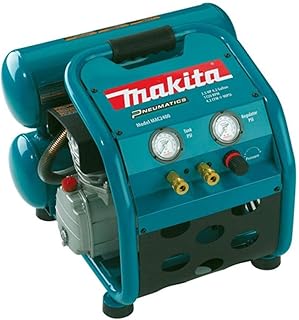
- Motor: 2.5 HP
- Tank: 4.2 gal twin-stack tank
- Air delivery: 4.8 CFM at 40 PSI, 4.2 CFM at 90 PSI
- Maximum pressure: 130 PSI
- Weight: 77 lbs
- Pump: oil-lubricated cast-iron Big Bore pump, 1730 RPM
- Power: 12.3 A
- Frame: roll cage
The Makita MAC2400 is the classic twin-stack compressor, and it earns its place in this group on the strength of its cast-iron pump and its steady air delivery. It delivers 4.8 CFM at 40 PSI and 4.2 CFM at 90 PSI, which is enough for most pneumatic plaster texture sprayers, and the oil-lubricated Big Bore pump keeps delivering that air steadily through a long spray run. The low running speed of 1730 RPM keeps the pump cool and stretches its life across many days of spraying, and the 130 PSI maximum leaves plenty of headroom above the pressure a sprayer needs.
The roll cage is a real advantage on spray work. The compressor gets dragged across floors, bumped against door frames, and set down on rough ground, and the cage takes the knocks that would dent a bare tank or crack a fitting on a lighter machine. At 77 lbs it is heavy, and the twin-stack shape is awkward to carry, so it is best treated as a roll-and-place machine. The oil-lubricated pump needs its oil level checked before the first spray of the day. In return the MAC2400 gives a steady, predictable air supply and a long working life, and its 4.8 CFM at 40 PSI will feed most sprayers without a pause.
Rolair JC10 Plus

- Motor: 1 HP
- Tank: 2.5 gal tank
- Air delivery: 2.35 CFM at 90 PSI
- Maximum pressure: 125 PSI
- Sound level: 60 dB
- Weight: 45 lbs
- Pump: oil-less dual-piston pump, 1725 RPM
- Power: 7.5 A
- Fill time: 55 seconds from 0 to 125 PSI
- Frame: roll cage
The Rolair JC10 Plus is the smallest machine in this group, and it suits the smallest sprayers. It delivers 2.35 CFM at 90 PSI from an oil-less dual-piston pump, and it fills from empty to 125 PSI in 55 seconds. That air delivery is enough for a small sprayer with a small nozzle, worked in short bursts with pauses while the surface is checked. The roll cage protects the tank, the pump, and the fittings, so the machine can be carried from a van into a house and set down on rough ground without worry. At 60 dB it runs at the sound level of a normal conversation, so it can sit beside the work without drowning out talk.
At 45 lbs the JC10 Plus is light enough to carry with one hand, and it draws only 7.5 amps, the lowest in this group, so it runs on any household circuit. The oil-less pump needs no oil checks before work starts. The limit is air delivery: a sprayer that draws more than 2.35 CFM at 90 PSI will drain the 2.5-gallon tank faster than the pump can refill it, and the spray will fade halfway through a run. For a small sprayer and a small job, the JC10 Plus is the lightest and quietest machine here, and its roll cage makes it the toughest small compressor in the group.
Bostitch BTFP02012

- Tank: 6 gal pancake tank
- Air delivery: 2.6 CFM at 90 PSI
- Maximum pressure: 150 PSI
- Weight: 30 to 31 lbs
- Pump: oil-free
The Bostitch BTFP02012 is the simplest machine in this group, and it suits a small sprayer worked at a relaxed pace. It is a 6-gallon pancake compressor with an oil-free pump, a 150 PSI maximum, and a weight of 30 to 31 lbs. It delivers 2.6 CFM at 90 PSI, which is enough for a small sprayer and a small nozzle, sprayed in short bursts. The pancake tank sits flat and stable on any floor, the machine carries with one hand, and there is nothing to maintain beyond draining the tank at the end of the day.
The 6-gallon tank stores enough air to cover a short spray run without the pump starting, and the pump refills while the surface is checked and the hopper is reloaded. The BTFP02012 will not keep up with a large sprayer or a thick mix, and the pump will run often on a long spray run, so it is best used at the pace the machine sets: spray a section, set the gun down, let the pump refill the tank, and spray the next section. For a plasterer who runs a small sprayer a few times a week and wants a machine that is easy to carry, easy to store, and easy to use, the BTFP02012 is the simplest choice here.
Porter-Cable C2002

- Motor: 0.8 HP
- Tank: 6 gal pancake tank
- Air delivery: 3.7 SCFM at 40 PSI, 2.6 SCFM at 90 PSI
- Maximum pressure: 150 PSI
- Weight: 30 lbs
- Pump: oil-free
- Power: 120V, 10 A
- Sound level: 82 dB
- Pressure switch: cut-in 120 PSI, cut-out 150 PSI
The Porter-Cable C2002 is the long-running classic of the 6-gallon pancake class, and it has stayed in workshops for years because it is simple, light, and easy to live with. It delivers 3.7 SCFM at 40 PSI and 2.6 SCFM at 90 PSI, which is enough air for a small to medium sprayer, and the 6-gallon tank stores enough air to cover a spray run without the pump starting. The pressure switch cuts in at 120 PSI and out at 150 PSI, so the tank stays in a narrow band and the pump runs in short, regular cycles that fit the pace of spray work.
At 30 lbs the C2002 carries with one hand, and the pancake tank sits flat and stable on any floor. The oil-free pump needs no oil care, and the machine draws 10 amps on a standard circuit. At 82 dB it is one of the louder machines here, so it is best kept a little further from the work, with a hose running to the gun. The C2002 suits a plasterer who runs a small sprayer in short bursts and wants a proven, simple machine at a modest weight. It is not the strongest machine here, but it is one of the most dependable, and its 3.7 SCFM at 40 PSI will feed a small sprayer without a pause.
Ridgid OF60150HA
- Motor: 1.5 HP
- Tank: 6 gal pancake tank
- Air delivery: 3.5 SCFM at 40 PSI, 2.6 SCFM at 90 PSI
- Maximum pressure: 150 PSI
- Weight: 34 to 35 lbs
- Pump: oil-free
- Power: 120V, 12.5 A
- Sound level: 80 dBA
- Regulator: locking regulator
- Couplers: 2 universal push-to-connect couplers
The Ridgid OF60150HA closes this group with a locking regulator and two push-to-connect couplers, and on spray work those features matter. The locking regulator holds the working pressure steady all day, so the spray pattern stays the same from the first section to the last, and the setting cannot be knocked out of place when the compressor is dragged across a floor. Two couplers let the sprayer hose and a blow gun stay connected at the same time, so the surface can be blown clean and sprayed without swapping hoses. Air delivery is 3.5 SCFM at 40 PSI and 2.6 SCFM at 90 PSI, which is enough for a small to medium sprayer.
At 34 to 35 lbs the OF60150HA is light enough to carry with one hand, and the 6-gallon pancake tank stores enough air to cover a spray run without the pump starting. It draws 12.5 amps on a standard circuit. At 80 dBA it is one of the louder machines here, so it is best parked a little further from the work. The OF60150HA suits a plasterer who runs a small sprayer and wants the pressure setting to stay put all day, with quick hose changes between sections. For a sprayer that draws no more than 3.5 CFM at 40 PSI, it keeps the air flowing steadily and the pattern even.
| Product | Tank | CFM at 40 PSI | CFM at 90 PSI | Max pressure | Weight |
|---|---|---|---|---|---|
| Makita MAC5200 | 5.2 gal | 6.9 | 6.5 | 140 PSI | 88 lbs |
| Husky C201H | 20 gal | 5.2 | 4.0 | 175 PSI | 73 lbs |
| Makita MAC2400 | 4.2 gal | 4.8 | 4.2 | 130 PSI | 77 lbs |
| Rolair JC10 Plus | 2.5 gal | – | 2.35 | 125 PSI | 45 lbs |
| Bostitch BTFP02012 | 6 gal | – | 2.6 | 150 PSI | 30-31 lbs |
| Porter-Cable C2002 | 6 gal | 3.7 | 2.6 | 150 PSI | 30 lbs |
| Ridgid OF60150HA | 6 gal | 3.5 | 2.6 | 150 PSI | 34-35 lbs |
How to choose
Read the sprayer's air need first
The first step in choosing a compressor for a pneumatic plaster texture sprayer is to read the sprayer's own stated air need. The sprayer manual gives a CFM figure at a working pressure, and that figure is the target the compressor has to meet. A compressor whose delivery at that pressure meets or beats the sprayer's need will keep the gun spraying without a pause. A compressor whose delivery falls short will drain its tank during a spray run and leave the second half of the pattern thinner than the first. The sprayer's air need should be compared with the compressor's delivery at the same pressure, because a CFM figure at 90 PSI says little about how the compressor behaves at the lower pressure a sprayer works at.
Compare CFM at the working pressure, not at 90 PSI
Most compressors list their air delivery at 90 PSI, because that is the standard figure for nail guns and other tools. A plaster texture sprayer works at a lower pressure, closer to 40 PSI, so the 40 PSI figure is the one that decides how the gun behaves. A compressor that delivers 4 CFM at 90 PSI might deliver 5 CFM at 40 PSI, or it might deliver less, and the difference decides whether the sprayer keeps spraying or fades. When the maker lists both figures, the 40 PSI figure should be used for the comparison. When the maker lists only the 90 PSI figure, the compressor should be treated with caution, and the tank size and the duty cycle should be checked as a back-up.
Size the tank for the spray run
The tank is a store of air, and its size decides how long the sprayer can run before the pump has to catch up. A long spray run on a whole wall needs a large tank, or a pump strong enough to keep up with the gun while it sprays. A short spray run on a small area needs only a small tank, because the pump refills while the surface is checked and the hopper is reloaded. A 20-gallon tank stores enough air for a very long run, but it takes about 7 minutes to fill from empty and weighs 73 lbs. A 6-gallon tank stores enough air for a short run and refills in a minute or two. The choice is a balance between the length of each spray run and the weight the plasterer is willing to carry.
Check the duty cycle for continuous work
A sprayer that runs for long periods needs a compressor whose pump can run for long periods too. Every maker states how long the pump can run before it needs a rest, and that duty cycle decides whether the machine can keep up with a full day of spraying. A machine rated for long running periods will keep the gun fed all day. A machine rated for short bursts needs the plasterer to work at its pace and take the pauses the machine needs. The duty cycle should be read alongside the CFM figure, because a compressor with a strong CFM figure and a short duty cycle will still need to rest, and a compressor with a modest CFM figure and a long duty cycle will keep working steadily all day.
Common mistakes
The most common mistake when supplying a pneumatic plaster texture sprayer is buying a compressor whose CFM rating is below the sprayer's air need. The mistake is easy to make, because the headline figure on the box is often the horsepower or the maximum pressure, not the air delivery. A 2.0 HP machine can deliver less air than a 1.0 HP machine, and a 200 PSI maximum says nothing about how much air the pump moves. The CFM at the working pressure is the figure that decides whether the sprayer keeps spraying, so it should be checked first and the other figures should be treated as secondary.
Another mistake is using a hose that is too long or too narrow. A long hose drops the pressure between the compressor and the sprayer, so the gun sees less pressure than the regulator shows, and the pattern comes out thinner than expected. A narrow hose does the same thing. The hose should be as short as the job allows and wide enough to carry the air the sprayer needs. A third mistake is setting the regulator too high. High pressure throws the mix too hard, makes the pattern coarse, and empties the tank fast. The regulator should be set to the lowest pressure that gives an even spray pattern, and then left alone.
A fourth mistake is ignoring the tank drain. Water collects in the tank every time the pump runs, and a tank that is never drained will rust from the inside and spit water into the air line. Water in the air line spoils the texture and leaves marks on the plaster. The drain valve should be opened at the end of each working day, and the tank should be left open overnight to dry out.
FAQ
How do I know if my compressor's CFM matches my sprayer?
Read the sprayer's manual for its stated air need, usually given in CFM at a working pressure, and compare it with the compressor's air delivery at the same pressure. If the compressor delivers at least as much air as the sprayer needs, the match is good. If the compressor delivers less, the tank will drain during a spray run and the pattern will fade. A little headroom is useful: a compressor that delivers 1 CFM more than the sprayer needs will keep the tank full while the gun sprays, and the pump will run in calm cycles instead of running constantly.
Is a bigger tank better for supplying a texture sprayer?
A bigger tank is better when the spray runs are long, because it stores more air and the pressure falls more slowly while the gun sprays. A 20-gallon tank can feed a sprayer for a long run without the pump starting. A 6-gallon tank stores enough air for a short run, and the pump refills while the surface is checked. The cost of a large tank is weight and fill time: a 20-gallon tank takes about 7 minutes to fill from empty and weighs 73 lbs. For short spray runs with pauses in between, a smaller tank with a strong pump is the better balance.
Why does my spray pattern fade halfway through a wall?
A pattern that fades halfway through a wall usually means the tank pressure is falling faster than the pump can refill it. The sprayer is drawing more air than the compressor delivers, so the tank drains during the spray and the regulator has less pressure to work with. The fix is to check the sprayer's stated air need against the compressor's delivery at the working pressure, lower the regulator to the lowest pressure that gives an even pattern, and check the hose for leaks. A leak at a fitting can waste enough air to starve the gun.
Can a small compressor run a pneumatic plaster texture sprayer?
Yes, if the sprayer is small and the compressor's air delivery meets the sprayer's need. A small sprayer with a small nozzle draws little air, and a compressor that delivers 2.5 CFM or more at 90 PSI can feed it in short bursts. The sprayer should be worked in short runs with pauses while the pump refills the tank. A small compressor will not feed a large sprayer, because the tank will drain faster than the pump can refill it, and the pattern will fade. The sprayer's manual states the air it needs, and that figure decides whether a small compressor is enough.
How long can a compressor run continuously while spraying?
That depends on the duty cycle the maker states. Some machines are rated for long running periods, and some are rated for short bursts with a rest in between. A machine rated S3, with 5 minutes on and 5 minutes off, needs the plasterer to work at its pace and take the pauses the machine needs. A machine with a 70/30 duty cycle can run for longer periods. The pump will also run hotter during continuous spraying, so the oil level on an oil-lubricated machine should be checked before a long day, and the machine should be given time to cool between long runs.
Conclusion
Supplying a pneumatic plaster texture sprayer comes down to one match: the compressor's CFM rating against the sprayer's air need. The Makita MAC5200 is the strongest choice in this group, delivering 6.9 CFM at 40 PSI and 6.5 CFM at 90 PSI, and it will feed any sprayer in this group without a pause. The Husky C201H is the best choice for long spray runs, with a 20-gallon tank that stores enough air to cover a whole wall and 5.2 SCFM at 40 PSI to keep it filled. The Makita MAC2400 is the most dependable middle choice, with 4.8 CFM at 40 PSI from a cast-iron pump built for long service.
For a plasterer who runs a small sprayer and wants a light machine, the Rolair JC10 Plus weighs only 45 lbs and runs at 60 dB, and its roll cage takes the knocks of daily carrying. For a plasterer who wants a locking regulator and quick hose changes, the Ridgid OF60150HA holds its pressure setting all day in a 34 to 35 lb package. Whichever machine is chosen, the rule stays the same: read the sprayer's air need, match the compressor's CFM at the working pressure, and set the regulator once and leave it alone. A compressor matched that way will keep the sprayer fed and the pattern even from the first wall to the last.
Related guides
More from Amazon
Programs that pair well with the guide above. Offers and eligibility are set by Amazon and may change.
Free shipping on eligible items, Prime Video and more. Eligible new members can start with a free trial.
Start a Prime free trialAudiobooks and podcasts to listen to on the go. Eligible new members can start with a free trial.
Try Audible freeAd-free music streaming. Eligible new subscribers can start with a free trial.
Try Music Unlimited freeA free business account with business pricing and bulk-buying tools for work, shop or home office.
Create a business accountAs an Amazon Associate we earn from qualifying purchases.



Write Your Review
No reviews yet. Be the first to share your experience!