
Key takeaways
- Refresh tired lime plaster with a compatible mineral finish. Compare seven interior limewash paints that bond to old plaster and revive soft, cloudy color.
What's inside
As an Amazon Associate I earn from qualifying purchases. This post may contain affiliate links at no extra cost to you.
Old lime plaster has a character that modern paint cannot copy: a soft, uneven surface that has hardened over decades, with faint trowel marks and a warmth that comes from the lime itself. When that surface looks tired, the right refresh is not a plastic paint that seals it, but a mineral finish that bonds with it. The best interior limewash paints for refreshing old lime plaster surfaces are lime-based paints that soak into the old plaster, harden with it, and leave a cloudy matte finish that revives the color without hiding the texture underneath.
Refreshing old plaster starts with an honest look at the wall. Lime plaster that is sound but faded, dusty, or stained is a good candidate for limewash. Plaster that is loose, hollow, or crumbling needs repair first, because no paint can hold a surface that is falling away. Tap the wall and listen: a solid thud means the plaster is bonded, while a hollow sound means it has come away from its base and needs a plasterer before any paint goes on. Clean the wall with a soft brush, fill hairline cracks with a lime-compatible filler, and leave the wall dry before painting. The limewash then goes on in thin coats, and the lime in the paint bonds with the lime in the plaster as both harden together.
Color choice for old plaster follows the age of the room. Warm whites revive a faded wall without changing its character, pale clay and soft ochre warm a cold room, and muted sage or dusty blue can lift a dark hallway. Limewash dries lighter than it looks wet, and the cloudy movement shows the old trowel marks rather than hiding them, so brush a sample on a board and then on a small patch of the wall itself, and look at it in daylight before painting the whole room. The seven paints below were chosen for old lime plaster specifically: each one lists mineral surfaces or plaster among its suitable surfaces, and each one carries maker guidance on coats, dilution, and primers, so you can match the paint to the condition of your wall.
Quick verdict
If the old plaster is bare and absorbent, start with Romabio Classico Limewash. The maker lists an authentic slaked-lime paint made in Italy with Dolomite lime, a one-coat process with no primer on absorbent masonry, and a very flat finish in seven curated whites and neutrals. It is the most direct lime-to-lime refresh in this group.
Ocres de France Badisof Limewash Paint is the pick when you want a true limewash made for interiors. The maker lists it as a ready-to-use air limewash for interior use only, with 88 colors and the option to tint with up to 20 percent natural pigment. A 4 kilogram bucket covers about 20 square metres for two coats, and the maker offers a 100 gram powder sample for checking the shade. It goes on in two coats over the maker's Sofadher primer, and the lime bonds with the old plaster as it hardens.
Portola Lime Wash suits old plaster where you want layered, hand-crafted color. The maker lists more than 75 colors in a traditional lime-based finish with a matte, textured surface and a suede-like appearance indoors. The paint needs its Limeproof Undercoat on previously painted surfaces, and a bonding primer when painting over existing lime wash.
Romabio Lime Slurry suits old plaster that needs more than a thin wash. The maker line lists it as a thick plaster-like lime coating made with authentic Italian Dolomite lime, brush-applied, with coverage of 50 to 60 square feet per litre. It lays down a heavier mineral coat that fills fine unevenness and gives a faded wall a fresh plaster surface to look at, and the maker line lists 20 to 25 days for full carbonation.
Vasari Lime Paint suits old plaster where you want a burnishable finish and a wide palette. The maker lists 180 colors in a natural mineral paint of crushed limestone and powdered marble, with a minimum of two coats and coverage of about 200 square feet per gallon per coat. The paint can be thinned with water to a lime wash effect and finished with the maker's Mineral Sealer.
James Alexander Modern Lime Paint is the pick when the old plaster is flat and you want a deeper, more saturated matte finish. The maker describes it as a thicker, smoother application with a deeper, more saturated matte finish than its limewash line, on the same mineral lime base. It is the smoothest finish in this group for a wall that is already even.
Porters Interno Lime Wash closes the group as the interior-only limewash for plaster walls. The maker lists it as an interior-only lime based coating for plasterboard, plaster, masonry, and previously painted surfaces, with a very flat finish, VOC under 1 gram per litre untinted, and coverage of about 8 square metres per litre. Two coats go on with a 4 by 14 centimetre block brush.
| Product | Key spec | Best for |
|---|---|---|
| Romabio Classico Limewash | 1-coat process; no primer on absorbent masonry | Bare, absorbent old plaster |
| Ocres de France Badisof Limewash Paint | 88 colors; interior use only; powder form | True limewash made for interiors |
| Portola Lime Wash | 75+ colors; suede-like matte interior finish | Layered, hand-crafted color |
| Romabio Lime Slurry | Thick plaster-like lime coating; Dolomite lime | Rough plaster that needs a heavier coat |
| Vasari Lime Paint | 180 colors; thins to a lime wash effect | Burnishable finish, wide palette |
| James Alexander Modern Lime Paint | Thicker, smoother, deeper matte finish | Flat plaster, saturated color |
| Porters Interno Lime Wash | Interior-only; 8 sq m per litre | Interior plaster walls |
How we chose
We started from the family pool of verified interior limewash paints and kept only products whose makers list them for interior use on mineral surfaces or plaster, with a lime base and a matte finish. Every specification in this article comes from the maker or retailer page listed in the sources file for this lot. Where a maker does not list a figure, we say so rather than filling the gap.
Plaster bond came first. A refresh paint must bond with old lime plaster rather than sealing it, so we favored paints whose makers list plaster, lime render, or absorbent masonry directly, and paints that need no primer on bare mineral surfaces. Where a paint needs a primer on previously painted plaster, the section names the primer, because old plaster in a lived-in house usually carries an old painted layer.
Condition range came second. Old plaster is rarely uniform: one wall may be bare and sound, another may carry old paint, and a third may have hairline cracks. We kept paints that cover that range, from a one-coat limewash for bare plaster to a ready-mixed paint for previously painted surfaces, so the article serves a real house rather than a single ideal wall.
Color range and sample access came third. A refresh should revive the room without changing its character, so pale and mid-tone shades matter more than saturated ones. We kept both broad palettes and small curated ones, and we favored makers that sell sample pots, sample boards, or small sample sizes, because a refresh shade should be checked on the old wall itself before the whole room is painted.
Overlap with sibling articles in this family was checked against every interior limewash paint article already on disk. The seven products here share at most three products with any other article in the family, measured from the product headings in those articles.
Romabio Classico Limewash
- Base: authentic slaked-lime paint with Dolomite lime, made in Italy
- Colors: 7 curated whites and neutrals, tintable to light and medium-light shades
- VOC: the maker lists 3.9 grams per litre ready to use; the sell sheet markets zero VOC
- Sizes: 1 litre, 2.5 litres, and 15 litres
- Coverage: 1 litre covers 80 to 100 square feet for one coat at 50 percent dilution
- Coats: 1 coat, diluted 50 to 100 percent with water
- Dry time: 10 to 60 minutes
- Finish: very flat finish, per the maker
- Primer: no primer on absorbent, unpainted masonry
- Cure: the lime finishes hardening up to 20 to 25 days after application, per the maker data sheet
Romabio Classico Limewash leads this group because it is the most direct lime-to-lime refresh available. The maker describes it as an authentic slaked-lime paint handcrafted in Italy with Dolomite lime, made with techniques the maker traces back two thousand years. It goes onto unpainted, absorbent interior and exterior brick, stone, and masonry with no primer, in a one-coat process, and dries to a very flat finish with an aged, distressed character. On old lime plaster, that is exactly the behavior you want: the paint soaks into the absorbent surface, bonds as it hardens, and leaves the texture of the old plaster visible through a soft wash of color.
The paint must be diluted 50 to 100 percent with water before application, and the maker lists coverage of 80 to 100 square feet per litre for one coat at 50 percent dilution. A litre covers a small wall, a 2.5 litre container covers a room, and the 15 litre size covers a whole floor. The seven curated colors run from Avorio White and Bianco White through Cristallo White, Nube Gray, Riposo Beige, Toscano Beige, and Tropea Beige, and the paint can be tinted to light and medium-light shades with natural earth oxide pigments. For a refresh, that pale range is ideal: it revives a faded wall without changing the character of the room.
Dry time runs 10 to 60 minutes, and the maker notes that the lime keeps hardening for 20 to 25 days after application, so the color keeps settling during that time. The paint can be removed from most brick within two days of application, which gives a short window to correct a coat. For old plaster, dampen the surface with water before painting, work the wall from top to bottom with a masonry brush, and avoid painting in full sun. The maker lists the paint as not intended as a solid finish or for horizontal surfaces, so use it as a wash that lets the old plaster show through.
Pros:
- No primer needed on absorbent, unpainted masonry
- One-coat process with a very flat finish
- Authentic slaked lime with Dolomite lime, per the maker
- Seven curated whites and neutrals suited to a refresh
Cons:
- Only light to medium-light colors, so deep shades are not available
- Must be diluted before use, which adds a step
- Not intended as a solid opaque finish
Ocres de France Badisof Limewash Paint
- Base: ready-to-use air limewash for interior use only
- Colors: 88 listed colors; tintable with up to 20 percent natural pigment
- Form: powder form, per the pool record
- Sizes: 4 kilogram bucket covering about 20 square metres and 8 kilogram bucket covering about 40 square metres, each for two coats
- Coats: 2 coats
- Primer: Sofadher primer, per the pool record
- Samples: 100 gram powder sample and paper sample available
- Surfaces: interior use only
Ocres de France Badisof Limewash Paint is the interior-only limewash in this group, made for rooms rather than facades. The maker lists it as a ready-to-use air limewash for interior use only, with 88 colors and the option to tint with up to 20 percent natural pigment. A 4 kilogram bucket covers about 20 square metres for two coats, and an 8 kilogram bucket covers about 40 square metres, so a small room needs little paint. The maker offers a 100 gram powder sample and a paper sample for checking the shade before buying a bucket.
For old lime plaster, Badisof has a natural advantage: it is a true limewash made for interiors, and it goes on in two coats over a primed surface with the maker's Sofadher primer. The powder form means the paint is mixed as needed, and the lime bonds with the old plaster as it hardens, leaving a soft matte finish that follows the texture of the wall rather than hiding it. The 88-color range is broad enough for a refresh, and the option to tint with natural pigment lets you adjust a shade toward the warm or cool side to match the room.
Brush the paint on in two coats, let the first coat dry fully before the second, and check the color on the old wall itself before painting the whole room, because the plaster underneath shows through the limewash and shifts the final tone. Badisof is an interior paint only, so keep it inside the house, and use it on the dry walls of bedrooms, living rooms, and hallways, where its soft matte finish revives tired plaster without changing the character of the room.
Pros:
- Made for interior use only, with 88 listed colors
- Powder form lets you mix what you need
- True limewash that bonds with old plaster
- Small powder sample available for checking the shade
Cons:
- Interior use only, so no exterior walls
- Needs the maker's Sofadher primer first
- Coverage per bucket is modest for large rooms
Portola Lime Wash
- Base: traditional lime-based finish
- Colors: more than 75 hand-crafted colors
- VOC: the maker lists no VOCs
- Sizes: quart, gallon, and 5 gallon
- Coverage: quart 40 to 50 square feet, gallon 160 to 200 square feet, 5 gallon 800 to 1,000 square feet, each for two coats
- Finish: matte, textured, with a weathered patina indoors and a suede-like appearance
- Surfaces: interior and exterior masonry and interior drywall
- Primer: Limeproof Undercoat for painted and drywall surfaces; bonding primer when painting over existing lime wash
- Samples: sample chips, drawdowns, and custom sample boards
Portola Lime Wash is the layered color pick for old plaster. The maker describes it as a traditional lime-based finish that dries to a weathered patina with subtle movement and natural color variation, softening and streaking with age. On an interior wall, the maker says the finish has a soft, suede-like appearance, which suits old plaster well: the cloudy movement follows the trowel marks and unevenness of the old surface instead of fighting them, and the wall reads as aged rather than newly painted.
The palette of more than 75 hand-crafted colors is deep in the earthy, muted tones that suit an old house. The maker notes that the paint dries about four shades lighter than it looks when wet, and keeps lightening with each coat, so the sample system matters: the maker offers sample chips, drawdowns, and custom sample boards, and a board brushed in the real technique shows the cloudy movement far better than a small chip. Brush the sample on the old wall itself if you can, because the plaster underneath shifts the final tone.
Coverage is generous: a gallon covers 160 to 200 square feet in two coats, so one gallon handles a full room. The maker lists the finish as non-wipeable, so treat the refreshed wall as a decorative surface. Previously painted plaster needs preparation: the maker lists two coats of Limeproof Undercoat after de-glossing and cleaning, and a bonding primer when painting over existing lime wash. Bare old plaster takes the paint directly once it is clean and sound, which is the simplest refresh in this group after Romabio.
Pros:
- Deep, hand-crafted palette of more than 75 colors
- Suede-like matte interior finish with natural movement
- Generous coverage per gallon for two coats
- Sample boards show the real brushed effect
Cons:
- Non-wipeable finish, so marks stay unless repainted
- Previously painted plaster needs undercoat first
- Color dries several shades lighter than the wet paint
Romabio Lime Slurry

- Base: thick plaster-like lime coating with authentic Italian Dolomite lime
- Coverage: 50 to 60 square feet per litre, per the pool record
- Application: brush-applied, per the pool record
- Cure: 20 to 25 days for full carbonation, per the pool record
- Surfaces: mineral surfaces, per the maker line
Romabio Lime Slurry is the thickest finish in this group, and it suits old lime plaster that needs more than a thin wash. The maker line lists it as a thick plaster-like lime coating made with authentic Italian Dolomite lime, brush-applied, with coverage of 50 to 60 square feet per litre. Where a limewash soaks into the plaster and leaves the texture visible, a lime slurry lays down a heavier mineral coat that fills fine unevenness and gives a faded wall a fresh plaster surface to look at. For a refresh, that makes it the right choice when the old plaster is sound but rough, patchy, or marked by decades of small repairs.
The paint goes on with a brush, and the maker line lists 20 to 25 days for full carbonation, which is the same slow hardening that the Classico Limewash lists. That slow pace is the character of a real lime finish: the coating keeps hardening for weeks after it feels dry, and the color keeps settling during that time. Judge the final shade after a few weeks, not on the day you paint, and keep the room ventilated while the coat hardens.
Coverage is modest at 50 to 60 square feet per litre, so a room needs more slurry than it would need limewash, and the thick coat means the work goes more slowly than a thin wash. Use it on the wall that needs the most help, and pair it with a thinner limewash on the other walls if the room is large. Brush it on in the same cross-hatch pattern as other lime paints, keep a wet edge, and let the coat dry fully before deciding whether a second coat is needed.
Pros:
- Thick plaster-like coat revives rough, patchy old plaster
- Authentic Italian Dolomite lime, per the maker line
- Brush-applied with a mineral finish that hardens with the wall
- Suited to walls that need more than a thin wash
Cons:
- Modest coverage per litre, so large rooms need more paint
- Full carbonation takes 20 to 25 days
- Heavier coat than a limewash, so less cloudy movement
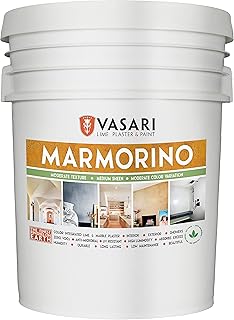
Vasari Lime Paint
- Base: natural mineral paint from crushed limestone and powdered marble
- Colors: 180 listed colors
- VOC: the maker lists low VOC
- Sizes: quart, gallon, and 5 gallon in the maker instructions
- Coverage: about 200 square feet per gallon per coat
- Coats: minimum 2 coats
- Finish: matte or soft sheen; can be burnished to a soft glow
- Primer: Mineral Primer for new drywall and best results
- Sealer: Mineral Sealer listed for added protection against dirt, stains, and water marks
- Samples: sample boards and swatch cards
Vasari Lime Paint suits old plaster where you want a burnishable finish and a wide palette. The maker describes it as a natural mineral paint made from crushed limestone and powdered marble, applied in a minimum of two coats to a matte or soft sheen, and burnishable to a soft glow if you want more light on the wall. The paint can be thinned with water to a lime wash effect, which is the right way to refresh a faded wall: thin coats let the old plaster show through, while full coats give a denser color where the plaster is stained.
The 180-color range is broad enough for any old house, and the maker offers sample boards and swatch cards for checking a shade at home. Coverage runs about 200 square feet per gallon per coat, so a gallon covers a room in two coats with paint to spare. The maker lists the paint for interior drywall at a level 4 finish or higher, and for exterior surfaces as well, so the same paint can run from a refreshed living room into a hallway without a visible change in character.
Application is flexible: the maker lists brush, roller, or spray, though a brush gives the cloudy limewash movement most clearly. The maker lists its Mineral Sealer as a topcoat for added protection, which is worth considering in a hallway or a room where the wall gets touched. For old plaster, the preparation is the same as for the other paints here: brush off loose material, fill hairline cracks with a lime-compatible filler, and let the wall dry before the first coat.
Pros:
- Broad palette of 180 colors
- Burnishable to a soft sheen for more light
- Can be thinned to a lime wash effect
- Maker-listed Mineral Sealer for protection
Cons:
- Sealer is an extra step and an extra purchase
- New drywall needs Mineral Primer first
- Low VOC is listed without a figure in the pool record
James Alexander Modern Lime Paint
- Base: same mineral lime base as the maker's limewash line
- Finish: thicker, smoother application with a deeper, more saturated matte finish, per the maker
- Collection: interior lime paint collection
- Surfaces: interior walls, per the maker collection
James Alexander Modern Lime Paint is the smooth, saturated option for old plaster that is already flat. The maker describes it as a thicker, smoother application with a deeper, more saturated matte finish than its limewash line, on the same mineral lime base. Where the limewash gives a thin, cloudy wash that follows every trowel mark, the Modern Lime Paint gives a denser, more even color with the same mineral movement. For a refresh, that distinction matters: choose the limewash when the old plaster has character you want to show, and choose the Modern Lime Paint when the old plaster is flat and you want the color itself to carry the room.
The maker lists the paint as part of its interior lime paint collection, and the line shares the mineral character of the limewash: lime, water, and mineral pigments, with no synthetic binder in the base. The thicker application covers a faded or lightly stained wall more evenly than a thin wash, so a room that needs two coats of limewash may need only the standard two coats of Modern Lime Paint to reach the same depth. The finish stays matte, so the wall keeps the soft, non-reflective character of a lime surface rather than turning glossy.
Because the pool record lists no coverage, size, or color figures for this paint, check the maker page for the current palette and sizes before ordering, and brush a sample on the old wall to confirm the depth. The sample jars and color cards from the limewash line show the maker's approach to sampling, and the same care applies here: a deeper matte color looks different on old plaster than on a card, and the wall underneath shifts the final tone.
Pros:
- Deeper, more saturated matte finish than the limewash line
- Thicker, smoother application covers faded plaster evenly
- Same mineral lime base as the limewash line
- Suited to flat old plaster that needs color depth
Cons:
- Coverage, sizes, and color count are not listed in the pool record
- Less cloudy movement than a thin limewash
- Needs a sample on the wall to confirm the depth
Porters Interno Lime Wash
- Base: interior-only lime based coating
- Colors: custom colors available, per the maker
- VOC: under 1 gram per litre untinted, per the maker
- Sizes: 1 litre, 4 litre, and 15 litre
- Coverage: about 8 square metres per litre
- Coats: 2 coats with a 4 by 14 centimetre block brush
- Dry time: touch dry in 2 hours; at least 6 hours between coats
- Finish: very flat finish, per the maker
- Surfaces: plasterboard, plaster, masonry, and previously painted surfaces
- Limitations: not recommended for bathrooms, wet areas, or kitchens, per the maker
Porters Interno Lime Wash closes this group as the interior-only limewash made for plaster walls. The maker describes it as a lime based coating designed for interior use that replicates the soft weathered patina of a traditional lime wash, and lists plasterboard, plaster, masonry, and previously painted surfaces among its suitable surfaces. The finish is very flat, and the maker lists VOC under 1 gram per litre untinted, which suits a lived-in house where the rooms stay in use during the project.
Two coats go on with a 4 by 14 centimetre block brush in a crow's feet or random multi-directional pattern, with touch dry in two hours and at least six hours of dry time between coats. Coverage runs about 8 square metres per litre, and the paint comes in 1, 4, and 15 litre sizes, so a small room needs little paint. The maker notes that the lime blooms to the surface as the paint dries, leaving the original color in the background with a soft shadowing of lime over the top, which is the cloudy character a refresh needs.
The maker lists custom colors on request, and notes that the paint is not suitable for wood, metal, glazed tiles, glazed bricks, or non-porous surfaces, and not for bathrooms, wet areas, or kitchens. For a bedroom, living room, or hallway with old lime plaster, those limits do not matter. Use Interno on the dry walls of the house, keep it away from wet rooms, and let the lime bloom do the work of reviving the old surface.
Pros:
- Made for interior plaster walls, per the maker
- Very flat finish with a lime bloom effect
- Low VOC under 1 gram per litre untinted
- Custom colors available
Cons:
- Not suitable for bathrooms, wet areas, or kitchens
- Only an interior paint, so no exterior use
- Coverage per litre is modest for large rooms
Buying guide
Start by checking whether the plaster is sound. Tap the wall and listen: a solid thud means the plaster is bonded to its base, while a hollow sound means it has come away and needs a plasterer before any paint goes on. Look for loose material, crumbling edges, and damp patches. A wall that is sound but faded, dusty, or lightly stained is a good candidate for limewash. A wall with rising damp or a leaking gutter above it needs the water problem fixed first, because no paint can hold back water, and limewash will stain again if the damp returns.
Clean the wall before you buy. Brush off dust and loose material with a soft brush, and wash off soot or grease with a mild cleaner, rinsing well afterward. Fill hairline cracks with a lime-compatible filler, and leave the filler to harden before painting. If the wall has old paint, check whether it is sound: flat, well-bonded paint can stay under a limewash with the primer the maker lists, while flaking or glossy paint needs to be removed or de-glossed first. Porters Interno lists previously painted surfaces among its suitable surfaces, with a primer, while Romabio Classico needs bare absorbent plaster for its one-coat process.
Measure the room and buy the full quantity at once, with 15 to 20 percent extra. Mineral color can vary between batches, and a second batch in a different tone would show across a refreshed wall. Check the coverage figure for the paint you chose: most paints here cover 60 to 400 square feet per gallon for two coats, so a room of about 350 square feet of wall usually needs one to two gallons, while a single wall needs a quart or a litre. Buy the primer and the brush at the same time, and choose the brush the maker recommends, because limewash is a brush finish and a roller leaves a different pattern.
Choose the color on the old wall itself. Brush two coats on a board at least a foot square, and then brush a small patch on the wall in an inconspicuous corner, using the same cross-hatch strokes you will use for the room. Limewash dries lighter than it looks wet, and the old plaster underneath shows through and shifts the final tone, so a card cannot show you the real finish. Favor warm whites and pale clay tones for a refresh, because they revive the wall without changing the character of the room, and use a deeper tone on one wall only when the room is large enough to carry it.
Paint in mild conditions. Most makers list a minimum air temperature around 55 degrees Fahrenheit and ask you to avoid direct sun and extreme heat. Dampen a bare plaster wall lightly with water before the first coat, work wall by wall from top to bottom, and keep a wet edge so the brush strokes blend into the cloudy pattern instead of drying as hard lines. Let each coat dry for the time the maker lists, which runs from under an hour to a full day depending on the paint, and do not rush the second coat. Lime paint keeps hardening for days or weeks after it feels dry, and the color keeps settling during that time, so judge the final shade after a week, not on the day you paint.
FAQ
Can limewash paint go straight onto old lime plaster?
Yes, when the plaster is sound and absorbent. Romabio Classico lists a one-coat process with no primer on absorbent masonry, and KEIM lists a two-coat system with no primer on bare masonry. Dampen the surface lightly with water first, brush off loose material, and fill hairline cracks with a lime-compatible filler. Previously painted plaster needs the primer the maker lists for that paint.
How do I know if my old plaster is too damaged for limewash?
Tap the wall: a solid thud means the plaster is bonded, while a hollow sound means it has come away from its base and needs a plasterer. Limewash cannot hold loose or crumbling plaster, and it cannot fix rising damp. Repair the plaster and fix any water problem first, then refresh the sound surface with limewash.
Will limewash hide the texture of old plaster?
No, and that is the point of a refresh. Limewash follows the texture of the wall rather than hiding it, and the cloudy finish shows the old trowel marks instead of covering them. If the plaster has deep cracks or holes, fill them first with a lime-compatible filler, because limewash will not level a damaged surface.
How much paint does a room with old plaster need?
A room has about 300 to 400 square feet of wall, and most paints here cover 60 to 400 square feet per gallon for two coats. One to two gallons usually covers the room, and a litre or a quart covers a single wall. Add 15 to 20 percent extra and buy the full quantity at once, because mineral color can vary between batches.
Does limewash work on plaster that has been painted before?
Yes, with the primer the maker lists. Porters Interno lists previously painted surfaces, Vasari lists previously painted surfaces with its Mineral Primer, and Portola lists its Limeproof Undercoat for painted surfaces. De-gloss shiny paint first, clean the wall, and let the primer dry for the time the maker lists before the limewash goes on.
How long does a limewash refresh last on old plaster?
A limewash refresh ages as a mineral surface rather than peeling as a coating, because the lime bonds with the plaster and hardens with it. The color softens over time and can be refreshed with a new wash when it fades. Keep the wall dry, dust it with a soft brush, and repaint a marked section with the same color rather than scrubbing it.
Conclusion
Refreshing old lime plaster is a repair in the old sense of the word: a mineral finish that bonds with the wall, hardens with it, and revives the color without hiding the texture. Romabio Classico Limewash leads for bare absorbent plaster, with a one-coat process and no primer. Ocres de France Badisof Limewash Paint leads for a true limewash made for interiors, with 88 colors and a powder sample. Portola Lime Wash leads for layered, hand-crafted color with a suede-like interior finish. Romabio Lime Slurry leads for rough, patchy plaster that needs a thicker mineral coat. Vasari Lime Paint leads for a burnishable finish with a wide palette and a maker-listed sealer. James Alexander Modern Lime Paint leads for flat plaster that needs a deeper, more saturated matte color. Porters Interno Lime Wash leads for interior plaster walls, with a very flat finish and a lime bloom effect.
Check the plaster first, repair what is loose, and fix any damp before you paint. Prime previously painted plaster with the primer the maker lists, brush a sample on the old wall itself, and buy the full quantity at once with a little extra. Paint in mild conditions, dampen bare plaster lightly, keep a wet edge, and let each coat dry for the time the maker lists. Judge the final shade after a week, when the lime has settled. When the room is back together, the wall should read as revived rather than repainted, with the old plaster still visible through a soft, cloudy wash of color.
Related guides
More from Amazon
Programs that pair well with the guide above. Offers and eligibility are set by Amazon and may change.
Free shipping on eligible items, Prime Video and more. Eligible new members can start with a free trial.
Start a Prime free trialAudiobooks and podcasts to listen to on the go. Eligible new members can start with a free trial.
Try Audible freeAd-free music streaming. Eligible new subscribers can start with a free trial.
Try Music Unlimited freeA free business account with business pricing and bulk-buying tools for work, shop or home office.
Create a business accountAs an Amazon Associate we earn from qualifying purchases.
More ways to save on your next finish
Programs that pair well with the guide above. Offers and eligibility are set by Amazon and may change.
A free business account with business pricing and bulk-buying tools for work, shop or home office.
Create a business accountFast, free shipping on eligible items, plus Prime Video and more. Eligible new members can start with a free trial.
Start a Prime free trialRead from a huge library of eBooks, including how-to guides and cookbooks. Eligible new members can start with a free trial.
Try Kindle UnlimitedAudiobooks and podcasts for the commute, the garage or the kitchen. Eligible new members can start with a free trial.
Try Audible freeAs an Amazon Associate we earn from qualifying purchases. Using these links costs you nothing extra.










Write Your Review
No reviews yet. Be the first to share your experience!