
Key takeaways
- Paint mineral kitchen walls with interior limewash paints under one hundred dollars a gallon, compared for sealing, coverage, washability and lime chemistry.
As an Amazon Associate I earn from qualifying purchases. This post may contain affiliate links at no extra cost to you.
Our top picks at a glance
3 products from this guide, in the order reviewed below.


As an Amazon Associate we earn from qualifying purchases. Prices and availability can change.
A kitchen is the hardest room in a house for limewash. Steam rises from every pot, grease settles on every surface, and the walls behind the sink and the stove get splashed daily. Mineral walls suit limewash chemically, because lime paint bonds with lime plaster and breathes with it, but a kitchen asks more of the finish than a bedroom ever will. The paint must survive moisture, accept a sealer, and hold its color where hands and cloths touch it. That is why best interior limewash paints under one hundred dollars for painting mineral based kitchen walls is a search with real constraints: every paint in this guide lists a gallon under the one-hundred-dollar ceiling, every one of them is a mineral or lime-based product for mineral walls, and every one of them has a published approach to sealing or washability.
This guide compares seven interior limewash paints for mineral kitchen walls, from a classic lime and marble paint to a thick lime slurry for a feature wall. Each one is a real product from a verified maker, with published coverage, coat counts, and application guidance. The focus is the kitchen: which paints tolerate steam and splashes, which ones accept a sealer without changing color, and which finish character suits a room that is cooked in as much as it is lived in.
Mineral kitchen walls are usually lime plaster, cement render, or a mineral board, and all three absorb paint differently. Bare lime plaster drinks the first coat fast and needs a dampened surface. Painted mineral walls need a primer or undercoat so the new lime paint bonds and the color reads true. Walls behind a stove or sink may carry a thin film of grease even after cleaning, and that film will repel a lime wash, so degreasing before painting is not optional. A sample patch on the real wall, left to cure and then wiped with a damp cloth, tells a buyer more about kitchen suitability than any data sheet can.
Quick verdict
Vasari Lime Paint leads this group for mineral kitchen walls. It is a natural mineral paint from crushed limestone and powdered marble, it burnishes to a soft sheen, it lists a gallon under the one-hundred-dollar ceiling, and its maker gives clear guidance on sealing wet areas. The burnished finish suits a kitchen because a smoother surface sheds splashes better than a rough matte.
Meoded Lime Wash is the pick for the most forgiving application, with a pre-mixed slaked limestone formula and a dedicated base coat for drywall and painted surfaces, while Color Atelier Lime Paint is the pick for coverage, at about 350 to 400 square feet per gallon. Romabio Masonry Flat and Romabio Masonry Textured bring silicate mineral chemistry with a twenty-year limited warranty, and Romabio Lime Slurry brings the thickest old-world texture for a single kitchen feature wall. Dolphin Lime Wash is the simplest budget entry at a gallon under the ceiling.
| Product | Key spec | Best for |
|---|---|---|
| Vasari Lime Paint | Burnishable matte; 180 colors; 200 sq ft per gallon per coat | Sealed kitchen walls |
| Meoded Lime Wash | 88 colors; base coat for drywall; 200-300 sq ft per gallon, 2 coats | Forgiving application |
| Romabio Masonry Flat | Silicate bond; 325-450 sq ft per gallon; 20-year limited warranty | Durable mineral finish |
| Romabio Masonry Textured | Silicate with aggregate; stucco-like texture; zero VOC | Hiding uneven walls |
| Romabio Lime Slurry | Thick lime coating; 50-60 sq ft per litre; 20-25 day carbonation | Feature wall texture |
| Color Atelier Lime Paint | 31 colors; 350-400 sq ft per gallon; X-stroke brushwork | Most coverage per gallon |
| Dolphin Lime Wash | 1-gallon size under the ceiling | Simplest budget entry |
How we chose
Every paint in this guide had to meet three conditions. First, the gallon had to list under one hundred dollars, verified from a retailer or maker listing, with the price expressed here in words rather than figures. A paint with no verifiable gallon price under the ceiling was left out. Second, the paint had to be a mineral or lime-based product suited to mineral kitchen walls: lime plaster, cement render, or mineral board. Latex paints tinted to look like limewash were left out, because a kitchen needs a finish that breathes with a mineral wall rather than sealing it. Third, the maker had to publish usable application data, including coverage, coats, primer guidance, and some approach to wet areas, whether a sealer, a burnished finish, or a washability rating.
We also weighed washability and sealing, because a kitchen wall gets touched, wiped, and splashed. A paint that cannot be sealed is a poor choice behind a sink, however beautiful its color. We weighed coverage on porous mineral surfaces, since kitchen plaster drinks more paint than primed drywall, and we weighed cure time, because a kitchen cannot stay out of use for long. Where a maker lists a long carbonation period, we note it plainly, so a buyer can plan the project around the room's real schedule.
Vasari Lime Paint
- Base: natural mineral paint from crushed limestone and powdered marble
- Colors: 180 colors
- VOC: the maker lists low VOC
- Sizes: quart, 1 gallon, and 5 gallon
- Coverage: about 200 square feet per gallon per coat
- Sample sizes: sample boards and swatch cards
- Coats: minimum 2 coats
- Primer: Mineral Primer
- Finish: matte that can be burnished to a soft sheen; dilutes with water to a lime wash effect
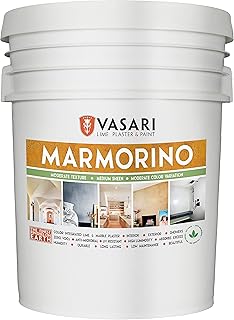
Vasari Lime Paint leads this group because it answers the kitchen question directly: a lime finish that can be burnished and sealed. The paint is made in California from crushed limestone and powdered marble, and its matte finish can be burnished to a soft sheen after the coats dry. On a mineral kitchen wall, that burnished surface matters: a smoother, denser finish sheds steam and splashes better than a rough matte, and it wipes more cleanly when the wall needs attention. The paint also dilutes with water to a lime wash effect, so a buyer can use a thin wash on the upper walls and a fuller burnished finish on the splash-prone lower walls, all from the same product line.
Coverage is about 200 square feet per gallon per coat, with a minimum of two coats, so a kitchen needs honest measuring before ordering, and the maker's Mineral Primer prepares previously painted walls and drywall for the lime paint. The 180-color range is broad, and the maker's sample boards and swatch cards help buyers see the burnished effect at scale, which a small jar cannot show. The maker lists low VOC and low odor, which suits a kitchen that cannot be emptied for days, and the maker advises sealing in wet areas, which is the step that makes this paint work behind a sink and a stove. Application can be by brush, roller, or spray, though a brush gives the most character on mineral plaster, and the burnishing step should be practiced on a sample board before it is attempted on the wall.
Pros:
- Burnishable finish that sheds splashes better than rough matte
- 180 colors with sample boards and swatch cards
- Clear maker guidance on sealing wet areas
- Dilutes with water to a lime wash effect
Cons:
- Two coats minimum with primer on painted walls
- Coverage per gallon is modest for a large kitchen
- Burnishing needs practice on a sample board first
Meoded Lime Wash
- Base: slaked limestone mineral paint
- Colors: 88 colors
- VOC: the maker lists zero VOC
- Sizes: quart, gallon, and 4 gallon
- Coverage: quart 50-75 square feet, gallon 200-300 square feet, each for two coats
- Coats: 2 coats with a cross-hatch brush technique
- Dry time: at least 8 hours between coats
- Primer: Lime Wash Base Coat recommended for interior applications, including drywall and painted surfaces
- Surfaces: interior and exterior, including drywall, plaster, masonry, brick, stone, and previously painted surfaces
Meoded Lime Wash is the most forgiving paint in this group, and forgiveness matters in a kitchen, where the wall behind the stove may be painted plaster, the wall by the window may be bare mineral render, and the wall by the door may be drywall. The paint is a slaked limestone mineral formula, pre-mixed and pre-tinted in 88 colors, and the maker recommends two coats of its Lime Wash Base Coat for interior applications. That base coat is the step that makes the finish work across mixed surfaces: without it, the lime wash can absorb unevenly and the cloudy pattern can turn patchy, while with it, the two finish coats go on evenly across plaster, drywall, and painted walls alike.
Coverage is practical for a kitchen: a gallon covers 200 to 300 square feet for two coats, and a quart covers 50 to 75 square feet, which is enough for the wall behind a sink or a stove as a sample of the full effect. The maker lists zero VOC and no harmful fumes, which matters in a room where food is prepared, and the two-coat cross-hatch brush technique builds the soft mottled finish the paint is known for. The maker lists at least eight hours of dry time between coats, so a kitchen takes two days, and the paint should not go on below 55 degrees Fahrenheit or above 85 degrees, per the maker. For wet areas, the maker recommends a base coat and a sealer for longer-lasting results, which is the guidance a kitchen buyer should follow behind the sink and the stove.
Pros:
- Pre-mixed and pre-tinted in 88 colors, ready to brush
- Base coat guidance for mixed kitchen surfaces
- Generous gallon coverage for two coats
- Zero VOC and solvent-free, per the maker
Cons:
- Needs the maker's base coat on interior surfaces
- At least 8 hours between coats, so a kitchen takes two days
- Temperature limits narrow the painting window
Romabio Masonry Flat
- Base: potassium silicate mineral paint
- Colors: 15+ pre-tinted colors including darks; unlimited custom colors at independent retailers
- VOC: 3.0 grams per litre
- Sizes: 1 litre, 2.5 litre, and 15 litre; gallon sizes at retail
- Coverage: 325-450 square feet per gallon
- Coats: 2 coats required
- Application: brush, roller, or airless sprayer
- Primer: MicroGrip Primer required on painted surfaces, concrete, stucco, Hardie board, and wood; no primer on unpainted masonry
- Warranty: 20-year limited warranty when applied per the technical data sheet
- Breathability: perm rating above 300, per the maker
Romabio Masonry Flat brings a different chemistry to the mineral kitchen wall: potassium silicate, which calcifies to the surface and forms a chemical bond that will not peel, chip, or flake. For a kitchen, that bond is the point. Steam, splashes, and daily wiping test a paint film constantly, and a silicate bond holds where a surface coating can lift. The maker lists a perm rating above 300, which means moisture vapor passes through freely, so the mineral wall keeps breathing behind the finish, and the maker lists a twenty-year limited warranty when the paint is applied per the technical data sheet.
Coverage is generous at 325 to 450 square feet per gallon, and two coats are required, which is the warranty condition. The 15 or more pre-tinted colors include darks that a lime wash cannot achieve, and independent retailers offer unlimited custom colors, so a kitchen that wants a deep green or charcoal wall can find it here. The maker requires its MicroGrip Primer on painted surfaces, concrete, stucco, Hardie board, and wood, while unpainted masonry needs no primer, which keeps the system simple on bare mineral walls. Application can be by brush, roller, or airless sprayer, and the flat European finish looks painted rather than washed, which suits a kitchen that wants a clean, uniform mineral surface rather than a cloudy limewash effect.
Pros:
- Silicate bond that calcifies to the mineral wall
- Twenty-year limited warranty when applied per the data sheet
- Generous coverage at 325-450 square feet per gallon
- Dark colors available, unlike most lime washes
Cons:
- Flat finish lacks the cloudy movement of a lime wash
- MicroGrip Primer required on painted surfaces
- Two coats required as a warranty condition
Romabio Masonry Textured
- Base: potassium silicate mineral paint with added natural aggregate
- Colors: same availability as Masonry Flat, lights and darks, unlimited custom
- VOC: the maker lists zero VOC
- Sizes: gallon sizes at retail
- Coverage: similar to Masonry Flat
- Coats: 2 coats required
- Application: brush, roller, or textured sprayer
- Primer: MicroGrip Primer required on painted surfaces, concrete, stucco, Hardie board, and wood
- Warranty: 20-year limited warranty when applied per the technical data sheet
- Finish: granular, stucco-like texture
Romabio Masonry Textured uses the same potassium silicate chemistry as Masonry Flat, with natural aggregate added for a granular, stucco-like texture. On a mineral kitchen wall, that texture does two jobs at once: it hides the unevenness of old plaster and render, and it gives the wall a Mediterranean character that a flat finish cannot copy. The aggregate fills grooves in rough surfaces for a more uniform appearance, which suits kitchens in old houses where the mineral walls were never flat to begin with.
The practical details match Masonry Flat: two coats required, zero VOC, a twenty-year limited warranty when applied per the technical data sheet, and the maker's MicroGrip Primer on painted surfaces. Coverage is similar to Masonry Flat, and application can be by brush, roller, or textured sprayer. The textured finish is the main difference, and it changes how the wall behaves in a kitchen: the granular surface catches light and shadow, which hides small marks, but it also holds dust and grease more readily than a flat finish, so the wall behind the stove should be sealed and wiped on a regular schedule. For a kitchen where the walls are uneven and the owner wants texture rather than flatness, this paint turns the wall's flaws into part of the finish.
Pros:
- Stucco-like texture hides uneven mineral walls
- Same silicate bond and twenty-year limited warranty as Masonry Flat
- Zero VOC with lights, darks, and custom colors
- Brush, roller, or textured sprayer application
Cons:
- Granular surface holds dust and grease more than a flat finish
- MicroGrip Primer required on painted surfaces
- Two coats required as a warranty condition
Romabio Lime Slurry
- Base: thick plaster-like lime coating; authentic Italian Dolomite lime
- Sizes: see product page for container sizes
- Coverage: 50-60 square feet per litre
- Coats: brush-applied in layers; see product page for coat guidance
- Carbonation: 20-25 days for full carbonation, per the maker
- Application: brush-applied only
- Finish: heavily textured, old-world plaster look
Romabio Lime Slurry is the thickest product in this guide, and it belongs in a kitchen only as a feature wall. The slurry is a thick, plaster-like lime coating made from authentic Italian Dolomite lime, much thicker than the Classico wash, and it creates a heavily textured, old-world plaster look that no thin paint can copy. Coverage is 50 to 60 square feet per litre, which is a small area per container, and the coating is brush-applied only, in layers that build the texture. For a single mineral kitchen wall, perhaps the wall opposite the stove or the wall that frames the dining end of the room, that texture becomes the room's focal point.
The trade-off is time. The maker lists 20 to 25 days for full carbonation, which is the period the lime needs to set fully and reach its final color and hardness. A kitchen feature wall painted in slurry cannot be sealed, wiped, or judged until that period has passed, and the room must stay in use around a wall that is still settling. That schedule suits a renovation where the kitchen is not yet in daily use, and it does not suit a quick refresh of a working kitchen. The slurry also needs a sealer in wet areas once it has set, per the maker's general guidance for lime finishes, and the wall behind a sink or a stove is the wrong place for it. Used with those limits understood, the slurry gives a kitchen a wall with real depth, trowel marks, and shadow, and the thick lime coating is the most honestly plaster-like finish in this guide.
Pros:
- Thickest texture in this guide for a real plaster look
- Authentic Italian Dolomite lime
- Turns an uneven wall into a feature
- Lists under fifty dollars
Cons:
- 20-25 days for full carbonation before sealing or judging
- Brush-applied only, in layers, so a wall takes time
- Suits a feature wall, not a whole working kitchen
Color Atelier Lime Paint
- Base: ready-mixed pre-tinted authentic lime wash paint
- Colors: 31 pre-mixed colors
- VOC: the maker lists zero VOC
- Sizes: quart, 1 gallon, and 5 gallon
- Coverage: about 350-400 square feet per gallon
- Coats: 2 coats with a lime paint brush in X-strokes
- Dry time: at least 6 hours between coats
- Primer: Matte Primer
- Color strengths: 50, 100, and 150 percent
Color Atelier Lime Paint covers more wall per gallon than any other paint in this guide, at about 350 to 400 square feet, which makes it the economical choice for a kitchen with a lot of mineral wall to cover. The paint is a ready-mixed, pre-tinted authentic lime wash from a small-batch maker in San Francisco, and it arrives ready to brush, with no mixing or dilution to get wrong. The 31 pre-mixed colors are a focused range, and the maker offers color strengths of 50, 100, and 150 percent, which lets a buyer tune the depth of a shade without leaving the line: a half-strength white for a bright kitchen, a full-strength neutral for a warm one, or a deeper strength for a feature wall.
Application follows the classic limewash pattern: two coats with a lime paint brush in X-strokes, with at least six hours between coats, over the maker's Matte Primer. The X-stroke pattern builds the cloudy movement on mineral walls, and the long dry time between coats means a kitchen takes two days rather than one, which should be planned around cooking: paint the first coat after dinner, let it dry overnight, and paint the second coat the next morning. The maker lists zero VOC, which matters in a room where food is prepared, and the pre-tinted colors keep batch variation low. For wet areas, the maker advises sealing, and a buyer should sample the sealer with the chosen color first, since some sealers leave a milky cast on deeper shades.
Pros:
- About 350-400 square feet per gallon, the best coverage here
- Ready-mixed and pre-tinted with no mixing needed
- Color strengths of 50, 100, and 150 percent
- Zero VOC from a small-batch maker
Cons:
- Only 31 pre-mixed colors
- At least 6 hours between coats, so a kitchen takes two days
- Needs the maker's Matte Primer and a sealer in wet areas
Dolphin Lime Wash
- Base: lime wash paint
- Sizes: 1-gallon size listed
- Coverage: see product page
- Colors: see product page
- Dry time: see product page
Dolphin Lime Wash is the simplest entry in this guide, and its appeal is its price: a one-gallon size lists under the one-hundred-dollar ceiling, which makes it the most direct way to start a mineral kitchen refresh on a tight budget. The retailer lists the paint as a lime wash in a one-gallon size, and buyers should confirm coverage, color range, and dry time on the product page before ordering, since the published listing gives the size and the price but not the full data sheet. That honesty matters more in a kitchen than in any other room: a budget paint only saves money when the quantity is right, and ordering without a coverage figure risks a shortfall halfway through the second coat.
For a mineral kitchen wall, the sensible way to use Dolphin Lime Wash is to start small. Order one gallon, paint a single wall with two coats, and measure the coverage on the real mineral surface before ordering the rest. Mineral plaster absorbs more than the flat surfaces most coverage figures assume, so a wall-by-wall approach protects the budget better than a single large order. Degrease the wall first, brush the wash on in overlapping strokes, keep a wet edge, and let the first coat dry fully before judging the color, because limewash dries lighter than it looks wet. If the finish suits the kitchen, the same paint can continue across the remaining walls, and the low gallon price keeps the whole project under the ceiling that this guide is built around. Plan on a sealer for the walls behind the sink and the stove, following the maker's guidance once the full data sheet has been checked.
Pros:
- One-gallon size under the one-hundred-dollar ceiling
- Simple budget entry for a first limewash project
- Suits a wall-by-wall approach on mineral plaster
Cons:
- Coverage, color range, and dry time listed as see product page
- No published primer guidance in the listing
- Needs a measured wall before ordering the full quantity
Buying guide
Start with the wall type, not the paint. Mineral kitchen walls are usually lime plaster, cement render, or mineral board, and each one absorbs paint differently. Bare lime plaster drinks the first coat fast and benefits from a light dampening. Painted mineral walls need the maker's primer or undercoat so the new lime paint bonds and the color reads true. Walls behind a stove or sink may carry a thin film of grease even after cleaning, and that film will repel a lime wash, so degrease with a suitable kitchen cleaner, rinse, and let the wall dry before sampling. A sample patch on the real wall, left to set and then wiped with a damp cloth, tells a buyer more about kitchen suitability than any data sheet can.
Order a small size first and paint a real patch. A quart or a one-litre size covers a generous wall area, and two coats on the wall behind the sink will show how the paint handles steam, splashes, and wiping. Live with the patch for several days and look at it in morning light and in the evening, when the kitchen lights are on. Limewash dries lighter than it looks wet, and the final color only settles after the maker's setting period, so do not judge a sample on the day it is painted. If the patch will be sealed, sample the sealer on the patch too, because some sealers leave a milky cast on deeper colors.
Match the primer to the paint and to the wall. Most makers in this guide sell a dedicated primer or undercoat, and a mineral kitchen wall usually needs it when the surface carries old paint. Bare mineral walls can often take limewash directly, sometimes with a light dampening first, while painted walls need the undercoat for color accuracy and adhesion. Read the maker's data sheet for the exact sequence and buy the primer with the paint, so the sample patch shows the true finished color. A sample painted without primer will read differently from the finished wall, and the difference can be enough to send a buyer back for a different shade.
Plan the sealer before the first coat. A kitchen wall gets touched, wiped, and splashed, and a lime finish without a sealer will mark. Makers in this guide suggest a sealer for kitchens, hallways, and bathrooms, and some sealers suit light colors only. Choose the sealer with the paint, confirm that it suits the chosen color, and budget for it as part of the project rather than as an afterthought. Burnished finishes, such as Vasari Lime Paint polished to a soft sheen, shed splashes better than rough matte, and a smoother surface wipes more cleanly.
Apply with a brush and keep a wet edge. Limewash gets its movement from brush strokes, and a roller flattens the finish. Use a wide masonry brush or a block brush, work in sections no wider than an arm's reach, and keep the edge wet so laps do not dry as lines. Two thin coats beat one thick coat on mineral walls: thin coats dry evenly, bond better, and let the plaster texture show through. Let each coat dry for the time the maker lists, and keep the kitchen ventilated while the coats dry. Plan cooking around the project: paint after dinner, let the first coat dry overnight, and paint the second coat the next morning.
Plan the setting period and the return to use. Lime paint keeps changing as it sets, and the color on day two is not the color on day ten. Some products in this guide need only a few days, while a thick lime slurry needs three weeks or more before it can be sealed or judged. Do not push appliances against the wall, hang shelves, or wipe the surface until the maker's setting period has passed. Wear gloves and eye protection during application, since lime paint is alkaline and the makers in this guide list pH values that call for basic protection.
FAQ
Can limewash survive in a kitchen?
Yes, when the paint and the sealer are chosen together. A mineral lime paint bonds with a mineral wall and breathes with it, and a sealer protects the finish from steam, splashes, and wiping. Makers in this guide suggest a sealer for kitchens, and some sealers suit light colors only, so sample the finish with the sealer before sealing a whole room. Walls directly behind a sink or stove need the most protection.
Should mineral kitchen walls be degreased before painting?
Yes. Walls behind a stove or sink often carry a thin film of grease even after ordinary cleaning, and that film will repel a lime wash. Clean with a suitable kitchen cleaner, rinse, and let the wall dry fully before priming or painting. A sample patch painted over grease will show the problem at once, which is another reason to sample first.
How many coats does a mineral kitchen wall need?
Two coats is the standard across the makers in this guide, with a primer or undercoat first on painted walls. One coat gives a thin wash with the mineral wall showing through, while two coats give fuller color and a more even cloudy pattern. Apply thin coats, let each one dry for the time the maker lists, and allow the full setting period before sealing or wiping.
What is the best limewash finish for a kitchen?
A burnished or sealed finish suits a kitchen better than a rough matte, because a smoother surface sheds splashes and wipes more cleanly. Vasari Lime Paint can be burnished to a soft sheen, and silicate paints such as Romabio Masonry Flat give a flat, bonded mineral finish. A thick textured finish, such as a lime slurry, suits a feature wall away from the sink and the stove rather than a splash zone.
How long must a kitchen limewash set before it can be wiped?
It depends on the product. Most lime paints in this guide set within a few days, while a thick lime slurry needs 20 to 25 days for full carbonation. Do not wipe, seal, or hang anything on the wall until the maker's setting period has passed, and sample the sealer on a cured patch first. Wiping too early can lift the finish and leave a permanent mark.
Is limewash safe to use where food is prepared?
Lime paints in this guide list zero or low VOC, and several makers list no solvents, which suits a room where food is prepared. Ventilate the kitchen while the coats dry, keep the temperature inside the range the maker lists, and wear gloves and eye protection during application, since lime paint is alkaline. Follow the maker's data sheet for the exact safety guidance.
Conclusion
Painting mineral kitchen walls with limewash is a project where the finish must work as hard as it looks good, and every paint in this guide lists a gallon under one hundred dollars. Vasari Lime Paint leads for its burnishable finish and clear sealing guidance, Meoded Lime Wash brings the most forgiving application across mixed surfaces, Romabio Masonry Flat and Masonry Textured bring silicate chemistry with a twenty-year limited warranty, Romabio Lime Slurry brings the thickest old-world texture for a feature wall, Color Atelier brings the best coverage per gallon, and Dolphin Lime Wash brings the simplest budget entry.
Degrease the wall, sample the color on the real mineral surface, match the primer to the paint, and choose the sealer with the paint rather than after it. Brush on two thin coats with a wet edge, let the finish set for the full period the maker lists, and seal the splash zones before the kitchen returns to daily use. Done that way, a mineral kitchen gains a cloudy, breathable finish that suits the walls it sits on, and a room that is cooked in every day will still look good a year later.
Related guides
More from Amazon
Programs that pair well with the guide above. Offers and eligibility are set by Amazon and may change.
Free shipping on eligible items, Prime Video and more. Eligible new members can start with a free trial.
Start a Prime free trialAudiobooks and podcasts to listen to on the go. Eligible new members can start with a free trial.
Try Audible freeAd-free music streaming. Eligible new subscribers can start with a free trial.
Try Music Unlimited freeA free business account with business pricing and bulk-buying tools for work, shop or home office.
Create a business accountAs an Amazon Associate we earn from qualifying purchases.
More ways to save on your next finish
Programs that pair well with the guide above. Offers and eligibility are set by Amazon and may change.
A free business account with business pricing and bulk-buying tools for work, shop or home office.
Create a business accountFast, free shipping on eligible items, plus Prime Video and more. Eligible new members can start with a free trial.
Start a Prime free trialRead from a huge library of eBooks, including how-to guides and cookbooks. Eligible new members can start with a free trial.
Try Kindle UnlimitedAudiobooks and podcasts for the commute, the garage or the kitchen. Eligible new members can start with a free trial.
Try Audible freeAs an Amazon Associate we earn from qualifying purchases. Using these links costs you nothing extra.










Write Your Review
No reviews yet. Be the first to share your experience!