
Key takeaways
- Refresh old lime plaster the careful way: interior limewash paints sold in sample sizes, from four-ounce jars to quart tins, compared for color and coverage.
What's inside
As an Amazon Associate I earn from qualifying purchases. This post may contain affiliate links at no extra cost to you.
Old lime plaster has a surface that no flat latex can copy: soft undulations, hairline crazing, and patches where a century of paint has thinned to a whisper. Refreshing it with limewash makes sense because limewash is mineral paint, and mineral paint belongs on mineral walls. The risk is color. Limewash dries far lighter than it looks in the container, and the same shade can read warm on one wall and cold on another, depending on the plaster beneath it. That is why best interior limewash paints with sample size availability for refreshing old lime plaster surfaces matter so much: a small jar lets you see the real color on your own wall before you commit to gallons.
This guide compares seven interior limewash paints that sell in sample sizes, from four-ounce jars to quart tins and small sample boards. Each one is a real mineral or lime-based paint from a verified maker, and each one suits old lime plaster that needs a breathable refresh rather than a sealing coat. The focus here is practical: which makers actually sell a small size, how much wall that small size covers, what the sample costs in effort rather than in money, and how the full-size paint behaves once you decide.
Old plaster rewards patience. A sample brushed onto a cleaned, lightly dampened patch shows the true color after two coats, and it shows how the plaster drinks the paint in. Walls that have been painted before absorb differently from bare plaster, and a sample is the only honest way to find out before you buy. Order two or three colors, paint each one in a square at least a foot across, and live with the patches for a few days. Morning light and evening light will tell you different stories, and the color you love at noon may look flat at dusk. That small delay saves the far larger cost of repainting a whole room in the wrong shade.
Quick verdict
James Alexander Limewash Paint leads this group because its sample program pairs the two things a careful renovator needs: four-ounce sample jars of the real paint and hand-painted color cards that show the true finish. With 36 Signature colors plus 15 Light and Airy colors, coverage of about 300 square feet per gallon over two coats, and a dedicated Lime-Prep Primer, it gives a buyer the clearest preview of the color on old plaster before ordering gallons.
JH Lime Wall Paint is the pick for the widest color choice with a certified low-emission formula, with 91 shades, zero VOC, GREENGUARD Gold certification, and sample brush-outs and eight-by-ten sample boards, while Graphenstone Siena is the pick for rooms that need a washable finish, with Class 1 washability and sample pots available. Tintural Cosi suits small rooms, with a 125-gram sample size and a simple primer-plus-two-coats system, and Kalklitir Kalkpaint suits buyers who want a powdered lime paint mixed fresh, with a sample chip set and 20 colors. Tockay Lime Paint Smooth 888 and Vasari Lime Paint round out the group with sample kits and sample boards for buyers who want to see the finish at full scale before they commit.
| Product | Key spec | Best for |
|---|---|---|
| James Alexander Limewash Paint | 4 oz sample jars; 51 colors; 300 sq ft per gallon, 2 coats | Most complete sample program |
| JH Lime Wall Paint | Sample brush-outs and boards; 91 shades; 350 sq ft per gallon per coat | Widest certified color range |
| Tockay Lime Paint Smooth 888 | Sample kits; 250+ color formulas; pH 13; 2 coats | Widest natural color formulas |
| Vasari Lime Paint | Sample boards and swatch cards; 180 colors; 200 sq ft per gallon per coat | Classic lime and marble finish |
| Kalklitir Kalkpaint | Sample chip set; 20 colors; 500 g covers 12 sq m, 2 coats | Powdered lime paint mixed fresh |
| Tintural Cosi Lime Paint Classic Finish | 125 g sample; 97 percent natural ingredients; 110 sq ft per kg per coat | Small rooms and first-time users |
| Graphenstone Siena | Sample pots; Class 1 washability; 5-6 sq m per litre, 2 coats | Washable finish on old plaster |
How we chose
Every paint in this guide had to meet four conditions. First, the maker had to sell a genuine sample size: a small jar, a small pot, a sample board, or a brush-out that lets a buyer see the real color on real plaster. A quart tin counts when it is the smallest size a maker sells, because a quart still covers a generous wall patch. Second, the paint had to be a true lime or mineral product, not a latex paint tinted to look like limewash. Old lime plaster needs a breathable finish, and a plastic film traps moisture behind it.
Third, the maker had to publish usable application data: coverage per container, number of coats, dry time between coats, and primer guidance. A paint with no published coverage cannot be planned, and a refresh project lives or dies on knowing how much paint a room needs. Fourth, the paint had to suit interior use on plaster, including walls that may already carry old paint. Products made only for exterior brick were left out, as were paints with no verifiable sample option.
We also weighed color range, because old plaster rooms often need a soft neutral that reads differently in every light, and we weighed finish character: the cloudy, mottled movement that makes limewash worth choosing over flat paint. Where a maker lists a sample board or a hand-painted card, we note it, because a board shows the finish at a scale a tiny jar cannot.
James Alexander Limewash Paint
- Base: natural lime water and mineral pigments
- Colors: 36 Signature colors plus 15 Light and Airy colors
- VOC: the maker lists zero VOC
- Sizes: quart and gallon
- Coverage: about 300 square feet per gallon over 2 coats; a quart covers about 75 square feet
- Sample sizes: 4 oz sample jars and hand-painted color cards
- Coats: 2 coats
- Primer: Lime-Prep Primer
- Dry time: 24 hours between coats
James Alexander Limewash Paint earns the lead here because no other maker in this group pairs a real paint sample with a hand-painted card in the same color. The four-ounce sample jars cover the 36 Signature colors and the 15 Light and Airy colors, and a buyer who wants more certainty can compare the hand-painted color card beside the jar patch on the same wall. For old lime plaster, that pairing matters: the finish is a natural lime paint, and its soft, cloudy appearance depends on the plaster beneath it. A jar brushed onto a cleaned patch shows the real interaction between paint and wall, including how thirsty the old plaster is and how much the color lightens as it dries.
The paint itself is a straightforward limewash made from natural lime water and mineral pigments, with zero VOC listed by the maker. Coverage runs about 300 square feet per gallon over two coats, with a quart covering about 75 square feet, so a sample jar goes a long way on a wall patch and a gallon covers a modest room. The maker lists its Lime-Prep Primer for the surface first, and 24 hours between coats, which sets a slower pace than a one-day repaint but suits a refresh where the color must be right. The Light and Airy colors suit rooms that need a pale, soft wash, while the Signature colors cover deeper tones for rooms that can carry them. As with most lime paints, the color dries lighter than it looks wet, so the sample jar and the card together are the honest preview before gallons are ordered.
Pros:
- Four-ounce sample jars plus hand-painted color cards
- 51 colors across Signature and Light and Airy ranges
- Zero VOC with a dedicated primer
- Clear coverage and two-coat guidance
Cons:
- 24 hours between coats makes the project slower
- Sample jars cover a patch, not a whole wall
- Deeper colors vary more in depth than the card suggests
JH Lime Wall Paint
- Base: pit lime aged a minimum of 36 months with natural earth mineral pigments and titanium dioxide
- Colors: 91 shades
- VOC: the maker lists zero VOC
- Certifications: GREENGUARD Gold Certified
- Sizes: quart, 1 gallon, and 3.5 gallon
- Coverage: about 350 square feet per gallon per coat over primed drywall; about 175 square feet per gallon per coat over porous surfaces
- Sample sizes: sample brush-outs and 8×10 inch sample boards
- Coats: 2 coats minimum
- Dry time: dry to touch in 2-4 hours; recoat in 6-8 hours; full cure in 7-10 days
JH Lime Wall Paint is the widest color choice in this guide by shade count, with 91 shades made from natural earth mineral pigments, and its sample brush-outs and eight-by-ten sample boards are the right preview for that range. A brush-out shows the color as a real painted swatch, and a sample board shows the finish at a scale a tiny jar cannot, which matters when the range is this large. For an old lime plaster refresh, the paint's base is the attraction: pit lime aged a minimum of 36 months, a slow-matured lime that suits the mineral wall beneath it, with zero VOC listed by the maker and GREENGUARD Gold certification for low chemical emissions.
Coverage is the most detailed in this guide, because the maker publishes two figures: about 350 square feet per gallon per coat over primed drywall and about 175 square feet per gallon per coat over porous surfaces. Old plaster is porous, so the lower figure is the honest one for planning, and a buyer should measure with that number in mind. Two coats is the minimum, with a recoat window of six to eight hours and a full cure of seven to ten days, so the color keeps settling for more than a week after the second coat. The 91-shade range is broad without becoming unmanageable, and the sample brush-out is the practical way through it: order the three closest shades, paint each one on the wall, and let the cure period decide. The trade-off is the wait: the full cure is the longest in this guide, and buyers who want to judge the color on day one will find a faster-curing paint easier. For a refresh where the exact shade matters, though, the brush-out and the board are worth the time.
Pros:
- Sample brush-outs and 8×10 inch sample boards for a 91-shade range
- Pit lime aged a minimum of 36 months
- Zero VOC with GREENGUARD Gold certification
- Two coverage figures for primed and porous surfaces
Cons:
- Full cure of 7-10 days is the longest in this guide
- Porous old plaster needs the lower coverage figure for planning
- The wide shade range needs time with the brush-outs
Tockay Lime Paint Smooth 888
- Base: marble lime hydrate paint with no synthetic resin binders and no synthetic pigments
- Colors: over 250 color formulas with natural pigments
- Sample sizes: sample kits and color charts
- pH: 13
- Coats: usually covering in 2 coats
- Surfaces: interior and exterior
- Vegan, per the maker
Tockay Lime Paint Smooth 888 is the widest color choice in this guide by formula count, with over 250 color formulas made from natural pigments, and its sample kits and color charts are the right preview for that range. A color chart shows the formulas side by side, and a sample kit lets a buyer paint the real color on the real wall, which matters when the range is this large. For old lime plaster, the paint's chemistry is the attraction: a marble lime hydrate paint with no synthetic resin binders and no synthetic pigments, so the finish is mineral through and through, and the maker lists it as vegan.
The paint usually covers in two coats, and the maker lists a pH of 13, which calls for gloves and eye protection during application, as with any strong alkaline lime paint. Two coats on old plaster give a smooth, even finish with the soft cloudy movement that limewash is known for, and the absence of synthetic binders means the finish stays breathable on a mineral wall. The paint suits interior and exterior use, so the same color can continue from a living room onto a porch wall if the house calls for it. The trade-off is the size of the choice: 250 formulas need a sample kit and a patient afternoon with the chart, and buyers who want a quick decision will find a narrower range easier. For a refresh where the exact shade matters, though, the kit is worth the time.
Pros:
- Sample kits and color charts for a 250-formula range
- No synthetic resin binders and no synthetic pigments
- Vegan, per the maker, with natural pigments
- Suits interior and exterior use
Cons:
- pH 13 calls for gloves and eye protection
- The huge formula range needs time with the chart
- Two coats as the standard, with no published coverage figure
Vasari Lime Paint
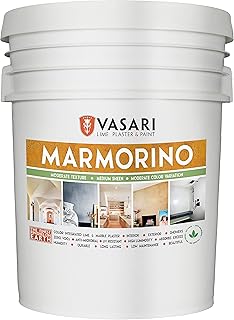
- Base: natural mineral paint from crushed limestone and powdered marble
- Colors: 180 colors
- VOC: the maker lists low VOC
- Sizes: quart, 1 gallon, and 5 gallon
- Coverage: about 200 square feet per gallon per coat
- Sample sizes: sample boards and swatch cards
- Coats: minimum 2 coats
- Primer: Mineral Primer
- Finish: matte that can be burnished to a soft sheen; dilutes with water to a lime wash effect
Vasari Lime Paint is the classicist of this group: crushed limestone and powdered marble, made in California, with a finish that can be burnished to a soft sheen or thinned with water into a lime wash effect. For old lime plaster, that flexibility is valuable. A refresh that needs a soft matte can stay matte, while a room that wants a little glow can be burnished after the coats dry. The maker's sample boards and swatch cards suit this paint well, because the burnished version looks very different from the matte version, and a board shows both effects at a scale a small jar cannot.
Coverage is about 200 square feet per gallon per coat, with a minimum of two coats, so a gallon covers a modest room and a quart handles a single wall or an accent area. The 180-color range is broad without becoming unmanageable, and the maker's Mineral Primer prepares previously painted walls and drywall for the lime paint. Application is by brush, roller, or spray, which gives more options than brush-only limewashes, though a brush still gives the most character on old plaster. The maker notes the paint is low VOC and low odor, which matters when refreshing a lived-in room. As with most lime paints, the maker advises sealing in wet areas, and buyers should plan for that step in bathrooms and kitchens.
Pros:
- Sample boards and swatch cards show the finish at scale
- 180 colors with a burnishable matte finish
- Dilutes with water to a lime wash effect
- Brush, roller, or spray application
Cons:
- Two coats minimum with primer on painted walls
- Coverage per gallon is modest for large rooms
- Wet areas need a sealer, per the maker
Kalklitir Kalkpaint
- Base: powdered lime paint from 100 percent natural minerals
- Colors: 20 colors
- Sample sizes: sample chip set available
- Mix: 1 part paint to 1.7 parts water
- Coverage: 500 grams covers about 12 square meters in two coats
- Coats: two coats with a natural-bristle brush
- Surfaces: interior walls including bedroom, kitchen, and bathroom
Kalklitir Kalkpaint is the only powdered paint in this guide, and the powder is its strength. The paint is made from 100 percent natural minerals, and it is mixed fresh with water at a ratio of one part paint to 1.7 parts water, so a buyer mixes only what the wall needs and the rest stays dry in the bag. For old lime plaster, a freshly mixed lime paint is the closest match to the wall's own chemistry, and the maker lists the paint for interior walls including bedrooms, kitchens, and bathrooms, which covers the dampest rooms in an old house.
The sample chip set is the right preview for a powdered paint, because it shows the 20 colors as cured chips rather than as wet swatches, and the small range makes choosing far easier than a 400-color catalog. Coverage is about 12 square meters per 500 grams for two coats, which makes quantity planning easy for a single room: weigh the powder, mix with water, and brush on two coats with a natural-bristle brush. The powder format also suits a refresh spread over several weekends, since unmixed powder keeps while a mixed tin would not. The trade-off is the mixing step itself: the ratio must be followed, the powder must be stirred smooth, and a buyer who wants a ready-mixed tin will find a liquid paint easier. For a careful renovator, though, the fresh mix is worth the extra step.
Pros:
- Sample chip set with a focused 20-color range
- Powdered paint mixed fresh from 100 percent natural minerals
- Simple coverage arithmetic for a single room
- Suits bedrooms, kitchens, and bathrooms
Cons:
- Mixing ratio must be followed carefully
- Only 20 colors
- Powder format needs stirring smooth before use
Tintural Cosi Lime Paint Classic Finish
- Base: 97 percent natural ingredients
- Colors: see product page for the full range
- VOC: under 0.75 grams per litre
- Sizes: 125 gram sample; 1 kilogram and larger sizes
- Coverage: 1 kilogram covers about 110 square feet per coat
- Sample sizes: 125 gram sample size
- System: 1 coat Multi primer plus 2 coats Cosi
- Finish: cloudy finish; indoor and outdoor use
Tintural Cosi Lime Paint Classic Finish is the smallest sample in this guide, and that is its strength. The 125-gram sample size is enough to paint a generous wall patch in the real color, and it costs a buyer far less in wasted paint than a full tin when the color turns out wrong. The paint itself is 97 percent natural ingredients with VOC under 0.75 grams per litre, and the maker lists a cloudy finish that suits the soft movement old lime plaster asks for. The system is simple: one coat of the maker's Multi primer, then two coats of Cosi.
Coverage is about 110 square feet per kilogram per coat, which makes quantity planning easy for small rooms: a kilogram per coat per hundred square feet, with two coats as the standard. That arithmetic suits the refresh of a single old-plaster room, where a buyer can order a small amount, sample first, and then order the full quantity in the confirmed color. The cloudy finish rewards brush application, and the maker lists the paint for indoor and outdoor use, so the same color can continue onto a porch or garden wall if the house calls for it. The trade-off is the smaller color story: the maker publishes the range on its product page, and buyers who want hundreds of named shades will find a narrower choice here than with the largest ranges in this guide.
Pros:
- 125-gram sample size, the smallest in this guide
- 97 percent natural ingredients
- Simple primer-plus-two-coats system
- Easy coverage arithmetic for small rooms
Cons:
- Narrower color story than the largest ranges
- Needs the maker's Multi primer
- Sample size suits a patch, not a whole wall
Graphenstone Siena
- Base: lime interior paint with limewash effect from aerated lime
- Colors: 16 earth colors plus English Heritage colors
- VOC: under 1 gram per litre
- Sizes: 1, 4, 12, and 15 litre
- Coverage: 5-6 square meters per litre for two coats
- Sample sizes: sample pots available
- Washability: Class 1 washability, per the maker
- pH: 13
- Certifications: Cradle to Cradle Certified Gold; absorbs CO2, per the maker
- Surfaces: interior walls
Graphenstone Siena closes this guide with the most practical finish for a lived-in old house: a lime interior paint with a limewash effect and Class 1 washability. Old plaster walls in hallways, stairwells, and family rooms get touched, brushed, and marked, and a finish that can be wiped matters more than a finish that only looks good on day one. The maker lists Class 1 washability alongside VOC under one gram per litre, and the paint is made from aerated lime with a pH of 13, which is the alkaline chemistry that keeps lime paint inhospitable to surface growth.
The color story is deliberately narrow: 16 earth colors plus English Heritage colors. For an old plaster refresh, that restraint helps, because earth colors suit period walls and the small range makes choosing a sample far easier than a 400-color catalog. Sample pots are available, and the one-litre size covers five to six square meters for two coats, so a sample pot goes a long way on a wall patch. The maker also lists Cradle to Cradle Certified Gold and notes that the paint absorbs carbon dioxide as it sets, which is a useful detail for buyers who want the finish to be as natural as the plaster beneath it. Two coats are the standard, and the limewash effect builds through brush strokes that leave the soft cloudy movement the finish is known for.
Pros:
- Class 1 washability for busy rooms
- Sample pots available with a focused earth-color range
- VOC under 1 gram per litre
- Cradle to Cradle Certified Gold
Cons:
- Narrow color range compared with the largest makers
- pH 13 calls for gloves and eye protection during application
- Earth colors only, so bright shades need another maker
Buying guide
Start with the wall, not the paint. Old lime plaster varies from room to room: some walls are bare and thirsty, some carry layers of old paint, and some have patches of repair plaster that absorb differently from the original surface. Clean the wall first with a soft brush and a damp cloth, and let it dry. Fill hairline cracks with a lime-based filler and let the filler cure before sampling. A sample painted over dust or over a fresh repair will lie about the color, and the whole point of a sample is an honest answer.
Order samples in twos and threes. Pick the color you love, one shade lighter, and one shade warmer or cooler, depending on the room light. Paint each sample in a square at least a foot across, with two coats, on the wall that will carry the paint. Keep the squares apart so the colors do not bleed into each other visually, and label each one on a small piece of tape below the square. Live with the patches for several days and look at them in morning light, midday light, and lamplight. Limewash dries lighter than it looks wet, and the final color only settles after the full cure period, so do not judge a sample on the day it is painted.
Match the primer to the paint. Most makers in this guide sell a dedicated primer or undercoat, and old plaster usually needs it when the wall carries old paint. Bare plaster can often take limewash directly, but a painted wall needs the maker's undercoat for color accuracy and adhesion. Read the maker's data sheet for the exact sequence: some call for a stain-blocking primer first on new drywall, some call for two coats of base coat, and some call for a single undercoat. Buying the primer with the sample order saves a second delivery and lets the sample show the true finished color, since primer changes how the top coats read.
Measure before ordering gallons. Coverage figures in this guide are per coat or per two coats, and the two are easy to confuse. A paint that lists 200 square feet per gallon per coat needs two gallons for a 200-square-foot room at two coats, while a paint that lists 200 square feet per gallon over two coats needs one. Measure each wall, subtract doors and windows, and add ten percent for the extra absorption of old plaster. Porous plaster drinks more paint than primed drywall, and the makers in this guide publish different coverage for the two surfaces where it matters.
Apply with a brush, not a roller. Limewash gets its cloudy movement from brush strokes, and a roller flattens the finish into something that looks like ordinary paint. Use a block brush or a wide natural-bristle brush, work in sections, and keep a wet edge so the laps do not show as lines. Two thin coats beat one thick coat: thin coats dry evenly, bond better, and show the plaster texture beneath. Dampen very thirsty plaster lightly before the first coat, following the maker's guidance, so the paint does not dry before it has bonded.
Plan the cure. Lime paint keeps changing as it carbonates, and the color you see on day two is not the color you will see on day ten. Do not hang pictures, press furniture against the wall, or judge the color until the maker's cure period has passed. Ventilate the room while the coats dry, keep the temperature inside the range the maker lists, and protect floors and trim, because limewash splashes are hard to remove once dry. Wear gloves and eye protection: lime paint is alkaline, and the makers in this guide list pH values that call for basic protection during application.
FAQ
How big should a limewash sample patch be?
Paint a square at least a foot across, with two coats, on the wall that will carry the paint. A patch smaller than that cannot show the cloudy movement of the finish, and a single coat cannot show the true color. Keep sample squares apart and label each one, then live with them for several days in different light before ordering gallons.
Can limewash go straight onto old lime plaster?
Bare, clean, sound lime plaster can often take limewash directly, and several makers in this guide list no primer on absorbent masonry. Walls that carry old paint usually need the maker's undercoat or primer first, for color accuracy and adhesion. Clean the wall, repair cracks with a lime-based filler, and follow the maker's data sheet for the exact sequence.
Why does limewash dry lighter than it looks in the tin?
Limewash is a thin mineral wash, and the water in it evaporates as it dries, leaving a lighter mineral film behind. The color also keeps changing as the lime carbonates over days. A sample painted on the real wall and left to cure shows the true final color, which is why the sample sizes in this guide matter more than any printed swatch.
How many coats does a limewash refresh need?
Two coats is the standard across the makers in this guide, with some calling for a primer or undercoat first. One coat gives a classic thin wash with the plaster showing through, while two coats give fuller color and a more even cloudy pattern. Apply thin coats and let each one dry for the time the maker lists before the next coat goes on.
Should old plaster walls be sealed after limewashing?
Sealing depends on the room. Makers in this guide suggest a sealer for kitchens, hallways, and bathrooms, where walls see steam, splashes, and contact. Some sealers suit light colors only, because they can leave a milky cast on deeper shades. Sample the finish with the sealer before sealing a whole room, and follow the maker's guidance for the product and the color.
What if the sample color looks wrong on the wall?
Order a second sample in a lighter, warmer, or cooler direction and paint it beside the first one. Limewash color shifts with the plaster beneath it, the primer, and the light, so a wrong sample is useful information rather than wasted money. Do not order gallons until a sample has cured fully and still looks right in morning and evening light.
Conclusion
Refreshing old lime plaster with limewash is a project that rewards a slow start. A sample jar, a sample pot, or a sample board costs little and answers the only question that matters: what will this color look like on this wall, in this light, after it sets. James Alexander Limewash Paint leads this guide because its sample program pairs real paint jars with hand-painted color cards, and JH, Vasari, Tintural, Graphenstone, Tockay, and Kalklitir each add a different strength, from the widest certified color range to the smallest sample size to the most washable finish.
Pick the sample program that fits the room, paint two-coat patches on the real wall, and wait for the cure before you judge. The right limewash will let the old plaster breathe, keep its soft texture visible, and give the room a cloudy, mineral finish that flat paint cannot copy. Start small, confirm the color, and then order with confidence.
Related guides
More from Amazon
Programs that pair well with the guide above. Offers and eligibility are set by Amazon and may change.
Free shipping on eligible items, Prime Video and more. Eligible new members can start with a free trial.
Start a Prime free trialAudiobooks and podcasts to listen to on the go. Eligible new members can start with a free trial.
Try Audible freeAd-free music streaming. Eligible new subscribers can start with a free trial.
Try Music Unlimited freeA free business account with business pricing and bulk-buying tools for work, shop or home office.
Create a business accountAs an Amazon Associate we earn from qualifying purchases.
More ways to save on your next finish
Programs that pair well with the guide above. Offers and eligibility are set by Amazon and may change.
A free business account with business pricing and bulk-buying tools for work, shop or home office.
Create a business accountFast, free shipping on eligible items, plus Prime Video and more. Eligible new members can start with a free trial.
Start a Prime free trialRead from a huge library of eBooks, including how-to guides and cookbooks. Eligible new members can start with a free trial.
Try Kindle UnlimitedAudiobooks and podcasts for the commute, the garage or the kitchen. Eligible new members can start with a free trial.
Try Audible freeAs an Amazon Associate we earn from qualifying purchases. Using these links costs you nothing extra.










Write Your Review
No reviews yet. Be the first to share your experience!