
Key takeaways
- Compare seven stipple brushes with durable natural fibers for blending Venetian color transitions, judged on bristle strength, head shape and pattern control.
As an Amazon Associate I earn from qualifying purchases. This post may contain affiliate links at no extra cost to you.
Our top picks at a glance
4 products from this guide, in the order reviewed below.
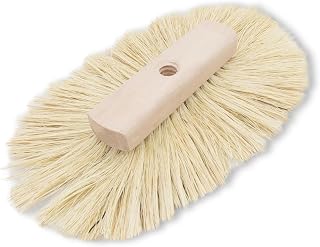


As an Amazon Associate we earn from qualifying purchases. Prices and availability can change.
Venetian plaster gets its depth from color transitions, and those transitions are made or broken in the minutes before the plaster sets. Two tinted coats meet on a wall, and the painter has one chance to blend the boundary so the eye reads a slow shift instead of a hard line. A stipple brush is the tool for that moment because its bristles carry a small amount of plaster from one color into the next and lay it down as a field of tiny peaks that mix the two tones without smearing them into a flat gray. The bristles must be strong enough to work a heavy lime plaster without splaying, and they must stay strong through rinsing and reuse, because a brush that sheds or bends halfway through a wall will leave a visible change in the blend. The best stipple brushes for decorative plaster for blending Venetian color transitions with durable natural fibers are the ones whose natural fibers hold their shape under load, whose heads are sized to the scale of the transition, and whose pattern is fine enough to mix colors rather than stamp them. This guide compares seven real brushes whose makers list them for stippling, texturing or plaster work, and explains how fiber type, head shape and head size change the way two Venetian colors meet. All specifications come from the makers' or retailers' own product pages; anything not published is marked as such.
Quick verdict
The Magnolia Brush 8 inch by 8 inch White Tampico Round Crowsfoot Texture Brush leads this group because its round white Tampico head lays an even stipple that mixes two Venetian tones without a directional mark, and Tampico fiber is the durable natural fiber this finish depends on. The MARSHALLTOWN 846 Single Crows Foot follows with the same white Tampico fiber on a clear lacquered hardwood block, sized at 12.8 by 8.5 inches for steady, controlled blending. The DQB Industries 11934 Panda Paw I adds a single white Tampico head at 14 by 9.2 inches for broad transitions, the Kraft Tool Single Crow's Foot brings a 13 inch flattened brush for long, even blending strokes, and the TexMaster 8804 adds a 12 inch Tampico shag head for the widest color fields. The Goldblatt G05260 Single-Crows Foot gives a compact single head for tight transitions, and the MARSHALLTOWN 844 Double Crows Foot closes the group with two rows of Tampico fiber on a 14 by 16-1/2 inch block for the largest walls. Choose the Magnolia round brush when the transition must stay soft and directionless; choose the MARSHALLTOWN 844 Double when the wall is large and the blend must be finished before the plaster sets.
| Product | Key spec | Best for |
|---|---|---|
| Magnolia Brush 8" x 8" White Tampico Round Crowsfoot Texture Brush | 8 x 8 in round head, white Tampico fibers | Soft, directionless blending of Venetian color transitions |
| MARSHALLTOWN 846 Single Crows Foot Brush | White Tampico fibers, lacquered hardwood block, 12.8 x 8.5 in | Controlled blending on medium accent walls |
| DQB Industries 11934 Panda Paw I Single Stippling Texture Brush | White Tampico fibers, 14 x 9.2 x 1 in | Broad transitions on large plaster panels |
| Kraft Tool Single Crow's Foot Texture Brush | 13 in flattened brush, handle hole in the center | Long, even blending passes across a color boundary |
| TexMaster 8804 12" Tampico Shag Style Brush | 12 in Tampico shag style head | Wide color fields where the blend must stay loose |
| Goldblatt G05260 Single-Crows Foot Texture Brush | Single-crows foot head, see product page for full specs | Tight transitions in corners and narrow panels |
| MARSHALLTOWN 844 Double Crows Foot Brush | White Tampico fibers, lacquered hardwood block, 14 x 16-1/2 in | Large walls where the blend must be finished quickly |
How we chose
Fiber durability came first. Blending Venetian color transitions means working a lime plaster that is heavy, wet and alkaline, and a brush whose fibers bend permanently or shed after one wall cannot finish a transition evenly. Tampico fiber leads this group for a reason: it comes from the agave plant, it is stiff enough to push plaster without collapsing, and it resists water and alkali, so it keeps its shape through repeated wetting, pouncing and rinsing. Every brush here uses a natural fiber the maker lists, whether white Tampico, horsehair or a horsehair blend, and the group was checked so that no brush depends on a soft synthetic fill that would flatten under a heavy plaster load. Head shape came second, because the shape of the head decides whether the blend reads as a smooth shift or as a stamped pattern. A round head leaves a circular mark that overlaps cleanly in any direction, which suits a transition that must fade without a visible direction, while a flattened or oblong head leaves a longer mark that suits a transition worked in bands. Head size came third, because a color transition has a scale: a narrow boundary between two tones wants a small single head that can work close to the line, while a wide field where two colors drift into each other wants a 12 or 14 inch head that can carry the blend across a whole panel. Threaded fittings and handle holes came last, since a tall Venetian wall is often blended from the floor with a pole, and a brush that accepts a standard handle keeps the pouncing motion upright and regular at height. No brush in this group was handled and no prices were compared; the guide relies on published specifications only.
Magnolia Brush 8" x 8" White Tampico Round Crowsfoot Texture Brush
- 8 x 8 in round head
- White Tampico fibers
- Crowsfoot pattern
- See product page for full specs
The Magnolia Brush 8 inch by 8 inch White Tampico Round Crowsfoot Texture Brush leads this group because it combines the two qualities a Venetian color blend needs most: a round head and a durable natural fiber. The round head lays a circular stipple that has no direction, so when the painter pounces along the boundary between two tinted coats, the marks overlap into a field of tiny peaks that mix the colors without leaving a line that points one way or the other. That directionless pattern is what makes a transition look like a slow shift of tone rather than a brushed stripe, and it is the hardest quality to get from a flat or oblong head. White Tampico fiber is the durable natural fiber the keyword asks for: it is a plant fiber with a stiff, springy character that pushes lime plaster without collapsing, and it holds up to water and to the alkaline nature of lime, so the bristles keep their shape through a full wall of blending and through the rinsing that follows. The eight inch square head is large enough to cover a transition band in a few pounces and small enough to control near a corner or a trim line, which gives the painter one brush for most of the wall. For blending Venetian color transitions, the Magnolia round brush is the tool that keeps the pattern soft, the fiber strong and the blend free of direction.
Pros: Round head leaves a directionless blend, white Tampico fiber stays strong in lime plaster, eight inch head suits most transition bands.
Cons: Full specifications are not published on the page opened, and a round head covers ground more slowly than a double block on a very large wall.
MARSHALLTOWN 846 Single Crows Foot Brush
- White Tampico fibers
- Clear lacquered hardwood block
- Standard threaded hole for a broom handle
- 12.8 x 8.5 in, made in the USA with global materials
The MARSHALLTOWN 846 Single Crows Foot Brush is the controlled single-head partner to the lead brush, and it earns its place because its white Tampico fibers are mounted on a clear lacquered hardwood block that gives the painter a firm, steady grip. A single crows foot head lays one row of fiber marks per pounce, which is the right density for a transition that must be built up slowly: the painter can work the boundary between two colors in light passes, checking the blend after each pass, instead of stamping a heavy pattern that cannot be undone. The hardwood block is clear lacquered, which seals the wood against the moisture of wet plaster and keeps the block from swelling or roughening through a long session, and the standard threaded hole in the center accepts any standard broom handle, so the brush can be used by hand for close work or on a pole for the upper part of a tall wall. At 12.8 by 8.5 inches the head is large enough to blend a transition band efficiently, yet the single row of fibers keeps the pattern open and readable, which matters when two Venetian tones must mix without turning muddy. The maker lists the brush for creating a quality textured finish, and that texture is exactly what a color transition needs: a field of small peaks that hold both colors at once and let the eye mix them.
Pros: Single head allows slow, controlled blending, lacquered hardwood block resists moisture, threaded hole allows hand or pole use.
Cons: Single row covers ground more slowly than a double head, and the block is heavy on overhead work without a pole.
DQB Industries 11934 Panda Paw I Single Stippling Texture Brush
- White Tampico fibers
- 14 x 9.2 x 1 in
- Single stippling texture brush
- See product page for full specs
The DQB Industries 11934 Panda Paw I Single Stippling Texture Brush brings the broadest single head in this group, and its 14 by 9.2 inch face is what makes it the choice for a wide color field where two Venetian tones drift into each other over a large area. White Tampico fiber gives the brush the same durable natural fiber as the lead brush, so the bristles push heavy lime plaster without splaying and keep their shape through repeated pouncing and rinsing. The single head design matters for blending: one layer of fiber marks per pounce means the painter can lay a light stipple over the boundary, step back, and decide whether the transition needs another pass, rather than committing to a dense pattern in a single stamp. The one inch depth of the head keeps the brush light for its size, which helps the hand stay steady across a broad panel, and the wide face covers a transition band in fewer pounces, which keeps the rhythm regular and the blend even. On a large Venetian wall where the color shift runs across several meters, the Panda Paw I lets the painter work the whole field with the same brush and the same fiber character, so the transition reads as one continuous shift instead of a patchwork of different tools.
Pros: Broad 14 inch face covers wide transitions fast, white Tampico fiber stays strong under load, single head allows gradual blending.
Cons: Wide head is awkward in corners and narrow panels, and full specifications are not published on the page opened.
Kraft Tool Single Crow's Foot Texture Brush
- 13 in flattened brush for a stippled effect
- Handle hole in the center
- Listed for walls and ceilings
- See product page for full specs
The Kraft Tool Single Crow's Foot Texture Brush earns its place with a 13 inch flattened head, which is the longest single blending face in this group and the shape that suits a transition worked in bands. A flattened brush lays a wide, even mark with each pounce, so the painter can work along the boundary between two colors in long, overlapping passes, carrying a little of each tone across the line with every stamp. The handle hole in the center is the practical detail that makes this brush work on a tall Venetian wall: the painter can grip the brush through the hole for close control, or fit a handle for reach, and the centered hole keeps the pressure even across the 13 inch face so one end of the brush does not press harder than the other. That even pressure matters for blending, because a brush that presses harder on one side will leave a heavier stipple on one side of the transition and the colors will mix unevenly. The maker lists the brush for a stippled effect on walls and ceilings, and the same pouncing motion that textures a ceiling carries over to a Venetian accent wall, where the flattened head lays a calm, regular stipple that mixes two tones without a directional streak.
Pros: Thirteen inch flattened face blends long boundaries evenly, centered handle hole keeps pressure balanced, suits walls and ceilings.
Cons: Flattened head leaves a directional mark if pounced unevenly, and fiber material is not published on the page opened.
TexMaster 8804 12" Tampico Shag Style Brush
- 12 in Tampico shag style head
- Tampico fiber
- Shag style texture brush
- See product page for full specs
The TexMaster 8804 12 inch Tampico Shag Style Brush is the loosest pattern in this group, and that looseness is exactly what a wide, drifting color field needs. A shag style head carries long, irregular Tampico fibers that leave a soft, open stipple rather than a tight, regular one, so the two Venetian tones mix in a scattered field of peaks that the eye reads as a gradual change rather than a stamped design. The 12 inch head covers a broad band with each pounce, which keeps the blending rhythm steady across a large panel, and Tampico fiber gives the brush the durability the keyword asks for: the fibers resist water and alkali, hold their shape under a heavy plaster load, and spring back after rinsing. A shag head also carries more plaster per load than a short trim brush, which means fewer reloads and fewer chances for the blend to change character halfway across the wall. On a Venetian wall where the color transition is meant to feel like a slow wash of tone rather than a sharp boundary, the TexMaster 8804 lays the loosest, most forgiving pattern in this group, and the painter can knock the peaks down lightly with a drywall knife while the plaster is still workable if the field needs softening.
Pros: Shag head leaves a loose, forgiving blend, 12 inch width covers broad fields fast, Tampico fiber resists water and alkali.
Cons: Loose pattern is too open for a tight, narrow transition, and full specifications are not published on the page opened.
Goldblatt G05260 Single-Crows Foot Texture Brush
- Single-crows foot head
- Compact single head for tight work
- Listed among Goldblatt texture brushes
- See product page for full specs
The Goldblatt G05260 Single-Crows Foot Texture Brush is the compact single head in this group, and its value sits in the places the large brushes cannot reach. A color transition often runs into a corner, a narrow strip beside a door frame, or the edge of a panel where a 14 inch head cannot fit, and a small single head can work that boundary with the same pouncing motion and the same fiber character as the rest of the wall. The single crows foot pattern lays one row of marks per pounce, which keeps the stipple open and lets the painter build the blend in light passes, checking the color mix after each pass instead of stamping a dense pattern that hides the transition. As part of the Goldblatt texture brush range, the G05260 shares its family with the double head in this guide, so a painter who blends the field of a wall with the double head can finish the edges with the single head and keep the pattern consistent. For tight transitions, narrow panels and the last few inches of a Venetian wall, the G05260 is the brush that keeps the blend continuous where a large head would leave a hard edge.
Pros: Compact single head reaches corners and narrow panels, single row allows gradual blending, matches the Goldblatt double head for consistency.
Cons: Too small for the field of a large wall, and full specifications are not published on the page opened.
MARSHALLTOWN 844 Double Crows Foot Brush
- White Tampico fibers
- Clear lacquered hardwood block
- Standard threaded hole for a broom handle
- 14 x 16-1/2 in, made in the USA with global materials
The MARSHALLTOWN 844 Double Crows Foot Brush closes this group with the largest head here, and its double row of white Tampico fiber is what makes it the choice for a large Venetian wall that must be blended before the plaster sets. Two rows of fiber lay a dense, layered stipple with each pounce, so the painter covers twice the pattern of a single head in the same motion, and the 14 by 16-1/2 inch block covers a broad band of the transition in one stamp. White Tampico fiber gives the brush the durable natural fiber this guide asks for: the fibers are stiff enough to push lime plaster, springy enough to leave rounded peaks, and resistant to the water and alkali that would flatten a weaker fill. The clear lacquered hardwood block seals the wood against moisture and gives the hand a solid, steady grip, while the standard threaded hole in the center accepts a broom handle for the upper wall, so the painter can keep the same upright pouncing motion from floor to ceiling. The maker lists the brush for creating a quality textured finish, and on a large wall that finish is a dense field of peaks that holds both Venetian tones at once. For the biggest walls, where time matters as much as softness, the 844 Double is the brush that finishes the blend while the plaster is still workable.
Pros: Double fiber rows cover large walls fast, white Tampico fiber stays strong in lime plaster, threaded hole allows pole work at height.
Cons: Dense pattern can overwhelm a narrow transition, and the large block is heavy without a pole.
Buying guide
Start with the transition, not the brush. A Venetian color transition has a scale, and the brush must match it: a narrow boundary between two tones wants a small single head that can work close to the line, a wide field where the colors drift into each other wants a 12 or 14 inch head that can carry the blend across a whole panel, and a large wall wants a double head that finishes the work before the plaster sets. Sketch the wall first and mark where each color starts and ends, then choose the head size that covers each band in a steady rhythm without forcing the painter to change tools mid-transition.
Fiber durability decides whether the blend stays even. Tampico fiber is the natural fiber to look for in this group because it is stiff, springy and resistant to water and alkali, which are the three qualities a lime plaster brush needs. Horsehair and hemp are the other durable natural fibers here, and both hold their shape through repeated wetting and rinsing. Check the product page for the fiber listing before buying, and avoid a brush whose fill is not named, because an unnamed fill may flatten under a heavy plaster load and leave a visible change in the blend halfway across the wall. Trim length matters too: a longer trim flexes more and leaves a softer, looser mark, while a short trim is firmer and leaves a deeper pattern that mixes colors more boldly.
Head shape decides whether the blend reads as a shift or a stamp. A round head leaves a circular mark with no direction, which suits a transition that must fade without a visible line. A flattened or oblong head leaves a longer mark that suits a transition worked in bands, and a shag head leaves a loose, scattered mark that suits a wide, drifting field. Choose the head by the character of the transition, and practice the pattern on a scrap board with both colors before touching the wall, because the practice board shows how the two tones mix under the brush and how many passes the boundary needs.
Technique matters as much as the tool. Mix both tinted plasters to the same consistency and keep them workable while the blend is made. Load the brush by dipping the bristles into the plaster and tapping off the excess, then pounce with the brush held upright, pressing straight down and lifting straight up so the bristles leave rounded peaks. Work in sections about a meter wide, carry a little of each color across the boundary with every pounce, and keep a wet edge between sections so the blend does not dry into a line. If the transition looks too bold while the plaster is still workable, drag a drywall knife lightly over the peaks to knock them down. Rinse the brush in warm water as soon as the session ends, work the bristles gently with the fingers to release plaster from the base, reshape the head, and let it dry with the bristles pointing down so the fiber keeps its shape for the next wall.
FAQ
How do I blend two Venetian colors without a hard line?
Pounce along the boundary with a round or single head brush, carrying a little of each color across the line with every stamp. Keep the pressure light and the brush upright, work in small sections, and keep a wet edge between sections so the blend stays workable. Check the transition from a few steps back after each pass, and add another light pass only where the line still shows.
Why does fiber type matter for Venetian plaster?
Venetian plaster is a heavy lime plaster, and a weak fiber will splay or shed under the load, which changes the pattern halfway across the wall. Tampico, horsehair and hemp fibers are durable natural fibers that hold their shape under load and resist water and alkali, so the stipple stays regular from the first pounce to the last.
What size brush suits a wide color transition?
A 12 or 14 inch head suits a wide field where two colors drift into each other, because it covers a broad band in a few pounces and keeps the rhythm steady. A narrow boundary wants a small single head that can work close to the line without stamping over the colors beside it.
Can I use a stipple brush on a ceiling?
Yes, when the brush accepts a standard handle or pole. Brushes with a threaded hole or an Acme thread fit a broom handle or extension pole, which lets the painter stipple overhead from the floor. Keep the pounce upright and light, and work in small sections so the plaster does not set before the blend is finished.
How do I clean natural fiber brushes after lime plaster work?
Rinse them in warm water right after finishing, before the plaster sets in the bristles. Work the fibers gently with the fingers to release plaster from the base of the head, reshape the bristles, and let the brush dry with the bristles pointing down or hanging. A brush that dries with bent fibers will leave an uneven pattern next time.
Should I practice blending before working on a real wall?
Yes, always practice on a scrap board with both tinted plasters. The practice board shows how the two colors mix under the brush, how many passes the boundary needs, and whether the pattern is too bold or too faint, and it lets the painter settle into a rhythm before the real wall sets the pace.
Conclusion
Blending Venetian color transitions is a matter of fiber, head shape and timing, and this group gives the painter seven brushes that cover all three. The Magnolia round Tampico brush leads for its directionless pattern and durable natural fiber, the MARSHALLTOWN 846 and the DQB Panda Paw I add controlled single heads in useful sizes, and the Kraft single and TexMaster shag heads cover long boundaries and wide fields. The Goldblatt G05260 finishes the tight transitions, and the MARSHALLTOWN 844 Double covers the largest walls before the plaster sets. Pick by the scale of the transition first, then by fiber: a narrow boundary wants a small single head, a wide field wants a 12 or 14 inch head, and every transition wants Tampico, horsehair or hemp fiber that holds its shape under lime plaster. Practice both colors on a scrap board, keep the brush upright and the pounce light, rinse promptly in warm water, and the finished wall will show the slow, even shift of tone that Venetian plaster is made for.
Related guides
More from Amazon
Programs that pair well with the guide above. Offers and eligibility are set by Amazon and may change.
Free shipping on eligible items, Prime Video and more. Eligible new members can start with a free trial.
Start a Prime free trialAudiobooks and podcasts to listen to on the go. Eligible new members can start with a free trial.
Try Audible freeAd-free music streaming. Eligible new subscribers can start with a free trial.
Try Music Unlimited freeA free business account with business pricing and bulk-buying tools for work, shop or home office.
Create a business accountAs an Amazon Associate we earn from qualifying purchases.
More ways to save on your next finish
Programs that pair well with the guide above. Offers and eligibility are set by Amazon and may change.
A free business account with business pricing and bulk-buying tools for work, shop or home office.
Create a business accountFast, free shipping on eligible items, plus Prime Video and more. Eligible new members can start with a free trial.
Start a Prime free trialRead from a huge library of eBooks, including how-to guides and cookbooks. Eligible new members can start with a free trial.
Try Kindle UnlimitedAudiobooks and podcasts for the commute, the garage or the kitchen. Eligible new members can start with a free trial.
Try Audible freeAs an Amazon Associate we earn from qualifying purchases. Using these links costs you nothing extra.










Write Your Review
No reviews yet. Be the first to share your experience!