
Key takeaways
- Seven wide skimming blades with extended grips for flattening painted drywall before Venetian plaster, compared on blade flex, width, grip and edge profile.
What's inside
As an Amazon Associate I earn from qualifying purchases. This post may contain affiliate links at no extra cost to you.
Painted drywall looks flat until the first coat of Venetian plaster goes on, and then every ridge, roller edge and patched seam shows through the thin polished layers. Venetian plaster is applied in coats only a fraction of a millimetre thick, so it hides nothing: the wall underneath has to be flat before the decorative work starts. A wide skimming blade is the tool for that flattening pass. Its long flexible edge spans the low spots instead of following them, and one steady pass can level a band of filler or skim coat that a narrow trowel would leave ridged. Paint changes the job in two ways. First, a painted surface is sealed and slick, so the blade has to glide without chattering or digging into the paint film. Second, any damage to the paint shows at once, so the edge of the blade must be smooth and the pressure even. Grip length matters more here than on bare plaster, because flattening a whole painted wall means long horizontal passes at shoulder height and above, and a short handle forces the wrist into awkward angles. The best wide plaster skimming blades for flattening painted drywall before Venetian plaster with extended grip handles combine a wide flexible stainless edge with a grip that stays comfortable over a full wall, and several of them accept a pole or an extendable handle for the high work. This guide compares seven real blades whose makers list flexible stainless edges and grip options suited to painted drywall, and explains how blade width, flex and handle length change the flattening pass.
Quick verdict
The NELA Edge Black Edition Spatula in the 600 mm size leads this group: its flexible stainless blade spans a wide band of filler, its moulded grip stays comfortable through long passes, and the matching pole and attachment extend its reach for high walls. The LEVEL5 24-Inch Skimming Blade 4-924 is the closest rival, with a rounded profile edge and a light aluminium body that suits fast flattening. The LEVEL5 24-Inch Composite Body Skimming Blade is the lighter of the two LEVEL5 blades and suits long sessions. The Super Prof Comfort Profile 0.4 mm brings an aluminium frame to big surfaces, the Super Prof Pure Spatula adds a leather handle that grips better as the hand warms, and the two Refina SUPERFLEX trowels bring German-made flexible blades with a choice of handles for finer control. Choose by wall size first, then by how much grip length the room needs.
| Product | Key spec | Best for |
|---|---|---|
| NELA Edge Black Edition Spatula 600 mm | Flexible stainless blade, 600 mm, moulded grip, pole available | Long flattening passes on painted walls |
| LEVEL5 24-Inch Skimming Blade 4-924 | 24 in aluminium body, rounded profile edge, 1-year warranty | Fast flattening with a light frame |
| LEVEL5 24-Inch Composite Body Skimming Blade | 24 in composite body, rounded blade, 1-year warranty | Long sessions where low weight matters |
| Super Prof Stainless Steel Comfort Profile 0.4 mm 480 mm | Aluminium frame, 0.4 mm blade, 480 mm, ergonomic | Big surfaces finished with little sanding |
| Super Prof Pure Spatula 570 mm | 0.4 mm blade, 570 mm, pure leather comfort handle | Grip that improves as the hand warms |
| Refina SUPERFLEX-1 Finishing Trowel 16 in | 0.4 mm stainless blade, 16 in, radiused corners, handle choice | Fine control on painted drywall |
| Refina SUPERFLEX-2 Finishing Trowel 16 in | 0.4 mm stainless blade, 16 in, firmer plate, gel thumb pad | Firmer flattening with a secure grip |
How we chose
Blade width was the first filter: every blade here spans at least 400 mm, so one pass levels a wide band of filler or skim coat instead of leaving a ridge at each edge. Blade flexibility came next, because painted drywall punishes a stiff edge: a flexible stainless blade follows the gentle curve of a wall and feathers filler thin, while a rigid blade can dig into the paint film and leave a mark that shows through Venetian plaster. Grip length and comfort were weighed after that, since flattening a painted wall means long passes at height, and the handles here range from moulded grips and cork to leather and soft-touch, with pole and extendable-handle options for the high work. Edge profile was checked next: rounded and radiused corners glide over paint without catching, while a square corner cuts a crisp line where the flattening pass meets a trim. Weight rounded out the choice, because a wide blade held at shoulder height for an hour needs a light frame, and the aluminium and composite bodies here keep the tool easy to hold. Replaceable edges and cleaning were checked last, since a blade that can take a fresh insert stays sharp longer and a stainless face rinses clean between passes. No prices were compared and no tool was handled; the guide relies on published specifications only.
NELA Edge Black Edition Spatula 600 mm
- Blade: flexible stainless steel blade
- Size: 600 mm, from a range of 150 to 1200 mm
- Handle: moulded grip shaped for comfort and ease
- Grip options: BiKoGRIP cork and BiKoGRIP soft available
- Reach: pole and attachment available for the Edge range
The NELA Edge Black Edition Spatula in the 600 mm size is the lead blade in this group because it pairs a genuinely wide flexible edge with a grip built for long work. The maker lists a flexible stainless steel blade that levels surfaces straight after the plaster or filler is applied, which is exactly the flattening pass painted drywall needs before Venetian plaster. A 600 mm edge spans a broad band of filler in one pass, so the ridges that a narrow trowel leaves at the edge of each stroke do not appear. The moulded grip is shaped to the hand, and the maker describes the design as ergonomic with a lightweight construction, which matters when the blade is held at shoulder height across a full wall. The grip options add to the appeal: BiKoGRIP cork and BiKoGRIP soft are both listed, and cork suits hands that run warm because it absorbs moisture and stays secure. For high walls, the NELA Edge pole and attachment fit the same spatula, so the flattening pass can reach the top of the wall without a step ladder for every stroke. The blade carries no moisture to the surface, according to the maker, which helps the filler firm up evenly. On painted drywall, where the paint film must stay intact and the surface must be flat before Venetian plaster, the Edge 600 mm gives width, flex and grip length in one tool.
Pros:
- 600 mm edge flattens a wide band in one pass
- Moulded grip stays comfortable through long passes
- Pole and attachment extend reach for high walls
- Cork and soft grip options suit different hands
Cons:
- Wider sizes need more storage space
- Pole and attachment are bought separately
LEVEL5 24-Inch Skimming Blade 4-924

- Blade: 24 in with a rounded profile blade edge
- Body: aluminium body, lightweight design
- Edge: replaceable blade inserts available
- Warranty: 1-year warranty from the maker
- Handle: handle adapter system accepts extendable handles
The LEVEL5 24-Inch Skimming Blade 4-924 brings a drywall finisher's approach to painted drywall: a light aluminium body, a rounded profile edge and a replaceable insert. The rounded profile is the detail that matters on paint. A square blade corner can catch the paint film and leave a line, while a rounded edge glides and lets the blade feather filler thin at the edges of each pass. The aluminium body keeps the tool light, and the maker describes its skimming blades as lightweight and easy to use, which counts when the blade is worked across a whole wall at height. The replaceable insert is a practical advantage on painted drywall, because the edge does the most work and a fresh insert restores a clean feathering edge without replacing the whole tool. The 1-year warranty covers the full skimming blade line, including handles and accessories. The handle adapter system accepts extendable handles, so the 24-inch blade can be worked from the floor on high walls. For flattening painted drywall before Venetian plaster, the 4-924 is the fast, light option: wide enough to level filler in broad bands, gentle enough at the edge to leave the paint film alone, and simple to keep sharp with a fresh insert.
Pros:
- Rounded profile edge glides over paint without catching
- Light aluminium body suits long flattening sessions
- Replaceable inserts keep the edge fresh
- Extendable handles available for high walls
Cons:
- Handle and adapter are separate from the blade alone
- Aluminium body needs care to avoid dents
LEVEL5 24-Inch Composite Body Skimming Blade
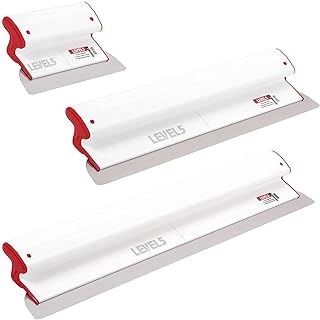
- Blade: 24 in with a rounded blade
- Body: composite body, lightweight design
- Edge: replaceable blade inserts available
- Warranty: 1-year warranty from the maker
- Handle: handle adapter system accepts extendable handles
The LEVEL5 24-Inch Composite Body Skimming Blade is the lighter twin of the aluminium 4-924, and it suits the plasterer who flattens painted drywall all day. The composite body trims weight from the frame, so the arm tires more slowly during the long horizontal passes that painted walls demand. The blade itself is a 24-inch rounded edge, which feathers filler thin and avoids the corner lines that show through Venetian plaster. The maker lists the same 1-year warranty across its skimming blade line, and replacement inserts are listed for the 24-inch size, so the working edge can be renewed when it starts to drag. The handle adapter system is shared with the aluminium blades, which means an extendable handle bought for one LEVEL5 blade fits the composite body too. On painted drywall, the composite body has a second quiet advantage: it does not chill the hand the way bare metal can in a cold room, so the grip stays relaxed through a long session. The composite frame is the choice when weight is the deciding factor and the wall is large; the aluminium version is the choice when a metal frame is preferred. Both share the same 24-inch rounded blade and the same replaceable insert system.
Pros:
- Composite body is lighter than the aluminium version
- Rounded blade feathers filler thin at pass edges
- Replaceable inserts renew the working edge
- Shares handles and adapters with the aluminium range
Cons:
- Composite frame can mark if dropped on a hard floor
- Fewer size options than the aluminium range
Super Prof Stainless Steel Comfort Profile 0.4 mm 480 mm
- Blade: 0.4 mm stainless steel blade
- Frame: aluminium construction
- Size: 480 mm, from a range of 170 to 1200 mm
- Feel: ergonomic, lightweight and robust
- Finish: made for super smooth finishing of big surfaces
The Super Prof Stainless Steel Comfort Profile 0.4 mm in the 480 mm size is built for the big flat areas of a painted wall. The maker describes the Comfort Profile as ideal for super smooth finishing of large surfaces, working fast with minimal loss of plastering material, and notes that sanding afterwards is almost unnecessary. That description fits the flattening pass before Venetian plaster, where the aim is a flat surface that needs little correction. The aluminium frame keeps the tool light for its width, and the maker lists it as ergonomic, lightweight and robust, a combination that matters when the blade is held overhead. The 0.4 mm stainless blade is thicker than the 0.3 mm version of the same profile, so it holds its line a little more firmly while still flexing enough to follow a wall. At 480 mm wide, it covers a broad band per pass without becoming hard to control at the ends. The range runs from 170 mm to 1200 mm, so the same profile can be used for detail work and for the widest walls. On painted drywall, the Comfort Profile suits the middle of the wall, where long straight passes level filler quickly and the aluminium frame keeps the weight down.
Pros:
- Aluminium frame keeps a wide blade light
- 0.4 mm blade holds its line while still flexing
- 480 mm width covers broad bands quickly
- Range spans 170 to 1200 mm for varied work
Cons:
- No replaceable blade listed for this profile
- 480 mm size needs a steady two-hand pass at height
Super Prof Pure Spatula 570 mm
- Blade: 0.4 mm stainless steel blade
- Size: 570 mm, from a range of 170 to 570 mm
- Handle: pure leather comfort handle
- Grip: leather absorbs moisture for a better grip
- Shape: rounder ergonomic handle shape
The Super Prof Pure Spatula in the 570 mm size earns its place here through its handle. The maker lists a pure leather comfort handle, and notes that leather absorbs moisture, which gives a better grip and improved working comfort. Flattening painted drywall is warm work: the hand sweats, the grip loosens, and a slick handle lets the blade wander. A leather handle that grips better as it absorbs moisture is a real advantage on a long wall. The 570 mm blade is wide enough to level filler in broad bands, and the 0.4 mm stainless blade flexes enough to feather the edges of each pass. The handle has been reshaped to a rounder form, which the maker describes as an ergonomic and optical change, and a rounder grip spreads pressure across the palm instead of concentrating it on one edge. The range runs from 170 mm to 570 mm, so the same leather-handled design covers detail work and wide flattening. On painted drywall before Venetian plaster, the Pure Spatula suits the plasterer whose hands run warm and who wants a grip that stays secure from the first pass to the last.
Pros:
- Leather handle grips better as it absorbs moisture
- 570 mm blade flattens broad bands in one pass
- Rounder handle shape spreads pressure across the palm
- 0.4 mm blade feathers pass edges thin
Cons:
- Leather handle needs drying after washing
- No pole or extendable handle listed for this model
Refina SUPERFLEX-1 Finishing Trowel 16 in
- Blade: 0.4 mm stainless steel blade, 125 mm wide
- Size: 16 in (405 mm), from a range of 12 to 18 in
- Corners: radiused corners and finished blade edges
- Handles: soft-touch, cork or wood
- Origin: made in Germany; intermediate plate for rigidity
The Refina SUPERFLEX-1 in the 16-inch size is the finer tool in this group, and it suits the edges and details of a painted wall where a 600 mm blade is too wide. The maker lists a 0.4 mm stainless steel blade, 125 mm wide, with radiused corners and finished blade edges, which is the combination that keeps drag marks off a painted surface. The intermediate plate gives rigidity along the length of the blade while allowing flex across its width, so the trowel holds a straight line along the pass and still feathers at the edges. The handle choice is wide: soft-touch composite rubber, cork or wood, so the grip can be matched to the hand rather than the other way round. The maker describes the SUPERFLEX-1 as the original flexible trowel, made in Germany, with minimal break-in time, which means the blade works cleanly from the first wall rather than needing days of use to settle. At 16 inches, it is wide enough to flatten filler bands and narrow enough to work around trims, sockets and corners without marking the paint. For painted drywall before Venetian plaster, the SUPERFLEX-1 is the control tool: it follows the wide blades and cleans up the places they cannot reach.
Pros:
- Radiused corners prevent drag marks on paint
- Handle choice in soft-touch, cork or wood
- Intermediate plate gives length rigidity with width flex
- Made in Germany with minimal break-in time
Cons:
- 16 in width covers less ground than 24 in blades
- Narrower blade needs more passes on large walls
Refina SUPERFLEX-2 Finishing Trowel 16 in
- Blade: 0.4 mm stainless steel blade, 120 mm wide
- Size: 16 in (405 mm), from a range of 12 to 18 in
- Plate: longer intermediate plate for a firmer feel
- Grip: gel thumb pad; soft-touch, cork or wood handles
- Origin: made in Germany; radiused corners
The Refina SUPERFLEX-2 in the 16-inch size is the firmer sister of the SUPERFLEX-1, and it suits painted drywall that needs a little more pressure to flatten. The maker lists a 0.4 mm stainless steel blade, 120 mm wide, with a longer intermediate plate that gives additional stiffness along the length of the trowel. That extra stiffness helps when the filler is firm and the blade must press it flat rather than ride over it. The gel thumb pad is the grip detail that sets this model apart: it gives the thumb a secure rest and improves control during the long push of a flattening pass. Handles come in soft-touch, cork or wood, matching the SUPERFLEX-1, and the radiused corners and finished edges are the same, so the blade glides over paint without catching. The maker describes the SUPERFLEX-2 as slightly stiffer than the SUPERFLEX-1, which makes it the right choice when the wall has firm filler ridges to level. At 16 inches it works the same detail areas as its sister, but with more authority. For painted drywall before Venetian plaster, the SUPERFLEX-2 is the firm control tool: it flattens stubborn ridges while its rounded corners protect the paint film.
Pros:
- Longer plate gives a firmer, more controlled feel
- Gel thumb pad improves grip during long pushes
- Radiused corners protect the paint film
- Handle choice in soft-touch, cork or wood
Cons:
- Firmer blade feathers less readily than the SUPERFLEX-1
- 16 in width covers less ground than 24 in blades
Buying guide
Flattening painted drywall starts before the blade touches the wall. Wash the surface to remove dust and grease, and let it dry fully, because a blade sliding over dust will drag and leave lines. Look for loose paint, flaking edges and proud screw heads, and deal with them first: a wide blade will catch a loose paint edge and peel it, and a screw head will nick the blade edge. If the paint is glossy, the surface needs a key so the filler and the later Venetian plaster can hold; follow the filler and plaster makers' guidance on preparation for painted surfaces, and let each coat dry as directed. Fill the low spots and seams first with a thin coat, and let the filler firm up before the flattening pass. A blade works best on filler that has started to set but is still workable, and a pass made too early will pull material back off the wall.
Blade width should match the wall. A 600 mm or 24-inch blade suits the broad middle of a wall, where long straight passes level filler quickly. A 480 mm blade suits walls with more breaks, such as around windows and doors, because it is easier to turn at the ends of a pass. A 16-inch trowel suits the edges, corners and the bands beside trims, where a wide blade cannot sit flat. Many plasterers carry two widths: a wide blade for the field and a narrower one for the edges. The wide blade does the levelling, and the narrower blade cleans up the places the wide one cannot reach.
Flex is the second choice. A flexible blade follows the gentle curve of a wall and feathers filler thin at the edges of each pass, which is what painted drywall needs, because a thick edge of filler will show through Venetian plaster. A firmer blade suits filler that has set hard and needs pressure to level. The blades in this guide range from the very flexible SUPERFLEX-1 to the firmer SUPERFLEX-2 and the 0.4 mm Comfort Profile, so the flex can be matched to the filler. When in doubt, start with the more flexible blade: it is kinder to the paint film, and a second pass with a firmer blade can follow if the surface still needs levelling.
Grip length decides how much of the wall can be worked from the floor. A standard grip suits work up to shoulder height. Above that, a pole or an extendable handle keeps the blade flat against the wall without a ladder for every pass. The NELA Edge pole and attachment fit the Edge spatulas, and the LEVEL5 handle adapter system accepts extendable handles for the 24-inch blades. When using a pole, keep the pressure light and let the blade do the work: pushing hard through a pole bends the blade and leaves a hollow in the middle of the pass. Grip comfort matters just as much. Cork absorbs moisture and stays secure, leather grips better as the hand warms, soft-touch rubber suits hands that prefer a cushioned hold, and a gel thumb pad steadies the push. Try the grip before a long wall, because a handle that feels fine for one pass can blister a hand over a full room.
Edge profile deserves attention on paint. Rounded and radiused corners glide over the paint film, while a square corner can catch and leave a line. After each pass, wipe the blade clean: dried filler on the edge will score the next pass. Stainless steel rinses clean with water, and the blade should be dried before storage so the edge stays bright. A nicked edge should be dressed or the insert replaced, because a damaged edge leaves a line on every pass until it is fixed. Replacement inserts, where the maker lists them, are the cheapest way to keep a wide blade working cleanly.
Finally, check the flattened wall before Venetian plaster starts. Hold a light at a low angle across the surface and look along it: the raking light shows ridges and hollows that overhead light hides. Mark the low spots and fill them, then flatten again with a light pass. Venetian plaster is applied in very thin coats, so it follows the wall rather than hiding it, and a flat painted base is what makes the polished finish look even. A wide skimming blade, used with a light hand and a clean edge, is the tool that makes that flat base.
FAQ
Can a wide skimming blade flatten painted drywall without damaging the paint?
Yes, when the blade edge is smooth and the pressure is light. A flexible stainless blade with rounded or radiused corners glides over the paint film, while a nicked edge or a square corner can catch and leave a line. Keep the blade clean, wipe it after each pass, and replace the edge or the insert when it starts to drag.
What blade width suits a standard room wall?
A 600 mm or 24-inch blade suits the broad middle of a wall, where long straight passes level filler quickly. A 480 mm blade suits walls with windows and doors, and a 16-inch trowel suits the edges beside trims and corners. Many plasterers carry two widths and use the wide blade for the field and the narrower blade for the edges.
Does a flexible blade or a firmer blade suit painted drywall better?
A flexible blade suits most painted drywall, because it follows the wall and feathers filler thin at the edges of each pass. A firmer blade suits filler that has set hard and needs pressure to level. Start with the flexible blade, and follow with a firmer pass only where the surface still needs levelling.
How do extended grips and poles change the work?
An extended grip or a pole lets the blade reach high walls from the floor, so the flattening pass stays flat instead of tipping at the top. Keep the pressure light through a pole, because pushing hard bends the blade and leaves a hollow in the middle of the pass. The NELA Edge pole fits the Edge spatulas, and LEVEL5 extendable handles fit the LEVEL5 blades through the handle adapter system.
How do I clean a skimming blade after flattening filler?
Rinse the stainless blade with water while the filler is still fresh, wipe the edge clean, and dry the blade before storage. Dried filler on the edge will score the next pass, so check the edge before each wall. A nicked edge should be dressed, and a blade with replaceable inserts can take a fresh insert.
Conclusion
Flattening painted drywall before Venetian plaster is a job for a wide flexible blade and a grip that lasts the wall. The NELA Edge Black Edition Spatula 600 mm leads this group because it combines width, flex and a moulded grip with a pole option for high work. The two LEVEL5 24-inch blades offer a light aluminium body and a lighter composite body with replaceable inserts, the Super Prof Comfort Profile and Pure Spatula bring aluminium frames and a leather grip to big surfaces, and the two Refina SUPERFLEX trowels bring fine control and a choice of handles for the edges. Pick the width that matches the wall, the flex that matches the filler, and the grip that matches the hand, keep the edge clean, and check the surface with a raking light before the Venetian plaster starts. A flat painted base is what makes the polished finish look even, and these seven blades are the tools that make it.
Related guides
More from Amazon
Programs that pair well with the guide above. Offers and eligibility are set by Amazon and may change.
Free shipping on eligible items, Prime Video and more. Eligible new members can start with a free trial.
Start a Prime free trialAudiobooks and podcasts to listen to on the go. Eligible new members can start with a free trial.
Try Audible freeAd-free music streaming. Eligible new subscribers can start with a free trial.
Try Music Unlimited freeA free business account with business pricing and bulk-buying tools for work, shop or home office.
Create a business accountAs an Amazon Associate we earn from qualifying purchases.
More ways to save on your next finish
Programs that pair well with the guide above. Offers and eligibility are set by Amazon and may change.
A free business account with business pricing and bulk-buying tools for work, shop or home office.
Create a business accountFast, free shipping on eligible items, plus Prime Video and more. Eligible new members can start with a free trial.
Start a Prime free trialRead from a huge library of eBooks, including how-to guides and cookbooks. Eligible new members can start with a free trial.
Try Kindle UnlimitedAudiobooks and podcasts for the commute, the garage or the kitchen. Eligible new members can start with a free trial.
Try Audible freeAs an Amazon Associate we earn from qualifying purchases. Using these links costs you nothing extra.










Write Your Review
No reviews yet. Be the first to share your experience!