
Key takeaways
- Rustic stucco panels need a brush with backbone. Compare seven stipple brushes, from double crows foot heads to stiff tampico blocks, and pick the right one.
As an Amazon Associate I earn from qualifying purchases. This post may contain affiliate links at no extra cost to you.
Our top picks at a glance
3 products from this guide, in the order reviewed below.


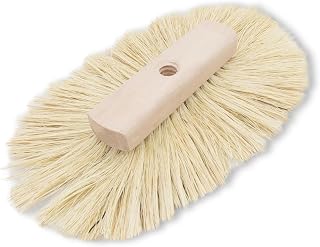
As an Amazon Associate we earn from qualifying purchases. Prices and availability can change.
A rustic stucco accent panel is meant to look hand-made, rough, and full of character. The texture should read from across the room: deep marks, open swirls, and a surface that catches light and shadow in a way a flat wall never does. That kind of finish needs a brush with backbone. Soft horsehair heads and foam sets, which suit fine stipple work, will not push a thick stucco coat into a deep pattern. What works is a stiff head on a solid block: tampico fiber that holds its shape under load, a double crows foot that lays a broad fan in each stomp, and a wide block that covers a panel in fewer passes. Best stipple brushes for decorative plaster for finishing rustic stucco accent panels are the ones that keep their shape when the plaster is thick, the panel is large, and the pattern has to stay bold from the first stomp to the last.
Rustic stucco work is physical. The brush is loaded heavily, pressed into the plaster, and lifted with a short, firm motion that leaves a deep, open mark. The head has to be stiff enough to hold the pattern and wide enough to keep the work moving, since a rustic panel is usually finished in one session while the plaster is still workable. The seven brushes below cover that job: a twenty-eight-inch double tampico head for the largest panels, a double crows foot for broad fans, a single crows foot for narrower bands, a tampico double and a tampico single on solid blocks, an eight-inch horsehair stipple brush for the middle ground, and a threaded single brush for pole work. Each one was matched against the same yardstick: bristle stiffness, head width, block strength, and how the brush behaves when the plaster is thick and the session is long.
Quick verdict
For most rustic stucco accent panels, the DQB Panda Paw II 11935 is the strongest lead pick. Its twenty-eight-inch tampico head covers a panel in broad, even stomps, its stiff bristle holds a deep pattern in thick plaster, and its hardwood block and threaded hole accept a standard handle for large walls. When the panel needs a classic fan pattern, the Certified MTP double crows foot head lays a layered, fan-like mark in each stomp. The Goldblatt G05261 double crows foot serves the same role in a simpler form, while the MARSHALLTOWN 844 double crows foot gives a tampico fan on a solid block. The ToolPro eight-inch horsehair brush covers the middle ground between detail and coverage, the Hyde 09880 single brush threads onto a pole for overhead work, and the MARSHALLTOWN 846 single crows foot gives a stiff tampico fan for narrower bands.
| Product | Key spec | Best for |
|---|---|---|
| DQB Panda Paw II 11935 Double Stippling Brush | Natural tampico fiber; 28 in head; stiff bristle; hardwood block | Largest rustic panels |
| Certified MTP Crows Foot Ceiling Texture Brush Double | Horse hair and synthetic blend; 13.5 in length; 8.5 in width | Classic fan pattern |
| Goldblatt G05261 Double-Crows Foot Texture Brush | Double crows foot texture brush | Broad double-fan stipple |
| MARSHALLTOWN Double Crows Foot Brush 844 | Tampico bristles; block 8 x 1 3/4 in; trim 4 in; threaded hole | Tampico fan on a solid block |
| ToolPro 8-Inch Horse Hair Stipple Brush | Horse hair and poly-fill; polypropylene block; 8 in width | Middle ground coverage |
| HYDE 09880 Single Texture Brush | Single texture brush; threaded for poles | Pole work overhead |
| MARSHALLTOWN Single Crows Foot Brush 846 | Tampico bristles; block 8 x 1 3/4 in; trim 4 in; threaded hole | Middle ground coverage |
How we chose
The pool for this family held twenty verified stipple brushes, and the seven below were picked for rustic stucco accent panels. Bristle stiffness came first: a rustic finish needs a head that pushes thick plaster into a deep mark and holds its shape. Head width came second, since a rustic panel is usually large and the brush has to cover it while the plaster is still workable. Block strength came third, because a wide head on a weak block will flex and leave an uneven pattern. Specs come from the product pages actually opened for this family, and any spec the maker does not list is shown as a dash. Soft horsehair heads, foam sets, and small detail brushes were kept out of this article, since they suit fine work rather than bold rustic texture, and they appear in the companion articles on soft stipple and Venetian blending.
DQB Panda Paw II 11935 Double Stippling Brush
- Bristle material: natural tampico fiber
- Head width: 28 in
- Bristle stiffness: stiff bristle
- Brush type: double stippling brush
- Block: sturdy hardwood block
- Handle: sold separately; one threaded hole
The DQB Panda Paw II 11935 leads this article because it is the largest and stiffest head in the pool, and rustic stucco panels reward both qualities. A twenty-eight-inch head lays a broad band of pattern in each stomp, so a large accent panel comes together in fewer passes and with fewer seams between loaded sections. The natural tampico fiber is stiff enough to push thick plaster into a deep, open mark, and the maker lists it for creating elegant swirls, stippled patterns, and the rough charm of stucco. The sturdy hardwood block holds the wide head flat against the wall, and the single threaded hole accepts a standard handle for work above comfortable reach. The handle is sold separately, so the plasterer can choose a handle length that suits the panel height. On a rustic panel, the Panda Paw II leaves a bold, open texture that reads clearly from across the room, and the double head gives each stomp a layered look that a single head cannot match.
Pros: twenty-eight-inch head covers panels fast; stiff tampico holds a deep pattern; hardwood block stays flat; threaded hole suits pole work.
Cons: handle sold separately; wide head is heavy on long sessions; too large for small panels.
Certified MTP Crows Foot Ceiling Texture Brush Double
- Bristle material: blend of horse hair and synthetic materials
- Length: 13.5 in
- Width: 8.5 in
- Handle: hole in the center
- Pattern: crows foot design
The Certified MTP double crows foot brush lays the classic fan pattern that defines rustic stucco work. Its bristles are arranged in a pattern that resembles a crow's footprint, and each stomp leaves a layered, fan-like mark that overlaps the last one to build a deep, textured field. The blend of horse hair and synthetic material gives the head enough body to push plaster without going limp, while the geometric arrangement keeps the pattern regular across the panel. At thirteen and a half inches long and eight and a half inches wide, the head is large enough to cover a panel at a good pace and small enough to turn into a corner or work around a feature. The center handle hole accepts a pole or broom handle for ceiling and high-wall work. For an accent panel where the fan pattern itself is the finish, this brush is the most direct tool in the article.
Pros: classic fan pattern defines the finish; horse hair and synthetic blend holds body; center hole suits pole work; size turns into corners.
Cons: fan pattern needs practice to keep regular; blend bristle is softer than pure tampico.
Goldblatt G05261 Double-Crows Foot Texture Brush
- Brush type: double crows foot texture brush
- Specs: see product page
The Goldblatt G05261 double crows foot brush serves the same role as the Certified MTP head in a simpler form: a double fan that lays a broad, layered stipple in each stomp. A double head covers more area than a single head and gives each mark a fuller, more layered look, which suits rustic stucco panels where the pattern should read boldly from a distance. The brush suits the middle of a panel best, where the plasterer can work in long, even rows without turning into edges. Used with a firm, even stomp and a quarter turn between passes, the double head builds a field of overlapping fans that hides seams and gives the panel a hand-made character. The maker does not list full specs on the page consulted, so the key spec is shown as the brush type itself, and the product page is the source for further detail.
Pros: double head covers panels fast; layered fan suits bold rustic texture; simple, direct tool for the middle of a panel.
Cons: full specs are not listed on the page consulted; wide head is awkward near edges.
MARSHALLTOWN Double Crows Foot Brush 844
- Bristle material: tampico bristles
- Block: 8 x 1 3/4 in
- Trim: 4 in
- Fitting: threaded hole in the center of the block
- Made in: USA with global materials
The MARSHALLTOWN 844 double crows foot brush is the tampico fan tool in this article. Its double head lays two fans side by side in each stomp, covering a panel faster than a single head and giving each mark a fuller, more layered look. The tampico bristles are stiff enough to push thick stucco plaster into a deep pattern, and the eight-by-one-and-three-quarter-inch block holds the head flat against the wall. The four-inch trim gives the bristles room to flex without going soft, and the threaded hole in the center of the block accepts a standard broom handle for ceiling and high-wall work. The maker lists this brush for creating a textured finish on drywall, and the same stiff tampico fan suits rustic stucco panels where the pattern should read boldly from a distance. Used with a firm, even stomp and a quarter turn between passes, the double head builds a field of overlapping fans that hides seams and gives the panel a hand-made character.
Pros: double head covers panels fast; stiff tampico holds a deep pattern; solid block stays flat; threaded hole suits pole work.
Cons: eight-inch block is smaller than the lead pick for very large panels; tampico needs a long rinse to clear plaster.
ToolPro 8-Inch Horse Hair Stipple Brush
- Bristle material: horse hair and poly-fill
- Block: polypropylene
- Width: 8 in
- Use: texturing only, not for applying compound
The ToolPro eight-inch brush is the middle-ground tool in this set. Its eight-inch width lays a broad band of stipple in each stomp, so the middle bands of a rustic panel come together in fewer passes and with fewer seams between loaded sections. The horse hair and poly-fill blend is softer than tampico, so it suits the areas where the pattern should read clearly without the deepest craters: the middle of a panel, the returns, and the sections between the broad passes of a double head. The polypropylene block resists moisture from wet plaster and rinses clean without swelling, which matters on a long job where the brush is washed several times a day. The maker lists this brush for texturing only, so it should not be used to spread plaster across a wall; it earns its place after the plaster is on, when the pattern is what matters. Package instructions are included, which helps a first-time user set the loading rhythm before touching a finished panel.
Pros: eight-inch width covers middle bands fast; polypropylene block resists moisture; even grain across wide passes; package guidance included.
Cons: horsehair blend is softer than tampico for the deepest marks; texturing only, not a spreading tool.
HYDE 09880 Single Texture Brush
- Brush type: single texture brush
- Fitting: threaded for poles
- Specs: see product page
The Hyde 09880 single texture brush is the pole-work tool in this article. Its threaded fitting is made for poles, so the plasterer can work a ceiling or a high accent wall with the brush held square to the surface, which keeps the stipple round and even. Reaching overhead by hand tends to tilt the brush and stretch the pattern, while a pole keeps the pounce vertical and the marks consistent. The single head suits narrower bands and the edges of a panel, where a wide double head cannot turn, and it also serves as the clean-up brush that evens out the seams between the broad passes of a larger head. The maker does not list full specs on the page consulted, so the key spec is shown as the brush type and fitting, and the product page is the source for further detail.
Pros: threaded fitting suits pole work; single head turns into edges; keeps the pounce vertical overhead; good clean-up brush for seams.
Cons: full specs are not listed on the page consulted; single head covers large panels slowly.
MARSHALLTOWN Single Crows Foot Brush 846
- Bristle material: tampico bristles
- Block: 8 x 1 3/4 in
- Trim: 4 in
- Fitting: threaded hole in the center of the block
- Made in: USA with global materials
The MARSHALLTOWN 846 single crows foot brush closes this article as the middle-ground tool. A single head lays one fan in each stomp, which suits the narrower bands, the edges, and the panels that are too small for a double head and too large for a detail brush. The tampico bristles hold a deep pattern in thick plaster, and the eight-by-one-and-three-quarter-inch block keeps the head flat and steady. The four-inch trim flexes enough to follow the surface without digging in, and the threaded hole accepts a standard broom handle for work above comfortable reach. The single head also serves as the clean-up brush that evens out the seams between the broad passes of a double head, since its narrower fan can work into the joints without disturbing the pattern around them. For a plasterer who wants one brush that covers the middle of a rustic panel and the edges around it, the 846 is a practical pick.
Pros: single head turns into edges and narrow bands; stiff tampico holds a deep pattern; solid block stays flat; good clean-up brush for seams.
Cons: single head covers large panels more slowly than a double; tampico needs a long rinse to clear plaster.
Buying guide
Stiffness decides the depth
Rustic stucco needs a head that pushes thick plaster into a deep mark and holds its shape while doing it. Natural tampico fiber is the stiffest bristle in this article, and it suits the boldest patterns. A horse hair and synthetic blend is softer, so it leaves a slightly shallower mark and suits a panel where the texture should read clearly without deep craters. The trim length also matters: a longer trim flexes more and softens the mark, while a short trim stays firm and digs deeper. When choosing, look at what the maker lists for bristle material and stiffness. If the plaster coat is thick and the panel is large, choose the stiffest head that still feels controllable. If the coat is thinner, a blend head will leave a cleaner mark without tearing the surface.
Head width sets the pace
A twenty-eight-inch head covers a panel in a few broad passes, but it is heavy and cannot turn into a corner. A thirteen-inch head covers a panel at a steady pace and turns more easily. An eight-inch head is the most flexible, covering the middle ground and the edges. Before buying, measure the panel. If the narrowest part of the panel is smaller than the head, the pattern will stop short and leave a flat border that shows in raking light. If the panel is large and the head is small, the plaster may start to set before the pattern is finished, and the seams between sections will show. Match the head to the panel, not to the shelf.
The stomp rhythm
Rustic stipple work is a stomp, not a brush stroke. Load the brush heavily, hold it square to the surface, press it in with a short, firm motion, and lift it cleanly away. Rotate the brush a quarter to a half turn between stomps so the fan pattern does not repeat in a visible grid. Work in sections that stay workable, and keep the edges of each section wet enough to blend into the next. A practice panel, even a scrap board with a skim of plaster, is the right place to find the loading rhythm before touching a finished wall. The first few stomps show whether the load is too heavy, which leaves blobs, or too light, which leaves a sparse field. Adjust the load, not the force: pressing harder only deepens the marks and breaks the surface.
Poles, handles, and reach
Most brushes in this article have a threaded hole or a center hole for a standard broom handle, and that fitting matters when a panel runs above shoulder height or across a ceiling. A pole keeps the stomp square to the surface, which keeps the marks round and even, while reaching overhead by hand tends to tilt the brush and stretch the pattern. Check the thread before buying a pole, since a mismatched thread will wobble and spoil the pattern. A wide head on a pole is heavy, so a light head and a steady pole are worth more than a large head when the work runs overhead. For ceiling work, the double crows foot heads in this article pair well with a pole, since their wide fans cover the ceiling in fewer passes.
Working with thick plaster
Rustic stucco coats are thicker than Venetian coats, and the plaster has to be mixed to a consistency the brush can move. A mix that is too stiff will not take a pattern, and a mix that is too wet will slump and lose the marks as it sets. The plaster maker guidance is the best reference for mix and working time. Load the brush from a hawk or a tray rather than from the wall, so the load stays even. Keep the sections small enough to finish before the plaster firms up, and keep a clean brush at hand for softening any seam that starts to show. If a section does firm up before the pattern is finished, leave it alone rather than reworking it, since reworking set plaster tears the surface.
Cleaning and storage
Stucco and lime plaster set hard, and a brush left dirty will not recover. Rinse with warm water and soap immediately after use, work the bristles gently with the fingers to release plaster from the base of the head, and rinse until the water runs clear. Tampico heads hold plaster deep in the fiber, so they need a longer rinse and a stiff brush or comb to clear the base. Reshape the head while it is damp, then let it dry with the bristles pointing down or hung, never resting on the bristle tips. Large double heads should be hung or laid flat with nothing resting on the bristles, since a crushed fan will never sit flat again. A brush stored damp in a closed bag will lose its shape and can carry a smell into the next job.
FAQ
What is a crows foot texture?
A crows foot texture is a fan-like pattern made by stomping a brush whose bristles are arranged like a crow's footprint. Each stomp leaves a spread of marks that overlap the last one, building a layered, textured field. The pattern is also called a slap brush or stomp brush texture, and it suits rustic stucco panels and ceilings where a bold, hand-made look is the goal.
How do I keep a rustic stipple pattern even across a large panel?
Work in sections that stay workable, reload on a steady rhythm, and rotate the brush a quarter to a half turn between stomps so the fan pattern does not repeat in a visible grid. Step back often and look at the panel in raking light, since a pattern that looks even from arm's length can show seams from across the room. A practice panel helps set the rhythm before the real wall.
Can a stipple brush be used on a ceiling?
Yes, with a pole. Most brushes in this article have a threaded or center hole for a standard broom handle, which keeps the stomp square to the ceiling and the marks round. A light head and a steady pole matter more than a large head overhead, since control fades as the arms tire. The double crows foot heads pair well with a pole, since their wide fans cover a ceiling in fewer passes.
How do I clean thick plaster out of a tampico brush?
Rinse with warm water and soap right after use, before the plaster sets. Work the bristles gently with the fingers, use a stiff brush or comb to clear the base of the head, and rinse until the water runs clear. Tampico holds plaster deep in the fiber, so allow a longer rinse than a horsehair head needs. Reshape the head while damp and dry it bristle-down or hung.
What is the difference between a single and a double crows foot brush?
A single crows foot head lays one fan in each stomp, while a double head lays two fans side by side in one stomp. The double head covers a panel faster and gives each mark a fuller, more layered look, while the single head suits narrower bands and turns more easily into corners. Both create the same family of fan pattern.
How thick should a rustic stucco coat be for stippling?
The coat has to be thick enough to hold a deep pattern and thin enough for the brush to move it. The plaster maker guidance is the best reference for coat thickness and working time. A practice panel is the right place to check the mix before committing to a finished wall, since a mix that is too stiff will not take a pattern and a mix that is too wet will slump.
Conclusion
Rustic stucco accent panels need a brush with backbone, and the seven brushes in this article cover that job from the largest panel to the tightest edge. The DQB Panda Paw II 11935 leads with a twenty-eight-inch tampico head that lays a bold, open texture in broad passes. The Certified MTP double crows foot and the Goldblatt G05261 give the classic fan pattern, the MARSHALLTOWN 844 double and 846 single give stiff tampico fans on solid blocks, and the ToolPro eight-inch horsehair brush covers the middle ground. The Hyde 09880 threads onto a pole for overhead work. Choose by bristle stiffness first, head width second, and handle fit third. Load heavily, stomp square, rotate between passes, and rinse promptly. A rustic panel done well reads as a hand-made surface full of light and shadow, and the brush is what makes that possible.
Related guides
More from Amazon
Programs that pair well with the guide above. Offers and eligibility are set by Amazon and may change.
Free shipping on eligible items, Prime Video and more. Eligible new members can start with a free trial.
Start a Prime free trialAudiobooks and podcasts to listen to on the go. Eligible new members can start with a free trial.
Try Audible freeAd-free music streaming. Eligible new subscribers can start with a free trial.
Try Music Unlimited freeA free business account with business pricing and bulk-buying tools for work, shop or home office.
Create a business accountAs an Amazon Associate we earn from qualifying purchases.
More ways to save on your next finish
Programs that pair well with the guide above. Offers and eligibility are set by Amazon and may change.
A free business account with business pricing and bulk-buying tools for work, shop or home office.
Create a business accountFast, free shipping on eligible items, plus Prime Video and more. Eligible new members can start with a free trial.
Start a Prime free trialRead from a huge library of eBooks, including how-to guides and cookbooks. Eligible new members can start with a free trial.
Try Kindle UnlimitedAudiobooks and podcasts for the commute, the garage or the kitchen. Eligible new members can start with a free trial.
Try Audible freeAs an Amazon Associate we earn from qualifying purchases. Using these links costs you nothing extra.










Write Your Review
No reviews yet. Be the first to share your experience!