
Key takeaways
- Bonding primers for Venetian plaster are easy to buy and easy to get wrong. Compare seven real options by grip, coverage and dry time, then judge the purchase.
What's inside
As an Amazon Associate I earn from qualifying purchases. This post may contain affiliate links at no extra cost to you.
A bonding primer is a small purchase beside the cost of a Venetian plaster job, yet it decides whether the finish lasts or fails. The plaster itself may be the most visible part of the work, but the primer is the part that holds it to the wall. A buyer who spends carefully on plaster and then reaches for the nearest can of primer has the priorities backwards. The question are bonding primers for venetian plaster worth buying on black friday is therefore worth asking properly, because the answer is not the same for every wall, every primer and every buyer.
The short answer is yes, with two conditions. First, the primer must match the wall: a bonding agent for a smooth surface, a sealer for a porous render, a mineral primer for a lime finish, a quartz primer where the plaster needs a rough key. Second, the purchase must be tied to a project. Primers have shelf lives, from about a year for a silicate product to three years for an acrylic sealer, and a can bought with no job in mind is a can that may never be opened. Meet those two conditions and a seasonal purchase is a sound move. Miss them and it is money on a shelf.
The seven products in this guide cover the range of what a bonding primer can be. There is a self-priming masonry paint, a latex bonder, an elastomeric masonry coating, a potassium waterglass hardener, two quartz aggregate primers and a lime wall finish used as a priming coat. Each one is a real product with published figures, and each one suits a different wall. The guide compares them honestly, including the cases where a product is not the right pick, so that the final answer to the question is based on the wall in front of you rather than on a slogan.
Quick verdict
Yes, bonding primers for Venetian plaster are worth buying during the Black Friday period, provided you buy the primer your wall needs and you have a project planned. The strongest single purchase for most buyers is the SAKRETE Concrete Bonder and Fortifier, because it works as a paint-on bonding coat, as an admixture and as a slurry, it publishes clear coverage figures for each method, and it keeps for a year on the shelf. For a Venetian plaster over boards or a lime coat, the artSparx Fine Quartz Primer is the better pick, with a quartz aggregate that gives the plaster a rough key to grip.
The purchase is not worth it when the primer is bought without a wall in mind, or when the wrong type is chosen. A self-priming masonry paint will not bond a glossy wall. A quartz primer will not seal a porous render on its own. A waterglass hardener will not level a rough surface. Match the product to the surface, buy the quantity the area needs, and the answer to the question is yes.
| Product | Key spec | Best for |
|---|---|---|
| KILZ Self-Priming Masonry, Stucco and Brick Paint | 250 to 400 sq ft per gal; alkali resistant to pH 12 | Painted masonry that needs priming |
| SAKRETE Concrete Bonder and Fortifier | 125 to 200 sq ft per qt; dry 2 to 4 hours | Multi-use bonding and admixture |
| BEHR Premium Elastomeric Masonry, Stucco and Brick Paint No. 68 | Stretches up to 600 percent; 75 to 125 sq ft per gal | Crack-bridging masonry coatings |
| Kreidezeit Potassium Waterglass 607 | Dilution 1 part waterglass to 3 parts water; dry at least 24 hours | Hardening lime and mineral surfaces |
| artSparx Fine Quartz Primer | 71 to 82 sq ft per quart; dry 30 min touch, 24 hours full | Smooth lime and Venetian finishes |
| artSparx Medium Quartz Primer | 71 to 82 sq ft per quart; medium quartz grade | Medium grain key for plaster |
| Kreidezeit Lime Wall Finish Fine | Grain 0.9 mm; layers 1.5 to 5 mm; dry 24 hours per mm | Backing coat for wet areas |
How we chose
Every product in this roundup had to meet four conditions. First, it had to be a real, named product with a published role in bonding, priming or preparing a surface for plaster. Second, the maker had to publish coverage and drying figures, or a dilution ratio, so that a buyer can work out the quantity and the schedule. Third, the product had to suit at least one surface Venetian plaster is applied over: masonry, stucco, concrete, plasterboard, a lime coat or a painted wall. Fourth, the product had to be currently sold in a pack size a plasterer can buy.
This guide gives extra weight to products that do more than one job, because a seasonal purchase should earn its place on the shelf. The SAKRETE bonder works as a bonding coat, an admixture and a slurry. The KILZ masonry paint primes and finishes in one product. The BEHR elastomeric coating bridges hairline cracks while it primes. The waterglass hardens a surface while it prepares it. A product that serves several purposes is a better use of a sale purchase than a product that serves only one.
Coverage, drying time and dilution were compared across the whole set, and the differences are wide: from 65 square feet per litre for a mineral primer to 400 square feet per gallon for a masonry paint, and from 30 minutes to a full day of drying. Those differences decide both the quantity to buy and the schedule of the job, so they are stated for every product in this guide.
The selection was made from maker data sheets and retailer listings that publish their own specifications. No product was included on the strength of a review alone, and no specification in this guide was taken from a source that did not publish it.
KILZ Self-Priming Masonry, Stucco and Brick Paint

- Type: self-priming acrylic latex masonry paint
- Coverage: 250 to 400 sq ft per gallon
- Drying: dries in about 3 hours
- Alkalinity: alkali resistant to pH 12
- Finish: flat; application by brush, roller or spray; soap and water cleanup
KILZ Self-Priming Masonry Paint is the simplest product in this roundup, and its simplicity is its point. It is a masonry paint that primes itself, which means that on a sound masonry, stucco or brick surface it can be applied without a separate primer coat. For a Venetian plaster job where the wall needs a sealed, even base before the plaster goes on, it provides that base in a single product, with a flat finish that takes the plaster well.
The coverage of 250 to 400 square feet per gallon is generous, and the drying time of about three hours fits a normal working day. The alkali resistance to pH 12 is a useful figure for a lime based finish, since it shows that the paint will not break down under an alkaline plaster. It is applied by brush, roller or spray, and it cleans up with soap and water. For a painted masonry wall that needs a fresh, sealed base before Venetian plaster, it is a practical and economical choice.
Pros: Self-priming, so no separate primer coat is needed on sound masonry; high coverage per gallon; alkali resistant to pH 12; easy soap and water cleanup.
Cons: A paint, not a dedicated bonding agent, so it will not grip a glossy or unsound surface; the flat finish is a base, not a decorative coat; not a substitute for a bonding agent on a difficult wall.
SAKRETE Concrete Bonder and Fortifier
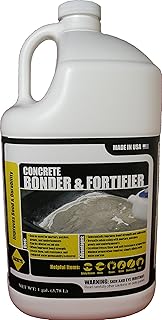
- Type: latex copolymer bonder and admixture
- Coverage as primer: 125 to 200 sq ft per quart, 500 to 800 sq ft per gallon; paint-on straight or diluted 1 to 1 with water
- Slurry: 2 parts bonder to 1 part Portland cement
- Drying: dry in 2 to 4 hours at 70F
- Application: 40 to 80F; 1-year shelf life; VOC under 10 g per litre
SAKRETE Bonder and Fortifier is the most flexible product in this roundup, and flexibility is what makes it the strongest single purchase. It can be painted on neat as a bonding coat, diluted one to one with water as a primer, mixed into a slurry with Portland cement for a repair, or used as an admixture to strengthen a mortar. The maker publishes a coverage figure for each method, so a buyer can work out the quantity for the job at hand rather than guessing.
The drying time of two to four hours at 70F fits a normal working day, and the application range of 40 to 80F covers most indoor work. The VOC figure under 10 grams per litre is low, and the one-year shelf life is realistic for a latex product. For a Venetian plaster job, the primer dilution is the relevant method: it seals the suction of the wall and leaves a bonding film for the plaster to grip. For the next job, the same bottle can serve as an admixture or a slurry. That range of uses is why it leads this guide.
Pros: Three uses in one product: bonding coat, primer and admixture; clear coverage figures for each method; low VOC; practical drying time; economical coverage as a primer.
Cons: The coverage range is wide, so the true quantity depends on the porosity of the wall; one-year shelf life is shorter than the acrylic sealers; needs measuring and dilution, so it is less convenient than a ready to use primer.
BEHR Premium Elastomeric Masonry, Stucco and Brick Paint No. 68
- Type: 100 percent acrylic elastomeric masonry paint
- Stretch: stretches up to 600 percent to bridge hairline cracks
- Coverage: 75 to 125 sq ft per gallon
- Drying: dry to touch in 4 to 6 hours, recoat in 24 hours, full hardness in 30 days
- Application: 2 coats; VOC under 50 g per litre
- Note: new stucco should dry and harden for 30 days before painting
BEHR Elastomeric No. 68 is the crack-bridging product in this roundup, and it earns its place because many masonry walls carry hairline cracks that a normal primer will not hide. The maker states that the coating stretches up to 600 percent, which allows it to bridge fine cracks and move with the wall as it expands and contracts. For a Venetian plaster over a wall with a history of hairline cracking, that flexibility is a genuine advantage.
The coverage of 75 to 125 square feet per gallon is the lowest in this guide, which reflects the thick, flexible film the product lays down. The drying schedule is slow: four to six hours to touch, 24 hours to recoat, and 30 days to full hardness. A buyer should allow for that schedule, and should note that new stucco needs 30 days before this product is applied. For a wall that needs both a primer and a crack-bridging coat, it is a sound choice; for a sound wall with no cracks, a thinner primer is more economical.
Pros: Bridges hairline cracks with up to 600 percent stretch; 100 percent acrylic; two-coat system with clear drying times; low VOC; made for masonry, stucco and brick.
Cons: Low coverage per gallon, so a large wall needs more product; slow drying with 30 days to full hardness; new stucco must wait 30 days before application; more than a sound wall needs.
Kreidezeit Potassium Waterglass 607
- Type: potassium waterglass for pre-hardening mineral surfaces
- Dilution: 1 part waterglass to 3 parts water
- Drying: at least 24 hours
- Use: pre-hardening before lime plaster and tadelakt work
Potassium Waterglass 607 is the hardener in this roundup, and it works in a different way from the primers. It is a potassium silicate solution that soaks into a mineral surface and hardens it from within, rather than forming a film on top. The maker lists it for pre-hardening before lime plaster and tadelakt work, which is exactly the preparation a Venetian plaster needs on a soft or dusty lime surface.
The dilution is stated plainly: one part waterglass to three parts water, with a drying time of at least 24 hours. That clarity matters, because a waterglass used too strong can leave a glassy film, and one used too weak will not harden the surface. For a Venetian plaster over a soft lime render, or over a surface that needs consolidating before the finish goes on, it is the correct preparation, and it is a product that a lime plasterer will keep on the shelf.
Pros: Hardens a mineral surface from within rather than filming over it; clear dilution ratio of 1 to 3; made for lime plaster preparation; long record of use in lime work.
Cons: A hardener, not a primer, so it does not replace a bonding coat on a glossy wall; needs at least 24 hours to dry; the dilution must be followed exactly, or the result will be wrong.
artSparx Fine Quartz Primer
- Type: quartz aggregate acrylic primer, fine grade
- Spread: 71 to 82 sq ft per quart; about 300 sq ft per gallon; about 1,200 sq ft per 4 gallons
- Dilution: 10 to 30 percent water
- Drying: 30 minutes to the touch, fully dry in 24 hours at 68F
- Shelf life: 36 months unopened
- Use: smooth finish primer for Venetian plaster and smooth lime finishes, including tadelakt and marmorino
The artSparx Fine Quartz Primer is the fine quartz option in this roundup, and it is made for exactly the finishes this guide serves. It is a quartz aggregate primer in an acrylic formula, and the fine quartz grains give a smooth plaster a light, even key to grip without showing through the finish. The maker lists it for Venetian plaster, smooth lime finishes, tadelakt and marmorino, which covers the full range of decorative plaster work.
The figures are precise: 71 to 82 square feet per quart, a dilution of 10 to 30 percent water, a touch dry time of 30 minutes and a full drying time of 24 hours at 68F. The shelf life of 36 months unopened is the longest in this guide, which makes it a good product to buy during a sale and keep for a later job. For a smooth Venetian plaster over plasterboard, wood or stone, it is the primer that gives the finish a foundation without changing its character.
Pros: Made for Venetian plaster and smooth lime finishes; fine quartz grain gives a key without showing through; precise spread and dilution figures; 36-month shelf life unopened; three pack sizes.
Cons: Coverage per quart is modest, so a large wall needs several quarts; full drying takes 24 hours; needs stirring at intervals during application, since the quartz settles.
artSparx Medium Quartz Primer
- Type: quartz aggregate acrylic primer, medium grade
- Spread: 71 to 82 sq ft per quart; about 300 sq ft per gallon; about 1,200 sq ft per 4 gallons
- Dilution: 10 to 30 percent water
- Drying: 30 minutes to the touch, fully dry in 24 hours at 68F
- Shelf life: 36 months unopened
- Use: quartz primer for Venetian plaster and smooth lime finishes, with a medium quartz grain
The Medium Quartz Primer is the sister product to the fine grade above, and the difference is the grain. The medium quartz gives the plaster a rougher, more open key, which suits a heavier Venetian finish, a marmorino with visible aggregate, or a plaster applied over a smooth surface that needs extra grip. A plasterer who wants the finish to hold on a slick board or a dense render will find the medium grain more reassuring than the fine one.
Everything else matches the fine grade: the same spread rate, the same dilution, the same drying time and the same 36-month shelf life. That makes the choice between the two a simple one, based on the finish rather than on the figures. For a smooth, polished Venetian plaster, choose the fine grade. For a heavier finish, or a surface that needs more grip, choose the medium grade. Buying both during a sale period covers the two cases a plasterer is most likely to meet.
Pros: Medium quartz grain gives a stronger key for heavy finishes; same precise figures and shelf life as the fine grade; made for Venetian plaster and lime finishes; three pack sizes.
Cons: The medium grain may show through a very thin, highly polished finish; same modest coverage per quart as the fine grade; needs stirring during application.
Kreidezeit Lime Wall Finish Fine
- Type: lime wall finish, fine grade, backing coat for wet areas
- Grain: 0.9 mm
- Layers: 1.5 to 5 mm thick
- Water: 0.28 to 0.3 litres per kilogram
- Drying: 24 hours per millimetre at 20C and 65 percent relative humidity
- Alkalinity: pH above 12.5; vapour diffusion sd below 0.03 m
- Use: backing coat for wet areas on tile backer boards, before tadelakt; intermediate coat with embedded glass fibre mesh
Lime Wall Finish Fine is the backing coat in this roundup, and it earns its place because a Venetian plaster in a wet area needs a backing coat before the finish goes on. It is a fine lime finish with a grain of 0.9 millimetres, applied in layers from 1.5 to 5 millimetres thick, and it is used on tile backer boards before a tadelakt or Venetian finish in a bathroom or a wet room. The maker states that it is applied with an embedded glass fibre mesh, which helps reduce cracking.
The figures are thorough: water at 0.28 to 0.3 litres per kilogram, drying at 24 hours per millimetre, a pH above 12.5 and a vapour diffusion value below 0.03 metres. Those numbers show a product made for lime work, with the alkalinity and the breathability that a lime finish needs. For a Venetian plaster in a wet area, it is the preparation that makes the finish possible; for a dry wall, it is more than the job needs.
Pros: Made as a backing coat for wet areas before tadelakt and Venetian finishes; clear grain, thickness and water figures; high pH suits lime work; mesh reinforcement reduces cracking.
Cons: A backing coat, not a primer, so it does not replace a bonding coat; needs 24 hours drying per millimetre, so a thick coat takes days; only needed where a wet area finish is planned.
Buying guide
Start with the wall, and be honest about its condition. A sound masonry wall needs a sealer or a self-priming masonry paint. A glossy or painted wall needs a bonding agent that grips. A soft lime surface needs a waterglass hardener. A smooth board needs a quartz primer with a fine or medium grain. A wet area needs a lime backing coat before the finish. The primer follows the wall, and buying the wrong type is worse than buying no primer at all.
Read the coverage figure as a range, and use the lower end for a porous wall. A gallon of KILZ masonry paint covers 250 to 400 square feet, while a gallon of BEHR elastomeric covers only 75 to 125, because it lays down a much thicker film. A quart of artSparx quartz primer covers 71 to 82 square feet. Measure the wall, divide by the lower figure, and add a margin for a second coat where the maker calls for one.
Check the drying time against your schedule. A quartz primer is touch dry in 30 minutes but needs 24 hours to dry fully. A waterglass hardener needs at least 24 hours. A lime backing coat needs 24 hours per millimetre, so a 5 millimetre coat needs five days. Do not rush these times. A primer or a backing coat that has not dried will not bond, and a plaster applied over it will fail.
Check the dilution wherever the maker states one. The SAKRETE bonder is used straight or diluted one to one with water. The artSparx quartz primers are diluted 10 to 30 percent. The Kreidezeit waterglass is diluted one part to three parts water. Follow the maker's ratio exactly, and mix in a clean container. A primer mixed too thin will not bond; one mixed too thick will not spread.
Buy for the area, not for the shelf. Primers and hardeners have shelf lives, from about a year for a latex bonder to 36 months for a quartz primer, and a can that sits unopened for two years may still be usable, but it is not a bargain if it is never opened. Measure the walls, work out the quantity from the coverage range, and buy that quantity with a small margin. A seasonal purchase makes sense when it covers a planned job.
Finally, remember that a primer is preparation, not decoration. It will not be seen in the finished wall, and its value is measured in years of adhesion rather than in appearance. Spend the time to choose it well, and the plaster will repay the care.
FAQ
Are bonding primers worth buying during a sale if I have no project planned?
No, not really. Primers have shelf lives, from about a year to three years, and a can bought with no job in mind may sit unopened until it is past its best. The saving on a single can is also modest beside the cost of a plaster job. Buy a primer when you have a wall measured and a finish chosen, and the purchase will be worth it.
Can I use a quartz primer under any Venetian plaster?
A quartz primer suits most Venetian plasters and smooth lime finishes, and the maker lists it for tadelakt and marmorino as well. Choose the fine grade for a smooth, polished finish and the medium grade for a heavier finish or a slick surface. Allow the full 24 hours for the primer to dry, and stir the product at intervals during application, since the quartz settles.
What is the difference between a bonding primer and a self-priming paint?
A bonding primer is made to grip a difficult surface and give the next coat a key. A self-priming paint, such as the KILZ masonry paint in this guide, primes and finishes in one product on a sound surface. On a sound masonry wall, a self-priming paint is enough. On a glossy, dusty or unsound wall, a dedicated bonding agent is needed.
How much primer do I need for one room?
Measure the wall area and divide by the coverage figure for your primer, using the lower end of the range for a porous wall. As a rough guide, a gallon of KILZ masonry paint at 250 square feet per gallon covers a medium room, while a quart of artSparx quartz primer at 71 square feet per quart covers a single feature wall. Always add a margin for a second coat where the maker calls for one.
Can I apply Venetian plaster straight over a waterglass hardener?
A waterglass hardener prepares and hardens a mineral surface, but it is not a bonding coat on its own. In a lime system, the usual sequence is to harden the surface with waterglass, allow at least 24 hours for it to dry, then prime or apply the lime wall finish as the maker directs. Follow the sequence the plaster maker states, and do not skip the priming step.
Conclusion
So, are bonding primers for Venetian plaster worth buying on Black Friday? Yes, when the purchase is tied to a real project and the primer matches the wall. The SAKRETE Concrete Bonder and Fortifier is the most flexible single purchase, serving as a bonding coat, a primer and an admixture. The artSparx Fine and Medium Quartz Primers are the best picks for a Venetian finish over boards or smooth surfaces, with a 36-month shelf life that makes a seasonal purchase low risk. The KILZ self-priming masonry paint is the economical choice for a sound masonry wall, and the Kreidezeit waterglass is the right preparation for a soft lime surface.
The answer is no when the primer is bought without a wall in mind, or when the wrong type is chosen for the surface. A primer is preparation, not decoration, and its value is measured in the years the plaster stays on the wall. Buy the primer the wall needs, in the quantity the area needs, allow the full drying time, and the purchase will be worth it. Buy blindly, and the saving will be spent twice over when the finish has to be redone.
Related guides
More from Amazon
Programs that pair well with the guide above. Offers and eligibility are set by Amazon and may change.
Send a Prime gift membership to someone who would use free shipping and Prime Video.
Gift Amazon PrimeGive audiobooks to someone who loves to listen. Plans and prices are set by Amazon.
Gift AudibleFree shipping on eligible items, Prime Video and more. Eligible new members can start with a free trial.
Start a Prime free trialAudiobooks and podcasts to listen to on the go. Eligible new members can start with a free trial.
Try Audible freeAs an Amazon Associate we earn from qualifying purchases.
More ways to save on your next finish
Programs that pair well with the guide above. Offers and eligibility are set by Amazon and may change.
A free business account with business pricing and bulk-buying tools for work, shop or home office.
Create a business accountFast, free shipping on eligible items, plus Prime Video and more. Eligible new members can start with a free trial.
Start a Prime free trialRead from a huge library of eBooks, including how-to guides and cookbooks. Eligible new members can start with a free trial.
Try Kindle UnlimitedAudiobooks and podcasts for the commute, the garage or the kitchen. Eligible new members can start with a free trial.
Try Audible freeAs an Amazon Associate we earn from qualifying purchases. Using these links costs you nothing extra.










Write Your Review
No reviews yet. Be the first to share your experience!