
Key takeaways
- Compare helical paddle mixer attachments for preparing cementitious stucco patch material, with low splash geometry that keeps the patch mix in the bucket.
As an Amazon Associate I earn from qualifying purchases. This post may contain affiliate links at no extra cost to you.
Cementitious stucco patch material is mixed in small batches, and it is mixed where the patch is: on a scaffold, in a hallway, or beside a finished wall that cannot be splashed. A paddle that throws the mix out of a small bucket wastes material, marks the wall next to the patch, and leaves the patch itself short of material. A paddle with low-splash geometry does the opposite: it turns slowly, it folds the material instead of churning it, and it keeps the mix in the bucket where it belongs. The best helical paddle mixer attachments for preparing cementitious stucco patch material with low splash geometry are the ones whose spiral shape moves a small cementitious batch gently, whose diameter matches the patch bucket, and whose speed range stays low enough to blend without spraying.
Low splash is a matter of shape, not of power. A paddle with a wide, flat head throws material because it pushes a lot of mix at once, while a helical paddle with a narrow spiral lifts the material and folds it over, which moves the batch without throwing it. A two-paddle design spreads the work across two heads, so each head turns more slowly for the same mixing effect, and a reverse spiral pulls material down into the bucket instead of pushing it up and out. The paddles in this roundup were picked for those shapes: two-paddle and three-paddle helical heads, reverse spirals, and high-shear heads that break up lumps without needing speed. The figures in the sections below come from the maker data sheets and catalogues, and where a figure was not stated the text says so instead of guessing.
The other thing that matters for stucco patch material is the batch size. A patch is a small job, and the material is mixed in a single bucket, often no more than fifteen or twenty-five kilograms at a time. A paddle made for a sixty-kilogram drum is too wide for a patch bucket, and it throws the mix because it cannot turn properly in a small volume. The paddles here run from 120 to 150 millimetres in diameter, with mixing volumes from 15 to 75 litres, so they cover the patch buckets a plasterer actually uses.
Best products
Collomix WK 140 HF
- 135 mm diameter, 590 mm length
- Mixing volume: 25 to 35 kg
- HEXAFIX quick-change system with an M14 adapter
- Right-rotating two-paddle design
The Collomix WK 140 HF leads this roundup because its two-paddle design is the clearest low-splash shape in it. Two paddles turning together lift the material from the bottom of the bucket and fold it over, and because the work is shared across two heads, each head turns more slowly for the same mixing effect. That slow, shared motion is what keeps a cementitious patch mix in the bucket: the material moves in a steady fold instead of being thrown by a single fast head. The stated mixing volume of 25 to 35 kg suits the patch batches a plasterer mixes most often, and the 135 mm diameter fits a standard patch bucket without scraping the sides.
The 590 mm length reaches the bottom of a deep bucket, and the HEXAFIX quick-change system lets the paddle be swapped fast when one paddle is used for patch material and another for plain plaster on the same job. The M14 adapter means it fits the standard mixers, and the right-rotating action keeps the material moving in one direction. That action suits a patch mix because it builds a steady flow instead of churning the surface, and a steady flow blends a cementitious batch more evenly than a fast, shallow stir. For a plasterer who mixes stucco patch material in bucket-sized batches and wants the gentlest paddle that does the job properly, the WK 140 HF is the straightforward pick.
Collomix MK 120 HF
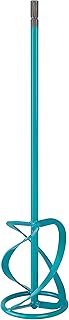
- 120 mm diameter, 590 mm length
- Mixing volume: 15 to 25 kg
- HEXAFIX quick-change system
- Three mixing paddles, right-rotating
- For heavy and tough materials such as concrete, screed, mortar and plaster
The Collomix MK 120 HF is the three-paddle pick in this roundup, and its three paddles are what set it apart from the two-paddle WK models. Three paddles turning together push more material with each rotation, and they give the paddle a firmer grip on a stiff cementitious patch mix that resists turning. The maker lists heavy and tough materials such as concrete, screed, mortar and plaster among the uses for the MK range, and a cementitious stucco patch sits squarely in that kind of work: a dense, cement-based material that needs force to move.
The stated mixing volume of 15 to 25 kg suits the smallest patch batches, and the 120 mm diameter fits the smallest patch buckets. The 590 mm length is the same as the other Collomix paddles here, and the HEXAFIX system lets it be swapped fast. The right-rotating action keeps the material moving in one direction, and that steady flow blends a stiff patch mix without throwing it. For a plasterer who wants the most forceful paddle in the smallest size, for patches that need to be mixed in a small bucket, the MK 120 HF is the pick.
Collomix KR 120 HF
- 120 mm diameter, 590 mm length
- Mixing volume: 15 to 25 kg
- HEXAFIX quick-change system
- High shearing forces
The Collomix KR 120 HF is the high-shear pick in this roundup, and it earns its place because cementitious stucco patch material is often mixed from dry materials that clump. A patch material that has sat in a bag absorbs moisture from the air, and it forms small lumps that a gentle paddle will not break apart. The KR 120 HF is built around high shearing forces, which means the paddle cuts through those lumps and breaks them apart instead of pushing them around the bucket. For a plasterer who mixes patch material from dry bagged stock, that shearing action is the difference between a smooth patch and a wall full of hard specks.
The 120 mm diameter and the 15 to 25 kg mixing volume make this the smallest high-shear paddle in this roundup, and it suits the smallest patch batches. The 590 mm length is the same as the other Collomix paddles here, and the HEXAFIX system lets it be swapped fast. The maker lists self-levelling compounds, adhesives and sealing substances among the materials this paddle is made for, and a cementitious patch batch sits in the same kind of work: a material that needs to be broken up and blended evenly. For the smallest patch batches, and for dry material that arrives lumpy, the KR 120 HF is the pick that does the hard work.
Collomix KR 140 HF
- 140 mm diameter, 590 mm length
- Mixing volume: 25 to 35 kg
- HEXAFIX quick-change system
- High shearing forces
The Collomix KR 140 HF is the larger high-shear version of the KR 120 HF, and it belongs in this roundup for the bigger patch batches. The 140 mm diameter and the 25 to 35 kg mixing volume cover the buckets that a 120 mm paddle would take too long to blend, and the same high shearing forces cut through lumps instead of pushing them around. The 590 mm length is the same as the other Collomix paddles here, and the HEXAFIX system lets it be swapped fast.
The difference between the two KR paddles is the size of the batch they cover: where the 120 mm version suits the smallest patches, the 140 mm version suits a standard patch bucket, and the extra width means fewer turns to blend the whole volume. For a plasterer who mixes stucco patch material in standard buckets and works with dry stock that clumps, the KR 140 HF is the pick that covers the bigger bucket with the same shearing action.
Refina MR3 140G
- 140 mm width, 600 mm length
- Mix: 25 to 75 litres
- 750 watt drill size
- Reverse spiral, top-to-bottom mix action
- For wet mixes, plasters, coatings and powders
The Refina MR3 140G is the reverse-spiral pick in this roundup, and its direction of flow is what makes it useful for low-splash patch work. A reverse spiral moves material from the top of the bucket down to the bottom, which is the opposite of the usual bottom-to-top flow, and that direction keeps the surface of the mix calm instead of pushing it up and out of the bucket. When a cementitious patch mix is stirred, the top layer is the first thing that splashes, and a reverse spiral pulls it down into the mix instead of throwing it over the rim.
The 25 to 75 litre mix range covers the patch batches this roundup is built around, and the 600 mm length reaches the bottom of a deep bucket. The stated drill size of 750 watts tells the user what kind of mixer drives this paddle, and it is a mid-range figure that suits the steady work of blending patch material. The MR3 design is the most widely used spiral paddle shape for bagged materials, plaster, cements, resins, coatings and wet pourable mixes, so a plasterer who already owns MR3 paddles in other sizes will find this one familiar. For a patch batch that has to be mixed without splashing the wall next to it, the MR3 140G is the paddle whose direction does the work.
Collomix DLX 120 HF

- 120 mm diameter, 590 mm length
- Mixing volume: 15 to 30 kg
- HEXAFIX quick-change system
- For liquid low-viscosity materials
The Collomix DLX 120 HF is the liquid-material paddle in this roundup, and it earns its place because stucco patch material starts as a thin mix before it thickens. A patch material that has just had its water added is a thin, fluid mix, and it needs a paddle that moves a thin material without whipping air into it. The DLX 120 HF is made for liquid low-viscosity materials, and its 120 mm diameter suits the small buckets that patch work uses. The HEXAFIX system and the M14 adapter are the same as on the other Collomix paddles here, so it fits the same mixers and swaps in the same way.
The stated mixing volume of 15 to 30 kg covers the patch batches this roundup is built around, and the 590 mm length reaches the bottom of a standard bucket. Used at a low speed, the DLX 120 HF folds a thin patch mix without dragging air down into it, and that keeps the patch free of the tiny bubbles that show up when a paddle runs too fast in a thin material. For a plasterer who mixes patch material from the thin stage and wants a paddle shaped for liquid work rather than for heavy render, the DLX 120 HF is a fair choice.
Collomix DLX 152 HF
- 150 mm diameter
- For liquid low-viscosity materials
- Fitted to the LevMix mobile mixer
The Collomix DLX 152 HF is the largest liquid-material paddle in this roundup, and it belongs here for the biggest patch batches. The 150 mm diameter suits a large patch bucket, where a 120 mm paddle would take too long to blend the full volume, and the liquid low-viscosity design moves a thin patch mix without whipping air into it. The maker states this paddle is fitted to the LevMix mobile mixer, which is a mobile mixing unit, so it is the pick for a plasterer who mixes patch material on a mobile unit rather than with a hand-held mixer alone.
The maker does not state a mixing volume or a length for the DLX 152 HF on the pages consulted for this roundup, so none is given here, and the user should check the product page for those figures before buying. What is stated is the diameter and the intended material, and those two facts are enough to place this paddle: it is the pick for the largest thin patch batches, where a wide paddle is needed to move the whole volume without splashing it out of the bucket. Used at a low speed, it folds a thin mix without dragging air down into it, and that keeps the patch free of bubbles.
| Product | Diameter and mixing volume | Best for |
|---|---|---|
| Collomix WK 140 HF | 135 mm, 25 to 35 kg | Two-paddle folding that keeps the mix down |
| Collomix MK 120 HF | 120 mm, 15 to 25 kg | Three-paddle force in the smallest size |
| Collomix KR 120 HF | 120 mm, 15 to 25 kg | High shear breaking up lumpy dry stock |
| Collomix KR 140 HF | 140 mm, 25 to 35 kg | High shear for standard patch buckets |
| Refina MR3 140G | 140 mm, 25 to 75 litres | Reverse spiral pulling the surface down |
| Collomix DLX 120 HF | 120 mm, 15 to 30 kg | Liquid thin mixes without whipped air |
| Collomix DLX 152 HF | 150 mm, liquid materials | Widest paddle for large thin batches |
How to choose
Pick a spiral that folds instead of throwing
Low splash starts with the shape of the spiral. A two-paddle design, such as the Collomix WK 140 HF, lifts material from the bottom and folds it over, which moves the batch without throwing it. A reverse spiral, such as the Refina MR3 140G, pulls material from the top down, which keeps the surface of the mix calm instead of pushing it up and out of the bucket. A three-paddle design, such as the Collomix MK 120 HF, pushes more material with each turn, so the paddle can run slower for the same mixing effect. The right choice depends on the batch: a thin patch mix needs the gentle fold, a stiff patch mix needs the force, and a settled batch needs the reverse spiral to pull it down.
Match the diameter to the patch bucket
Patch buckets are small, and the paddle diameter has to match them. A 120 mm paddle suits a standard patch bucket of ten to twenty litres, because it reaches most of the bucket floor without hitting the sides. A 135 or 140 mm paddle suits a larger patch bucket, where a 120 mm paddle would take too long to blend the full volume. A 150 mm paddle suits the largest patch buckets, where a smaller paddle would take too long. The mistake to avoid is a paddle that is too wide for the bucket: it scrapes the sides, it throws the mix, and it leaves material stuck to the bucket wall where the paddle cannot reach it. Before buying, measure the buckets the patch material is mixed in, and pick a paddle whose diameter leaves room around it on all sides.
Keep the speed low
Speed is the other half of low splash. A paddle turning at high speed in a thin patch mix whips air into the material, and the air shows up later as tiny bubbles and pinholes in the finished patch. The mix should move in a slow, steady fold, and the surface should look calm rather than churned. Start the paddle slowly, keep it below the surface, and raise the speed only once the material is moving as one body. A paddle with a wide speed range helps, because the user can start at the bottom of the range and build up only as far as the mix needs. Never start the paddle in the open air above the bucket, and never lift a spinning paddle out of the mix.
Mind the mixing volume
Every paddle states a mixing volume, and that figure is the maker telling the user where the paddle is at home. A paddle rated for 15 to 25 kg is made for the smallest patch batches, while a paddle rated for 25 to 35 kg covers the standard patch bucket. Mixing past the stated volume makes the motor work too hard and leaves the material at the edges untouched, so the patch comes out uneven. The mixing volume also decides how many batches a patch needs: a small paddle means more batches, and each batch has to match the one before it, so a paddle that covers the whole batch in one go is worth having. Pick a paddle whose stated volume covers the batch size, and mix in batches that sit inside the stated limits.
Common mistakes
The most common mistake with cementitious stucco patch material is mixing at too high a speed. A fast paddle in a thin patch mix whips air into the material, and the air shows up later as tiny bubbles and pinholes in the finished patch. The mix should move in a slow, steady fold, and the surface should look calm rather than churned. Use a low speed, keep the paddle below the surface, and let the spiral do the work instead of the speed. A second mistake is using a paddle that is too wide for the bucket. A wide paddle in a small patch bucket creates a vortex that pulls air into the mix and throws it over the rim, while a narrow paddle moves the material gently and keeps the surface calm. A paddle of 120 to 140 mm suits a standard patch bucket, and the 150 mm paddles suit larger buckets.
A third mistake is adding all the water at once and then trying to mix a soup. A cementitious patch material needs the water added in stages: part of the water first, then the dry material, then the rest of the water as the mix comes together. When all the water goes in at the start, the dry material floats on top and the paddle cannot pull it down, so the mix stays uneven and the paddle works harder than it needs to. A fourth mistake is mixing a patch batch and then leaving it to sit while the wall is prepared. Patch material settles, and a batch that has sat for an hour needs to be stirred again before use, or the first trowel will be stiff and the last one thin. Stir the bucket again before each use, even if it was stirred an hour earlier. A fifth mistake is forgetting to clean the paddle between batches. Dried patch material on a paddle flakes into the next batch and leaves hard lumps in the finished coat, so wash the paddle as soon as each batch is done, while the material is still wet.
FAQ
What makes a paddle low splash?
The shape of the spiral makes a paddle low splash. A two-paddle design lifts material from the bottom and folds it over, which moves the batch without throwing it. A reverse spiral pulls material from the top down, which keeps the surface of the mix calm instead of pushing it up and out of the bucket. A three-paddle design pushes more material with each turn, so the paddle can run slower for the same mixing effect. The right shape depends on the batch: a thin patch mix needs the gentle fold, a stiff patch mix needs the force, and a settled batch needs the reverse spiral.
What size paddle should I use for a stucco patch?
A 120 mm paddle suits a small patch batch in a standard bucket of ten to twenty litres. That size reaches most of the bucket floor and blends the whole volume without hitting the sides. A paddle larger than 140 mm is too wide for a small bucket and will scrape the sides, which wears the paddle and leaves material stuck to the bucket wall. A paddle smaller than 120 mm will blend the batch, but it takes longer and can leave dry material untouched near the edges. Check the maker-stated diameter for the paddle before buying.
Can one paddle mix patch material and plain plaster?
Yes, if the paddle has a spiral that suits both jobs and the diameter matches the bucket. The paddles in this roundup with two-paddle or three-paddle designs, such as the Collomix WK 140 HF and the Collomix MK 120 HF, are made for exactly that kind of mixed work. The main thing to change between jobs is the cleaning: wash the paddle between a patch batch and a plain batch, so dried patch material does not flake into the plain plaster and mark it. A paddle used for patch material should be rinsed in clean water as soon as the batch is done.
Why does my patch material bubble after mixing?
Bubbles come from air whipped into the mix by a paddle that is too fast, too wide, or half out of the liquid. Slow the paddle down, use a narrower paddle, and keep the paddle fully under the surface. A paddle that breaks the surface pulls air down with it on every turn. If the mix already has bubbles, let the bucket stand for a few minutes before use so the air can rise out.
How do I keep a patch batch from splashing the wall?
Mix slowly, keep the paddle below the surface, and use a paddle whose diameter matches the bucket. A reverse-spiral paddle helps, because it pulls material down instead of pushing it up and out. Start the paddle slowly and raise the speed only once the material is moving as one body. Never start the paddle in the open air above the bucket, and never lift a spinning paddle out of the mix. If the patch is being mixed beside a finished wall, cover the wall before the batch is started.
Conclusion
Cementitious stucco patch material needs a paddle that folds a small batch gently instead of throwing it out of the bucket. The Collomix WK 140 HF leads this roundup with its right-rotating two-paddle design and its 135 mm size for patch buckets, and the Collomix MK 120 HF offers three-paddle force in the smallest size. The Collomix KR 120 HF and the Collomix KR 140 HF bring high shear for lumpy dry stock in small and standard buckets, the Refina MR3 140G brings a reverse spiral that pulls the surface down, the Collomix DLX 120 HF covers thin liquid mixes without whipped air, and the Collomix DLX 152 HF covers the largest thin batches. Pick the paddle whose spiral folds instead of throwing, whose diameter matches the patch bucket, and whose speed stays low, and add the water in stages until the mix runs off the paddle in one even stream. That is all the care stucco patch material needs, and a paddle with low-splash geometry will give it every time.
Related guides
More from Amazon
Programs that pair well with the guide above. Offers and eligibility are set by Amazon and may change.
Free shipping on eligible items, Prime Video and more. Eligible new members can start with a free trial.
Start a Prime free trialAudiobooks and podcasts to listen to on the go. Eligible new members can start with a free trial.
Try Audible freeAd-free music streaming. Eligible new subscribers can start with a free trial.
Try Music Unlimited freeA free business account with business pricing and bulk-buying tools for work, shop or home office.
Create a business accountAs an Amazon Associate we earn from qualifying purchases.



Write Your Review
No reviews yet. Be the first to share your experience!