
Key takeaways
- Water resistant kneeling pads keep installers dry while they finish decorative baseboard details. Compare seven pads with sealed outer layers and firm foam.
As an Amazon Associate I earn from qualifying purchases. This post may contain affiliate links at no extra cost to you.
A decorative baseboard is finished at floor level, and that means the installer spends the whole job on the knees, with wash water, wet plaster and damp floors all around. The best kneeling pads for plaster installers with water resistant outer layer for finishing decorative baseboard details are the pads that keep the knees dry while they cushion them, because a pad that soaks up water turns heavy and cold within an hour. A sealed outer layer is what separates a pad made for plaster work from a plain foam mat, and the seven pads in this roundup all carry one.
Water reaches the floor in every part of a plaster job. The wash bucket splashes, the trowel drips, and the floor itself is often damp from cleaning or from a freshly washed wall. A pad with an open foam surface drinks that water in, and once the foam is wet it stays wet, which chills the knees and adds weight to every move. A water resistant outer layer stops that from happening: the water sits on the surface, the pad wipes clean, and the foam underneath stays dry for the next room.
Thickness still matters, even when the outer layer is sealed. A pad that is too thin lets the knees feel every tile edge and stone in the floor, while a pad that is too thick can wobble when the installer leans forward to tool a decorative profile. The pads in this roundup run from 0.75 inches to 2 inches thick, and the right choice depends on the floor: thin pads suit smooth tiles and short sessions, while thick pads suit concrete and long runs of skirting.
The seven pads below cover the range a plaster installer needs for baseboard work. Some are wide mats for long runs, some are slim pads for tight corners, and one is a thick washable pad for the longest sessions. Every figure in this roundup comes from the maker or a retailer listing, and where a figure was not published the table says so rather than guessing. That is the only honest way to compare pads, because a number that is not published is a number that cannot be checked.
Best products
TOUA Extra Large Thick Foam Kneeling Pad
- PU foam, 17.8 x 10.9 x 1.5 in
- Waterproof surfaces that stay dry on damp floors
- Anti-slip cross-pattern base
- Built-in handle for carrying between rooms
- High-density foam that holds its shape
The TOUA pad is the roomiest mat in this roundup, and that width matters when a plaster installer has to kneel along a baseboard and shift sideways without standing up. The pad measures 17.8 inches by 10.9 inches, so both knees sit on foam with room to spare, and the 1.5 inch PU foam keeps the knees off cold tile and hard concrete while a decorative baseboard coat is finished. Its waterproof surfaces are the point for plaster work: splashes from a wash bucket, drips from a wet trowel and damp floors stay on the surface instead of soaking into the foam, and the pad wipes clean at the end of the day. The anti-slip cross-pattern base grips smooth floors, so the pad stays where it is put while the installer leans into a long run of skirting. A built-in handle makes the pad easy to carry from room to room, and the high-density foam keeps its shape through long sessions instead of flattening under one knee.
PEP STEP Extra-thick Waterproof Kneeler
- Foam about 1.5 in thick
- Waterproof build that does not absorb water
- Lightweight and portable with a built-in handle
- Roomy surface for a natural kneeling posture
- Made for heavy-duty outdoor use
The PEP STEP kneeler is built for wet work, and that is exactly what finishing a decorative baseboard involves when wash water and wet plaster sit on the floor. The foam runs about 1.5 inches thick, which gives the knees a deep cushion on hard floors, and the waterproof build means the pad does not absorb water or moisture, so it stays light and dries fast after a damp job. The pad is lightweight and portable, with a built-in handle that makes it easy to carry around the house and the site, and its roomy surface lets the installer kneel in a natural posture instead of perching on a narrow strip. The foam does not compress under load, so the cushion stays even through a long stretch of baseboard work, and the pad suits heavy-duty outdoor use as well as indoor plastering. For an installer who works near ground level with wet materials all day, a kneeler that stays dry is worth more than a thicker pad that soaks up water.
Klarg Garden Kneeling Pad 2 PCS
- EVA and PE foam, 16.1 x 7.4 x 0.78 in
- 2-pack, so one pad can stay at the mixing area
- Waterproof and easy to clean with a damp cloth
- Anti-skid base for stability on smooth floors
- Built-in handle slot for carrying
The Klarg pad comes as a two-pack, and that pairing is practical on a plaster job where one pad can sit at the mixing bucket while the other stays at the wall. Each pad measures 16.1 inches by 7.4 inches with 0.78 inch of EVA and PE foam, a slim profile that slides under low furniture and along skirting without catching on the floor. The foam is waterproof, so splashes wipe off with a damp cloth and the pad dries fast, and the anti-skid base keeps it steady on tiles and polished concrete while the installer leans forward to tool a baseboard edge. A built-in handle slot makes the pad easy to carry from room to room, and the compact size stores flat in a tool bag. Two pads for the cost of one set also means a spare is always at hand when the first pad needs a wash, which keeps the work moving on a tight schedule.
Altdorff Thick Kneeling Pad 2 Pack

- Memory-foam inner, waterproof shell
- 15 x 7 x 0.8 in
- 2-pack in deep grey
- Stain resistant and easy to clean
- Anti-skid base and built-in handle
The Altdorff pad pairs a shock-absorbing memory-foam inner with a waterproof shell, a combination that suits plaster work where the floor is often damp and the knees need soft support. Each pad measures 15 inches by 7 inches with 0.8 inch of foam, a compact size that fits along a skirting board and under a low vanity without taking up floor space. The waterproof shell keeps the knees dry on wet tiles and resists stains from plaster and wash water, and the pad wipes clean with a damp cloth or rinses under water. The anti-skid base stops the pad from sliding on smooth floors, and the built-in handle makes it easy to carry between rooms. Sold as a two-pack, it gives the installer a spare pad for the mixing area or a second pair of knees on the job, and the memory foam spreads the load so the knees stay comfortable through a long finishing session.
HappyPicnic Extra Thick Kneeling Pad
- 2 in foam, 17 x 9.8 in
- 600D polyester zip-off cover
- Cover unzips for washing
- Weighs 8.16 oz
- Thickest foam in this roundup
The HappyPicnic pad carries the thickest foam in this roundup at 2 inches, and that depth is what keeps knees off a cold tile floor during a long baseboard session. The pad measures 17 inches by 9.8 inches, giving both knees a wide surface, and the foam core sits inside a 600D polyester cover that unzips for washing, so plaster dust and wash water come off in the laundry instead of building up in the foam. At 8.16 ounces the pad is light enough to carry from room to room with one hand, and the cover resists stains and moisture while the foam underneath stays dry. The thick foam spreads the weight of the knees across a wide area, which matters when an installer has to hold a trowel steady along a decorative skirting run. For plaster work that runs for hours at floor level, a pad that is both thick and washable earns its place in the kit.
Fiskars Garden Kneeling Pad
- EVA foam, 11 x 18 x 0.75 in
- Carry handle
- Moisture and rip resistant
- Weighs 0.18 lb
- Protects knees on hard, rough, cold or damp surfaces
The Fiskars pad is a long, light EVA mat that covers a wide kneeling area along a skirting board without weighing the kit down. It measures 11 inches by 18 inches with 0.75 inch of EVA foam, and at 0.18 pounds it is one of the lightest pads in this roundup, so it hangs on a hook or slips into a tool bag without notice. The EVA foam will not absorb moisture and resists rips and abrasion, which matters on a plaster site where the floor carries grit, dried plaster and sharp edges. A carry handle makes it easy to move from room to room, and the foam protects the knees on hard, rough, cold or damp surfaces. The slim profile slides under low furniture and along baseboards where a thick pad would catch, and the long shape lets the installer shift sideways along a run of skirting without lifting the pad. For quick finishing jobs and repairs, a light pad that is always at hand beats a heavy one left in the van.
WORKPRO Extra Thick Kneeling Pad
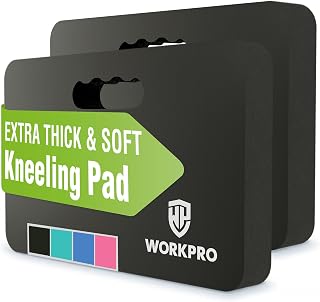
- NBR foam, 1.5 in thick, 17.5 x 11 in
- 70 percent shock absorbency
- Built-in handle
- Water resistant with minimal water absorption
- Textured bottom that resists slipping
The WORKPRO pad is the workhorse of this roundup, a slab of high-density NBR foam that suits long kneeling sessions on concrete, tile and timber floors. It measures 17.5 inches by 11 inches with 1.5 inches of foam, and the maker lists 70 percent shock absorbency, which means the foam takes the sting out of hard floors instead of passing it to the knees. The NBR foam is water resistant and absorbs minimal water, so the pad stays light on damp floors and dries fast after wash water splashes across it. A textured bottom keeps the pad from slipping while the installer leans into a baseboard run, and a built-in handle makes it easy to carry between rooms. The foam holds its shape through repeated use and will not compress or deform over time, which matters when the same pad is used day after day on plaster repairs. For an installer who kneels for hours at a time, the WORKPRO gives broad, firm support at a size that covers both knees with room to spare.
| Product | Size and thickness | Outer layer and grip | Best for |
|---|---|---|---|
| TOUA Extra Large Thick Foam Kneeling Pad | 17.8 x 10.9 x 1.5 in, PU foam | Waterproof surfaces, anti-slip base | Wide baseboard runs |
| PEP STEP Extra-thick Waterproof Kneeler | About 1.5 in foam | Waterproof, does not absorb water | Wet rooms and outdoor work |
| Klarg Garden Kneeling Pad 2 PCS | 16.1 x 7.4 x 0.78 in, EVA and PE | Waterproof, anti-skid base | Tight corners, spare pad |
| Altdorff Thick Kneeling Pad 2 Pack | 15 x 7 x 0.8 in, memory foam | Waterproof shell, anti-skid base | Damp floors, spare pad |
| HappyPicnic Extra Thick Kneeling Pad | 17 x 9.8 x 2 in | 600D polyester zip-off cover | Longest sessions |
| Fiskars Garden Kneeling Pad | 11 x 18 x 0.75 in, EVA foam | Moisture and rip resistant | Quick jobs, light carry |
| WORKPRO Extra Thick Kneeling Pad | 17.5 x 11 x 1.5 in, NBR foam | Water resistant, textured bottom | Long daily sessions |
How to choose
Check the outer layer first
The outer layer is the first thing to check, because it decides whether the pad stays dry. Look for a sealed or coated surface, a waterproof shell, or closed-cell foam that will not absorb water. The TOUA pad carries waterproof surfaces, the PEP STEP kneeler is built not to absorb water, and the Altdorff pad wraps its memory foam in a waterproof shell. A pad with an open foam face may feel soft in the shop, but it will drink wash water on the first day and stay damp for the rest of the job. Wipe the surface after use and check that it dries fast, because a pad that stays wet between jobs will smell and lose its cushion.
Match the size to the skirting run
A long run of decorative baseboard needs a long pad, because the installer has to shift sideways without standing up. The TOUA pad measures 17.8 inches by 10.9 inches, the WORKPRO measures 17.5 inches by 11 inches, and the Fiskars pad runs 18 inches long, so all three give both knees room to move. Slim pads such as the Klarg at 16.1 inches by 7.4 inches and the Altdorff at 15 inches by 7 inches suit tight corners and short runs where a wide pad would catch on the floor. Measure the space along the skirting before buying, and pick a pad that covers both knees with room to spare rather than one that forces them together.
Grip on smooth floors
Polished tiles and sealed concrete are slippery, and a pad that slides while the installer leans forward is a hazard. Look for a textured base or an anti-slip pattern on the underside: the TOUA pad has an anti-slip cross-pattern, the WORKPRO has a textured bottom, and the Klarg and Altdorff pads both carry anti-skid bases. Press the pad onto a smooth floor and lean into it before the job starts, because a pad that grips in the shop will grip on site. A pad with a smooth underside may be fine on rough ground, but it will skate across a polished bathroom floor the moment weight shifts.
Weight and carrying
A plaster installer carries the pad from room to room all day, so weight and a handle matter. The Fiskars pad weighs 0.18 pounds and the HappyPicnic pad weighs 8.16 ounces, so both are easy to carry with one hand. The TOUA, PEP STEP, WORKPRO and Grenebo pads all carry built-in handles, and the Klarg pad has a handle slot. A pad without a handle ends up being dragged or left behind, and a dragged pad picks up grit that scratches floors. Pick a pad that is light enough to carry and has a handle that fits a gloved hand.
Common mistakes
Using a pad that soaks up water is the most common mistake, and it shows up within an hour when the pad turns heavy and cold. A foam mat with an open surface drinks wash water and stays damp, which chills the knees and makes the pad smell. Pick a pad with a sealed outer layer or closed-cell foam, and check that it dries fast after a wipe.
Picking a pad too narrow for both knees is the second mistake, because the knees end up hanging off the edges and pressing into the floor. A pad that is only wide enough for one knee forces the installer to kneel half on the pad and half on the tile. Measure the kneeling width before buying, and pick a pad that covers both knees with room to spare.
Skipping the grip check on polished tile is the third mistake, because a pad that slides can throw the installer forward onto the wall. Smooth floors need a textured base or an anti-slip pattern, so press the pad down and lean into it before starting work. If it moves, use a different pad or a non-slip mat underneath.
Leaving the pad on a wet floor overnight is the fourth mistake, because even a water resistant pad will take in moisture if it sits in a puddle. Hang the pad up or stand it on edge at the end of the day so air reaches both faces. A pad stored flat on a damp floor will be wet again in the morning.
Using a thick soft pad that sinks and wobbles while tooling a decorative profile is the fifth mistake, because the knees move while the trowel needs to stay steady. A pad that is too soft lets the body rock, and the profile line wanders. Pick a firm pad with dense foam for detailed work, and save the softest pads for rough work where precision matters less.
FAQ
Can I use a garden kneeling pad for plaster work?
Yes, as long as it has a water resistant outer layer and firm foam. Garden pads and work pads share the same foam and sizes, and the pads in this roundup are sold for gardening as well as for painting and repair work. The difference that matters is the outer layer: a garden pad with an open foam face will soak up wash water, while a pad with a sealed surface will stay dry. Check the outer layer before buying, and pick a pad that wipes clean.
Does a waterproof pad still breathe?
A waterproof pad keeps water out, and the foam underneath stays dry, which is what matters for comfort. The outer layer does not need to breathe, because the knees press on the top face and the pad is only in use for the length of a session. What matters is that the surface wipes clean and dries fast, so the pad is ready for the next room. Pads with a zip-off cover, such as the HappyPicnic, let the cover wash separately, which keeps the foam fresh.
How thick should a pad be for baseboard work?
For baseboard work on smooth tiles, a pad between 0.75 inches and 1.5 inches thick gives a good balance of cushion and stability. Thin pads suit short sessions and tight corners, while thick pads suit concrete floors and long runs. A 2 inch pad such as the HappyPicnic gives the deepest cushion, but it can feel less stable when the installer leans forward to tool a profile. Try the thickness on the actual floor before a long job.
How do I clean plaster off a kneeling pad?
Wipe the pad with a damp cloth while the plaster is still wet, because dried plaster sticks to foam and needs scraping. A pad with a sealed or waterproof surface wipes clean in seconds, while an open foam face needs a brush and soapy water. For pads with a zip-off cover, take the cover off and wash it. Never soak a foam pad in a bucket, because the foam will hold water and take days to dry.
Is a rolling creeper better than a pad for baseboards?
A rolling creeper suits long, straight runs of baseboard on smooth floors, because the installer rolls along the wall instead of standing up to move. A flat pad suits detailed work and rooms with rough or uneven floors, where wheels would catch. Many installers keep both: a creeper for long hallway runs and a pad for corners and detailed profiles. Pick the tool that fits the floor and the length of the run.
Conclusion
Finishing a decorative baseboard is slow, low work, and the knees carry the whole job. A pad with a water resistant outer layer keeps the knees dry while wash water and wet plaster reach the floor, and the seven pads in this roundup cover the range from slim mats for tight corners to thick washable pads for the longest sessions. The TOUA pad leads for its wide waterproof surface, the PEP STEP kneeler follows for its waterproof build, and the WORKPRO pad gives firm trade-grade support at a size that covers both knees. The Klarg and Altdorff two-packs give spares for the mixing area, the HappyPicnic pad gives the thickest foam with a washable cover, and the Fiskars pad is the lightest mat for quick jobs. Pick the pad whose outer layer stays dry, whose size fits the skirting run, and whose grip holds on the floor in the room. Hang the pad up at the end of the day so it dries, and it will be ready for the next wall. Done that way, the baseboard gets a steady hand and the knees get through the job without complaint.
Related guides
More from Amazon
Programs that pair well with the guide above. Offers and eligibility are set by Amazon and may change.
Free shipping on eligible items, Prime Video and more. Eligible new members can start with a free trial.
Start a Prime free trialAudiobooks and podcasts to listen to on the go. Eligible new members can start with a free trial.
Try Audible freeAd-free music streaming. Eligible new subscribers can start with a free trial.
Try Music Unlimited freeA free business account with business pricing and bulk-buying tools for work, shop or home office.
Create a business accountAs an Amazon Associate we earn from qualifying purchases.
More ways to save on your next finish
Programs that pair well with the guide above. Offers and eligibility are set by Amazon and may change.
A free business account with business pricing and bulk-buying tools for work, shop or home office.
Create a business accountFast, free shipping on eligible items, plus Prime Video and more. Eligible new members can start with a free trial.
Start a Prime free trialRead from a huge library of eBooks, including how-to guides and cookbooks. Eligible new members can start with a free trial.
Try Kindle UnlimitedAudiobooks and podcasts for the commute, the garage or the kitchen. Eligible new members can start with a free trial.
Try Audible freeAs an Amazon Associate we earn from qualifying purchases. Using these links costs you nothing extra.



Write Your Review
No reviews yet. Be the first to share your experience!