
Key takeaways
- Seven darbies and straightedges under one hundred eighty dollars for checking stucco wall straightness, compared on length, blade material, level vial and grip.
What's inside
As an Amazon Associate I earn from qualifying purchases. This post may contain affiliate links at no extra cost to you.
A stucco wall that looks flat from across the yard can still hide a hollow the width of a hand, and that hollow only shows itself when the sun rakes across the surface at a low angle or when the next coat goes on unevenly. The straightness check is the moment a plasterer finds out whether the base coat did its job, and the tool for that check is a long, rigid darby or straightedge laid flat against the wall and read against the light. Short tools lie about long walls: a two-foot level spans a single stud bay and calls it good, while a six- or eight-foot straightedge crosses several bays at once and shows every rise and dip in between. The best plaster darbies and straightedges under one hundred eighty dollars for checking straightness on stucco walls combine enough length to span a real wall section with a blade that stays true, a readable edge, and a grip that lets the plasterer hold the tool flat without rocking it. This guide compares seven real darbies and straightedges whose makers and retailers list them within that price ceiling, and explains how length, blade material, a level vial and handle design change the straightness check on stucco. All specifications come from the makers' or retailers' own product pages; anything not published is marked as such.
Quick verdict
The BuckEye eight-foot straight edge darby and screed leads this group: at eight feet with a built-in level vial it spans the longest wall section here and reads level in the same pass, which is exactly what a straightness check on stucco needs. The Kraft Tool laminated canvas-resin tapered forty-five-inch darby with level vial follows closely, pairing a light layered blade with a built-in vial for mid-length checks, the Kraft Tool laminated canvas-resin double-handle forty-inch darby brings a lighter blade and two-handed control for shorter checks, the Kraft Tool tapered mahogany forty-five-inch darby adds a steady wooden edge for checking by feel, the Kraft Tool Gator GatorLoy thirty-six-inch darby with Ultra Twist bracket suits one-handed checking at close range, the Kraft Tool magnesium shotcrete smoother rod at forty-eight inches gives a rigid magnesium edge for straightening fresh coats, and the Kraft Tool Wiskey Stick sixty-inch screed float straightedge covers the widest span of the Kraft Tool entries. Choose by length first — the wall section you need to check decides the tool — then by whether a level vial helps the reading and how much weight the arm can hold flat for a full pass.
| Product | Key spec | Best for |
|---|---|---|
| BuckEye Concrete Straight Edge One Man Darby and Screed 8 ft x 1.5 in with Level Vial | 8 ft x 1.5 in, level vial, one-man darby and screed | Longest straightness checks across stucco walls |
| Kraft Tool Laminated Canvas-Resin Tapered 45 in Concrete Darby with Level Vial | 45 in tapered, laminated canvas-resin blade, level vial | Mid-length checks with level and flatness together |
| Kraft Tool Laminated Canvas-Resin Double Handle 40 in Concrete Darby | 40 in, laminated canvas-resin blade, double handle | Two-handed checks with even pressure |
| Kraft Tool Tapered Concrete Darby Mahogany 45-inch | 45 in tapered, mahogany blade | Steady wooden edge for checking by feel |
| Kraft Tool Gator GatorLoy 36 in Hand and Curb Concrete Darby with Ultra Twist Bracket | 36 in, GatorLoy alloy, Ultra Twist bracket | Close-range checking with a pivoting grip |
| Kraft Tool Magnesium Shotcrete Gunite Smoother Rod 48 in | 48 in magnesium smoother rod | Rigid magnesium edge for straightening coats |
| Kraft Tool Wiskey Stick 60 in Concrete Screed Float Straightedge | 60 in screed float straightedge | Widest span among the Kraft Tool entries |
How we chose
Length was the entry requirement: every tool here measures at least thirty-six inches, because a straightness check on a stucco wall needs a tool long enough to bridge several stud bays and show a hollow instead of hiding inside one. Beyond length, the shortlist weighs the qualities that decide how honestly a tool reads a wall. Blade rigidity comes next, since a darby that flexes under its own weight bends around the very hollows it should reveal, and magnesium, GatorLoy alloy and laminated canvas-resin each bring a different balance of stiffness and weight. A level vial earns extra weight in this group because checking straightness often means checking level at the same time, and a vial built into the blade saves a second tool and a second pass. Handle and bracket design follow, since the plasterer must hold a long blade flat against the wall without rocking it, and a knob handle, double handle or pivoting bracket changes how steadily that works. All seven tools are listed within the one-hundred-eighty-dollar ceiling on the retailer's own page, and no tool was handled; the guide relies on published specifications only.
BuckEye Concrete Straight Edge One Man Darby and Screed 8 ft x 1.5 in with Level Vial
- Length: 8 ft
- Width: 1.5 in
- Level vial: built in
- Form: one-man darby and screed straight edge
- Retailer code: T14374
The eight-foot BuckEye is the longest straight edge in this group, and that length is the whole point of a straightness check on stucco. Laid flat against a wall, an eight-foot blade crosses four or five stud bays at once, so a hollow that a shorter tool would sit inside shows up as daylight under the blade or as a rocking motion when the tool is pressed at its ends. The built-in level vial adds a second reading to the same pass: while the edge shows flatness, the vial shows whether the line it follows is level, which matters when the check runs along a horizontal course or across a wall head. At one and a half inches wide the blade is narrow enough to read a fine line against the stucco surface, and the one-man form means a single plasterer can carry it, set it and read it without a second pair of hands. Eight feet of tool is a lot to move through a house, and it needs clear floor space to turn around, but on an open exterior stucco wall it is the fastest way to learn whether the coat is true. The retailer lists it within the one-hundred-eighty-dollar ceiling.
Pros:
- Longest blade here spans the most wall in one check
- Built-in level vial reads level and flatness together
- Narrow one-and-a-half-inch edge reads fine deviations
Cons:
- Eight feet is awkward to carry through doorways and tight rooms
- Needs clear floor space to turn and set on the wall
Kraft Tool Laminated Canvas-Resin Tapered 45 in Concrete Darby with Level Vial
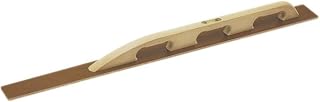
- Length: 45 in
- Form: tapered darby
- Blade: laminated canvas-resin
- Level vial: built in
- Retailer code: T25897
The forty-five-inch laminated canvas-resin tapered darby with level vial pairs a light layered blade with a built-in reading, and that combination suits straightness checks on stucco where the wall section is too wide for a short darby and too broken up for an eight-foot straight edge. Laminated canvas-resin is a layered blade material that the maker lists for concrete darbies, and at forty-five inches it spans a wall section wider than two stud bays, which is enough to catch the hollows that matter on a stucco wall in a single pass. The tapered form narrows toward the working edge, so the blade presents a fine leading edge to the surface and reads small deviations cleanly, while the wider back keeps the tool rigid across the span. The built-in level vial adds the second reading to the same pass: while the edge shows flatness, the vial shows whether the line it follows is level, which matters when the check runs along a horizontal course or across a wall head. The canvas-resin blade runs lighter in the hand than a metal darby of the same length, which helps when the check runs overhead or along a long horizontal course, and the forty-five-inch length turns around in rooms where a six- or eight-foot straight edge would not fit. It will not replace the eight-foot tool on a long open wall, but for the walls most plasterers check most often, it is a practical mid-length pick. The retailer lists it within the one-hundred-eighty-dollar ceiling.
Pros:
- Built-in vial combines level and flatness readings
- Laminated canvas-resin blade is light for its length
- Forty-five inches spans a wide wall section in one check
Cons:
- Shorter span means more repositioning on very long walls
- Layered blade needs a steady hand to keep full contact
Kraft Tool Laminated Canvas-Resin Double Handle 40 in Concrete Darby
- Length: 40 in
- Form: double handle darby
- Blade: laminated canvas-resin
- Retailer code: T26567
The forty-inch Kraft Tool darby pairs a laminated canvas-resin blade with a double handle, and that combination suits a plasterer who wants two-handed control for checking stucco at close range. Laminated canvas-resin is a layered blade material that the maker lists for concrete darbies, and the double-handle form spreads the grip across both hands so the pressure stays even from end to end and the blade does not rock on the wall. At forty inches the darby covers a wall section wider than a single stud bay, which is enough to check the straightness of a repair patch or a single stucco panel, and the two handles make it easier to hold the blade flat with steady pressure through a full pass. The blade runs lighter in the hand than a magnesium darby of the same length, which helps when the check runs overhead or along a long horizontal course, and the forty-inch length turns around in rooms where a six- or eight-foot straight edge would not fit. It carries no level vial, so a separate level is needed when the check must also read level, and it suits panel-by-panel checks rather than whole-wall sweeps. The retailer lists it within the one-hundred-eighty-dollar ceiling.
Pros:
- Double handle keeps pressure even across the blade
- Laminated canvas-resin blade is light in the hand
- Forty inches spans a repair patch in one check
Cons:
- No built-in level vial for a combined reading
- Needs two hands and clear space to work well
Kraft Tool Tapered Concrete Darby Mahogany 45-inch
- Length: 45 in
- Form: tapered darby
- Blade: mahogany
- Retailer code: T6720
The forty-five-inch mahogany darby is the wooden edge in this group, and its dense hardwood blade suits a plasterer who checks straightness by feel as much as by sight. Mahogany is a dense, stable hardwood, and a mahogany darby has a warmth and steadiness in the hand that metal blades do not: it does not chill the fingers on a cold morning, and its weight sits evenly along the blade so the edge stays flat through a long pass. At forty-five inches it spans a wall section wider than two stud bays, which is enough to catch the hollows that matter on a stucco wall, and the tapered form narrows toward the working edge so the blade can read a fine line against the surface while the wider back keeps it rigid. A wooden blade also forgives a small mistake: it will not gouge a soft coat the way a sharp metal edge can if the angle slips. It carries no level vial, so level must be read with a separate tool when the check needs one, and wood needs more care than metal, since it should be kept dry and wiped clean of lime residue after use. For interior stucco work, for walls broken up by windows and doors, and for any job where the eight-foot tool will not turn around, the forty-five-inch mahogany darby is a practical pick. The retailer lists it within the one-hundred-eighty-dollar ceiling.
Pros:
- Mahogany blade is steady and warm in the hand
- Forty-five inches spans a wide wall section in one check
- Tapered edge reads fine deviations without gouging soft coats
Cons:
- No built-in level vial for a combined reading
- Wood needs drying and cleaning after lime work
Kraft Tool Gator GatorLoy 36 in Hand and Curb Concrete Darby with Ultra Twist Bracket
- Length: 36 in
- Form: hand and curb darby
- Alloy: GatorLoy
- Bracket: Ultra Twist
- Retailer code: T24611
The Gator GatorLoy thirty-six-inch darby with Ultra Twist bracket is the close-range checking tool in this group, built for work where the plasterer stands close to the wall and reads the surface section by section. GatorLoy is the maker's alloy for the Gator line, and the hand and curb form gives a compact blade that the plasterer can press flat against the stucco with one hand while the other hand sights along the edge. The Ultra Twist bracket is the feature that sets this version apart from the plain GatorLoy thirty-six-inch darby: it pivots, so the handle angle can be set to keep the wrist straight while the blade stays flat, which matters when the check runs along a course at shoulder height or higher. At thirty-six inches it spans two stud bays, enough to catch a hollow in a repair patch or around a window reveal, and its compact size moves easily through a house. It will not replace a long straight edge on a whole wall, but for detailed checking it is the most adjustable tool here. The retailer lists it within the one-hundred-eighty-dollar ceiling.
Pros:
- Ultra Twist bracket adjusts the handle angle to the work
- Compact thirty-six-inch blade suits close-range checks
- GatorLoy alloy blade in a hand and curb form
Cons:
- Thirty-six inches spans less wall than the long straight edges
- Pivoting bracket adds a moving part to keep clean
Kraft Tool Magnesium Shotcrete Gunite Smoother Rod 48 in
- Length: 48 in
- Material: magnesium
- Form: shotcrete and gunite smoother rod
- Retailer code: T24462
The forty-eight-inch magnesium smoother rod is the rigid edge in this group, a straight bar of magnesium built for smoothing shotcrete and gunite that doubles as a straightness check on stucco. Magnesium is light for its stiffness, so a forty-eight-inch rod can be held flat against a wall without the arm tiring, and its straight edge reads hollows the same way a darby blade does. At four feet it spans two or three stud bays, which covers a repair area or a single stucco panel in one pass, and the rod form has no handle to get in the way, so the plasterer grips the bar itself and feels the wall through it. The smoother rod was designed to finish sprayed concrete, which means its edge is made to ride over a rough coat and cut it back, and that same behavior helps when a stucco base coat needs to be checked and straightened in one motion. It carries no level vial and no handle, so the plasterer supplies both the grip and the level reading. The retailer lists it within the one-hundred-eighty-dollar ceiling.
Pros:
- Magnesium rod is stiff yet light for its length
- Forty-eight inches spans a repair area in one pass
- Rod form lets the hand feel the wall through the tool
Cons:
- No handle and no level vial, so the plasterer supplies both
- Rod form is less familiar than a handled darby for some users
Kraft Tool Wiskey Stick 60 in Concrete Screed Float Straightedge
- Length: 60 in
- Form: screed float straightedge
- Retailer code: T26568
The Wiskey Stick is the sixty-inch screed float straightedge in this group, and its five feet of length place it between the forty-eight-inch rod and the eight-foot BuckEye. A screed float straightedge is built to be drawn across a fresh coat to level it, and the same long edge that levels a coat also checks one: laid against a dried stucco wall, the sixty-inch blade shows hollows and high spots across a span wider than any single repair patch. Five feet is long enough to cross three or four stud bays, which makes it a whole-wall checking tool on smaller wall runs, and it is still short enough to turn around in a room where the eight-foot BuckEye would not fit. The Wiskey Stick name covers the maker's screed float straightedge line, and the sixty-inch size is the one that balances span against handling for a single plasterer. It carries no level vial, so level must be read with a separate tool, and its length still needs clear space to move. The retailer lists it within the one-hundred-eighty-dollar ceiling.
Pros:
- Sixty inches spans three or four stud bays in one check
- Turns around in rooms where eight feet will not fit
- Screed float form levels fresh coats as well as checking them
Cons:
- No built-in level vial for a combined reading
- Still needs clear floor space to carry and set
Buying guide
Length decides the check before anything else does. A straightness check is only as honest as the span of the tool doing it, and a blade that fits inside a hollow cannot reveal it. Measure the wall sections you check most often: an exterior stucco wall with long uninterrupted runs rewards a six- or eight-foot straight edge, while a wall broken by windows, doors and corners rewards a forty-five- or forty-eight-inch darby that can be set between openings. A good rule is to own at least one tool longer than the widest gap between the features on your walls, so the blade always bridges from sound coat to sound coat across any hollow. Shorter darbies still have a place: they check repair patches, reveals and panel work where a long blade cannot sit flat, and they are easier to hold steady overhead. If the budget allows only one tool, pick the longest one you can carry through your own doorways and store in your own vehicle, because a tool left in the truck checks nothing.
Blade material changes how the check feels and how long the edge stays true. Magnesium is the classic darby material: light for its stiffness, easy to hold flat for a full pass, and forgiving on the arm during a long day of checking. GatorLoy alloy is the maker's own blend for the Gator line, and it sits in the same role as magnesium with a different feel in the hand. Laminated canvas-resin is a layered blade that runs lighter than metal at the same length, which helps when the check runs overhead or along a high course. Wood has its place too, though no wooden darby made this group. Whichever material you choose, keep the edge clean: dried stucco on the blade lifts the tool off the wall and reads as a hollow that is not there, so wipe the edge before every check and store the tool flat or hung so the blade cannot bow.
A level vial built into the blade is worth more than it looks. Checking straightness and checking level are two different readings, and a vial lets the plasterer take both in one pass instead of setting the darby, reading the flatness, then setting a separate level and reading again. On a horizontal course, the vial shows whether the line the darby follows is level; on a vertical check, it shows plumb. Two tools in this group carry a vial, the eight-foot BuckEye straight edge and the laminated canvas-resin tapered darby, and they are the ones to reach for when the check must also read level. If your work never needs a level reading, a plain blade without a vial is simpler and has nothing to break, but most stucco straightness checks do run along a level line sooner or later, and the vial earns its place.
Handle and bracket design decide whether the blade stays flat. A darby held by its ends rocks if the grip is uneven, and a rocking blade reads straight on a wall that is not. The hand and curb form puts the grip close to the blade so the plasterer can press the edge flat with the palm, the double-handle form spreads the grip across two hands for long blades, and the Ultra Twist bracket on the Gator GatorLoy darby pivots so the wrist stays straight while the blade stays flat. A knob handle suits one-handed checking at close range, where the plasterer sights along the edge with the free hand. Try the grip before a long day of checking if you can: a handle that suits a large hand will cramp a small one, and a cramped hand rocks the blade. The rod form has no handle at all, which some plasterers prefer because the hand feels the wall directly through the bar, though it asks more of the grip on a long pass.
Matching the tool to the coat matters as much as matching it to the wall. A fresh stucco coat is soft and can be cut back, so a tapered darby or a screed float straightedge that levels as it checks earns its place during the base coat. A cured coat is hard and can only be read, so a rigid straight edge with a fine narrow edge is the right tool, and the reading should be done with the blade clean and dry so no grit lifts it off the surface. Light is part of the check too: a raking light across the wall, from a work light held low or from the sun at a low angle, shows hollows that a straight-on light hides, and the darby confirms what the light suggests. Read the wall twice, once with the blade held horizontally and once vertically, because a hollow can run in either direction and a single pass only finds one of them. Mark what you find with a pencil line at the edge of the hollow so the next coat or the repair knows exactly where to go.
Care and storage keep a straight edge straight. Hang long straight edges vertically or lay them flat on a level shelf, never leaning at an angle against a wall where their own weight can bow them over a season. Wipe magnesium blades dry after use, since moisture and lime residue can mark the surface, and keep the blade away from other tools that could nick the edge. A nicked edge reads as a high spot every time it passes that point on the wall, so a damaged blade should be dressed smooth or retired from checking duty. Check the tool itself once in a while by laying it on a known flat surface, such as a sheet of glass or a machined table, and sighting along the edge: a darby that has bowed is worse than no darby at all, because it reports the wall as true when it is not.
FAQ
How long should a darby be for checking straightness on a stucco wall?
Long enough to bridge the hollow you are looking for. A hollow between two studs is about sixteen inches wide, so a blade needs to reach sound coat on both sides of it, which means at least thirty-six inches for small checks and six to eight feet for a whole wall. The longest tool in this group is the eight-foot BuckEye straight edge, and it is the one to reach for on long exterior walls. For repair patches and walls broken by openings, a forty-five- or forty-eight-inch darby is enough, and it is easier to hold flat.
Does a level vial on a darby replace a separate level?
It covers the readings that happen during the straightness check, but it does not replace a full-size level for setting out work. A vial built into the blade shows whether the line the darby follows is level while the edge reads flatness, which saves a second pass and a second tool. For setting out a new wall, for plumbing a corner, or for any reading where the level must be trusted on its own, a separate level is still the right tool. Treat the vial as a convenience that makes the check faster, not as the only level on the job.
Why check a stucco wall in both directions?
Because a hollow can run horizontally or vertically, and a single pass only finds one of them. A blade held horizontally reads dips that run across the wall, such as a sag between studs, while the same blade held vertically reads dips that run down the wall, such as a low spot under a window head. Running both passes takes only a few minutes and gives a full picture of the surface before the next coat goes on. Mark each hollow with a pencil line at its edge so the repair knows where to start and stop.
Can the same darby straighten a fresh coat and check a cured one?
Yes, and most of the tools in this group are built to do both. A tapered darby or a screed float straightedge levels a fresh coat by cutting back high spots as it is drawn across, and the same edge laid against a cured coat reads flatness without cutting anything. The difference is in how the tool is used: on a fresh coat the blade works with pressure and motion, while on a cured coat it rests lightly and is read against the light. Keep the edge clean for both jobs, since dried material on the blade lifts it off the wall and falsifies the reading.
What makes a straight edge go out of true?
Its own weight, poor storage, and knocks. A long blade leaned at an angle against a wall for months can take a bow from gravity, and a blade dropped on its edge can take a bend that no eye can see until it is laid on a known flat surface. Heat and moisture can move some blade materials over time, and a nicked edge reads as a high spot on every pass. Store long tools flat or hung vertically, wipe them dry after use, and check them against a flat surface now and then so a bent tool never reports a wall as true when it is not.
Conclusion
Checking straightness on a stucco wall comes down to span, stiffness and an honest edge, and the seven tools in this group cover those needs within the one-hundred-eighty-dollar ceiling. The eight-foot BuckEye straight edge is the pick for long exterior walls, where its span and built-in vial read a whole wall section in one pass. The laminated canvas-resin tapered forty-five-inch darby with level vial is the practical choice for rooms and walls broken by openings, the laminated canvas-resin double-handle Kraft Tool darby brings a light blade and two-handed control to panel checks, the tapered mahogany forty-five-inch darby suits checking by feel with a steady wooden edge, the Gator GatorLoy darby with Ultra Twist bracket handles close-range checking with an adjustable grip, the forty-eight-inch magnesium smoother rod gives a rigid edge for straightening, and the sixty-inch Wiskey Stick splits the difference between span and handling. Pick the longest tool you can carry and store, keep its edge clean and true, and read the wall in both directions with a raking light before the next coat goes on.
Related guides
More from Amazon
Programs that pair well with the guide above. Offers and eligibility are set by Amazon and may change.
Free shipping on eligible items, Prime Video and more. Eligible new members can start with a free trial.
Start a Prime free trialAudiobooks and podcasts to listen to on the go. Eligible new members can start with a free trial.
Try Audible freeAd-free music streaming. Eligible new subscribers can start with a free trial.
Try Music Unlimited freeA free business account with business pricing and bulk-buying tools for work, shop or home office.
Create a business accountAs an Amazon Associate we earn from qualifying purchases.
More ways to save on your next finish
Programs that pair well with the guide above. Offers and eligibility are set by Amazon and may change.
A free business account with business pricing and bulk-buying tools for work, shop or home office.
Create a business accountFast, free shipping on eligible items, plus Prime Video and more. Eligible new members can start with a free trial.
Start a Prime free trialRead from a huge library of eBooks, including how-to guides and cookbooks. Eligible new members can start with a free trial.
Try Kindle UnlimitedAudiobooks and podcasts for the commute, the garage or the kitchen. Eligible new members can start with a free trial.
Try Audible freeAs an Amazon Associate we earn from qualifying purchases. Using these links costs you nothing extra.










Write Your Review
No reviews yet. Be the first to share your experience!